


Latest news with #Mita


Japan Today
 2 days ago
- Business
- Japan Today
Japan venture seeks to export 'espresso' of hot springs
Onsens -- bath houses where patrons relax naked together in water of various temperatures -- are a major domestic industry beloved by both locals and tourists By Tomohiro OSAKI Japan's famous onsen hot springs were long considered unexportable, until an idea struck Naoki Mita one day: What if he could condense them like espresso coffee? Mita's Tokyo-based venture firm, Le Furo, has invented a technology it calls "craft onsen" -- whereby hot spring ingredients are extracted and filtered into an ultra-high concentration. Le Furo now seeks to use that patented technology to export Japan's hot springs overseas, with a view toward opening several onsen facilities in the Gulf region in 2026. Transporting hot springs overseas long seemed logistically impossible because of the sheer volume of water involved, as well as their susceptibility to germs. But with Le Furo's invention, "just like you extract coffee as espresso, we grind the mineral resources to fine, sand-like powders," CEO Naoki Mita told AFP. The entrepreneur says many commercially available "onsen powders" are synthetic and put an emphasis on mimicking the relaxing color and scent, and don't necessarily contain the necessary ingredients. Only after solid metals such as iron, magnesium and zinc dissolve into water does it become possible to chemically resemble onsen and recreate the therapeutic effect, Mita said. Le Furo's technology sticks to the natural soil and minerals of hot spring sources, and uses a special method to make them soluble in water. Its "Craft Onsen" concentrate comes in bottles or small tanks, which can then be distributed and poured into water in other countries to feel like the real thing. Onsens -- bath houses where patrons relax naked together in hot spring water of various temperatures -- are a major domestic industry in Japan beloved by both locals and tourists. As of 2021, Japan was home to 28,000 confirmed hot spring sources, according to the environment ministry. Le Furo is setting its sights particularly on countries like the UAE, Oman and Saudi Arabia where "water is considered a more precious resource than oil", Mita says. "Here in Japan, we have this culture of soaking ourselves in a good, long bath to attain better health -- that's the kind of story that I believe (other countries) will show great interest in," Mita said. © 2025 AFP


The Star
6 days ago
- Business
- The Star
Japanese venture seeks to 'condense' hot springs for export
TOKYO: Japan's famous "onsen" hot springs were long considered unexportable, until an idea struck Naoki Mita one day: what if he could condense them like espresso coffee? Mita's Tokyo-based venture firm, Le Furo, has invented a technology it calls "craft onsen" -- whereby hot spring ingredients are extracted and filtered into an ultra-high concentration. Le Furo now seeks to use that patented technology to export Japan's hot springs overseas, with a view toward opening several onsen facilities in the Gulf region in 2026. Transporting hot springs overseas long seemed logistically impossible because of the sheer volume of water involved, as well as their susceptibility to germs. But with Le Furo's invention, "just like you extract coffee as espresso, we grind the mineral resources to fine, sand-like powders," CEO Naoki Mita told AFP. The entrepreneur says many commercially available "onsen powders" are synthetic and put an emphasis on mimicking the relaxing colour and scent, and don't necessarily contain the necessary ingredients. Only after solid metals such as iron, magnesium and zinc dissolve into water does it become possible to chemically resemble onsen and recreate the therapeutic effect, Mita said. Le Furo's technology sticks to the natural soil and minerals of hot spring sources, and uses a special method to make them soluble in water. Its "Craft Onsen" concentrate comes in bottles or small tanks, which can then be distributed and poured into water in other countries to feel like the real thing. Onsens -- bath houses where patrons relax naked together in hot spring water of various temperatures -- are a major domestic industry in Japan beloved by both locals and tourists. As of 2021, Japan was home to 28,000 confirmed hot spring sources, according to the environment ministry. Le Furo is setting its sights particularly on countries like the UAE, Oman and Saudi Arabia where "water is considered a more precious resource than oil", Mita says. "Here in Japan, we have this culture of soaking ourselves in a good, long bath to attain better health -- that's the kind of story that I believe (other countries) will show great interest in," Mita said. - AFP

Straits Times
6 days ago
- Business
- Straits Times
Japanese venture seeks to ‘condense' hot springs for export overseas
Sign up now: Get ST's newsletters delivered to your inbox Transporting hot springs overseas long seemed logistically impossible because of the sheer volume of water involved, as well as their susceptibility to germs. TOKYO - Japan's famous 'onsen' hot springs were long considered unexportable, until an idea struck Mr Naoki Mita one day: What if he could condense them like espresso coffee? Mr Mita's Tokyo-based venture firm, Le Furo, has invented a technology it calls 'craft onsen' – whereby hot spring ingredients are extracted and filtered into an ultra-high concentration. Le Furo now seeks to use that patented technology to export Japan's hot springs overseas, with a view towards opening several onsen facilities in the Gulf region in 2026. Transporting hot springs overseas long seemed logistically impossible because of the sheer volume of water involved, as well as their susceptibility to germs. But with Le Furo's invention, 'just like you extract coffee as espresso, we grind the mineral resources to fine, sand-like powders', Mr Mita told AFP. The entrepreneur and chief executive officer says many commercially available 'onsen powders' are synthetic and put an emphasis on mimicking the relaxing colour and scent, and do not necessarily contain the necessary ingredients. Only after solid metals such as iron, magnesium and zinc dissolve into water does it become possible to chemically resemble onsen and recreate the therapeutic effect, Mr Mita said. Top stories Swipe. Select. Stay informed. Singapore Jalan Bukit Merah fire: SCDF says PMD battery could have started fatal blaze Singapore 4 housebreaking suspects taken to Bukit Timah crime scene under police escort Business MyRepublic customers to see no immediate changes to existing services: StarHub Singapore To Vers or not to Vers: How will this scheme affect HDB prices? Asia From Brazil to Vietnam: How footballer Rafaelson became Vietnam's favourite 'Son' Asia Malaysian MP Rafizi says his son was jabbed with syringe in planned attack, threatened with Aids Asia India, Singapore ministers discuss deeper tie-ups in digitalisation, skills, industrial parks Singapore From quiet introvert to self-confident student: How this vulnerable, shy teen gets help to develop and discover her strength Le Furo's technology sticks to the natural soil and minerals of hot spring sources, and uses a special method to make them soluble in water. Its 'craft onsen' concentrate comes in bottles or small tanks, which can then be distributed and poured into water in other countries to feel like the real thing. Onsens – bath houses where patrons relax naked together in hot spring water of various temperatures – are a major domestic industry in Japan beloved by both locals and tourists. As at 2021, Japan was home to 28,000 confirmed hot spring sources, according to the environment ministry. Le Furo is setting its sights particularly on countries like the United Arab Emirates, Oman and Saudi Arabia where 'water is considered a more precious resource than oil', Mr Mita says. 'Here in Japan, we have this culture of soaking ourselves in a good, long bath to attain better health – that's the kind of story that I believe (other countries) will show great interest in,' he said. AFP
The Star
19-05-2025
- Business
- The Star
New horizons for tourism
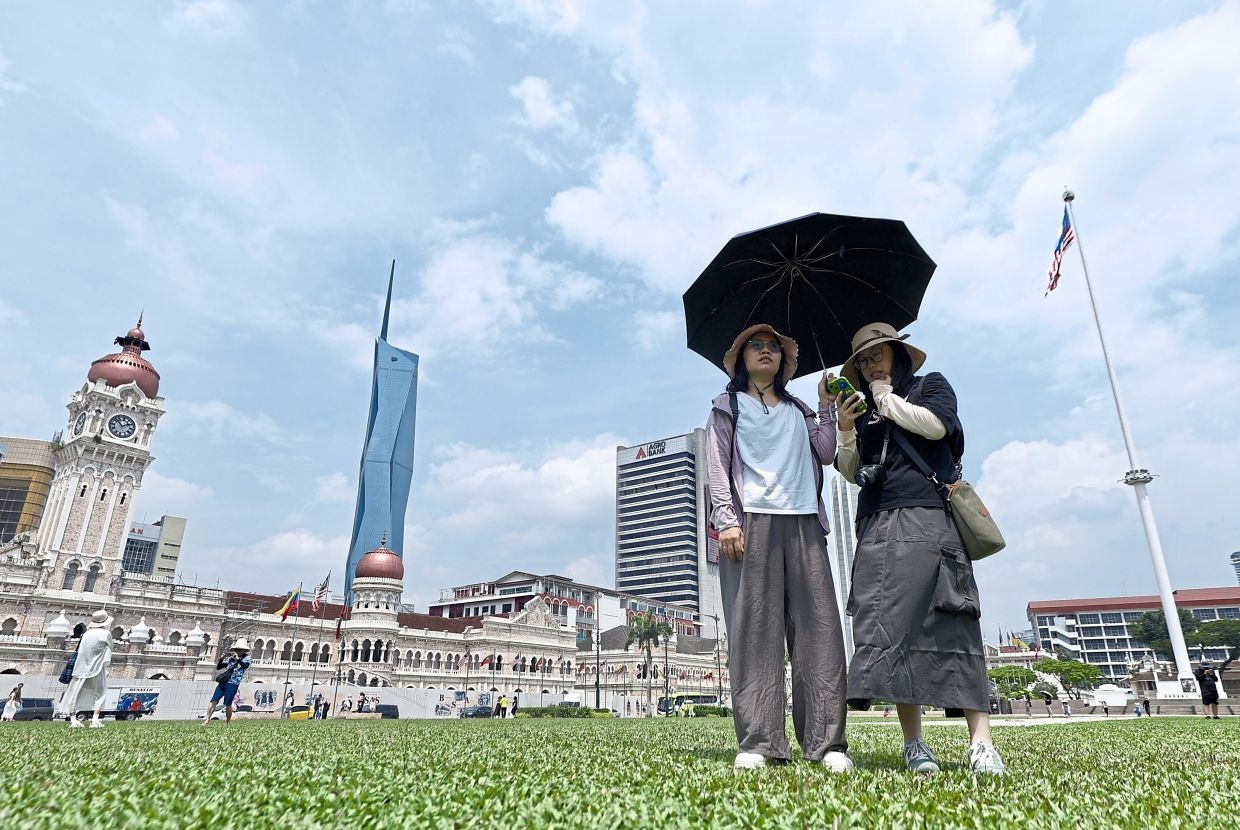
Entertainment industry highlighted as 'growth point' for economy PETALING JAYA: Experiential tourism is what Malaysia should aim to excel in during its next phase of development, say industry experts. This form of tourism – centred on dining, eco-adventures and immersive entertainment – has strong potential to attract increasing interest from both regional and long-haul travellers in the lead-up to Visit Malaysia 2026. Malaysian Inbound Tourism Association (Mita) president Mint Leong described Visit Malaysia 2026 as a key opportunity to propel the industry forward. She noted that foreign visitors are increasingly drawn to dining and entertainment options, while hotel occupancy rates continue to reflect the strength of domestic tourism. 'This trend will help enhance the overall tourism economy and lay the foundation for the 2026 tourism year,' said Leong. She added that analysing consumer patterns from major source markets is essential for crafting targeted promotional strategies. 'For instance, Singaporean visitors tend to favour weekend trips to Johor and Melaka,' said Leong. Beyond attractions, Malaysia aims to boost spending through shopping and entertainment. 'The entertainment industry is becoming a new growth point for the tourism economy. High-level concerts, e-sports events and commercial exhibitions are expected to attract foreign visitors and engage local youth,' she said. Malaysia Inbound Chinese Association (Mica) president Datuk Dr Angie Ng also pointed to a shift in tourism trends – from traditional sightseeing to high-end consumption and niche experiences. She noted the rise of business delegations, incentive travel, and medical tourism, all of which have significantly increased visitor spending. As Asean Chair this year, Malaysia has hosted numerous international conferences, contributing to a surge in visitor numbers. 'Besides business inspection tours, medical and educational tourism are experiencing explosive growth,' said Ng. Eco-tourism and distinctive offerings such as jungle exploration and nature-based education continue to attract Chinese travellers. Ng also highlighted the growing number of Chinese Muslim visitors, with Malaysia offering a welcoming environment through halal dining options and accessible prayer facilities. Social media platforms like Xiaohongshu (known in English as RedNote) in China are helping promote Malaysia's culinary and travel experiences, further supporting the local tourism economy. 'The government is open to industry input, aiming to implement more effective promotional activities and develop educational tourism initiatives such as summer camps and survival experiences,' she added. According to Tourism Malaysia, the country recorded 2.98 million international visitor arrivals in March 2025, marking a 13% increase from February. Singapore led with 1.4 million visitors, followed by China (333,045) and Indonesia (331,555). Thailand and Brunei contributed 189,036 and 102,549 visitors respectively, while India recorded 98,910 arrivals. The top 10 list was completed by the Philippines, South Korea, Britain and Japan. This continued growth signals a steady recovery in Malaysia's tourism sector as the country moves through 2025. Malaysian Association of Tour and Travel Agents (MATTA) president Nigel Wong said the Visit Malaysia 2026 campaign presents a pivotal platform to engage international visitors. He added that travel agencies are working closely with the government through trade missions and other initiatives. 'Promotions are crucial, so we urge the government to ensure marketing efforts are directed towards the right customer segments,' he said. Wong also suggested revitalising incentives for travel agents to promote inbound and domestic tourism, such as tax exemptions for those who bring in significant visitor numbers. 'For a modest investment, these incentives can fuel vigorous promotions and increase visitor spending, yielding a substantial return,' he said. He also called for stronger collaboration between the public and private sectors, especially with key industry bodies like the Malaysian Association of Hotels. Identifying China and India as major growth markets, Wong said, 'China remains undertapped, while India – with its burgeoning middle class and spending power – holds significant potential.' He encouraged diversification into long-haul markets, pointing to countries like the Netherlands and the Czech Republic, where travellers show interest in Malaysia's climate and cultural diversity.


Forbes
05-05-2025
- Entertainment
- Forbes
This Michelin-Starred Latin Restaurant In D.C. Is Redefining Plant-Based Dining
Mita's intimate 46-seat dining space Rey Lopez Latin American food is often synonymous with juicy meats and savory starches, from churrasco to rice and beans. However, at Michelin-starred Mita Restaurant in Washington, D.C.'s Shaw neighborhood, chefs Miguel Guerra and Tatiana Mora are pushing beyond the expected to craft an exciting new narrative. Inspired by their Venezuelan heritage, this culinary duo leads diners on a dynamic and imaginative journey of Latin American flavors, placing fruits and vegetables at center stage. Mora shares with Forbes, "We wanted to create a space where vegetables aren't just a side dish—they're the heart of the experience.' The pair first crossed paths while working at La Cosecha in Union Market—Guerra as the head chef at El Cielo Washington and Mora leading the culinary program at the Latin cocktail bar Serenata. Their shared passion for Latin American cuisine soon blossomed into a collaborative vision with Mita. Presentation is a key element in their creative process, as Mora and Guerra draw on their deep-rooted connection to food and their homeland. "We take pride in constantly experimenting with new textures, colors, and regional ingredients to create dishes that feel both familiar and fresh," says Guerra. The result is a menu of dishes that are as visually striking as they are delicious. Chefs Miguel Guerra and Tatiana Mora Rey Lopez The restaurant's vegetable-forward philosophy is presented in three unique tasting menus: a 4-course prix-fixe, a 6-course prix-fixe, and an immersive 14-course experience divided into four acts—an opening, first, second, and third. Notable dishes include a modern interpretation of arepas, featuring petite rounds made from smoked potatoes, yuca, corn and wheat, paired with non-dairy sour cream, chontaduro and guasacaca sauces. Another highlight is the watermelon crudo, a fresh spin on ceviche made with watermelon, cucumber and fermented carrots. The restaurant's popular arepas dish Rey Lopez The final course, or third act, features sweet treats like the Nazca Lines, a culinary nod to the famous geoglyphs in southern Peru. This enticing dessert is made with picarones—light, spiced doughnuts made from sweet potato and squash—layered with quinoa, Peruvian chocolate, lucuma and a drizzle of chancaca sweetener. Restaurant guests can enhance their tasting menus with four- or six-course drink pairings or sample mezcal and tequila flights for a deeper dive into Latin spirits. A varied offering of beers, wines and non-alcoholic drinks rounds out the beverage program. Mora, the first Venezuelan female chef to earn a Michelin star, discovered her passion for cooking after losing her mother at the age of 10. In the wake of her grief, the kitchen became her sanctuary — a place where she could express love and provide comfort to her family. She realized food's profound impact after making arepas on her own for the first time, and her career has taken her across the world. In addition to being a chef, Mora is also a sommelier and a holistic wellness coach with Love Soul School. Guerra, the youngest Venezuelan chef to achieve a Michelin star, grew up in a close-knit family in Venezuela. He fell in love with baking while assisting his maternal grandmother during his youth. As a master baker known for making intricate wedding cakes for friends and family, she gave him a deep appreciation for the precision and artistry of pastry-making. He pays homage to those formative experiences by preparing dishes inspired by traditional Venezuelan recipes and his grandmother's handwritten cookbook. Opening Mita in 2023 and earning a Michelin star just a year later have been landmark achievements for Mora and Guerra. Yet, they see these milestones not as endpoints but as catalysts for continued growth. Today, their focus is on elevating every detail of the guest experience—crafting dishes that are not only deeply flavorful and thoughtfully presented but always infused with love.
