


Latest news with #OisínCoghlan

RTÉ News
 25-06-2025
- Business
- RTÉ News
Concrete industry warns of quarry materials shortfall
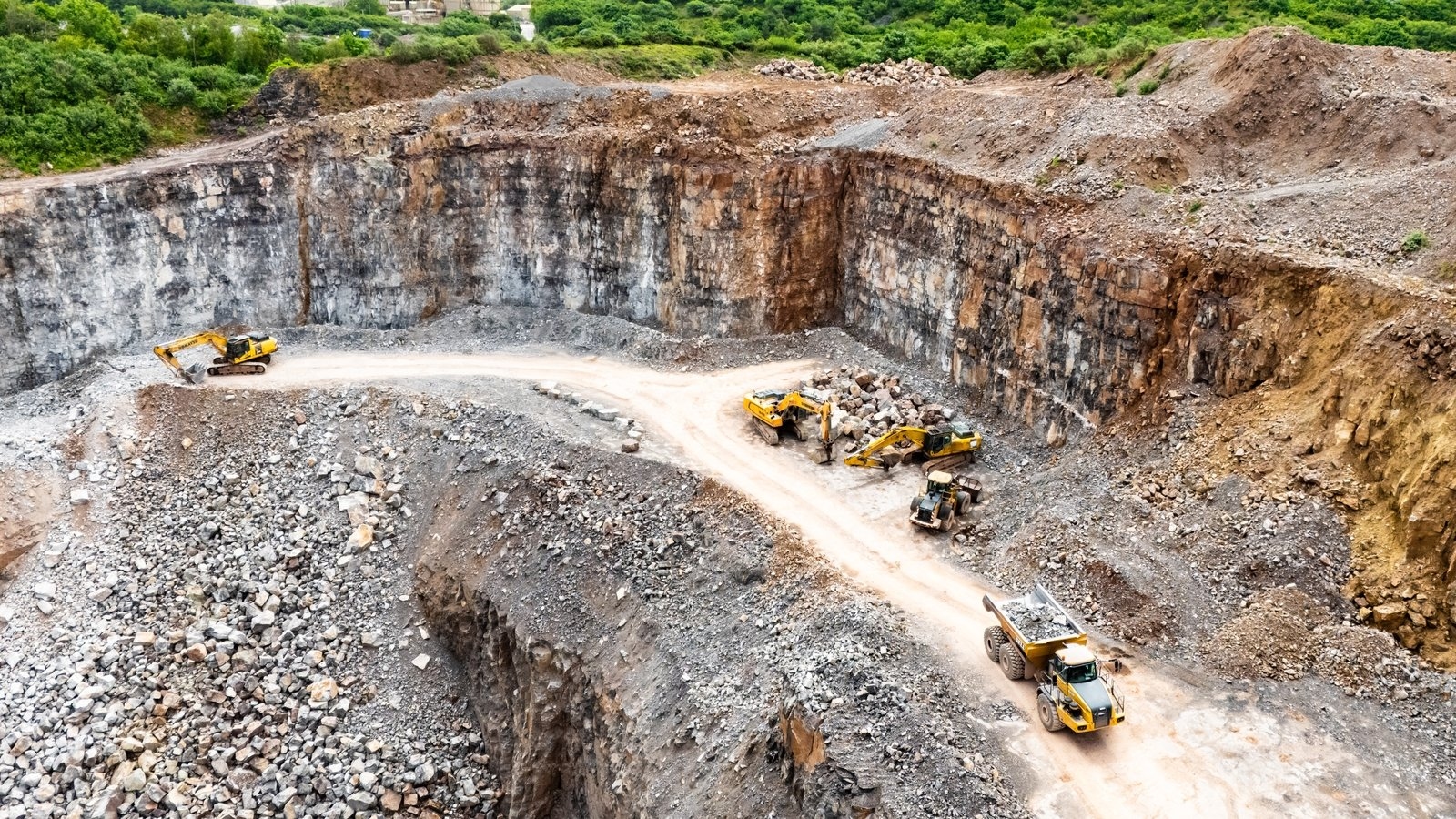
The concrete industry has warned Ireland is facing a significant shortfall of materials such as stone, sand and gravel in future years because quarries are not being granted sufficient planning permissions. The Irish Concrete Federation said the delivery of the Government's housing targets and major infrastructure projects are highly dependent on reliable supplies. A study by engineering consultancy firm RPS for the Irish Concrete Federation, found the replenishment rates of quarries is running at 61% of the annual consumption. The study found planning permission was refused for more than half of the volume of proposed extraction of sand, stone and gravel in greater Dublin between 2017 and last year. It also highlighted delays obtaining planning to extend quarries or get permission for new sites. It said: "During 2023, planning cases for aggregates (when subject to an appeal) were spending on average 146 weeks (33 months) in the planning process, almost five times the statutory objective period." The report said there is "an urgent need for a National Policy Statement by the Irish Government to facilitate the long-term sustainable supply of essential aggregate materials". It said the statement should explicitly recognise that stone, sand and gravel are a "strategic national resource", essential for the future development of Ireland and fundamental to meeting societal needs. The RPS report said a typical new 3-bed semi-detached home requires approximately 300 tonnes of aggregates for construction, including foundations, floors, walls and roof tiles with larger houses requiring substantially more. The report said: "A continued depletion of aggregate reserves in the Greater Dublin Area will eventually lead to increased haulage of large volumes of aggregates over longer distances from quarries located outside the region, thereby increasing fuel consumption, costs and greenhouse gas emissions." Commenting on the report, Oisín Coghlan, a spokesman for the Environmental Pillar, said: "There is a new planning regulator An Coimisiún Pleanála. There is no reason why any one industry should get a pass or prioritisation. "There is a lot the industry can do, the national and EU drive is towards less concrete per square foot, more efficiency less pollution and more recycled materials which we aren't using as much of in Ireland."


Irish Times
29-05-2025
- Business
- Irish Times
Ireland could face penalties of €28bn by 2030 for failing to meet emissions targets
The State could face financial penalties totalling as much as €28 billion for failing to sufficiently reduce greenhouse gas emissions by 2030, experts say. Latest projections show Ireland is further away than ever to reaching climate targets. Under EU agreements, countries that fail to meet their obligation to cut emissions in half by 2030 will have to purchase carbon credits from other countries who have exceeded their targets. A joint report last month from the Irish Fiscal Advisory Council and the Climate Change Advisory Council, both of which were set up to advise the Government, warned that Ireland could have to pay between €8 billion and €26 billion purchasing carbon credits from other countries on current projections. However, yesterday's report from the Environmental Protection Agency (EPA) showed that Ireland's progress towards the goal of reducing emissions by half is slowing. It will now only achieve reductions of 23 per cent in a best-case scenario. READ MORE It is likely that more carbon credits will have to be purchased at a potential additional cost of almost €2 billion, experts estimate. The total bill could be as high as €27.9 billion, according to initial calculations supplied by climate experts to Oisín Coghlan, policy adviser to the Stop Climate Chaos coalition. 'Today's EPA figures could add as much as the cost of another children's hospital to the billions in fines we are facing for not doing enough to hit our 2030 targets,' Mr Coghlan said, referring to the National Children's Hospital, which has soared to a cost of more than €2.2 billion. 'But this would be a complete waste of money. The real message here is that we can save billions of euro by investing more now in public transport, warmer homes and clean energy rather than more fossil fuels. 'But it requires political leadership because there is short-term inconvenience on the road to a better quality of life all round. Micheál Martin has repeatedly said climate change is the defining challenge of our generation. Now, as Taoiseach, it's time to show he can rise to it.' Climate experts say a recalculation of emissions from the agricultural sector seemed to have improved the Irish position, though the overall picture still shows Ireland facing massive costs for failing to meet emissions targets. The Department of Finance confirmed the Government may decide to purchase carbon credits from other countries, but said no decision had yet been made. 'In a scenario where targets aren't achieved, then consideration could be given to using various flexibilities available to member states, one of which is purchasing surpluses from other member states,' the department said in response to questions. The department said it was 'important to realise that if the EU as a whole does not meet compliance with its 2030 targets, then it may not be possible to purchase compliance at any price as there will be no surplus to purchase'. It added: 'This is one of the key reasons as to why there is significant uncertainty in relation to any potential cost projections.' The department said work was under way by the Department of Environment to consider what credible options would be available to Ireland in order to meet compliance, if necessary. In response to questions, the Department of the Environment and Climate said: 'The Government remains committed to complying with our domestic and EU emissions reduction targets through investing in climate action at home, and by driving forward implementation of the Climate Action Plan. 'We will continue to explore all compliance options available under the relevant EU legislation.'

Irish Times
28-05-2025
- Business
- Irish Times
Ireland's emissions trend ‘alarming and shocking, with actions reset required'
The latest indications on Ireland's carbon emissions 'are alarming and shocking', according to the Stop Climate Chaos (SCC) coalition. SCC public policy adviser Oisín Coghlan said Ireland was going backwards on the path to a pollution-free future. He was responding to Environmental Protection Agency (EPA) projections up to 2030 published on Wednesday indicating Ireland will only cut emissions by 23 per cent compared to a 51 per cent legally binding target. 'The new Government simply isn't implementing the policies and measures in the climate action plan fast enough ... it seems to be stalling rather than accelerating action to reduce emissions,' he said. READ MORE 'What the Government does now will be the acid test of Micheál Martin's commitment to deliver the programme for government, which reaffirmed Ireland's legally binding limits on polluting emissions to 2030 and promised 'decisive action to radically reduce our reliance on fossil fuels', he said. This required a moratorium on any new data centres unless they operate on 100 per cent renewables from the start, Mr Coghlan added. The Government should reinstate the ban on commercial LNG imports that would simply increase dependence of fossil gas, and pause plans to build a State gas reserve until there's an independent assessment of whether the existing oil reserve could provide backup power needed, Mr Coghlan added. A commitment to spend twice as much on new public transport as on new roads and adopt the 'moving together' strategy shelved last year to reduce congestion and traffic pollution should be reinstated, he said. The Infrastructure and Climate Fund and EU Social Climate Fund should be used to retrofit 100 per cent of social housing and put solar panels on every school, church, sports club and community hall by 2030, he said. Immediate action was needed to bring agriculture into line with legally binding limits, Mr Coghlan said. Fertiliser prices were dropping and gains from lower fertiliser use in recent years were at risk, unless use was capped at current levels. 'The science is clear that reducing methane is the 'emergency hand brake' for emissions. 29 per cent of our emissions come from methane.' Minister for Climate and Energy Darragh O'Brien said the projections 'are a clear signal that, while we've made real progress, we need to move faster to meet our 2030 climate targets'. The Government was fully aware of the scale of the climate challenge and need to accelerate climate action, he said. 'We are undergoing a renewables-led energy transformation. Coal is on the way out, and renewables are now the backbone of our power mix; electricity generation from renewables has increased fivefold since 2005. It is estimated that renewables provided 40 per cent of our electricity demand in 2024,' he added. This was being backed by important permitting and legal reforms, and further auctions to support additional onshore and offshore renewable energy, Mr O'Brien said. A €2.5 billion programme of grid upgrades was under way to strengthen the electricity network for renewables and electrification, while major investment in EirGrid and ESB was being finalised. [ Ireland falls further behind on emissions targets making billions in fines more likely Opens in new window ] 'As part of our energy revolution we are delivering new interconnectors: the Greenlink interconnector to the UK is now operational, doubling Ireland's interconnector capacity,' the Minister said. 'These projects boost energy security and allow greater import/export of clean power.' He added: 'This is backed by concrete action: emissions fell by 6.8 per cent in 2023. GDP has seen a six-fold increase and the population has increased by nearly 50 per cent since 1990. Yet, emissions are lower today than they were then. That's real decoupling of emissions from economic activity – and few countries in Europe have achieved it under similar pressure.' Despite the EPA projection that Ireland would only have 640,000 EVs at best by 2030 rather than a 945,000 target in the Government's climate plan, Mr O'Brien said 'electric vehicle sales are up – by 23 per cent in April alone – and not just in cities'. Home retrofits were scaling up, with over 1,000 upgrades a week happening last year, he said. 'Certainty around National Development Plan support is a key enabler to that growth.' The Solar for Schools programme was delivering clean power to more than 1,000 schools and increasing climate awareness in the classroom, he said, while the recently introduced Renewable Heat Obligation would help decarbonise heating in industry and buildings. The 2025 Heat Bill would unlock district heating in urban areas, he said. Mr O'Brien said: 'EPA projections are not absolute forecasts; they reflect delivery to date. The first climate action plan of this Government was delivered last month. Cross-departmental taskforces are in place. Governance arrangements have been strengthened, with the first meeting of the new Climate Action Programme Board held last week, involving senior officials from all the main sectors – including energy, transport and agriculture. Its remit is clear: to focus on accelerated delivery of the actions needed to close the emissions gap.'
