


Latest news with #Samburu


West Australian
 30-07-2025
- Business
- West Australian
Africa &Beyond Suyian Lodge, in tune with conservation
The &Beyond Suyian Lodge has opened on a 17,800ha private conservancy in Laikipia, northern Kenya. Owned by the Suyian Conservancy Trust, a Kenyan not-for-profit, the conservancy is managed under a plan approved by the Kenya Wildlife Service with oversight from Space for Giants. Space for Giants is a global conservation charity which directly supports rewilding and community development in the region. Once a cattle ranch, the land has been rewilded over decades into a thriving biodiversity corridor — where herders and wildlife now share space. With &Beyond holding sole tourism rights, there is no other lodge on the concession, meaning that guests have the land to themselves. There are elephants, lions, Grevy's zebras, reticulated giraffes, African wild dogs, Laikipia hartebeest and black leopards. &Beyond Suyian Lodge has 14 suites designed in collaboration with Nicholas Plewman Architects, Michaelis Boyd and Fox Browne Creative. A spokesperson for the team says: 'The lodge embodies a raw yet refined aesthetic. Earthy textures, sculptural details and handcrafted finishes reflect the surrounding terrain.' Each suite has a private plunge pool and views across the escarpment. But the spokesperson says the team looks beyond the buildings themselves: 'What sets Suyian apart is its invitation to slow down and connect. From walking with local herders and horseback safaris to yoga on ancient rock platforms and storytelling around the fire, every moment is designed to evoke presence and wonder.' &Beyond executive chairman and CEO Joss Kent says, 'From walking with herders to horseback safaris, from architecture inspired by rock formations to the possibility of seeing a black leopard in its natural range, this is Kenya, reimagined for the traveller who seeks more than a checklist. 'Suyian Conservancy brings the full breadth of Laikipia to life through layered storytelling, meaningful interaction, and a lodge that feels as though it has grown organically from the ground it rests on.' + 'Suyian' means 'wild dog' in the local Samburu language. about SUYIAN CONSERVANCY + Suyian Conservancy is an unfenced wildlife habitat that is part of the wider Laikipia-Ewaso ecosystem. + A spokesperson says it holds the highest diversity of large mammal species of any ecosystem of its size in the world. + It is home to 55 mammal species and over 260 bird species. + Suyian was been managed for decades as a working cattle ranch and as a sanctuary for wildlife, as well as providing support for local communities. + It was created and is overseen by the non-government organisation Space for Giants. about SPACE FOR GIANTS + Space for Giants is an international conservation NGO based in Africa and founded in 2011. + Its mission is to protect the natural ecosystems on which Africa's large wild animals depend. + It works in 11 countries across Central, East and Southern Africa. + Its headquarters are in Kenya and it is registered as a charity in the UK and an NGO in the US. fact file &Beyond Suyian Lodge Suyian Conservancy

West Australian
23-07-2025
- Business
- West Australian
New Africa lodge underpinned by conservation
A new safari lodge has just opened on a 17,800ha private conservancy in Laikipia, in northern Kenya, East Africa. Owned by the Suyian Conservancy Trust, a Kenyan not-for-profit, the conservancy is managed under a plan approved by the Kenya Wildlife Service. Previously a cattle ranch, the land has been rewilded over decades into a biodiversity corridor where elephants, lions, Grevy's zebra, reticulated giraffe, African wild dog, Laikipia hartebeest, elusive black leopards — and herders — now share space. And the travel company andBeyond now holds sole tourism rights on the land. There is no other lodge on the concession. Guests have the place to themselves. andBeyond Suyian Lodge has 14 suites designed in collaboration with Nicholas Plewman Architects, Michaelis Boyd and Fox Browne Creative. A spokesperson for the team says: 'The lodge embodies a raw yet refined aesthetic. Earthy textures, sculptural details and hand-crafted finishes reflect the surrounding terrain.' Each suite has a private plunge pool and views across the escarpment. But the spokesperson says the team looks beyond the buildings themselves: 'What sets Suyian apart is its invitation to slow down and connect. From walking with local herders and horseback safaris to yoga on ancient rock platforms and storytelling around the fire, every moment is designed to evoke presence and wonder.' The lodge was created in partnership with Space for Giants, a global conservation charity, and directly supports rewilding and community development in the region. 'From walking with herders to horseback safaris, from architecture inspired by rock formations to the possibility of seeing a black leopard in its natural range, this is Kenya, reimagined for the traveller who seeks more than a checklist,' says Joss Kent, &Beyond executive chairman and CEO. 'Suyian Conservancy brings the full breadth of Laikipia to life through layered storytelling, meaningful interaction, and a lodge that feels as though it has grown organically from the ground it rests on.' + 'Suyian' means 'wild dog' in the local Samburu language. + Suyian Conservancy is an unfenced wildlife habitat that is part of the wider Laikipia-Ewaso ecosystem. + A spokesperson says it holds the highest diversity of large mammal species of any ecosystem of its size in the world. + It is home to 55 mammal species and over 260 bird species. + Suyian was been managed for decades as a working cattle ranch and as a sanctuary for wildlife, as well as providing support for local communities. + It was created and is overseen by the international conservation non-government organisation Space for Giants. + Space for Giants is an international conservation organisation based in Africa and founded in 2011. + Its mission is to protect the natural ecosystems on which Africa's large wild animals depend. + It currently works in 11 countries across Central, East and Southern Africa. + Its headquarters are in Kenya and are registered as a charity in the UK and an NGO in the US. andBeyond Suyian Lodge Suyian Conservancy

India.com
13-07-2025
- General
- India.com
Entry of men is banned in this village ruled by women due to..., name of village is..., it is located in...
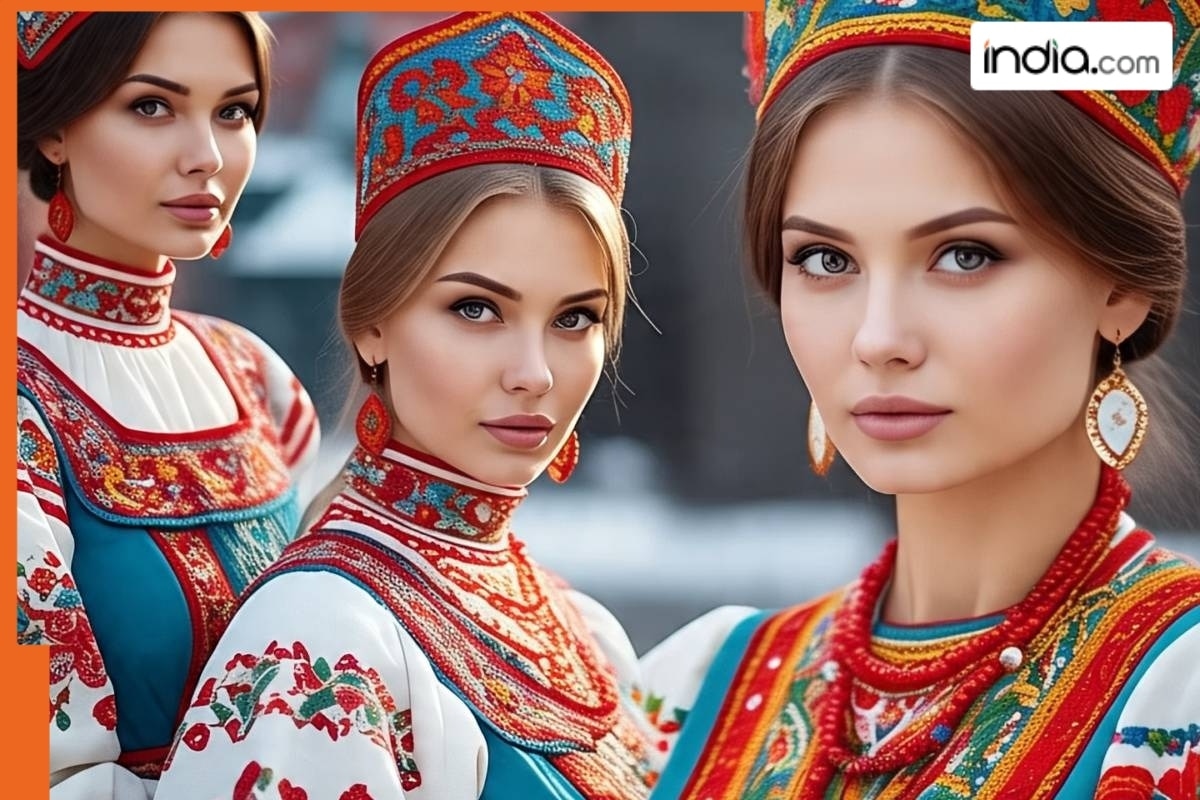
(Representational image/AI generated) New Delhi: The world has witnessed many movements and efforts to bridge the gap between genders, i.e., men and women and the process has been going on for more than a century. In the post-World War 2 scenario, this drive gained a lot of momentum and the changes were visibly evident by the 1980s and 1990s. Now, it can safely be assumed that there is hardly any discrimination on the basis of gender and women and men are getting equal opportunities in every sector. Having said that, we come across various cultures and traditions that are very strongly detached from the modern world. For example, there are many tribes across the continents that live their lives completely according to their indigenous, ethnic laws and do not conform to the rules and regulations of the outside world. Why does this village stand out as unique? Here we will tell you about Umoja Uaso village where only women rule and the entry of men is banned here. It is out-and-out matriarchal. Not even a single man lives here, and if any man comes here, the local police warns him to leave. Most of the women who live in Umoja Uaso have faced sexual violence and abuse or their families have abandoned them. It also houses women who have escaped child marriage or female circumcision. Where is this village located? The Umoja Uaso village is located in Kenya. It was founded in 1990. The unique thing about this village is that it is an all-female matriarch village located near the town of Archers Post in Samburu County, 380 km (240 mi) from the capital, Nairobi. It was founded by Rebecca Lolosoli, a Samburu woman, as a sanctuary for homeless survivors of violence against women, and young girls running from forced marriages or female genital mutilation. The women of the Samburu people do not agree with violence and the traditional subordinate position of women. What is intriguing about this village is that the number of family members keeps on fluctuating, i.e., it either increases or decreases. This village tells its residents about women's rights and gender-based violence. Here, the male child of any woman is allowed to live in the village only till the age of 18. After this, he has to go and live somewhere else. Women of all ages can come and live here.


Condé Nast Traveler
01-07-2025
- Condé Nast Traveler
Editor's Letter: Travel Is Better When You Have a Guide
One of the privileges of my job has been discovering, on trips everywhere from Spain to Seoul, how a great guide can unlock a destination. A long-ago trip to Kenya was especially instructive: My guide showed me things few travelers get to see (the singing wells of the Samburu tribespeople of upper Kenya, for instance) while also giving me richer insight into famous places (the ever-popular Masai Mara) than I could have gleaned on my own. Along the way we became friends. I hope you see Condé Nast Traveler as a kind of a guide too. Our goal is to take you deeper—with projects such as our recent digital package on the world's quietest places (you can get a taste in Pico Iyer's luminous essay here) and via YouTube programming that lets you in on local secrets, like where the world's most interesting chefs eat when they're not at work. And of course we want to guide you in our print issues, including this one, with stories—like Catherine Fairweather's pine-scented trek along the hiking trails of Corsica and Gary Shteyngart's restaurant romp through the Georgian capital of Tbilisi—that elucidate how history, culture, and regional identity can shape a journey. Over the years, though, many readers have told me how much they wish they could actually go on these kinds of trips with us. So we've taken a step toward making that a reality by teaming up with the venerable travel company Abercrombie & Kent on a new program called Curated Escapes. The first two trips, to Japan and to California's Sonoma County, mix unexpected takes on popular hits with under-the-radar experiences. Japan: A Cultural Journey, visits Tokyo, Kanazawa and other coastal enclaves, and Kyoto in a quest to showcase the country's renowned collisions between the future and the past. Sonoma: A Culinary Adventure, pairs a behind-the-scenes look at the winery Passalacqua and an epic meal at the legendary SingleThread with immersion into some of the region's wild natural places, like Armstrong Redwoods State Natural Reserve. We're just getting started—look out for a new batch of Curated Escapes in the months ahead. We hope to travel with you soon. This article appeared in the July/August 2025 issue of Condé Nast Traveler. Subscribe to the magazine here.


Vogue
19-06-2025
- Vogue
What Traditional Dance Reveals About a Travel Destination
Ultimately, dance is a prism for understanding people. Their resistance, passion, grief, transcendence, and joyful celebration. For those communities willing to share this with visitors (through ceremony or education at cultural centers), don't neglect the opportunity. And if you're asked to join—the only answer is yes. I've been welcomed into a swaying circle of Samburu women, leaped between moving bamboo poles beside the Manggarai, and heel-toed my cowboy boots across a dance hall in Montana—each experience deepening an appreciation for each culture's singular identity (and serving as a humbling reminder I should probably stick to ballet). So, to travelers mapping out their itineraries, take note: every culture has its own form of traditional movement, a few of which are highlighted below. Clear your dance card. Photo: Amansara Khmer (Cambodia) Dotted with temples and surrounded by ancient ruins and sacred mountains, Cambodia is a landscape imbued with spirituality. Travelers checking into Amansara should book the Dance & Devotion experience, which brings guests to the sacred dancers of Angkor Conservatoire. Here, classic Khmer dance is preserved in its native form (not a performance, but a spiritual offering) and guests have the opportunity to watch both rehearsals and the basrei ceremony. Afterward, a master teacher guides guests through a few hand movements and storytelling techniques. Viennese Waltz (Austria) Experience the glittering glamour of Viennese waltz during the city's Ball Season, which runs from November through April. During this time, Austria's gilded capital hosts over 400 balls that evoke its imperial past (particularly the Opera Ball that is held in the most beautiful ballroom in the world: the Vienna State Opera). Guests staying at Almanac Palais Vienna can book their Night at the Ball package, which includes a private dance lesson, couture gown, and horse-drawn carriage to the ball (with a limousine return at the end of the night, plus an in-room breakfast and spa treatment the following morning). Legong (Bali) Hinduism's cultural influence sweeps across all aspects of life on the island of Bali, especially through expressions like traditional dance. There are several styles that visitors can observe—from the Kecak 'fire dance' to the Barong and Kris 'dagger dance'—but definitely don't miss out on Legong while on the island. With its vibrant facial expressions and complex finger and foot movements, the story of a king who finds a lost maiden is colorfully brought to life. If you're eager to dive deeper into meaning behind these intricate movements, take a Balinese dance lesson at Hoshinoya Bali, held in a gazebo overlooking the jungle. Tango (Argentina) Argentina and Uruguay have long sparred over who invented tango, but if you find yourself in the former, book an experience with Untamed Traveling to experience the authenticity of Argentine Tango. Activities can range from lessons to an overnight stay in a tango hotel in San Telmo (the oldest neighborhood in Argentina). If educational tourism is your love language, they can even take you to a lecture about the history of the tango, followed up by a visit to a milonga where locals go dancing. Bon Odori (Japan) Japan is home to hundreds of styles of traditional dance, from Kabuki's dramatic theater sequences to the Geisha's graceful Kyomai movements. For travelers looking for an authentic, immersive dance experience, the Gujo Odori Festival in the Gifu prefecture lasts from July to September. This dance festival takes place during the obon period when the Japanese honor ancestral spirits, and there are ten recognized dances (which you're encouraged to learn on the spot from your neighbor). Even better: many attendees opt to wear yukata kimonos and elevated wooden sandals called geta. Sau Sau (Rapa Nui) Rapa Nui (also known as Easter Island) is the southernmost point of Oceania's Polynesia Triangle. Its rich culture and heritage is celebrated at Nayara Hangaroa (a luxury hotel owned by a local family) where guests of the property are invited to learn about the traditional dress, and can see expressions of the Haka'Ara Tupana dance group two times a week during peak season. One of the most common styles of dance is the Sau Sau; a joyful rocking of the arms and hips with dancers in skirts crafted from feathers or grasses. Sema (Türkiye) This enigmatic dance, practiced by members of the Mevlevi Order of Sufi Muslims known as 'whirling dervishes,' dates back to the 13th century and the teachings of the poet and mystic Rumi. Often called a 'moving meditation,' the ritual (known as the sema) features dancers in tall hats and flowing white robes spinning in circles to reach a state of spiritual transcendence. The dance represents a journey of shedding the ego and connecting with the divine, and it requires months of dedicated practice to learn. Travelers can observe these sema ceremonies at destinations like the Mevlana Cultural Center in Konya or the Galata Mevlevihanesi Museum in Istanbul, which has ceremonies every Sunday at 6 p.m. Caci (Flores) This ritual whip fight is integral to the Manggarai's cultural identity on the Indonesian island of Flores. The energetic dance is held between two male fighters who take turns attacking and defending. The attacker uses a whip, while the defender uses a round shield made of buffalo hide. Caci is accompanied by chanting and drumming and the fights are ceremonial, not intended to be violent. Guests staying at the newly opened Ta'aktana, a Luxury Collection Resort & Spa in Labuan Bajo can discover Caci every Thursday at the property's amphitheater, or they can arrange an off-site dance excursion as well.
