


Latest news with #Schifrin

Scroll.in
 07-07-2025
- Entertainment
- Scroll.in
From Lalo Schifrin to Duke Ellington, sacred music to a jazz beat
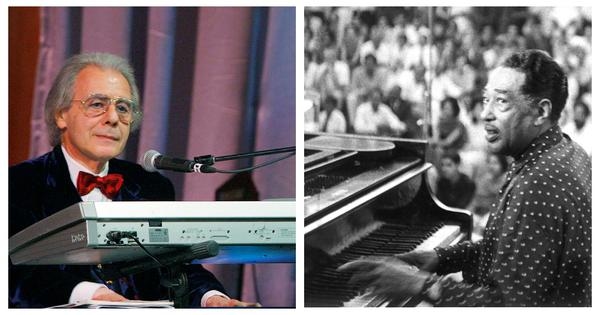
June 26 saw the demise of the famed Argentine-American pianist, composer, arranger, and conductor Lalo Schifrin at the age of 93. He is best known for his work as a composer for films and television shows going back to the 1950s. I listened to a compilation of his 'greatest hits' and relived some of those films or shows I had watched. I had forgotten that he was responsible for the film score to the 1973 martial arts blockbuster Enter the Dragon, my introduction to Bruce Lee and my brother's pin-up hero. Listening to the music once again brough back memories of the kung fu craze, the Bruce Lee hairstyle (and bloodcurdling yells and flying kicks to go with it) and improvised nanchakus from discarded sticks from the Vaglo cloth store. Nothing can take you back in time like music. So much Hindi film music was 'inspired' by this track. It is a testament to Schifrin's versatility and adaptability that he could make his music just as fresh and relevant through all the intervening decades to the present. He will probably be most remembered by today's young generation for scoring the Mission Impossible theme. I hadn't realised that the distinctive tune in 5/4 time with its dash-dash dot-dot metre spells out in Morse code the letters M and I, for Mission Impossible. Pretty ingenious. Play After I had listened to Schifrin's 'life in music' in terms of film and television scores, I decided to explore his wider oeuvre. I was intrigued by a composition titled Jazz Suite on Mass Texts, originally released on the RCA Victor label in 1965, composed and conducted by Schifrin. The tracks are titled Kyrie, Interludium, Gloria, Credo, Sanctus, Prayer, Offertory and Agnus Dei. Scored for choir and an assortment of woodwind, brass, harp, vibraphone, piano, bass, drums and other percussion, I have to say that with the possible exception of the last track (Agnus Dei), the album left me cold. I found a review which chastised reactions like mine: 'Certainly much of the record can be found leading into the realm of experimental music, and the critical listener should not be so critical, but rather sit, enjoy, and open their mind and listening senses.' To me, (on a first listening at any rate; I'll revisit it soon) the Mass text (sung by the choir in English although the titles are in Latin) seems tacked on to the jazzy accompaniment. The sung text could just as well have been the contents of recipe cookbook for all the impact it made. Play As I trawled through YouTube for the above track, I found a set that resonated much more with me, and that I hadn't heard before. This year marks the 60th anniversary of the American jazz composer, conductor and pianist Edward Kennedy 'Duke' Ellington's Concert of Sacred Music (1965), the same year as Schifrin's Jazz Suite on Mass Texts. Ellington followed this up with his Second Sacred Concert in 1968 and Third in 1973. He called these concerts 'the most important thing I have ever done'. Ellington died on May 27, 1974, from complications of lung cancer and pneumonia, six months after his last Sacred Concert performance. He clarified many times that he was not trying to compose a Mass. The 1965 concert took place as part of a series of events called 'Festival of Grace' to celebrate the opening of San Francisco's Grace Cathedral. The Very Reverend C Julian Bartlett, the cathedral Dean, who invited him, wrote that 'Duke Ellington has been endowed by God with the gift of genius', calling him 'one of the giants of contemporary music.' But not everyone was a fan. As critic Richard S. Ginell puts it, at the time 'conservatives called it a blasphemous attempt to sully religion with jazz' while 'radicals thought it was a sellout on bended knee to organized religion'. Both Schifrin and Ellington (and later Dave Brubeck) responded to progressive members of the clergy in taking up the challenge of fusing Christian texts with jazz. Another critic Gary Giddins described these concerts as Ellington bringing the Cotton Club revue to the church. I've not found the original review to assess whether this comparison was meant as compliment or sniffing dismissal. Listening and watching the footage of that same concert, I hear the influence of Gospel and spirituals, tapping into Ellington's evidently deep faith. It would be difficult to find a more sincere and heartfelt offering than Esther Marrow singing Ellington's treatment of The Lord's Prayer or Come Sunday. Play In the Beginning God connects Genesis with the 20th century with this lyric to underline the emptiness: 'No poverty, no Cadillacs, no sand traps, no bottom, no birds, no bees, no Beatles....' The programme is a montage from several stages in Ellington's career, reflecting how seamlessly his belief seeped into his art. The concert ends with a tap dance routine by Bunny Briggs, who Ellington introduces tongue-in-cheek, tongue-twistingly as 'the most super-leviathonic, rhythmaturgically syncopated taps-the-maticianisamist' to David Danced before the Lord with all his Might and a reprise of Come Sunday. The Second Sacred Concert, this time using fresh compositions premiered at New York's Cathedral of St John the Divine, but no recording of it exists. It was subsequently recorded in a studio. It was the first time Alice Babs (dubbed 'the Swedish Julie Andrews') appeared with Ellington's band, singing Heaven, Almighty God Has Those Angels (with stunning improvisations by Johnny Hodges on alto saxophone and by Russell Procope on clarinet), the wordless vocal aptly named T.G.T.T. ('Too Good to Title') and Praise God and Dance. The song Freedom is introduced by Ellington as 'that much used, often misused word' and he ends it with an eloquent tribute to his friend Billy Strayhorn, who had died recently. Play Shepherd Who Watches Over the Night Flock is a tribute to pastor John Genzel, New York City, who Ellington says 'has made many sacrifices to help the people who live at night, by night or through the night, if they're lucky' with brooding 'growl' trumpet by Cootie Williams. By the Third Sacred concert (which premiered in London's Westminster Abbey in 1973), Ellington, stricken with lung cancer, was aware that his end was near. 'Is God a three-letter word for love? Is Love a four-letter word for God?' he asks, adding 'Whether former or later, really doesn't matter.' The concert was held on October 24, which is United Nations Day, commemorating the anniversary of the entry into force of the UN Charter in 1945. Introducing the performance, British diplomat Sir Colin Crowe said, 'The UN is once again in the eye of a storm', a reference to the 1973 Arab-Israeli so-called Yom Kippur or Ramadan war. He added, '…and without disrespect to the Secretary-General, if only Duke Ellington had to conduct their debates, maybe we really should get some harmony.' Half a century later, the United Nations is even more impotent, and due to the same region of the world. It seems doomed to go the way of the League of Nations before it, into the dustbin of history.

Kuwait Times
29-06-2025
- Entertainment
- Kuwait Times
‘Mission: Impossible' composer Lalo Schifrin dies aged 93
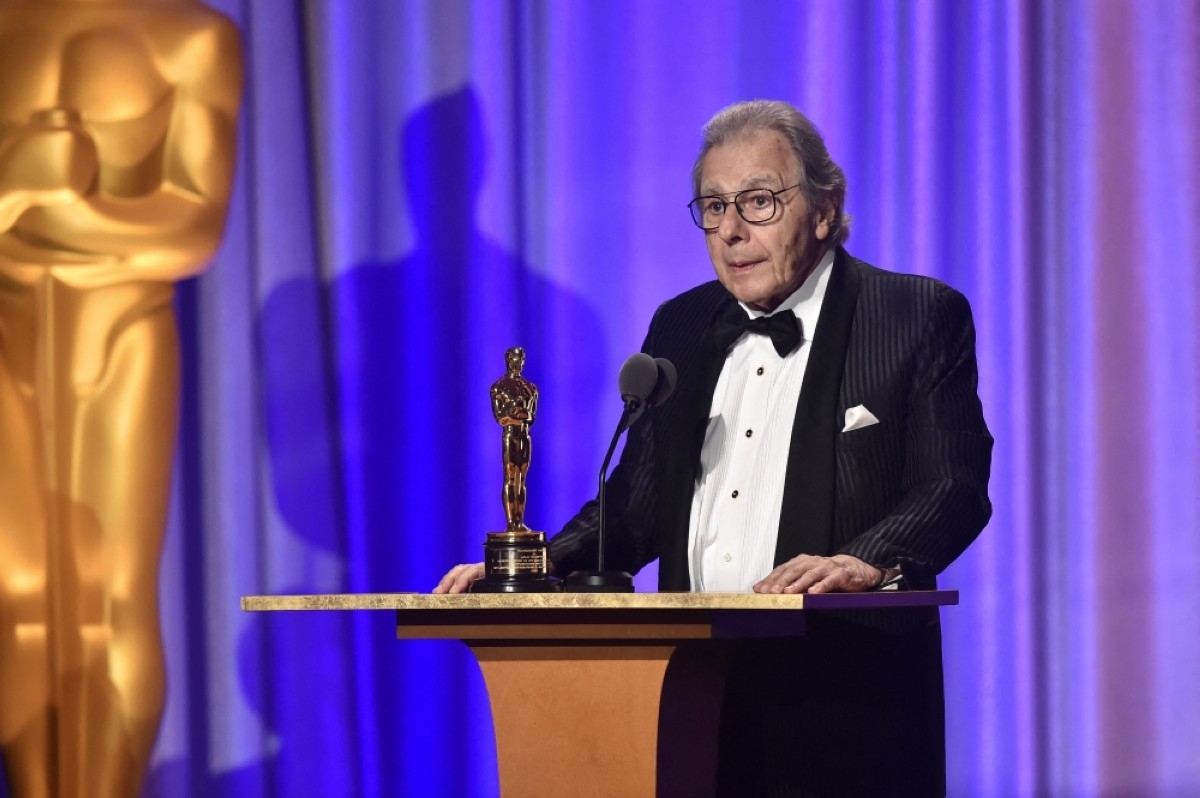
Famed composer Lalo Schifrin, who created themes for a host of hit Hollywood films and television shows -- including the instantly recognizable 'Mission: Impossible' score -- died Thursday aged 93, US media reported. Born in Argentina, Schifrin blended the influences of his classical and symphonic training with jazz and modern sounds in his diverse and vast oeuvre, which includes the scores for around 100 films, some of them the best-known of their generation. His death was confirmed by his son, Ryan Schifrin, to several entertainment trade publications. Schifrin's work for film includes 'The Cincinnati Kid (1965) and 'Bullitt' (1968), both with Steve McQueen, Paul Newman's 'Cool Hand Luke' (1968), and Clint Eastwood's 'Dirty Harry' (1971). He also created the score to the 1960s 'Mission: Impossible' television series, which inspired the theme of the massive film franchise starring Tom Cruise. A pipe-smoker in his younger years and bespectacled with a mane of silver hair later, he was also a highly respected international orchestra conductor and jazz pianist. Boris Claudio Schifrin was born in Buenos Aires on June 21, 1932 into a musical family, his father Luis Schifrin being the concert master of the city's Philharmonic Orchestra for 25 years. He learned piano at a young age, developing an extensive knowledge of classical music. His introduction in his teens to jazz and the American sound -- through its greats such as Charlie Parker, George Gershwin and Louis Armstrong -- was like a conversion, he would say later, and set his life on a new course. After training in Paris, Schifrin returned to Buenos Aires and set up his own big band, with a performance notably impressing jazz legend trumpeter Dizzy Gillespie. 'So after we finished, Dizzy came to me and said, did you write all these charts? And I said, yes. Would you like to come to United States? I thought he was joking. He wasn't,' Schifrin recounted to NPR in 2007. 'I wouldn't be here had it not been for that moment,' he told the US radio. Schifrin moved to the United States in 1958 and became a US citizen over a decade later. In Hollywood, television producer Bruce Geller asked him to create scores for his television series 'Mission: Impossible' (1966) and 'Mannix' (1969). Geller's brief was for 'a theme that's exciting, promising, but not too heavy' and anticipates the action to follow, Schifrin told NPR in 2015. Geller said that when 'people go to the kitchen and get a Coca-Cola, I want them to hear the theme and say, Oh, this is 'Mission: Impossible',' he recounted. The score he delivered earned Schifrin two Grammy music awards in 1967, adding to two for the albums 'The Cat' (1964) and 'Jazz Suite On The Mass Texts' (1965). Shifrin received several Academy Award nominations for his film work including for 'Cool Hand Luke.' In 2018, he received an honorary Oscar for lifetime achievement, presented by Eastwood.—AFP


New Straits Times
28-06-2025
- Entertainment
- New Straits Times
#SHOWBIZ : Mission: Impossible' composer Lalo Schifrin dies at 93
LOS ANGELES: Argentine musician Lalo Schifrin, composer of the memorable "Mission: Impossible" theme and the scores for dozens of Hollywood movies and TV shows, has died at age 93, media outlets reported on Thursday. Schifrin's son, William, confirmed his father's death, The Hollywood Reporter said. An agent for Schifrin did not immediately respond to an e-mail from Reuters. Born in Buenos Aires, Schifrin became a fan of American jazz in his teens. He was also a pianist and conductor. Schifrin received six Oscar nominations for movie scores that included the 1967 film "Cool Hand Luke" and "The Amityville Horror" in 1979. He won four Grammys, including one for the "Mission: Impossible" theme set to an unconventional 5/4 time signature. The song was written for the CBS television spy drama that debuted in 1966 and became a blockbuster film franchise still running today. Schifrin received an honorary Oscar for his lifetime of work in 2018. Clint Eastwood presented him with the award. - REUTERS

Express Tribune
27-06-2025
- Entertainment
- Express Tribune
Mission: Impossible' composer dies at 93
Famed composer Lalo Schifrin, who created themes for a host of hit Hollywood films and television shows – including the instantly recognisable Mission: Impossible score – died Thursday aged 93, US media reported. Born in Argentina, Schifrin blended the influences of his classical and symphonic training with jazz and modern sounds in his diverse and vast oeuvre, which includes the scores for around 100 films, some of them the best-known of their generation. His death was confirmed by his son, Ryan Schifrin, to several entertainment trade publications. Schifrin's work for film includes The Cincinnati Kid (1965) and Bullitt (1968), both with Steve McQueen, Paul Newman's Cool Hand Luke (1968), and Clint Eastwood's Dirty Harry (1971). He also created the score to the 1960s Mission: Impossible television series, which inspired the theme of the massive film franchise starring Tom Cruise. A pipe-smoker in his younger years and bespectacled with a mane of silver hair later, he was also a highly respected international orchestra conductor and jazz pianist. Boris Claudio Schifrin was born in Buenos Aires on June 21, 1932 into a musical family, his father Luis Schifrin being the concert master of the city's Philharmonic Orchestra for 25 years. He learned piano at a young age, developing an extensive knowledge of classical music. His introduction in his teens to jazz and the American sound – through its greats such as Charlie Parker, George Gershwin and Louis Armstrong – was like a conversion, he would say later, and set his life on a new course. Schifrin moved to the United States in 1958 and became a US citizen over a decade later. In Hollywood, television producer Bruce Geller asked him to create scores for his television series Mission: Impossible (1966) and Mannix (1969). Schifrin received several Academy Award nominations for his film work including for Cool Hand Luke. In 2018, he received an honorary Oscar for lifetime achievement, presented by Eastwood. afp
Yahoo
27-06-2025
- Entertainment
- Yahoo
Lalo Schifrin, Composer of ‘Mission: Impossible' Theme, Dead at 93
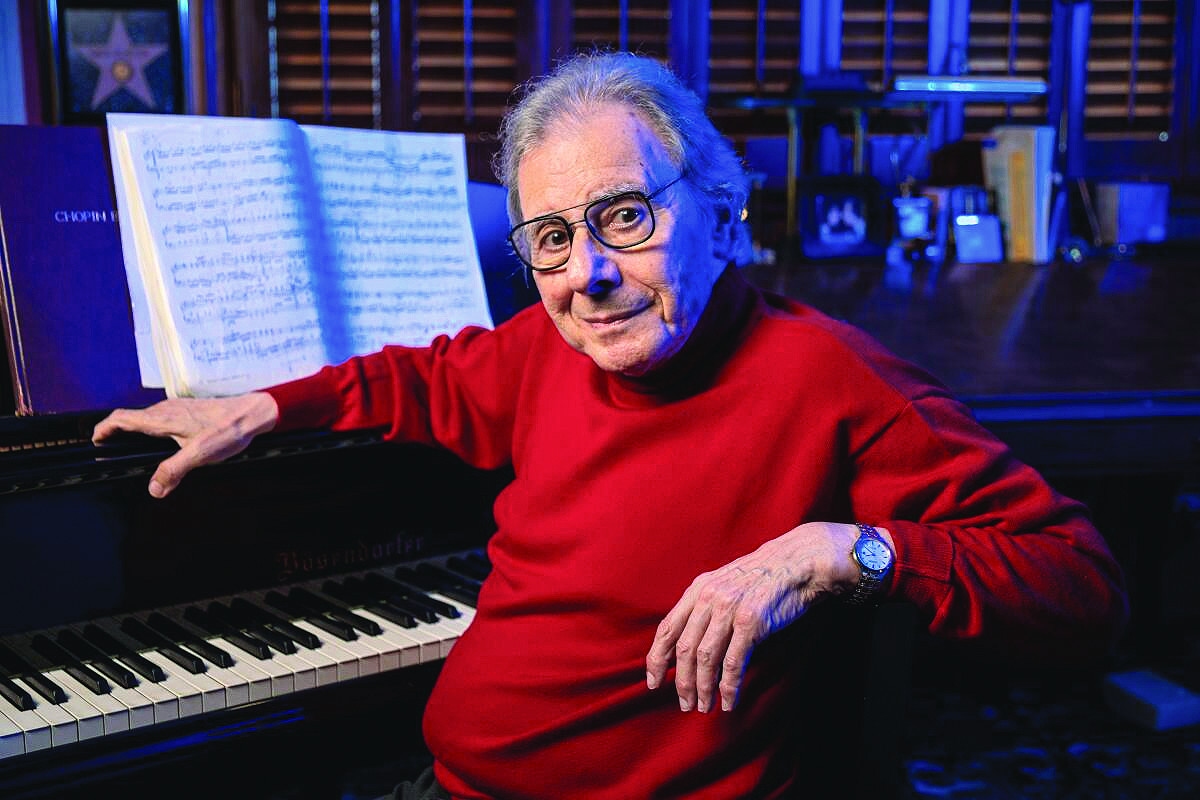
Lalo Schifrin, the Oscar-nominated and Grammy-winning composer behind the 'Theme From Mission: Impossible,' has died at the age of 93. The composer's son Ryan confirmed his father's death to the Associated Press, adding that Schifrin died Thursday due to complications from pneumonia at his home in Los Angeles. More from Rolling Stone Rebekah Del Rio, 'Mulholland Drive' Singer of 'Llorando,' Dead at 57 Bobby Sherman, Teen Music and Television Star, Dead at 81 Patrick Walden, Babyshambles Guitarist, Dead at 46 The Buenos Aires, Argentina-born Schifrin, the son of an orchestral violinist, had an early start in music, training on the piano at the age of six. However, upon entering college, Schifrin opted to study law, but his musical roots ultimately took hold. 'While advancing with my law studies, I was also studying music on the side, only as a hobby. And I had a very good teacher, who is probably the most important South American composer—Juan Carlos Paz. He's known among avant-garde circles all over the world, because he's the one who introduced twelve–tone music and the serial techniques in Argentina,' Schifrin told Jazz Professional in 1967. 'All of a sudden, the French Embassy in Buenos Aires offered a scholarship to the Conservatoire of Music. I went for the examination and won the scholarship. That meant that I abandoned my plans for a law career, and I decided to go to Europe.' In Paris, Schifrin became immersed in jazz music, as many of the greats of the time — Count Basie, Ella Fitzgerald, Oscar Peterson — would regularly perform during his time there. Upon returning to Argentina, Schifrin joined one of the country's first jazz orchestras, where he drew the attention of a visiting jazz legend, Dizzy Gillespie. Schifrin, who at that time was already scoring Argentinean films, eventually joined Gillespie's band. 'I stayed with Dizzy about three years,' he said. 'In addition to writing many things for the small group, I rearranged his band book for a type of orchestra with no saxophones in it—only brass,' compositions that formed Gillespie's 1960 LP Gillespian, and resulted in Schifrin's first Grammy nomination (for Best Original Jazz Composition). Schifrin moved to New York and worked alongside Gillespie from 1960 to 1963. (Schifrin and Gillespie would reunite for 1977's Free Ride.) However, dissatisfied with the traveling involved with being in a jazz group, Schifrin signed a contract with Metro-Goldwyn-Meyer, moved to Los Angeles, and scored his first American film, 1964's Rhino! Two years later, Schifrin created his most popular work, the theme from the American spy series Mission: Impossible,' which — the composer frequently admitted — he wrote in just three minutes, and without first seeing any footage from the series or even reading a script. All Schifrin had to go on was producers' idea for an opening credits' burning fuse, which gave the theme its original title, 'Burning Fuse.' (Morse Code of the series' initials, M:I, would also form the theme's 5/4 signature.) 'Television, in those days, people were in the kitchen having a soft drink, and all of the sudden in the living room, the TV set is playing the theme of a new show,' Schifrin said, adding that the 'inviting, exciting' theme was like a lure. Like the series itself, 'Theme From Mission: Impossible' was a hit, landing on the Billboard Hot 100 and earning Schifrin a Grammy Award for Best Instrumental Theme; the song would also be inducted into the Grammy Hall of Fame. (Decades later, the TV show would also eventually become a billion-dollar Tom Cruise film franchise, and though it updated Schifrin's theme, the composer did not contribute musically to any of the reboot's installments.) Over the course of his career, Schifrin would score over 200 films and television shows, and while some would lean on his jazz background — like his work on the 1968 Steve McQueen classic Bullitt and his Oscar-nominated score for Cool Hand Luke, notably its famed 'Tar Sequence' — Schifrin would adapt musically to fit the project, like his experimental work on George Lucas' sci-fi flick THX-1138 and his terrifying score for The Amityville Horror; the composer was infamously recruited to originally score The Exorcist, but upon delivering a portion of his music, the studio and director William Friedkin deemed the shrieking score too scary for even the film and rejected. 'I look for unusual sounds—but never as gimmicks. I like always to make them functional, organic parts of the music,' Schifrin told Jazz Professional. 'It can be percussion, it can be bizarre or exotic instruments, or it can be electronic instruments—but I look for that musical quality, that can be combined, and be organic to the film, to the orchestra and to the music.' Other notable Schifrin scores include Dirty Harry and its sequel Magnum Force, 1973's Charley Varrick, the Bruce Lee kung fu classic Enter the Dragon, Brubaker, the Rush Hour trilogy, Carlos Saura's Tango, the Ringo Starr-starring Caveman and more. 'I've used something in the periphery of jazz myself—not really jazz, but some jazz–orientated scores, like Bullitt, the picture with Steve McQueen. And a little bit of jazz in certain other movies,' Schifrin said. 'But jazz doesn't need anything to be seen, while film–making is made up of many components. There are the dramatic, the visual and the audio elements: they have to be all integrated, and be part of the one thing.' Despite winning a handful of Grammys, the Academy Award remained elusive: Schifrin was nominated for Best Original Score six times — for Cool Hand Luke, The Fox, Voyage of the Damned, The Amityville Horror, The Competition and The Sting II — but never won an Oscar. However, the Academy celebrated Schifrin's career with an honorary Oscar in 2019. 'I love music. To me there is no labels,' Schifrin said in 1969. 'I don't believe in rock n' roll or classical or jazz. I believe that there is good music and bad music.' Best of Rolling Stone Sly and the Family Stone: 20 Essential Songs The 50 Greatest Eminem Songs All 274 of Taylor Swift's Songs, Ranked
