


Latest news with #Sejil


Euronews
 20-06-2025
- Euronews
Over 600 migrants rescued from two fishing boats off southern Greece
More than 600 migrants were rescued overnight and into Friday morning from two overcrowded wooden fishing vessels found adrift off the southernmost part of Greece, the Greek coast guard has said. The first vessel, carrying 352 people, was located around 55 kilometres (35 miles) south of Gavdos, a small Greek island. The passengers were rescued by a vessel from the EU's border agency Frontex, supported by a coast guard patrol boat and four additional ships. A further 278 people were discovered on a second boat approximately 90 kilometres (60 miles) south of Crete. Those aboard were transferred onto a passing Portuguese-flagged cargo ship. In both instances, the migrants were taken to Crete for processing. The authorities have not yet disclosed the nationalities of the rescued individuals. Two additional migrant boats were located in the same parts of the Mediterranean on Thursday. One was discovered carrying 73 men south of Gavdos, while the other, found near Crete's southern coast, had 26 people on board, including a woman and three children. Passengers from the smaller of these two vessels said they had departed from Tobruk, Libya, the night before, each reportedly paying smugglers €4,000 for the perilous journey, according to the Greek coast guard. Two Sudanese teenagers, aged 16 and 19, were arrested on suspicion of migrant trafficking after passengers identified them as the boat's operators. Greece continues to be a key entry point to the EU for people escaping conflict and hardship in the Middle East, Africa and Asia. Arrivals surged last year, with over 60,000 migrants landing in Greece — the majority by sea — compared to around 48,000 in 2023, according to UN refugee agency data. By mid-June 2025, Greece had recorded 16,290 arrivals, over 14,600 of which were by sea. With Greek authorities stepping up patrols along the eastern maritime border with Turkey, traffickers appear to be increasingly choosing the longer and more dangerous route across the Mediterranean from North Africa, using larger boats capable of carrying more people. Iran's Islamic Revolutionary Guard Corps (IRGC) on Wednesday announced the use of a super-heavy Sejil missile as part of what it said was the 12th wave of strikes on Israel. Despite its frequent appearance in the Tehran regime's military parades since it was reportedly brought into service in 2012, the Sejil missile's launch against Israel marks the first time one of its prized assets was used in direct confrontation. Its real-world application also reveals a shift in gears in Tehran's deterrence calculations and response. The Sejil, or "Brimstone", is classified as a surface-to-surface ballistic missile and was developed entirely inside Iran by the Ministry of Defence-run Aerospace Industries Organisation. Although some reports claimed that Tehran used similar Chinese-made missiles as a technical basis for the Sejil, its size and other features suggest it is entirely designed and produced in Iran. The missile, developed to replace the Shabab class of rockets in service since the late 1980s, has a range of about 2,000 kilometres and uses solid fuel as propellant, making it quicker to launch compared to liquid-fueled equivalents. The Sejil is manoeuvrable in all stages of flight, making it difficult to intercept by conventional air defence systems. Although details on its speed are unclear, Tehran reportedly stated that it is capable of reaching Tel Aviv in approximately seven minutes if launched from central Iran. In terms of technical specifications, reports say it measures 25 metres in length, 1.25 metres in diameter, and weighs approximately 2.3 metric tonnes. It can carry warheads weighing up to 700 kilograms and is believed to be capable of carrying nuclear warheads. The Sejil first appeared in a field test in 2008, before its improved version, the Sejil-2, was developed in 2009. In this version, the warhead design was modified, and guidance wings were added to enhance accuracy. However, some reports claim that Sejil-2 might not be a separate model, but rather a test name for the same rocket. Yet footage from 2021 military exercises featuring the Sejil shows updates to earlier missiles of the same model have been made, notably to its jet vanes. Furthermore, rumours of another updated model, the Sejil-3, say that a more modern version was developed with a maximum range of 4,000 kilometres, meaning that in theory it could almost reach Brussels from Tehran. Israeli authorities said on Thursday that the Sejil was successfully intercepted, with debris causing damage to a vehicle.

Euronews
20-06-2025
- Politics
- Euronews
New missile in Israel-Iran conflict: What we know about Tehran's Sejil
Iran's Islamic Revolutionary Guard Corps (IRGC) on Wednesday announced the use of a super-heavy Sejil missile as part of what it said was the 12th wave of strikes on Israel. Despite its frequent appearance in the Tehran regime's military parades since it was reportedly brought into service in 2012, the Sejil missile's launch against Israel marks the first time one of its prized assets was used in direct confrontation. Its real-world application also reveals a shift in gears in Tehran's deterrence calculations and response. The Sejil, or "Brimstone", is classified as a surface-to-surface ballistic missile and was developed entirely inside Iran by the Ministry of Defence-run Aerospace Industries Organisation. Although some reports claimed that Tehran used similar Chinese-made missiles as a technical basis for the Sejil, its size and other features suggest it is entirely designed and produced in Iran. The missile, developed to replace the Shabab class of rockets in service since the late 1980s, has a range of about 2,000 kilometres and uses solid fuel as propellant, making it quicker to launch compared to liquid-fueled equivalents. The Sejil is manoeuvrable in all stages of flight, making it difficult to intercept by conventional air defence systems. Although details on its speed are unclear, Tehran reportedly stated that it is capable of reaching Tel Aviv in approximately seven minutes if launched from central Iran. In terms of technical specifications, reports say it measures 25 metres in length, 1.25 metres in diameter, and weighs approximately 2.3 metric tonnes. It can carry warheads weighing up to 700 kilograms and is believed to be capable of carrying nuclear warheads. The Sejil first appeared in a field test in 2008, before its improved version, the Sejil-2, was developed in 2009. In this version, the warhead design was modified, and guidance wings were added to enhance accuracy. However, some reports claim that Sejil-2 might not be a separate model, but rather a test name for the same rocket. Yet footage from 2021 military exercises featuring the Sejil shows updates to earlier missiles of the same model have been made, notably to its jet vanes. Furthermore, rumours of another updated model, the Sejil-3, say that a more modern version was developed with a maximum range of 4,000 kilometres, meaning that in theory it could almost reach Brussels from Tehran. Israeli authorities said on Thursday that the Sejil was successfully intercepted, with debris causing damage to a vehicle. China dispatched 74 military aircraft towards the Taiwan Strait between late Thursday and early Friday, with 61 of them crossing its median line, the Taiwanese defence ministry has said. The incursion, which represents one of the largest in recent months, began a day after the UK sailed a navy ship across the strait, in a move welcomed by Taipei but condemned by Beijing. The Chinese planes were sent in two separate waves, with six naval vessels also accompanying the manoeuvres, according to Taiwan. Beijing regards the democratically governed island as part of its own territory and has stepped up such deployments to demonstrate its readiness to encircle and potentially invade Taiwan. Analysts say the moves are also aimed at intimidating Taiwan's population and exhausting its military resources and morale. Taiwan responded by scrambling its own fighter jets, deploying naval ships and activating land-based missile systems to monitor the incursion. The incident came after the British patrol vessel HMS Spey passed through the Taiwan Strait on Wednesday. Taiwan's Ministry of Foreign Affairs welcome the patrol, saying it 'once again (reaffirmed the Strait's) status as international waters". 'Such transits by the UK and other like-minded countries are encouraged to safeguard peace and stability in the Taiwan Strait, and to promote a free and open Indo-Pacific,' it added. Britain's de facto embassy in Taipei said the HMS Spey was legally within its rights to sail through the strait. 'Wherever the Royal Navy operates, it does so in full compliance with international law and exercises its right to Freedom of Navigation and overflight,' it stated. However, Beijing condemned the Royal Navy's actions, with the Chinese army saying the British vessel had 'deliberately disturbed the situation and undermined the peace and stability of the Taiwan Strait". While the timing raised speculation, it remains unclear whether China's large-scale aerial deployment was a direct response to the British naval transit. The Taiwan Strait is an important international waterway, but Beijing routinely objects to the presence of foreign military vessels in the area.


Saba Yemen
10-06-2025
- Saba Yemen
Saraya al-Quds in Jenin detonates explosive device in Zionist personnel carrier
Ramallah – Saba: Saraya al-Quds – Jenin Battalion - confirmed on Tuesday that it detonated a guided explosive device in a Zionist enemy military personnel carrier in Jenin. Saraya said in a brief statement 'After contacting one of our combat formations was restored, they confirmed to us that at exactly 10:35 p.m. Monday, they were able to detonate a guided explosive device, a Sejil, in a Nimr military personnel carrier in al-Hamama axis. Whatsapp Telegram Email Print

Shafaq News
25-03-2025
- Politics
- Shafaq News
Missile buildup: Iran flexes military muscle amid regional tensions
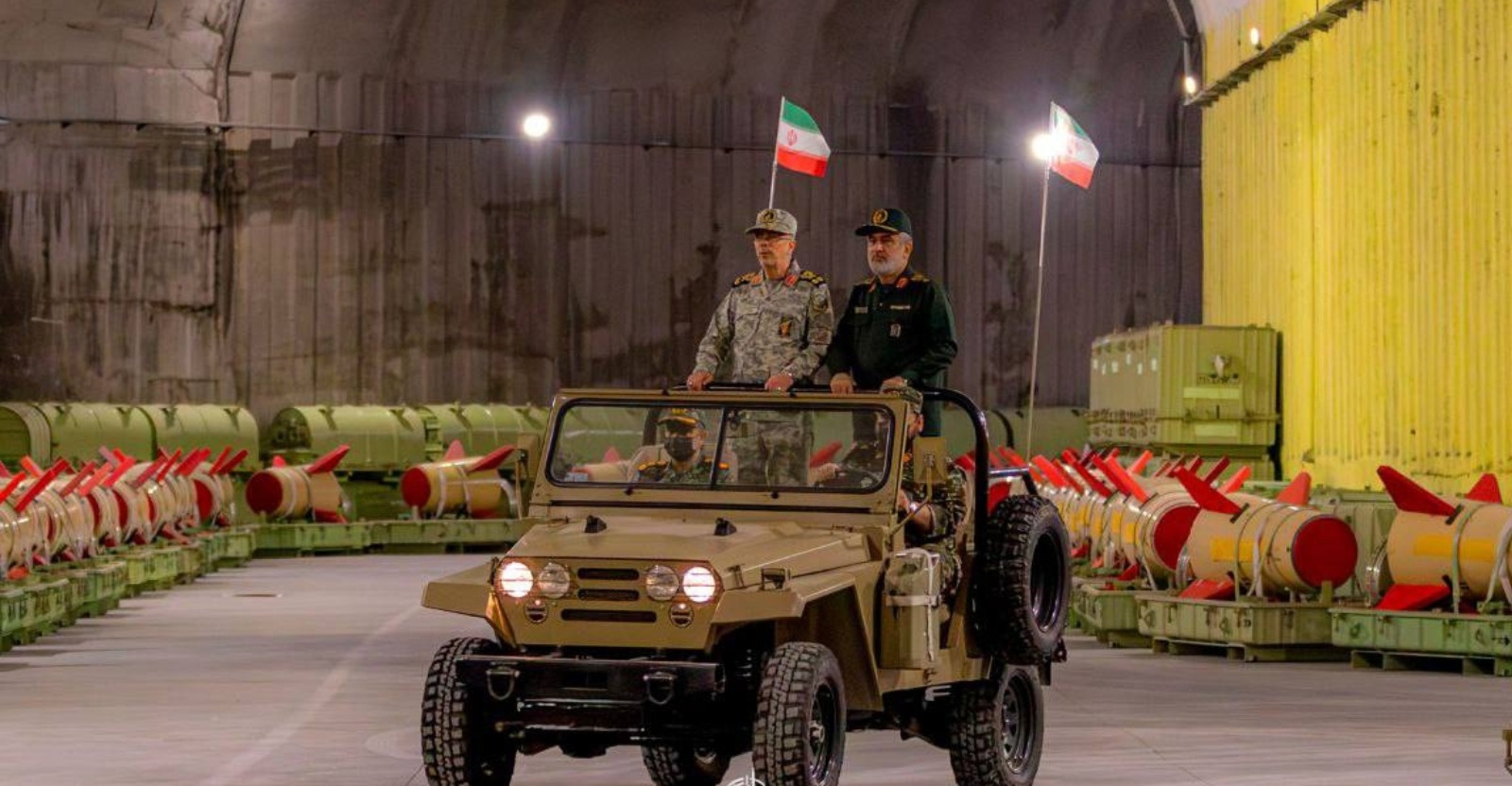
Shafaq News/ On Tuesday, Iran's Islamic Revolutionary Guard Corps (IRGC) unveiled a vast underground missile facility, showcasing its advanced arsenal in what it described as a key step in bolstering the country's military capabilities. The facility, located deep within mountainous terrain, houses thousands of ballistic missiles, including the Kheibar Shekan, Sejil, Emad, Qadr, and Haj Qassem models, according to Iranian state media. Footage broadcast on Iranian television displayed missiles fueled by both liquid and solid propellants, underscoring Tehran's expanding offensive and defensive capabilities amid heightened regional tensions. #BREAKING Iran has unveiled its most strategically significant missile facility, concealed deep within mountainous terrain. The base houses thousands of advanced missiles, including the Kheibar Shekan, Sejil, Emad, and Qadr. 🇮🇷 — The World Truth Eyes (@theworldtruthe) March 25, 2025 Iran's Chief of Staff declared that the country's military strength now surpasses 'dozens of times' the scale of its 'True Promise 2' operation. He asserted that Iran's defense expansion is 'outpacing its adversaries' ability to address their vulnerabilities, leaving them at a strategic disadvantage.' "The enemy will remain behind in the balance of power," he said, emphasizing Iran's commitment to advancing its missile program despite international scrutiny. Iran's military buildup is driven by longstanding geopolitical rivalries, particularly with Israel, as well as economic and strategic pressures exacerbated by international sanctions. These constraints have pushed Tehran to develop defense technologies, with its missile program serving as a cornerstone of its deterrence strategy. The country's support for proxy groups—including Hezbollah and the Houthis—further shapes its military posture, frequently bringing it into indirect conflict with regional adversaries. According to the Global Firepower Index, Iran ranks 14th in global military strength among 145 countries, boasting approximately 610,000 active personnel. Its air force operates 551 aircraft, while its ground forces include 1,996 tanks and over 65,000 armored vehicles. Iran's navy fields 37 ships, including seven submarines.
