


Latest news with #SheikhaHind

Emirates 24/7
 05-08-2025
- Business
- Emirates 24/7
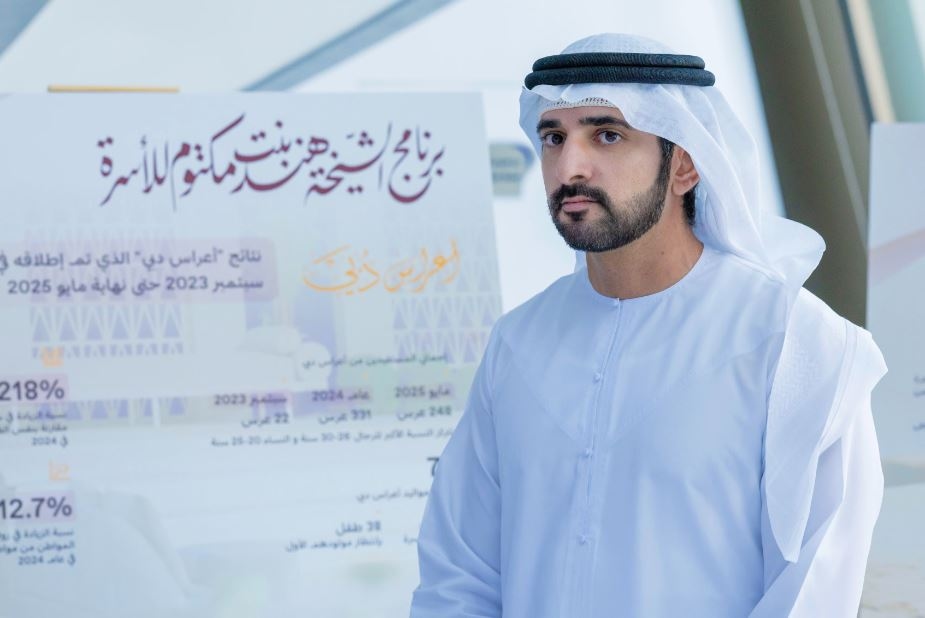
Hamdan bin Mohammed reviews program to strengthen family ties and community values in Dubai
His Highness Sheikh Hamdan bin Mohammed bin Rashid Al Maktoum, Crown Prince of Dubai, Deputy Prime Minister, Minister of Defence, and Chairman of The Executive Council of Dubai, affirmed that the leadership places the highest priority on strengthening family values and fostering social cohesion, while ensuring that all necessary resources and support are made available to build a thriving and prosperous Emirati society. Reviewing the outcomes of the Sheikha Hind Bint Maktoum Family Program, His Highness Sheikh Hamdan bin Mohammed emphasised that Dubai's development vision has always placed people at its very heart. Launched in September 2023 by the Community Development Authority (CDA) in Dubai to empower Emirati families and reinforce social stability through a comprehensive set of initiatives, the programme facilitates a host of benefits including avenues for psychological and social support, financial literacy, and direct assistance in meeting housing and other expenses incurred by new couples. His Highness applauded the success of the Sheikha Hind Bint Maktoum Family Program in reinforcing the foundations of social stability by supporting and empowering Emirati families through a series of integrated and high-impact initiatives. The programme aligns with the expansive vision outlined for various social empowerment programmes and their role in creating a lasting positive impact that supports the goals of the Dubai Social Agenda 33. The review of the programme is part of ongoing efforts to monitor the social empowerment agenda and ensure that various initiatives aimed at advancing those goals achieve sustainable impact in line with Dubai's strategic vision. His Highness Sheikh Hamdan said: 'The programme reflects our deep commitment to empowering our youth and supporting them in building a future that matches their aspirations. A stable family denotes a fundamental pillar in the development and progress of societies. We are committed to providing every prerequisite for young people looking to start a dignified family life – including suitable housing, financial support, enhanced employment opportunities, and expanded social care initiatives. We believe that investing in families is an investment in the nation's future, and we will continue working to provide a wholesome environment that ensures well-being and stability for all.' Praising participants in the programme, His Highness said: 'We commend the determination of the youth who have chosen to begin their family lives based on a clear foundation of awareness and responsibility – setting a proud example for a generation that knows how to shape its future through willpower, hard work, and initiative.' Remarkable impact The Sheikha Hind Bint Maktoum Family Program has contributed to a significant increase in marriage rates among Emiratis. The Dubai Weddings initiative recorded a 218% increase in participation during 2025 compared to 2024, with the number of weddings held to date exceeding 700. Marriages facilitated through the Dubai Weddings initiative accounted for 27.7% of all marriages registered in the emirate. The results also indicated that the largest demographic of beneficiaries consisted of men aged between 26–30 and women aged between 20–25. The programme also recorded an impressive 95% beneficiary satisfaction rate. The programme offers extensive education and training sessions for couples as part of efforts to ensure the long-term success of marital relationships. Among notable highlights are Start it Right, a course promoting awareness of marital rights and effective approaches to foster mutual understanding; Family Financial Culture – Dubai, which focuses on sound financial planning; and How to Build Your Home, which offers guidance on smart and viable housing decisions. Tangible solutions The programme's benefits extend beyond education, offering tangible solutions that meet real-life needs. It offers full coverage of wedding costs for both men and women when the ceremony is hosted in CDA-approved venues. It also facilitates priority access to ready-to-move-in housing through easy instalment payment schemes. Among other benefits are exclusive discounts on medical services, wedding essentials, jewellery, magazines, and travel. Another advantage comes in the form of a loyalty card under the Esaad programme that offers various community perks. There is also a remote work provision for newlywed female employees following maternity leave. Leadership's vision Her Excellency Hessa bint Essa Buhumaid, Director General of the Community Development Authority in Dubai, emphasised that the Sheikha Hind Bint Maktoum Family Program reflects the vision of the leadership in placing family at the core of sustainable development. She noted that strengthening Emirati families is fundamental to building a cohesive and happy society. She stated: 'The programme's achievements are a source of pride. True investment starts within the Emirati household. Seeing young families embark on a key phase of life and welcoming new members into their families under the umbrella of this initiative proves that we are creating not just statistics, but real stories of secure and thriving beginnings. 'From awareness to empowerment, and from financial to housing support, we are offering a complete ecosystem that supports families at every stage of their journey. This aligns with the goals of the Dubai Social Agenda 33 and reinforces the city's role as an ideal environment for starting a family and building a future.' Thanking Her Highness Sheikha Hind bint Maktoum bin Juma Al Maktoum, wife of His Highness Sheikh Mohammed bin Rashid Al Maktoum, Vice President and Prime Minister of the UAE and Ruler of Dubai, for her generous patronage of the initiative, Her Excellency Buhumaid said: 'Dubai Weddings is more than just a scheme providing assistance – it is a gesture rooted in compassion and community spirit. 'Through this initiative, Her Highness has touched the lives of countless youths, helping them start on the path of family with confidence and clarity. This initiative brought the true essence of social responsibility to life,' she said, reaffirming the Authority's commitment to continuously enhancing the programme through strategic partnerships, positioning it as a leading model for family empowerment and sustainable social development.


Zawya
17-06-2025
- Business
- Zawya
Family businesses in GCC driving economic growth, diversification
An interview with Sheikha Hind Suhail Bahwan, Chairperson Of The Family Business Council Gulf Muscat – The Family Business Council Gulf (FBCG) is a not-for-profit organisation aiming to strengthen family business governance and ensure their continuity over generations. The Council seeks to identify and address issues unique to the GCC region through research, education, capacity development and networking among peers. In an exclusive interview with Muscat Daily, Sheikha Hind Suhail Bahwan, Chairperson of the Family Business Council Gulf, discusses the critical role family businesses play in the economic landscape of the GCC countries. She offers insights into the Council's efforts to strengthen governance, support generational transitions, and foster sustainability in family enterprises. Sheikha Hind also outlines the key challenges and priorities shaping the future of family businesses across the region. What are the main focus areas and top priorities of the Family Business Council Gulf (FBCG)? The Family Business Council Gulf was established in 2013 with a mission to promote the sustainability and success of family enterprises across generations. Our focus is on enhancing the contribution of family businesses to the economic and social development of the region, while also reinforcing their significance as essential pillars of economic resilience, innovation, and regional identity. How do you assess the FBCG's impact since its formation? What initiatives are currently underway to support family enterprises across the GCC? The Family Business Council Gulf has made a significant impact across various areas. Firstly, we have successfully created a strong identity and community for GCC families, fostering meaningful friendships and, in many cases, productive business partnerships. We prioritise next-generation training, having trained over 300 future leaders who are poised to inherit or take ownership of family businesses. Additionally, FBCG has made considerable progress in raising awareness about the importance of good governance and succession planning within the family business ecosystem. In the UAE, we played a pivotal role in collaborating with authorities to develop a comprehensive legal framework that regulates the ownership and governance of family businesses in the country. FBCG hopes to be able to play a role in replicating this framework in other jurisdictions across the region. What are the most common issues that member families bring to the Council for support? Each family business is unique. In the absence of regulatory frameworks, FBCG would typically be approached for guidance during situations where there are: challenging family business leadership successions, the unexpected passing of a founder or major shareholder, financial disputes amongst family members, disputes over fair allocation of inheritance, agreeing fair allocation of dividends, divestment or liquidation of assets, agreement on how business decisions are to be taken, who has the casting vote, disagreements over the strategic direction of the family business and tension between a professional management board and the family members. As you can see the issues are wide and can be complex and these issues are further amplified during periods of economic downturn. In your view, how do family enterprises in the GCC contribute to national visions such as Saudi Arabia's Vision 2030 or Oman Vision 2040? Family businesses have been instrumental in the development of the GCC region, with estimates suggesting that their contribution to private sector GDP ranges from 60% to 80%, depending on the specific country. These enterprises are also key employers within the private sector and are major contributors and investors in private capital for strategic initiatives that promote economic diversification, particularly in sectors such as real estate, retail, hospitality, manufacturing, mobility, technology, fintech, and energy. What are the main challenges facing family businesses in the GCC today? And what are the biggest gaps you have identified in current practices that the FBCG is working to address? The challenges faced by family businesses are diverse, but from the perspective of the Family Business Council Gulf, we can categorise them into three main areas. Firstly, the professionalisation of family businesses is crucial. This includes separating ownership from management, establishing a professional board of directors, creating a clear business strategy, implementing disciplined business planning, and developing robust governance structures, with a strong emphasis on detailed succession planning. Secondly, a common challenge is the ability of the second or third generation to take on leadership roles. This may stem from a gap in business knowledge or a desire to pursue different career paths. Lastly, a third challenge – one that is not unique to family businesses – is the lack of constructive dialogue and communication. This can create unnecessary tensions that negatively impact relationship dynamics and adversely affect the effectiveness of the business. According to the Council's research, only 33% of Gulf family businesses have a documented succession plan. Why are this figure so low, and what initiatives is the FBCG undertaking to encourage and improve succession planning in the region? There are multiple reasons most of which I have mentioned previously. Whilst we have made good progress, there is still a long way to go and that is why the FBCG places a tremendous emphasis on training the family business 'next gens' through structured programmes and peer exposure. Additionally, we need to build on the work undertaken in the UAE and work with relevant GCC authorities to implement regulatory frameworks to address the governance, ownership and inheritance of family business. In your view, how can next-generation leaders be better prepared to take over? What advice would you offer to families struggling with leadership transitions? Leadership transitions in family businesses are critical moments – and preparation is everything. It starts with open communication: within the family, with trusted advisors, and with others who've navigated similar paths. Expose the next generation early. Even if they don't join management, they should understand the business, embrace family values, and grow into responsible owners who can carry the founder's vision forward. Building a talent pipeline is just as important. At FBCG, we offer programmes like Pathfinder and Launch360 to help young family members discover their strengths and prepare for future roles from an early age. To families facing transition: start early, invest in development, and keep the conversation going. The future depends on it. How do you view the role of women in family businesses? Are women sufficiently represented in leadership roles within family enterprises across the GCC? When we launched the Family Business Council Gulf, female representation in our membership was below 5%. Today, that number has risen to over 25%, and we are proud to have two female board members. Here in GCC, we are fortunate to have established and successful female role models, such as Muna Almoayyed from Bahrain, Lubna Al Olayan from Saudi Arabia, H E Raja Al Gurg from UAE, and many more. How does the FBCG support families during major transitions such as IPOs, mergers, or divestments? FBCG can facilitate knowledge sharing and connect family businesses with others, both regionally and globally, that have experienced similar journeys. We can also introduce family businesses to a trusted network of advisors who can assist with transactions. Furthermore, if needed, we can provide customised support and expertise tailored to the specific nature of each family need and aspiration. © Apex Press and Publishing Provided by SyndiGate Media Inc. (

Qatar Tribune
07-06-2025
- Sport
- Qatar Tribune
Everything we do at QF is for the country, the region, and to create potential global impact: Sheikha Hind
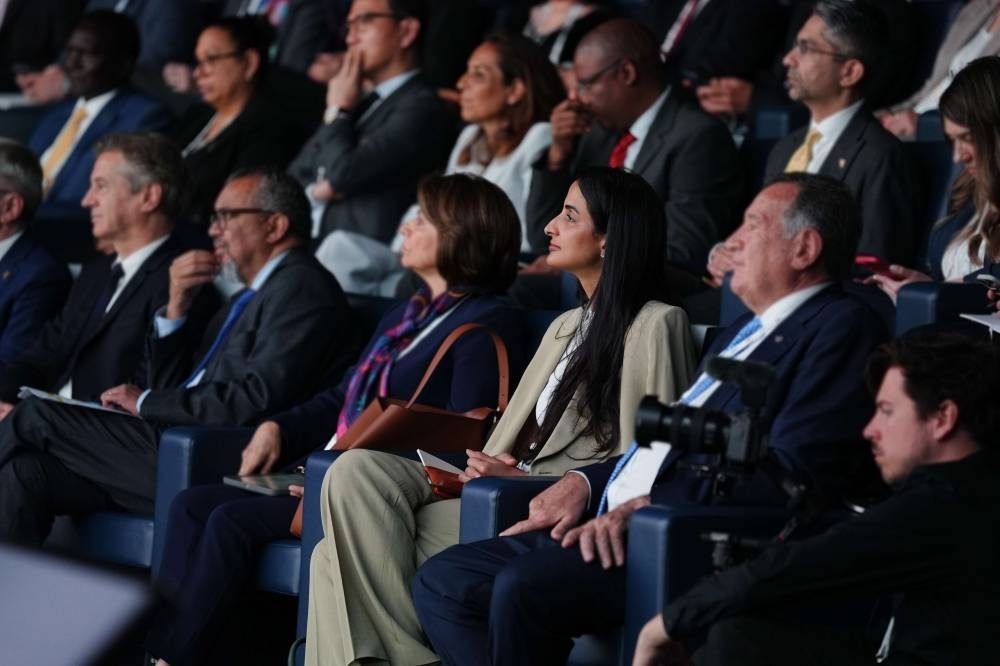
The session was moderated by Benny Bonsu, Director of Daily Content at the Olympic Channel. 'It's not only about creating a legacy for Qatar. Everything we do at Qatar Foundation is for the country, the region, and to create a potential global impact. When you think about our region and its two billion people, there is a real opportunity to view socioeconomic potential through the lens of sport, and to ensure sport is seen in a more sustainable and comprehensive way,' said HE Sheikha Hind. Circle In—a name inspired by the image of sports teams huddling together to symbolise unity and shared purpose—aims to deliver accessible, safe, gender-inclusive, and sustainable community sports programmes and capacity-building pathways in the countries where it initially operates. The initiative's first goal is to benefit up to 50,000 children and youth, and to train up to 5,000 coaches, teachers, and instructors to promote equality, inclusion, and education through sport. In a subsequent phase, Circle In will provide additional countries in the region with digital resources to help them develop localised, sport-based solutions to the challenges they face. 'I'm very proud of this partnership, because we're taking our expertise and learning in socioeconomic development through sports to different countries and finding local partners who can support our endeavours there,' Sheikha Hind told the summit. 'Even the name 'Circle In' reflects that this is a community project. It's not simply extracting something and placing it in a country. It's about co-creating something together.' Sheikha Hind also explained how Qatar's sporting ethos, from the world-class events it hosts to the programmes and pathways it provides for everyone to embrace, enjoy, and excel in sports, is built on gaining knowledge and ideas from an international outlook, and adapting this to fit the culture and values of the nation and region. She went on saying: 'When my country hosted the FIFA World Cup in 2022, the safest, most family-friendly, and most inclusive World Cup in history, I was very proud that we stuck to our values. This is important for any citizen when a sporting tournament comes to their country, that it is reflective of the values of that country. 'It's incredible to see the empowerment sports can bring. When I look at students from our school for children with autism participating in horse-riding classes, that is inclusive sports, and we do this across the board at Qatar Foundation. We ensure everyone has a space. 'Sports is part of the Qatari DNA, and so is social development. When we look at what Qatar has done, not just across the region but globally, it only made sense to naturally evolve and transition these two elements together, and so we have an opportunity to create even wider impact through sports in the context of socioeconomic development.' For his part, Acting CEO of Education Above All Foundation, Mohamed Al Kubaisi said: 'Circle In is more than a sport-for-good initiative, it is a powerful extension of Education Above All Foundation's mission to ensure that every young person, especially those from marginalised backgrounds, has access to inclusive education and opportunities for personal growth. 'Through our collaboration with Qatar Foundation and the IOC, we are integrating sports with education to build resilient, empowered communities where youth can learn, thrive, and lead change, both inside the classroom and on the playing field.' Through the Circle In collaboration, EAA Foundation is bringing its global expertise in education access, inclusion, and youth empowerment to ensure that the initiative not only promotes sport for development, but also drives learning outcomes and social inclusion for vulnerable groups. EAA's Foundation role includes integrating education and life skills into the design of sport-for-development programs, leveraging its partnerships in more than 60 countries to identify communities where Circle In can have maximum impact. With a focus on girls, children with disabilities, and marginalized youth, EAA Foundation will ensure that the initiative delivers holistic, sustainable, and measurable outcomes.
Qatar Tribune
07-06-2025
- Sport
- Qatar Tribune
A Qatar Olympics would be legacy gamechanger: Sheikha Hind
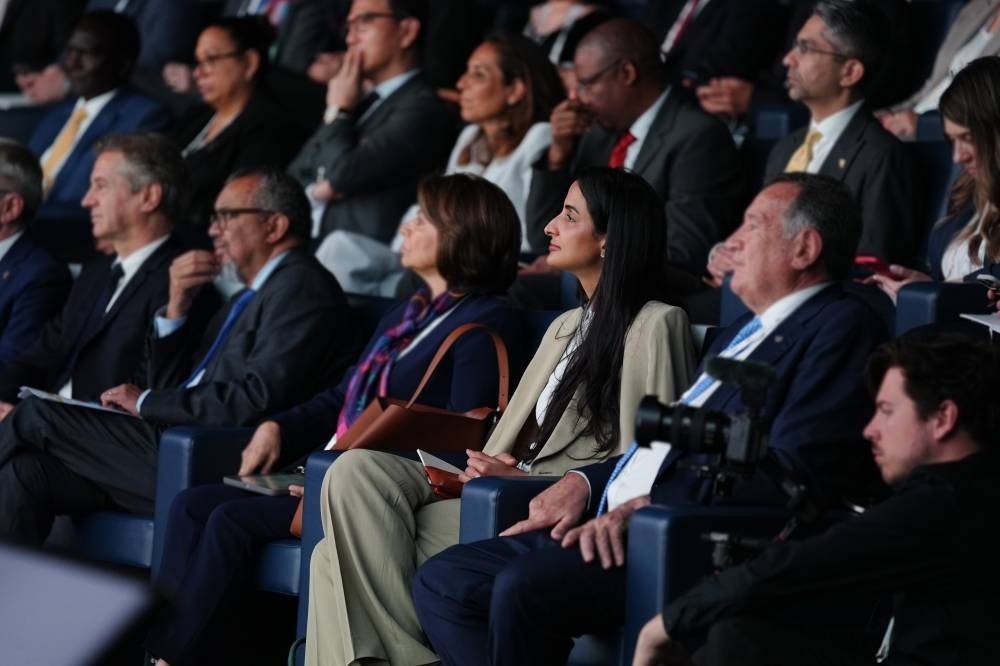
QNA Lausanne-Switzerland Hosting an Olympic Games in Qatar, and bringing the global sporting showcase to the Middle East for the first time, would create a social legacy that extends beyond Qatar and across the region and the world, said Vice Chairperson of Qatar Foundation (QF) HE Sheikha Hind bint Hamad Al Thani. Speaking at the Olympism365 Summit: Sport for a Better World, Sheikha Hind, who is also a member of the International Olympic Committee's Olympic Education Commission, outlined how Qatar is strengthening its position as a global hub of sports following its staging of the FIFA World Cup in 2022, while cultivating an inclusive, accessible sporting culture across the nation, the region, and beyond. In a high-level session exploring the role of sports as an enabler of sustainable development, Sheikha Hind spotlighted the Circle In project, launched by Qatar Foundation, Education Above All (EAA) Foundation, and the International Olympic Committee (IOC) to nurture more equitable, inclusive and educated communities across Asia and the Middle East and North Africa region, through sport. Part of the IOC's Olympism365 strategy to strengthen the role of sports and Olympism in achieving the United Nations Sustainable Development Goals, in its initial phase Circle In will support sport-for-good projects in seven countries, with a focus on women and girls, people with disabilities, and people from marginalised backgrounds. Sheikha Hind told an audience including members of the Olympic movement and representatives of UN agencies and development organisations that, just as Circle In is harnessing the power of sports to unify, connect, and create opportunities, so Qatar wants to do the same as an Olympic host. 'It's no secret that Qatar is going for the 2036 Olympic and Paralympic Games, and for me, as a person who is leading a foundation focused on education, and who has seen the legacy we were able to create in one sport through hosting the FIFA World Cup, it gives me chills to think about what can be created through all the different Olympic sports,' she said during the panel session, on which she was joined by Dr Najat Maalla, United Nations. Special Representative on Ending Violence Against Children, with the session being moderated by Benny Bonsu, Director of Daily Content at the Olympic Channel. 'It's not only about creating a legacy for Qatar. Everything we do at Qatar Foundation is for the country, the region, and for a potential global effect. When you think about our region, and its two billion people, there is a real opportunity to think about the socioeconomic possibility through the lens of sports, and to ensure sports is seen in a different way, a more sustainable and comprehensive way.' Circle In, the name of which stems from sports teams coming together a huddle to symbolize unity and purpose, will provide accessible, safe, gender-inclusive, and sustainable community sports programs, and capacity-building pathways, in the countries where it initially operates. Its initial goal is to benefit up to 50,000 children and youth in these countries, and train up to 5,000 coaches, teachers, and instructors to promote equality, inclusion, and education through sports. In a subsequent phase, Circle In will provide more countries in the region with digital resources that support them in developing localized, sports-based solutions to challenges they face. 'I'm very proud of this partnership, because we're taking our expertise and learning in socioeconomic development through sports to different countries and finding local partners who can support our endeavors there,' Her Excellency told the summit. 'Even the name 'Circle In' reflects that this is a community project. It's not simply extracting something and placing it in a country. It's about co-creating something together.' Sheikha Hind also explained how Qatar's sporting ethos, from the world-class events it hosts to the programs and pathways it provides for everyone to embrace, enjoy, and excel in sports, is built on gaining knowledge and ideas from an international outlook, and adapting this to fit the culture and values of the nation and region. She went on saying: 'When my country hosted the FIFA World Cup in 2022, the safest, most family-friendly, and most inclusive World Cup in history, I was very proud that we stuck to our values. This is important for any citizen when a sporting tournament comes to their country, that it is reflective of the values of that country. 'It's incredible to see the empowerment sports can bring. When I look at students from our school for children with autism participating in horse-riding classes, that is inclusive sports, and we do this across the board at Qatar Foundation. We ensure everyone has a space. 'Sports is part of the Qatari DNA, and so is social development. When we look at what Qatar has done, not just across the region but globally, it only made sense to naturally evolve and transition these two elements together, and so we have an opportunity to create even wider impact through sports in the context of socioeconomic development.' For his part, Acting CEO of Education Above All Foundation, Mohamed Al Kubaisi said: 'Circle In is more than a sport-for-good initiative, it is a powerful extension of Education Above All Foundation's mission to ensure that every young person, especially those from marginalized backgrounds, has access to inclusive education and opportunities for personal growth. 'Through our collaboration with Qatar Foundation and the IOC, we are integrating sports with education to build resilient, empowered communities where youth can learn, thrive, and lead change, both inside the classroom and on the playing field.' Through the Circle In collaboration, EAA Foundation is bringing its global expertise in education access, inclusion, and youth empowerment to ensure that the initiative not only promotes sport for development, but also drives learning outcomes and social inclusion for vulnerable groups. EAA's Foundation role includes integrating education and life skills into the design of sport-for-development programs, leveraging its partnerships in more than 60 countries to identify communities where Circle In can have maximum impact. With a focus on girls, children with disabilities, and marginalized youth, EAA Foundation will ensure that the initiative delivers holistic, sustainable, and measurable outcomes.


ILoveQatar.net
07-06-2025
- Sport
- ILoveQatar.net
Qatar Olympics would be a legacy Gamechanger, H.E. Sheikha Hind tells Olympism365 Summit
Hosting an Olympic Games in Qatar – and bringing the global sporting showcase to the Middle East for the first time – would create a social legacy that extends beyond Qatar and across the region and the world, Her Excellency Sheikha Hind bint Hamad Al Thani, Vice Chairperson of Qatar Foundation, has told a top international sporting summit. Speaking at the Olympism365 Summit: Sport for a Better World, Her Excellency Sheikha Hind – who is a member of the International Olympic Committee's Olympic Education Commission – outlined how Qatar is strengthening its position as a global hub of sports following its staging of the FIFA World Cup™ in 2022, while cultivating an inclusive, accessible sporting culture across the nation, the region, and beyond. In a high-level session exploring the role of sports as an enabler of sustainable development, she spotlighted the Circle In project, launched by Qatar Foundation, Education Above All (EAA) Foundation, and the International Olympic Committee (IOC) to nurture more equitable, inclusive and educated communities across Asia and the Middle East and North Africa region, through sport. Part of the IOC's Olympism365 strategy to strengthen the role of sports and Olympism in achieving the United Nations Sustainable Development Goals, in its initial phase Circle In will support sport-for-good projects in seven countries, with a focus on women and girls, people with disabilities, and people from marginalized backgrounds. And Her Excellency Sheikha Hind told an audience including members of the Olympic movement and representatives of UN agencies and development organizations that, just as Circle In is harnessing the power of sports to unify, connect, and create opportunities, so Qatar wants to do the same as an Olympic host. 'It's no secret that Qatar is going for the 2036 Olympic and Paralympic Games, and for me, as a person who is leading a foundation focused on education, and who has seen the legacy we were able to create in one sport through hosting the FIFA World Cup, it gives me chills to think about what can be created through all the different Olympic sports,' Her Excellency said during the panel session, on which she was joined by Dr. Najat Maalla, United Nations Special Representative on Ending Violence Against Children, with the session being moderated by Benny Bonsu, Director of Daily Content at the Olympic Channel. 'It's not only about creating a legacy for Qatar. Everything we do at Qatar Foundation is for the country, the region, and for a potential global effect. When you think about our region, and its two billion people, there is a real opportunity to think about the socioeconomic possibility through the lens of sports, and to ensure sports is seen in a different way – a more sustainable and comprehensive way.' Circle In – the name of which stems from sports teams coming together a huddle to symbolize unity and purpose – will provide accessible, safe, gender-inclusive, and sustainable community sports programs, and capacity-building pathways, in the countries where it initially operates. Its initial goal is to benefit up to 50,000 children and youth in these countries, and train up to 5,000 coaches, teachers, and instructors to promote equality, inclusion, and education through sports. In a subsequent phase, Circle In will provide more countries in the region with digital resources that support them in developing localized, sports-based solutions to challenges they face. 'I'm very proud of this partnership, because we're taking our expertise and learning in socioeconomic development through sports to different countries and finding local partners who can support our endeavors there,' Her Excellency Sheikha Hind told the summit." 'Even the name – Circle In – reflects that this is a community project. It's not simply extracting something and placing it in a country. It's about co-creating something together.' Her Excellency Sheikha Hind also explained how Qatar's sporting ethos – from the world-class events it hosts to the programs and pathways it provides for everyone to embrace, enjoy, and excel in sports – is built on gaining knowledge and ideas from an international outlook, and adapting this to fit the culture and values of the nation and region. 'When my country hosted the FIFA World Cup in 2022 – the safest, most family-friendly, and most inclusive World Cup in history – I was very proud that we stuck to our values,' she said. 'This is important for any citizen when a sporting tournament comes to their country – that it is reflective of the values of that country. 'It's incredible to see the empowerment sports can bring. When I look at students from our school for children with autism participating in horse-riding classes, that is inclusive sports – and we do this across the board at Qatar Foundation. We ensure everyone has a space." 'Sports is part of the Qatari DNA, and so is social development. When we look at what Qatar has done, not just across the region but globally, it only made sense to naturally evolve and transition these two elements together, and so we have an opportunity to create even wider impact through sports in the context of socioeconomic development.' Mohamed Al-Kubaisi, Acting CEO of Education Above All Foundation, said: 'Circle In is more than a sport-for-good initiative – it is a powerful extension of Education Above All Foundation's mission to ensure that every young person, especially those from marginalized backgrounds, has access to inclusive education and opportunities for personal growth. 'Through our collaboration with Qatar Foundation and the IOC, we are integrating sports with education to build resilient, empowered communities where youth can learn, thrive, and lead change—both inside the classroom and on the playing field.' Through the Circle In collaboration, EAA Foundation is bringing its global expertise in education access, inclusion, and youth empowerment to ensure that the initiative not only promotes sport for development, but also drives learning outcomes and social inclusion for vulnerable groups. EAA's Foundation role includes integrating education and life skills into the design of sport-for-development programs, leveraging its partnerships in more than 60 countries to identify communities where Circle In can have maximum impact. With a focus on girls, children with disabilities, and marginalized youth, EAA Foundation will ensure that the initiative delivers holistic, sustainable, and measurable outcomes.
