28-07-2025
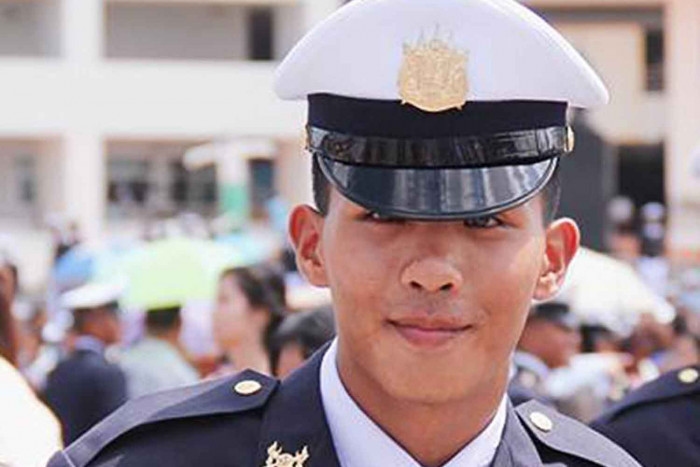
The death of Cadet Pakapong Tanyakan
After nearly eight years, the tragic death of young cadet Pakapong "Moei" Tanyakan reached a devastating conclusion last week. The Supreme Military Court sentenced two senior cadets to just four months and 16 days in prison, sparking widespread public criticism over the apparent disparity in penalties between military personnel and civilians accused of similar offences.
What happened to Pakapong?
Pakapong, aged 18, enrolled as a first-year student at the Armed Forces Academies Preparatory School (AFAPS) in Nakhon Nayok when the semester began in May 2017, but he died after five months in the school.
On Aug 23, 2017, he was admitted to the AFAPS Hospital for treatment of a head injury after senior cadets allegedly forced him to perform a "Kangaroo" headstand in the school bathroom until he fainted.
Medical records noted a 4cm abrasion on his scalp and low blood pressure. He was advised by the doctor to avoid strenuous activity for seven days and refrain from doing exercises that involve lowering the head below the body, as this may cause a drop in blood pressure.
However, according to his sister Supicha Tanyakan, he was ordered to sprint on Aug 30 despite his sickness.
Two months on, on Oct 15, 2017, Pakapong and other freshmen were woken in the middle of the night for workouts in an 8x8 metre, poorly ventilated room known as the "sauna." Pakapong was told to assume a position as if he were holding a plank.
The next day, he was ordered to perform "backward dives" on a floor for 1–2 minutes, during which he collapsed and began to hyperventilate. A duty officer was called to assess his condition, and an ambulance was summoned.
On Oct 17, the sick cadet was subjected to a disciplinary penalty by two senior cadets, allegedly for using a ladder reserved for senior students.
Around 3.40pm, Pakapong was found unconscious in his dormitory room. Medical staff attempted to resuscitate him and took him to hospital, but his life could not be saved.
His family was informed that the cause of death was sudden cardiac arrest.
Why did his parents doubt the reports?
Pakapong's parents, Pichet and Sukanya Tanyakan, doubted the initial findings after noticing bruises, broken ribs, and ruptures in their son's spleen and liver. They requested a second autopsy by the Central Institute of Forensic Science (CIFS).
The December 2017 CIFS report revealed vital organs -- including the brain, heart, and stomach -- were missing before the second autopsy, organs critical for determining the cause of death.
Phramongkutklao Hospital, which conducted the first autopsy, admitted to separating these organs for microscopic testing, but the organs returned did not match Pakapong's DNA.
Following this, the Royal Thai Armed Forces Headquarters acknowledged Pakapong's death was linked to disciplinary action. The family lodged a complaint with the Department of Special Investigation (DSI) in December, 2017.
What legal actions followed?
After an investigation, two senior cadets present before Pakapong's death and an AFAPS trainer were charged with negligence causing death. The case was heard by the 12th Military Circle Court in Prachin Buri.
The family also sued Phramongkutklao Hospital doctors for misconduct; no outcomes have been reported yet, according to the parents.
Between 2018 and 2019, the Civil Military Court suspended the two senior cadets but threw out the other charges. The Military Court of Appeal later upheld criminal charges and ordered the Defence Ministry to compensate the family.
Ms Sukanya said the ministry paid only 100,000 baht for funeral expenses, with no further compensation. Meanwhile, the defendants continued their normal lives, with one working as a police officer.
How was the final conviction reached?
On July 22, 2025, the Supreme Military Court convicted the two senior cadets, ending the family's pursuit of justice. They were sentenced to four months and 16 days in prison, with a suspended sentence citing clean records and potential for future service.
They were fined 15,000 baht each and placed on two years' probation, during which any reoffence would result in no leniency. The court said the conviction related only to the August 2017 assault incident -- not the October death or autopsy issues.
The cadets were found guilty of assault causing physical harm under Section 295 of the Criminal Code. Their cooperation, clean records, and lack of prior military academy penalties contributed to the lenient sentence.
Why did kin, public object?
Mr Pichet and Ms Sukanya expressed deep disappointment, calling the sentence too lenient and saying many questions -- such as those surrounding the missing organs -- remain unanswered.
The ruling also provoked public criticism over unequal legal penalties between military personnel in a military court and civilians in a criminal court.
What is the broader impact?
A day after the verdict, the House Committee on Armed Forces held a briefing condemning the ruling. Wiroj Lakkhanaadisorn, MP of the People's Party and committee chairman, vowed to reopen the case with the Ministry of Justice, supported by Pakapong's family.