


Latest news with #WetWipeIsland


The Guardian
 5 days ago
- The Guardian
Welcome to ‘Wet Wipe Island': my day at London's grimmest new landmark
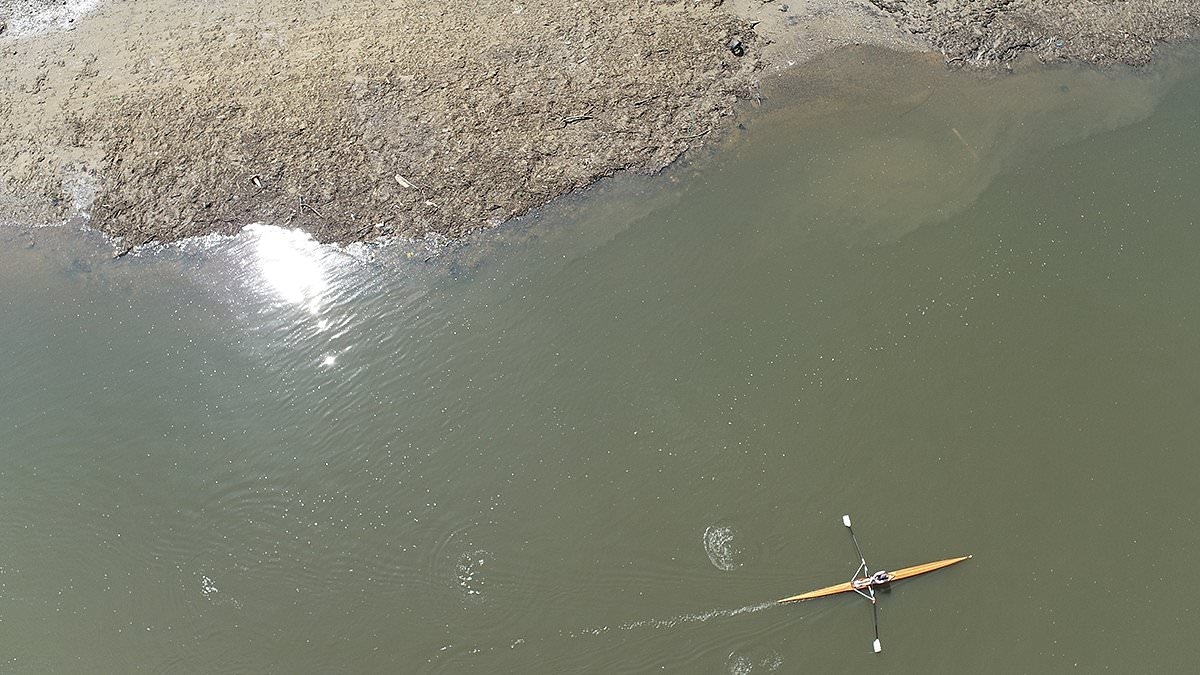
Imagine several mounds of congealed grot (consistency akin to the insides of a leisure centre shower drain, or the world's most disgusting pedal bin) washed up on the southern foreshore of the River Thames in London at low tide. Then, imagine a tourist from New Zealand stopping to take a picture and several videos of said grot – presumably to show his kin back home what louts we are – while diggers deposit big black clods of the stuff into the bed of a truck, and rowers glide blithely by. Imagine it, or see it for yourself. Welcome to 'Wet Wipe Island', London's newest – and grimmest – landmark. Forget the Grecian torsos and brute machiavellianism of Love Island. At the foot of Hammersmith Bridge, the show of the summer is fast becoming the excavation of this very different type of island, a stretch of the Thames that is saturated with enough discarded wet wipes to form two tennis courts. 'I'm shocked, to say the least,' says the 31-year-old architectural designer Adam Perry, whose office is just off the bridge. 'To be honest, it makes me emotional and frustrated that people are actually flushing their wet wipes instead of disposing of them correctly. It's slightly embarrassing. Don't get me wrong, the majority of Londoners are doing their part, but all it takes is a certain percentage to do stuff like that and it affects us all.' Unfortunately, the numbers suggest that it is more than just a small percentage who are flushing these environmental terrors down the toilet. Grace Rawnsley, the director of sustainability for the Port of London Authority (PLA), which has taken on the gruesome task of dredging up the wet wipes, estimates that more than 180 tonnes – roughly equivalent to 15 of the capital's doubledecker buses – will be pulled from the river in the next month. It's no wonder, then, that Wet Wipe Island – which has its own Google Maps listing (it's recorded as a cultural landmark), should you struggle to find your way from the tube station – has garnered an unlikely notoriety in recent days. 'My ears pricked up when I heard Hammersmith on the news,' says 62-year-old Russell Page, who is nursing a pint outside the Rutland Arms, a pub with expansive views of the river and now, this first-of-its-kind cleanup operation. 'I had no idea what they were doing over there until the other day. It's not until you see [the detritus] up close that [you realise] it's so dreadful.' The self-financed PLA – which declined to say how much the cleanup will cost, though admitted it was 'in the hundreds of thousands' – is using a 'rake-and-shake' method to sift the wipes, which get caught in the bucket of the digger like rotten string cheese, from the river sediment. They will eventually be put into landfill. 'The sediment will be what's containing the aquatic invertebrates,' says Rawnsley. 'We're removing that contaminated layer while retaining as much of the foreshore as we can.' If you think that sounds like an unpleasant job, spare a thought for volunteers from the environmental charity Thames21, who have fished about 140,000 wet wipes by (gloved) hand from the river since 2017. When wipes are flushed into the sewage system, and the sewage system overflows in heavy rain, '[it] throws them out into the Thames', explains the charity's Liz Gyekye. Because this part of the river is a slow-moving bend, they gather en masse – and their impact is 'devastating for wildlife and potentially humans', says Gyekye. In short, 'they shouldn't be in the environment.' Whether they're used for makeup removal or nappy changing, most wipes sold in the UK contain plastic, which invariably ends up in the systems of the invertebrates, fish and birds that call the Thames home. Every year, Thames Water clears 3.8bn wipes from its network at an annual cost of £18m. Although the government has pledged to ban wet wipes containing plastic, progress has stalled since last year's general election. Still, it's not all bad. 'The story of this river is the story of recovery,' says Rawnsley. Where parts of the Thames were declared 'biologically dead' in the 1950s, today, with 125 different species of fish and 92 species of bird, 'it's on its way back to being miraculous – but we still have further to go.' Of course, it's not just wet wipes that are blighting the UK's second-longest river. Most Londoners have a pub story about the most menacing thing they've spotted in the Thames. (My own was a lifesize crucifix, which I watched being thrown into the water from Vauxhall Bridge.) 'I've seen lots of horrible things floating,' says a 69-year-old passerby, Doune Storey. 'Tampons, Durex, nappies. It's got to go somewhere – it's not just going to go into the ether. We've all got to be more responsible.' Earlier this year, over the course of a two-day environmental survey, the PLA pulled 29 bikes (15 of which were Lime bikes), a park bench, a wheel clamp and an empty safe from the river. As for Wet Wipe Island, Rawnsley hopes it will soon be wiped from the map once and for all: 'Without sounding too virtuous, we're working towards making the Thames the river that everyone wants it to be.' Who knows, maybe in a few years we'll be living la vie parisienne and swimming in it. Maybe.

Daily Mail
11-08-2025
- General
- Daily Mail
Wave goodbye to 'Wet Wipe Island': First mass removal from the River Thames is launched to clear London's 180-ton problem
A huge 'Wet Wipe Island' in the River Thames is set to be removed after 180 tonnes of the bathroom items have piled up underwater. The underwater 'island', which is the size of two tennis courts and weighs the same as two double decker buses, is said to have harmed the wildlife and ecology of the river. The island sits along a 250-metre stretch of the Thames near Hammersmith Bridge. An operation to remove the 180 tonnes of congealed wet wipes that formed the island is expected to take up to a month to complete. The removal is will be led and co-ordinated by the Port of London Authority in collaboration with Thames Water. Until now, efforts to clean wet wipes from the river have relied on people removing them by hand. Volunteers from Thames 21 have monitored the island since 2017 and have already collected more than 140,000 wet wipes. The group has called for the banning of plastic wet wipes, citing the damage it can do to the environment. For years the group has also called for the removal of the disgusting island underneath surface of the Thames. St Paul's School, Barnes is supporting the clean-up and giving access to its grounds to allow the eight-tonne excavator to carefully remove the 'island', which is one metre high in places, from the foreshore when the tide is low. The wet wipes and other pollutants will then be taken away in skips and responsibly disposed of. Thames Water recently announced a further £1.8billion investment to improve river health across London, and last year connected its £4.6 billion Thames Tideway Tunnel to support the reduction of sewage discharges into the Thames. Port of London Authority's Director of Sustainability, Grace Rawnsley, said: 'For too long, 'Wet Wipe Island' in Hammersmith has been a source of environmental harm and an embarrassment to the capital. Inspired by the work of volunteers at Thames 21, we decided to take a lead in co-ordinating action to remove this unsightly and harmful mess. 'This is the first time anyone has sought to execute a mass, mechanical removal of wet wipes in this way. 'We want a cleaner, healthier tidal Thames and will continue to work with all interested parties to secure that. And we will continue to bring innovation and investment to help the world's greatest river thrive.' Thames Water's Head of Tideway Integration Group, John Sullivan, said: 'Our purpose is to deliver life's essential service, so our customers, communities and the environment can thrive. 'We are pleased to collaborate with the PLA and Thames21 to remove this mass of wet wipes. 'For us it is a visible reminder of the damage caused by putting the wrong things down the toilet because flushing something non-biodegradable like a wet wipe doesn't just make it disappear. 'Blockages caused by wipes are a leading cause of pollution and we remove an estimated 3.8 billion wipes from our network each year. 'We all have a role to play in ensuring that people can enjoy our rivers. Over the next five years Thames Water is targeting a record £9.5 billion (in 2022/23 prices) of investment across our wastewater assets to meet the demands that come with population growth and climate change.' Chris Coode, CEO at Thames21, said: 'Plastic wet wipes have no place in our rivers or natural environment, so it's terrific news that action is being taken to remove wet wipe island in the Thames. 'This vital move is a crucial step towards protecting the health of the River Thames and its wildlife, as it will reduce the introduction of microplastics into the environment from this site. 'Thames21 and its dedicated volunteers have been building evidence for eight years. We want to give our volunteers a huge shout-out for their persistence. This has been a massive piece of work! 'Thames21 has been pushing for a ban on plastics in wet wipes. However, we would like to see more systemic change to tackle the issue of plastics entering the environment via wet wipes and other sanitary waste. 'We want producers to get serious about plastic-free alternatives to wet wipes. We ask water companies to increase their investment in screening to prevent wet wipes and other sanitary waste which contains plastic entering the environment. 'We'd also like to see a step-change in their investments in upgrading sewage infrastructure to prevent overflows. 'We'd like to remind people to bin their sanitary waste and wet wipes, not flush them down the toilet, so that they don't enter our wastewater system. 'By working together, we can achieve great things for rivers, wildlife and people. Let's do it!' Fleur Anderson, MP for Putney, Southfields, Roehampton and Wandsworth Town, said: 'This is a huge moment, after years of campaigning, wet wipe island hopefully is no more! It's so long overdue and very welcome. There was a national outcry at this monstrosity in the Thames – caused by plastic wet wipes, which cause massive damage to our environment and our sewer systems. 'The ban I've introduced will mean 3.8 billion wipes removed from the network every year. A win for our waters, sewers and environment'
