


Latest news with #Yuyuantantian
Yahoo
 02-05-2025
- Business
- Yahoo
Talks or no talks: who blinks first in US-China trade war?
In the early hours of Thursday morning, Chinese state media announced that the United States had been seeking to initiate tariff negotiations with Beijing. It was news the rest of the world had been waiting to hear as astonishingly high tariffs - up to 245% on some Chinese exports to the US - throttle trade between the world's two biggest economies, raising the spectre of a recession. President Donald Trump's administration has used various channels to contact Beijing, according to a post on social media platform Weibo by Yuyuantantian, an account affiliated with China Central Television (CCTV). The statement, which cited unnamed individuals familiar with the matter, came less than a week after Trump claimed conversations between the two nations were already underway – a suggestion Beijing later denied. "China has no need to talk to the United States," Yuyuantantian said in Thursday's post. "From the perspective of negotiations, the United States must be the more anxious party at present." The statement follows a cycle of assertions and denials from both the US and China, as each side refuses to publicly initiate discussions. The question is not whether the discussions will take place, but rather when, under what circumstances and at whose behest. Experts characterise the tussle as a game of chicken between Trump and Chinese leader Xi Jinping, as both men attempt to save face while covertly pursuing a mutually beneficial outcome – namely, a de-escalation of the trade war. "I expect some of this back-and-forth, because neither Washington nor Beijing wants to look like they are the side that's giving in," says Ja Ian Chong, assistant professor of political science at the National University of Singapore. "[But] a de-escalation would be to the overall benefit of both sides, so there is some overarching incentive to do so." Wen-Ti Sung, an academic member of the Australian Centre on China in the World, puts it another way: "It's like two race cars going at each other: whoever swerves first will be seen as the weaker of the two parties. And at this juncture, neither party wants to look soft." The leader who admits he was the first to initiate tariff talks would be seen as the one compromising his position in negotiations. "Whoever seems desperate loses bargaining leverage," Mr Sung says. "Both sides want to portray the other side as the more desperate one." This peculiar stalemate – where both parties seek the same outcome, but neither wants to be the first to suggest it – has resulted in a tactic of "constructive ambiguity": the deliberate use of language so vague that each party could arguably claim to be in the right. It is this tactic that Mr Sung points to as an explanation for Yuyuantantian's Weibo post. "This is Beijing trying to explore the possibility of using word games to create an off-ramp for both sides, so that they can gradually climb their way down from this escalation spiral," he says. One way to escape this game of chicken is when a third party mediates, offering both sides an off-ramp. The other option, Mr Sung explains, is a "much looser understanding of what 'the other side has reached out' means". That way, the side that does indeed come to the table first is still able to characterise it as a response rather than the first move. In Trump and Xi's case, it would also mean that tariff negotiations could begin with both leaders claiming to have achieved some kind of victory in the trade war. The optics here are important. As Mr Chong points out, de-escalation is one thing – but another top priority for Trump and Xi is to "deliver a win for their domestic audiences". "Trump obviously wants to show that he has made Beijing capitulate. And on the People's Republic of China side, Xi probably wants to show his own people and the world that he's been able to make Trump become more reasonable and moderate and accommodating," Mr Chong says. On the domestic front, both leaders are facing tariff-induced headwinds. Trump this week struggled to quell fears of a recession as fresh data indicated the US economy contracted in its first quarter for the first time since 2022. Meanwhile, Xi - who before the tariffs was already battling persistently low consumption, a property crisis and unemployment - must reassure China's population that he can weather the trade war and protect an economy which has struggled to rebound post-pandemic. "Both [Trump and Xi] recognise that at this point of the trade war, it's not going to be a winner-takes-all outcome for either side anymore," Mr Sung says. "Trump recognises he's not going to get anywhere near 100% of what he wants, so he's trying to find a concession point where China can let him have just enough winning, especially for domestic purposes." And while China is not unwilling, he adds, "they are very much stuck on what's the right price point". For Xi, Mr Sung described the situation as a "two-level game". "The China side needs to manage US-China bilateral negotiations, while domestically Beijing needs to save enough face so that the Chinese leadership can hold on to this narrative of 'the East is rising and the West is declining'," he says. "A kowtowing of the East towards the West is not a rising East." At the time of writing, the US has not denied China's claims that it has been attempting to initiate talks. But the fact that both sides have now made that assertion indicates there is "some sort of contact", according to Mr Chong. "The two sides are talking," he says. "And that is a sign that there is some possibility that some accommodation could be reached." But the start of negotiations does not mean that the US-China relationship - which was rocky even before Trump kicked off a trade war - is close to being steadied. Mr Chong isn't holding his breath. For one, he believes the "posturing" suggests the two sides have not reached the point "where they are both trying to seek a way out". "[Each party] may hope that there are concessions from the other side, so they're going to have this standoff until they see which side blinks first.


BBC News
02-05-2025
- Business
- BBC News
US-China trade war: Who blinks first to negotiate tariffs?
In the early hours of Thursday morning, Chinese state media announced that the United States had been seeking to initiate tariff negotiations with was news the rest of the world had been waiting to hear as astonishingly high tariffs - up to 245% on some Chinese exports to the US - throttle trade between the world's two biggest economies, raising the spectre of a recession. President Donald Trump's administration has used various channels to contact Beijing, according to a post on social media platform Weibo by Yuyuantantian, an account affiliated with China Central Television (CCTV).The statement, which cited unnamed individuals familiar with the matter, came less than a week after Trump claimed conversations between the two nations were already underway – a suggestion Beijing later denied."China has no need to talk to the United States," Yuyuantantian said in Thursday's post. "From the perspective of negotiations, the United States must be the more anxious party at present."The statement follows a cycle of assertions and denials from both the US and China, as each side refuses to publicly initiate question is not whether the discussions will take place, but rather when, under what circumstances and at whose behest. Playing chicken Experts characterise the tussle as a game of chicken between Trump and Chinese leader Xi Jinping, as both men attempt to save face while covertly pursuing a mutually beneficial outcome – namely, a de-escalation of the trade war."I expect some of this back-and-forth, because neither Washington nor Beijing wants to look like they are the side that's giving in," says Ja Ian Chong, assistant professor of political science at the National University of Singapore. "[But] a de-escalation would be to the overall benefit of both sides, so there is some overarching incentive to do so."Wen-Ti Sung, an academic member of the Australian Centre on China in the World, puts it another way: "It's like two race cars going at each other: whoever swerves first will be seen as the weaker of the two parties. And at this juncture, neither party wants to look soft."So the leader who admits that he was the first to initiate tariff talks would be seen as the one compromising his position in negotiations. "Whoever seems desperate loses bargaining leverage," Mr Sung says. "Both sides want to portray the other side as the more desperate one." This peculiar stalemate – where both parties seek the same outcome, but neither wants to be the first to suggest it – has resulted in a tactic of "constructive ambiguity": the deliberate use of language or claims so vague that each party could arguably claim to be in the is this tactic that Mr Sung points to as an explanation for Yuyuantantian's Weibo post."This is Beijing trying to explore the possibility of using word games to create an off-ramp for both sides, so that they can gradually climb their way down from this escalation spiral," he way to escape this game of chicken is when a third party mediates, offering both sides an off-ramp. The other option, Mr Sung explains, is a "much looser understanding of what 'the other side has reached out' means". That way, the side that does indeed come to the table first is still able to characterise it as a response rather than the first move. In Trump and Xi's case, it would also mean that tariff negotiations could begin with both leaders claiming to have achieved some kind of victory in the trade war. A win at home The optics here are important. As Mr Chong points out, de-escalation is one thing – but another top priority for Trump and Xi is to "deliver a win for their domestic audiences"."Trump obviously wants to show that he has made Beijing capitulate. And on the People's Republic of China side, Xi probably wants to show his own people and the world that he's been able to make Trump become more reasonable and moderate and accommodating," Mr Chong the domestic front, both leaders are facing tariff-induced headwinds. Trump this week struggled to quell fears of a recession as fresh data indicated the US economy contracted in its first quarter for the first time since Xi - who before the tariffs was already battling persistently low consumption, a property crisis and unemployment - must reassure China's population that he can weather the trade war and protect an economy which has struggled to rebound post-pandemic."Both [Trump and Xi] recognise that at this point of the trade war, it's not going to be a winner-takes-all outcome for either side anymore," Mr Sung says."Trump recognises he's not going to get anywhere near 100% of what he wants, so he's trying to find a concession point where China can let him have just enough winning, especially for domestic purposes."And while China is not unwilling, he adds, "they are very much stuck on what's the right price point". For Xi, Mr Sung described the situation as a "two-level game"."The China side needs to manage US-China bilateral negotiations, while domestically Beijing needs to save enough face so that the Chinese leadership can hold on to this narrative of 'the East is rising and the West is declining'," he says."A kowtowing of the East towards the West is not a rising East."At the time of writing, the US has not denied China's claims that it has been attempting to initiate talks. But the fact that both sides have now made that assertion indicates there is "some sort of contact", according to Mr Chong."The two sides are talking," he says. "And that is a sign that there is some possibility that some accommodation could be reached."But the start of negotiations does not mean that the US-China relationship - which was rocky even before Trump kicked off a trade war - is close to being steadied. Mr Chong isn't holding his breath. For one, he believes the "posturing" suggests the two sides have not reached the point "where they are both trying to seek a way out". "[Each party] may hope that there are concessions from the other side, so they're going to have this standoff until they see which side blinks first.
Yahoo
01-05-2025
- Business
- Yahoo
Trump tariffs live updates: Trump administration quietly reaches out to Beijing to kick off tariff talks
Chinese state-run media said late Wednesday that the Trump administration has quietly reached out to Beijing to kick off tariff talks. Despite President Trump's public stance that President Xi must make the first move, the development represents the latest behind-the-scenes thawing of relations. Trump told his Cabinet on Wednesday that falling cargo flows showed China would soon need to engage. Trump said he was confident he'd speak with Xi. But a post from Yuyuantantian, a Weibo account affiliated with China Central Television that regularly signals Beijing's views on trade, said China won't engage unless the US takes 'meaningful measures.' The post added that Washington appears to be the more anxious party under growing pressure. Reuters reported the day prior that China quietly compiled a list of US goods exempt from its 125% tariffs, aiming to ease trade tensions without making public concessions. The list is expanding, with recent waivers on US ethane, some semiconductor products, and certain pharmaceuticals, offering behind-the-scenes relief while maintaining a tough public stance. Trump defended the 145% tariffs on Chinese imports, claiming China "deserves it" and would likely absorb the costs. While acknowledging potential supply shortages and higher prices, he downplayed concerns, saying shelves might have fewer toys and they'd cost a bit more. Trump's comments contrast with efforts inside the administration to consider phased tariff reductions and revive trade talks with China, though no formal talks have begun. With 145% tariffs on China in place, cargo shipments have dropped 60%, raising concerns of supply shortages and layoffs in trucking, logistics, and retail. Meanwhile, some tariff relief is on the way for automakers after Trump signed an order offering exemptions to certain car and parts tariffs. The order clarifies that companies already paying tariffs on imported vehicles won't be charged other levies, such as on steel. The US also eased duties on foreign parts. The climbdown comes after intense lobbying from the auto industry, which warned of a huge hit to sales and price hikes for consumers. On Trump's 100th day in office, administration officials also looked to play up progress with other countries. Commerce Secretary Howard Lutnick on Tuesday claimed the US and one unnamed country were on the doorstep of a trade deal. Bessent said the US was "very close" to a deal with India. Here are the latest updates as the policy reverberates around the world. McDonald's missed Wall Street estimates in the first quarter as US sales and traffic declined, reflecting growing consumer caution and economic uncertainty. The fast food giant is struggling to navigate a shaky backdrop amid volatile trade policies. Yahoo Finance's Laura Bratton, breaks down what the earnings reveal about the fast food giants position in a jittery consumer market. Read more here. Bloomberg News reports: Read more here. Reuters reports: Read more here. Warren Buffett has long warned that Berkshire Hathaway's (BRK-B, BRK-A) future returns won't match its past. Now, Trump's tariffs are adding fresh pressure to parts of the business. Reuters reports: Read more here. Reuters reports: Read more here. Reports show that President Trump's hardline tariff strategy is easing, with significant rollbacks in recent weeks. Yahoo Finance's Washington correspondent Ben Werschkul reports on the month when Trump blinked on trade: Read more here. Donald Trump only just managed to block an attempt in the US Senate to stop his global tariff plans, as his trade policies are making more people worry about rising prices and a possible recession. Bloomberg News reports: Read more here. British factory exports saw their steepest decline in nearly five years in April, while cost pressures mounted, a survey showed — highlighting the strain from President Trump's trade war and a recent tax increase on UK employers. Reuters reports: Read more here. AP reports: Read more here. The Trump administration has quietly reached out to Beijing through multiple channels to kick off talks on the sweeping tariffs the US has imposed on Chinese goods, according to a post from Yuyuantantian, a state-linked Weibo account often used to reflect China's trade stance. The post, citing unnamed sources, offered no specifics but signals potential backchannel efforts to ease tensions. Bloomberg News reports: Read more here. President Trump on Wednesday acknowledged the possibility of supply shortages and price increases with mammoth tariffs on China still in effect. Responding to a question about when he plans to speak to Chinese President Xi Jinping — Trump said "it'll happen" — Trump claimed China was "ripping off" the US and suggested much of what the country sends over to the US isn't necessary for consumers. "Somebody said, oh, the shelves are going to be open," Trump said in a Cabinet meeting. "Well, maybe the children will have two dolls instead of 30 dolls, you know. And maybe the two dolls will cost a couple bucks more than they would normally." Trump frequently claims that his tariffs will make the country "rich," though he has more recently acknowledged that there could be a period of transition for consumers. Trump's comments came as he sought to furiously push back on the latest dour economic data points emerging since he took office. The highlight Wednesday was a release showing US GDP contracted for the first time in three years last quarter. Earlier Wednesday, Trump blamed former President Biden for the negative reading. In the Cabinet meeting, he suggested he'd also point the finger at Biden if second-quarter numbers also turned out bleak. Freight trucking company XPO (XPO) delivered an update on Wednesday on what it's hearing from customers as tariff policy changes have upended supply chains and business forecasts. XPO's quarterly survey of its customers suggested that US businesses exhibited "a wide variety of behaviors," making economic activity difficult to predict. "Customers generally are falling in three camps," CEO Mario Harik said. "Some customers are in a wait-and-see type pattern. Some customers are still importing goods as they always have. ... And then some customers are redesigning their supply chain to get more product sourced or built locally." Harik noted that the company, which is more exposed to industrials, has not seen a significant pull-forward in demand. While the less-than-truckload segment focuses on domestic trade versus international trade, its quarterly results provide some early color on demand as investors search for signs of an economic slowdown. "The majority of customers are expecting to see a flattish demand in the back half as opposed to what they were a quarter ago, where the majority were expecting an acceleration of demand in the back half," Harik said. "So we're getting a more cautious tone from the customers." Yahoo Finance Senior Columnist Rick Newman writes: Read more here. As Trump's China tariffs shut the big loophole that makes Shein's clothes so cheap for American consumers, the Chinese fast fashion company is seeking to adapt. From the Financial Times: Read more here (paywalled unless a Yahoo Finance subscriber). The FT reports: Read more here. US consumer spending rose in March as households rushed to buy cars ahead of expected price hikes and shortages from Trump's tariffs, but economists say growth is still slowing. Reuters reports: Read more here. Yahoo Finance's Josh Schafer reports: Read more here. Reuters reports: Read more here. Bloomberg News reports: Read more here. The FT reports: Read more here. McDonald's missed Wall Street estimates in the first quarter as US sales and traffic declined, reflecting growing consumer caution and economic uncertainty. The fast food giant is struggling to navigate a shaky backdrop amid volatile trade policies. Yahoo Finance's Laura Bratton, breaks down what the earnings reveal about the fast food giants position in a jittery consumer market. Read more here. Bloomberg News reports: Read more here. Reuters reports: Read more here. Warren Buffett has long warned that Berkshire Hathaway's (BRK-B, BRK-A) future returns won't match its past. Now, Trump's tariffs are adding fresh pressure to parts of the business. Reuters reports: Read more here. Reuters reports: Read more here. Reports show that President Trump's hardline tariff strategy is easing, with significant rollbacks in recent weeks. Yahoo Finance's Washington correspondent Ben Werschkul reports on the month when Trump blinked on trade: Read more here. Donald Trump only just managed to block an attempt in the US Senate to stop his global tariff plans, as his trade policies are making more people worry about rising prices and a possible recession. Bloomberg News reports: Read more here. British factory exports saw their steepest decline in nearly five years in April, while cost pressures mounted, a survey showed — highlighting the strain from President Trump's trade war and a recent tax increase on UK employers. Reuters reports: Read more here. AP reports: Read more here. The Trump administration has quietly reached out to Beijing through multiple channels to kick off talks on the sweeping tariffs the US has imposed on Chinese goods, according to a post from Yuyuantantian, a state-linked Weibo account often used to reflect China's trade stance. The post, citing unnamed sources, offered no specifics but signals potential backchannel efforts to ease tensions. Bloomberg News reports: Read more here. President Trump on Wednesday acknowledged the possibility of supply shortages and price increases with mammoth tariffs on China still in effect. Responding to a question about when he plans to speak to Chinese President Xi Jinping — Trump said "it'll happen" — Trump claimed China was "ripping off" the US and suggested much of what the country sends over to the US isn't necessary for consumers. "Somebody said, oh, the shelves are going to be open," Trump said in a Cabinet meeting. "Well, maybe the children will have two dolls instead of 30 dolls, you know. And maybe the two dolls will cost a couple bucks more than they would normally." Trump frequently claims that his tariffs will make the country "rich," though he has more recently acknowledged that there could be a period of transition for consumers. Trump's comments came as he sought to furiously push back on the latest dour economic data points emerging since he took office. The highlight Wednesday was a release showing US GDP contracted for the first time in three years last quarter. Earlier Wednesday, Trump blamed former President Biden for the negative reading. In the Cabinet meeting, he suggested he'd also point the finger at Biden if second-quarter numbers also turned out bleak. Freight trucking company XPO (XPO) delivered an update on Wednesday on what it's hearing from customers as tariff policy changes have upended supply chains and business forecasts. XPO's quarterly survey of its customers suggested that US businesses exhibited "a wide variety of behaviors," making economic activity difficult to predict. "Customers generally are falling in three camps," CEO Mario Harik said. "Some customers are in a wait-and-see type pattern. Some customers are still importing goods as they always have. ... And then some customers are redesigning their supply chain to get more product sourced or built locally." Harik noted that the company, which is more exposed to industrials, has not seen a significant pull-forward in demand. While the less-than-truckload segment focuses on domestic trade versus international trade, its quarterly results provide some early color on demand as investors search for signs of an economic slowdown. "The majority of customers are expecting to see a flattish demand in the back half as opposed to what they were a quarter ago, where the majority were expecting an acceleration of demand in the back half," Harik said. "So we're getting a more cautious tone from the customers." Yahoo Finance Senior Columnist Rick Newman writes: Read more here. As Trump's China tariffs shut the big loophole that makes Shein's clothes so cheap for American consumers, the Chinese fast fashion company is seeking to adapt. From the Financial Times: Read more here (paywalled unless a Yahoo Finance subscriber). The FT reports: Read more here. US consumer spending rose in March as households rushed to buy cars ahead of expected price hikes and shortages from Trump's tariffs, but economists say growth is still slowing. Reuters reports: Read more here. Yahoo Finance's Josh Schafer reports: Read more here. Reuters reports: Read more here. Bloomberg News reports: Read more here. The FT reports: Read more here. Sign in to access your portfolio
Yahoo
01-05-2025
- Business
- Yahoo
Hints emerge in Chinese media that Beijing open to US tariff talks
China could be open to starting trade negotiations with the United States, if Washington makes the first move and offers meaningful concessions, an influential Chinese platform wrote on Thursday. The message was delivered in a post from Yuyuantantian, a social media account affiliated with state broadcaster China Central Television (CCTV) and which is seen as reflecting government's stance on trade and economic issues. The post said that the US has reached out to China "through a variety of channels" in a bid to initiate discussions on tariffs, but that there "is no need for China to talk to the US before the US takes any substantive action." The state of trade negotiations, including whether any consultations are under way at all, has been a matter of debate in recent days. US President Donald Trump told Time magazine that talks were taking place, and that Chinese President Xi Jinping had called him. China's Foreign Ministry fired back, adamently denying any discussions between the the two leaders or their top aides. Tensions sharply escalated in early April, when the US imposed tariffs of up to 145% on Chinese imports. Beijing retaliated with levies of up to 125% on US goods. Both sides, however, have issued temporary exemptions for specific items seen as critical - such as certain electronics - in order to mitigate the economic fallout. The Yuyuantantian post went so far as to suggest that opening a dialogue with the Trump administration could serve China's interests. "If the US wants to engage with China, it will not be bad for China at this stage," it read, adding: "China needs to observe and even force out the US's true intentions." It added that the first country to reach a deal with the US could become a reference point for others navigating Washington's evolving tariff regime. Separately, the Hong Kong-based South China Morning Post, citing informed sources, reported on Thursday that Beijing is holding off on serious negotiations until it becomes clear who will lead the talks on the US.
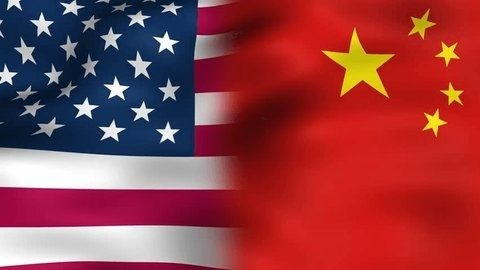

The Star
01-05-2025
- Business
- The Star
US reached out to Beijing to initiate tariff talks, says Chinese state media
BEIJING: US President Donald Trump's administration has been seeking contact with Beijing to initiate talks on the massive tariffs Washington has imposed on China, according to a state-run media outlet. The US government recently reached out to China through various channels, Yuyuantantian, a Weibo account affiliated with China Central Television that regularly signals Beijing's views on trade, said in a post. It cited unidentified people with knowledge of the matter, providing no further details. The post casts a different light on behind-the-scenes manoeuvring between the world's two largest economies. Trump has repeatedly said President Xi Jinping needs to contact him in order to begin tariff talks and earlier this week, Treasury Secretary Scott Bessent said it's up to Beijing to take the first step to de-escalate the dispute. Trump argued Wednesday (April 30) during a Cabinet meeting that a recent fall in cargo flows indicated that Beijing would soon need to engage with him. The president said he was "not happy' with the sharp decline in trade between the two nations because he wanted "China to do well' while treating the US fairly. Trump later Wednesday expressed confidence he would eventually speak with Xi, despite the Chinese leader's reluctance to engage directly with his counterpart. "It'll happen,' Trump said. "China doesn't need to talk to the US until it takes meaningful measures,' Yuyuantantian said in the post. From a negotiation standpoint, the US is "clearly the more anxious party at the moment,' it added, citing pressure the Trump administration faces on multiple fronts. In Washington, official data showed the US economy contracted at the start of the year for the first time since 2022 following a monumental pre-tariffs import surge and more moderate consumer spending. The data provided a first snapshot of ripple effects from Trump's trade policies. At the same time, prices from some of the most popular sellers of made-in-China goods already suggest US shoppers will be paying a major portion of the bill despite Trump's claim Beijing will bear the brunt of his 145% tariffs. - Bloomberg
