


Latest news with #coastalstates


The Guardian
 06-08-2025
- Politics
- The Guardian
US judge blocks Trump officials from diverting disaster prevention grants
A federal judge blocked the Trump administration on Tuesday from diverting funds from a multibillion-dollar grant program designed to protect communities against natural disasters. US district judge Richard Stearns in Boston issued a preliminary injunction preventing the government from spending money allocated to the Building Resilient Infrastructure and Communities (Bric) program for other purposes. Twenty mostly Democratic-led states sued the administration last month, saying the Federal Emergency Management Agency (Fema) lacked power to cancel the Bric program without congressional approval. Fema is part of the Department of Homeland Security (DHS). Neither agency immediately responded to requests for comment. Created in 2018 during Donald Trump's first term, the Bric program helps state and local governments protect major infrastructure such as roads and bridges before the occurrence of floods, hurricanes and other disasters. According to the lawsuit, Fema approved about $4.5bn in grants for nearly 2,000 projects, primarily in coastal states, over the last four years. But the agency announced in April it would end the program, calling it wasteful, ineffective and politicized. Stearns said that while Fema does not appear to have since canceled grants, states should not have to wait to sue until after they lose funding, while the cancellation of new grants suggested Fema considered an eventual shutdown a fait accompli. He also said the states have shown a realistic chance of irreparable harm if the Bric program ended. 'There is an inherent public interest in ensuring that the government follows the law, and the potential hardship accruing to the states from the funds being repurposed is great,' the judge wrote. 'The Bric program is designed to protect against natural disasters and save lives,' Stearns added. 'The potential hardship to the government, in contrast, is minimal.' Led by Massachusetts and Washington, the 20 states that sued also include Arizona, California, Colorado, Connecticut, Delaware, Illinois, Maine, Maryland, Michigan, Minnesota, New Jersey, New York, North Carolina, Oregon, Pennsylvania, Rhode Island, Vermont and Wisconsin. The offices of Massachusetts' and Washington's attorneys general had no immediate comment.

The Guardian
05-08-2025
- Politics
- The Guardian
US judge blocks Trump officials from diverting disaster prevention grants
A federal judge blocked the Trump administration on Tuesday from diverting funds from a multibillion-dollar grant program designed to protect communities against natural disasters. US district judge Richard Stearns in Boston issued a preliminary injunction preventing the government from spending money allocated to the Building Resilient Infrastructure and Communities (Bric) program for other purposes. Twenty mostly Democratic-led states sued the administration last month, saying the Federal Emergency Management Agency (Fema) lacked power to cancel the Bric program without congressional approval. Fema is part of the Department of Homeland Security (DHS). Neither agency immediately responded to requests for comment. Created in 2018 during Donald Trump's first term, the Bric program helps state and local governments protect major infrastructure such as roads and bridges before the occurrence of floods, hurricanes and other disasters. According to the lawsuit, Fema approved about $4.5bn in grants for nearly 2,000 projects, primarily in coastal states, over the last four years. But the agency announced in April it would end the program, calling it wasteful, ineffective and politicized. Stearns said that while Fema does not appear to have since canceled grants, states should not have to wait to sue until after they lose funding, while the cancellation of new grants suggested Fema considered an eventual shutdown a fait accompli. He also said the states have shown a realistic chance of irreparable harm if the Bric program ended. 'There is an inherent public interest in ensuring that the government follows the law, and the potential hardship accruing to the states from the funds being repurposed is great,' the judge wrote. 'The Bric program is designed to protect against natural disasters and save lives,' Stearns added. 'The potential hardship to the government, in contrast, is minimal.' Led by Massachusetts and Washington, the 20 states that sued also include Arizona, California, Colorado, Connecticut, Delaware, Illinois, Maine, Maryland, Michigan, Minnesota, New Jersey, New York, North Carolina, Oregon, Pennsylvania, Rhode Island, Vermont and Wisconsin. The offices of Massachusetts' and Washington's attorneys general had no immediate comment.


The Independent
16-07-2025
- Politics
- The Independent
20 states sue the Trump admin for cutting disaster prevention money
A coalition of 20 US states, predominantly led by Democrats, has launched a legal challenge against the Trump administration, seeking to reinstate a multi-billion-dollar grant programme crucial for infrastructure upgrades designed to mitigate natural disasters. The lawsuit, filed in Boston federal court, contends that the Federal Emergency Management Agency (FEMA) acted unlawfully by cancelling the Building Resilient Infrastructure and Communities (BRIC) programme in April, despite its prior approval and funding by Congress. The BRIC programme, established in 2018, was designed to cover up to 75 per cent of infrastructure project costs, or 90 per cent in rural areas, aimed at protecting communities from natural catastrophes. Over the past four years, FEMA had allocated approximately \$4.5 billion in grants for nearly 2,000 projects, many benefiting coastal states, funding initiatives from evacuation shelters to flood walls and improvements to roads and bridges. The administration, however, cited the programme as wasteful, ineffective, and politicised when announcing its termination. "By unilaterally shutting down FEMA's flagship pre-disaster mitigation program, Defendants have acted unlawfully and violated core separation of powers principles," the states, spearheaded by Washington and Massachusetts, asserted in their filing. Neither FEMA nor the US Department of Homeland Security immediately responded to requests for comment regarding the lawsuit. The legal action comes as FEMA faces heightened scrutiny following its response to deadly floods in Texas earlier this month, which claimed over 130 lives. This event has intensified focus on the administration's broader efforts to reduce the agency's scope or even abolish it. A bipartisan group of lawmakers had previously urged FEMA in May to reinstate the grants, emphasising their particular importance for rural and tribal communities, and called for collaboration with Congress to enhance the programme's efficiency. The states further argue that Congress designated disaster mitigation as a core function of FEMA, asserting that the US Constitution and federal law prohibit the Trump administration from altering the agency's mission without legislative input. They also allege that Cameron Hamilton and his successor, David Richardson, who served as acting directors of FEMA when the programme was terminated, were not properly appointed and therefore lacked the authority to cancel it. The states are now seeking a preliminary injunction to compel the programme's reinstatement while the case proceeds, marking the latest in a series of challenges by states against the Trump administration's approach to disaster funding. Massachusetts Attorney General Andrea Campbell, a Democrat, underscored the critical need for federal funding in light of the recent Texas floods. "By abruptly and unlawfully shutting down the BRIC program, this administration is abandoning states and local communities that rely on federal funding to protect their residents and, in the event of disaster, save lives," she stated.

Bloomberg
24-06-2025
- Climate
- Bloomberg
Florida Could Be Flying Blind This Hurricane Season
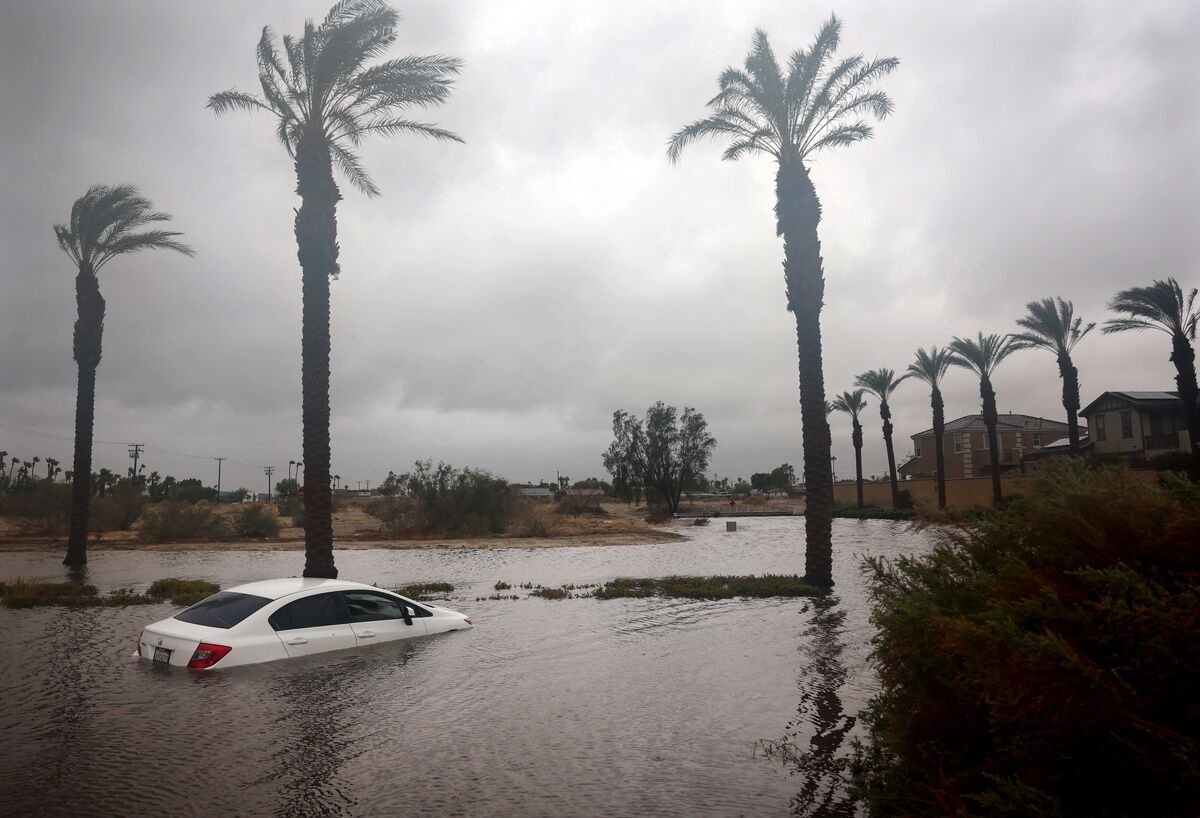
As the US heads into the June-to-November Atlantic hurricane season, many of the tools weather forecasters rely on to assess risk and warn the public have been weakened or all but dismantled by the Trump administration's scorched-earth campaign to cut government services. Coastal states are going to feel the brunt of the impact. The deep cuts to the programs that supply data for the forecasts mean that meteorologists will be left 'flying a plane in the clouds with no navigation system,' said Michael Lowry, a hurricane specialist and a storm surge expert for WPLG in Miami. Operating without accurate data can be quite costly: According to an estimate from the Global Commission on Adaptation, a 24-hour warning of an impending storm can reduce damage by 30%.


Free Malaysia Today
21-05-2025
- Business
- Free Malaysia Today
US stock futures dip, bond yields climb as Trump's tax bill faces test
Highly valued technology stocks took a hit in premarket trading as rising rates tend to discount the present value of future profits. (AP pic) NEW YORK : US stock index futures slipped and Treasury yields surged today as investors awaited the outcome of a pivotal debate around US President Donald Trump's tax-cut bill that has fanned concerns about the country's growing debt. The gate-keeping House Rules Committee has scheduled an unusual 1am hearing that is expected to run well into daylight hours, as Republicans try to overcome internal divisions about cuts to the Medicaid health programme and tax breaks in high-cost coastal states. Nonpartisan analysts say the proposed plan could add US$3 trillion to US$5 trillion to the federal government's US$36.2 trillion in debt. 'When tariffs and uncertainty reduce growth, further questions are also raised about how the US federal deficit will be affected by the economy,' Daniel Bergvall, head of economic forecasting at SEB said. At 6.52am, Dow E-minis were down 409 points, or 0.96%, S&P 500 E-minis were down 0.71% to 5,917.5 points and Nasdaq 100 E-minis were down 154 points, or 0.72%. US bonds have been pressured since the start of the week, when Moody's downgraded the country's sovereign credit rating. Today, yields on the 30-year note were back up to 5% and the benchmark 10-year yield climbed 5.4 basis points to 4.53%. Federal Reserve officials said yesterday that they expected tariffs to increase prices, but counselled patience before any interest-rate decisions were made. Highly valued technology stocks took a hit in premarket trading as rising rates tend to discount the present value of future profits. Nvidia led losses among top megacap and growth stocks and was down nearly 1%. Among other movers, UnitedHealth Group tumbled over 7% after a Guardian report said the healthcare conglomerate secretly paid nursing homes thousands in bonuses to help slash hospital transfers for ailing residents. HSBC also downgraded the stock to 'reduce' from 'hold'. On the earnings front, retailer Target fell 1.6% after it slashed its annual forecast, citing a pullback in discretionary spending. Lowe's rose 2.7% after it posted a smaller-than-expected drop in first-quarter comparable sales. Wolfspeed tumbled more than 57% to US$1.3 following a report that the semiconductor supplier was preparing to file for bankruptcy within weeks. US stocks closed lower yesterday, with the S&P 500 snapping a six-day winning streak while the Dow logged its first decline in four sessions. Despite the losses, they have had a solid month so far. The S&P 500 is more than 17% higher than its April lows, when Trump's reciprocal tariffs roiled global markets. A pause in the tariffs, a temporary trade truce between the US and China and tame inflation data have pushed equities higher, although the S&P 500 is still about 3% off its record highs. Brokerage Morgan Stanley upgraded its stance on US equities to 'overweight', citing a slowing, but still expanding, global economy despite policy uncertainty.
