


Latest news with #exportindustry
Yahoo
 05-08-2025
- Business
- Yahoo
‘Important': Huge boost to key Aus sector
Australia will lift the number of foreign students allowed to study in the 2026 academic year to 295,000, in a bid to safeguard the 'incredibly important export industry'. The figure is 25,000 higher than the number allowed by Education Minister Jason Clare for the 2025 academic year, but is still 8 per cent lower than the influx of international students after borders opened post-pandemic. It will also not account for students at TAFE or those who enrol in a public-funded university but previously attended an Australian high school. Universities will be able to request an increase to their 2025 allocations, but they must be able to show an increased engagement with Southeast Asia - as part of Australia's Southeast Asia Economic Strategy to 2040 - and that they have enough student accommodation to cater to both domestic and international students. The largest proportion of students from overseas were from China (23 per cent), India (17 per cent) and Nepal (8 per cent). Mr Clare said international education - worth $51bn to the Australian economy in 2023-24 and employing more than 250,000 workers - was an 'incredibly important export industry', but needed to be sustainably managed. 'International education doesn't just make us money - it makes us friends,' he said. 'This is about making sure international education grows in a way that supports students, universities and the national interest.' Home Affairs Minister Tony Burke said the government's priority was ensuring the international education sector maintained the 'integrity of the migration system'. 'We are making sure student visa processing supports genuine education outcomes and our strategic priorities – including increasing provision of student accommodation,' he said. 'This is about backing providers who do the right things and giving them the certainty they need to grow sustainably.' Skills and Training Minister Andrew Giles also welcomed the exclusion of TAFE from the cap, saying it would allow the international VET sector to grow sustainably and better meet skills needs. 'The diverse nationalities of international VET students present an opportunity to strengthen our international partnerships,' he said. 'From today, VET providers can plan recruitment with confidence for 2026, knowing they will continue to enjoy equitable access to student visa processing.'

News.com.au
05-08-2025
- Business
- News.com.au
Labor government to increase international student cap by 25,000 for 2026 academic year
Australia will lift the number of foreign students allowed to study in the 2026 academic year to 295,000, in a bid to safeguard the 'incredibly important export industry'. The figure is 25,000 higher than the number allowed by Education Minister Jason Clare for the 2025 academic year, but is still 8 per cent lower than the influx of international students after borders opened post-pandemic. It will also not account for students at TAFE or those who enrol in a public-funded university but previously attended an Australian high school. Universities will be able to request an increase to their 2025 allocations, but they must be able to show an increased engagement with Southeast Asia - as part of Australia's Southeast Asia Economic Strategy to 2040 - and that they have enough student accommodation to cater to both domestic and international students. The largest proportion of students from overseas were from China (23 per cent), India (17 per cent) and Nepal (8 per cent). Mr Clare said international education - worth $51bn to the Australian economy in 2023-24 and employing more than 250,000 workers - was an 'incredibly important export industry', but needed to be sustainably managed. 'International education doesn't just make us money - it makes us friends,' he said. 'This is about making sure international education grows in a way that supports students, universities and the national interest.' Home Affairs Minister Tony Burke said the government's priority was ensuring the international education sector maintained the 'integrity of the migration system'. 'We are making sure student visa processing supports genuine education outcomes and our strategic priorities – including increasing provision of student accommodation,' he said. 'This is about backing providers who do the right things and giving them the certainty they need to grow sustainably.' Skills and Training Minister Andrew Giles also welcomed the exclusion of TAFE from the cap, saying it would allow the international VET sector to grow sustainably and better meet skills needs. 'The diverse nationalities of international VET students present an opportunity to strengthen our international partnerships,' he said. 'From today, VET providers can plan recruitment with confidence for 2026, knowing they will continue to enjoy equitable access to student visa processing.'
Yahoo
13-07-2025
- Business
- Yahoo
Merz Says 30% US Tariffs Would Hit German Industry to ‘Core'
(Bloomberg) -- German Chancellor Friedrich Merz said US President Donald Trump's threat of 30% tariffs would hit exporters in Europe's largest economy 'to the core,' if a negotiated solution in the trade conflict can't be found in the coming weeks. Singer Akon's Failed Futuristic City in Senegal Ends Up a $1 Billion Resort Why Did Cars Get So Hard to See Out Of? How German Cities Are Rethinking Women's Safety — With Taxis Philadelphia Reaches Pact With Workers to End Garbage Strike The European Union will extend the suspension of trade countermeasures against the US until Aug. 1 to allow for further talks after Trump threatened a new 30% tariff rate against the bloc over the weekend. If that were to happen, Germany's government may need to postpone parts of its economic policy efforts, Merz told ARD public broadcaster in an interview in Sunday. 'That would overshadow everything, and hit the German export industry to the core.' Merz said he was coordinating closely with other EU leaders to ensure tariffs of such magnitude don't go ahead. 'That requires two things: unity in the European Union and good lines of communication with the American president,' the conservative leader added. Asked if Germany supports counter-tariffs against the US, Merz replied: 'Yes, but not before Aug. 1.' The chancellor said he'd discussed the matter intensively over the weekend with both French President Emmanuel Macron and European Commission chief Ursula von der Leyen, in addition to a call with Trump on Friday. 'We want to use this time now, these two and a half weeks until Aug. to find a solution,' Merz said. 'I am really committed to this.' 'Our Goal Is to Get Their Money': Inside a Firm Charged With Scamming Writers for Millions Trump's Cuts Are Making Federal Data Disappear Soccer Players Are Being Seriously Overworked Will Trade War Make South India the Next Manufacturing Hub? Trade War? No Problem—If You Run a Trade School ©2025 Bloomberg L.P.

Bloomberg
02-07-2025
- Business
- Bloomberg
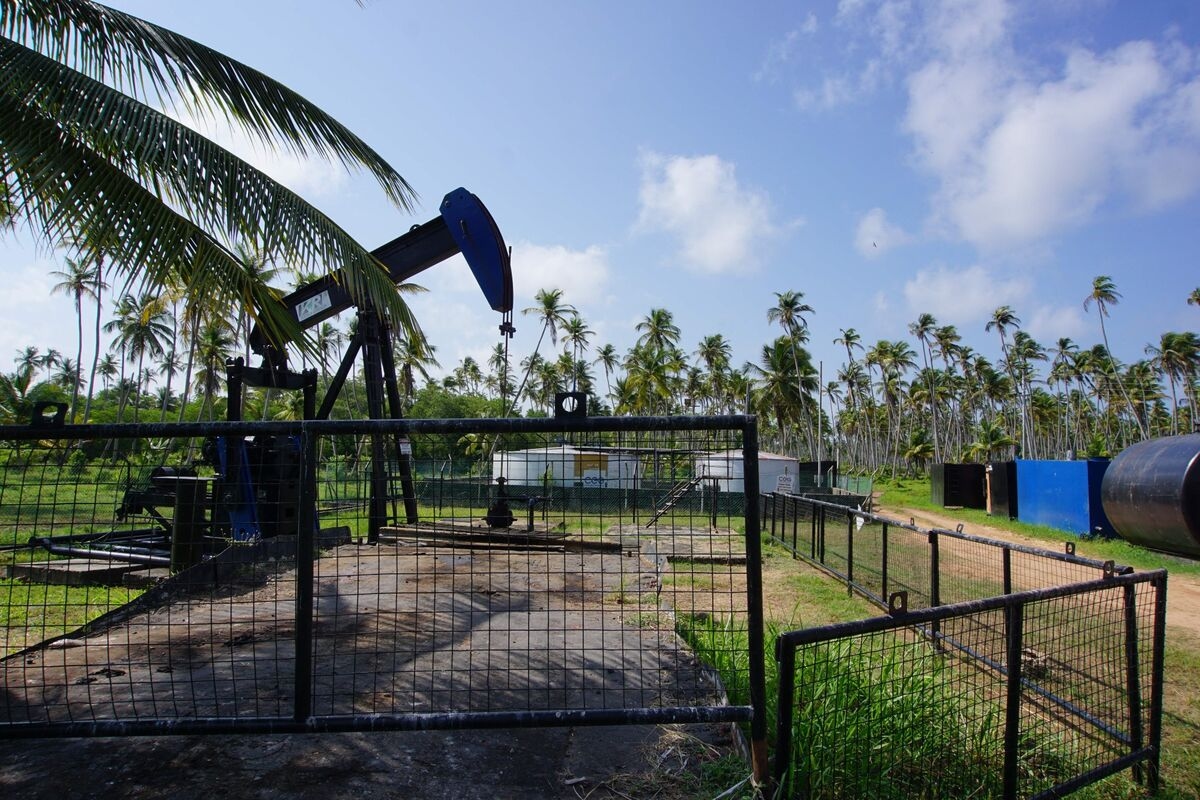
Trinidad Aims to Boost Gas Output With BP, Woodside Projects
Trinidad and Tobago is working to reverse a major slump in gas production and revive a key export industry in the Caribbean nation to boost its economic growth. Energy Minister Roodal Moonilal sees strong potential in the country's offshore waters at a time when auditors said more gas output must be added to satisfy demand.
