


Latest news with #federalland


Fast Company
 5 hours ago
- Business
- Fast Company
Trump's bill kills clean energy tax credits. Here's exactly how much money Big Oil gave to Republican backers
The oil industry was a major donor to Donald Trump's presidential campaign, and it's gotten a return on that investment. Trump's 'Big Beautiful Bill' kills clean energy incentives, gives millions of dollars in tax breaks and handouts to fossil fuel companies and executives, and mandates new oil and gas lease sales on federal land. But Trump isn't the only politician in the pocket of Big Oil. The Republican lawmakers who supported that tax bill have also taken money from the fossil fuel industry—accepting more than $105 million in donations collectively, according to a recent analysis from environmental advocacy group Climate Power. That's even as the clean energy tax credits and other incentives in Joe Biden's Inflation Reduction Act sent more than $200 billion to Republican districts, bolstering their economies and creating thousands of jobs. 'Why did they vote to kill manufacturing jobs in their home-state energy industries and raise utility rates on their own constituents while sending their constituents' tax dollars to oil and gas executives?' Climate Power asks in its analysis. 'The mystery isn't hard to solve,' it continues. 'These Republicans in Congress are caught red-handed taking massive donations from the oil and gas industry, and voting to give them billions and to destroy their competition from their own state's clean energy industries.' All but two Republican House members and three Republican Senators voted to pass Trump's budget bill. The Climate Power report, which was first published in the Guardian, tallied up how much those supporters have received in donations from the fossil fuel industry over their entire careers. Republican House members have accepted $54.4 million, the Guardian reports, and Republican senators $51.5 million. More than $3 million from the oil industry has specifically gone to 15 Republicans whose states have major renewable energy sectors. These 15 lawmakers all backed Trump's budget bill—risking nearly 112,000 clean energy jobs in their states. Michigan, for example, is a hub for the battery sector, which was heavily supported by the Inflation Reduction Act. Representative Bill Huizenga has taken more than $200,000 in oil and gas contributions. In Arizona, a prominent state for solar power, three representatives—David Schweikert, Eli Crane, and Juan Ciscomani—have collectively accepted more than $500,000 in donations from oil and gas companies. In Iowa, more than 60% of the state's electricity came from wind energy in 2024. Wind is an industry that Trump has had particular ire for. And Iowa Representatives Mariannette Miller-Meek and Zach Nunn have accepted about $230,000 and $130,000 in oil and gas contributions, respectively. Big Oil has been lobbying politicians for decades, but the industry has found a prominent supporter in Trump. While campaigning for his second run at the presidency, he invited oil and gas executives to his Mar-A-Lago estate, promising them benefits if they donated $1 billion to his efforts. Though Trump ultimately didn't receive that massive total, the oil and gas industry did still give: In the last election cycle alone, the industry spent $445 million to influence both Trump and Congress members, a previous Climate Power analysis found. Since regaining control of the White House in January, Trump has led a uniquely damaging assault on the planet, giving free reign to polluters, rolling back dozens of environmental regulations, and freezing billions in funding to support clean technologies like solar farms and EV chargers.

Bloomberg
3 days ago
- Politics
- Bloomberg
Washington Should Be a ‘Freedom City,' Not a Police State
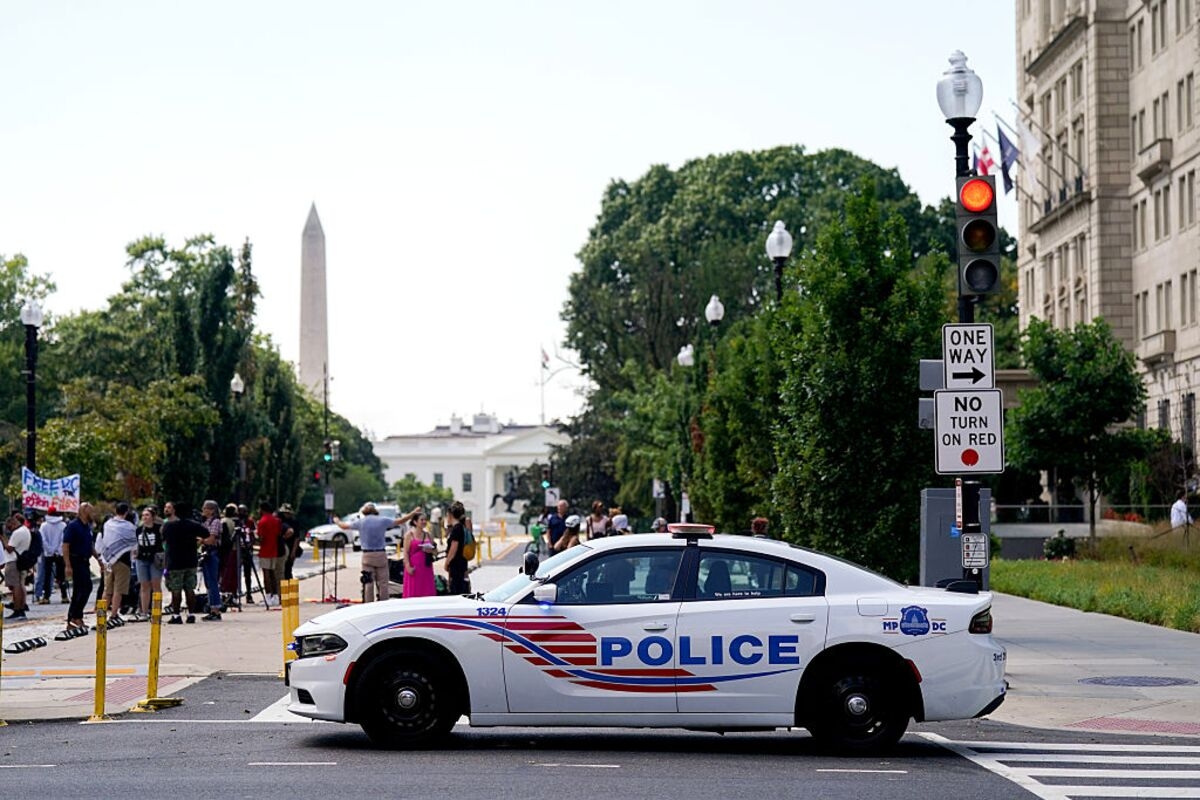
As a longtime resident of our nation's capital, and even as I strenuously object to Donald Trump seizing control of our city's police force, I would like to make a suggestion: Mr. President, you took over the wrong department. As a former developer, you should know that the real power to change a city is in its planning office. I am not being entirely facetious. If Republicans are going to treat DC as a vassal state, they should at least have the courage of their convictions and try do something constructive. Specifically, they could make Washington the first of the 10 ' Freedom Cities ' Trump has pledged to build on federal land.


E&E News
4 days ago
- Politics
- E&E News
Survey finds lukewarm support for old-growth forests
Saving the nation's oldest forests remains a priority among a wide range of forest policy groups — but there are cracks in that support, an industry survey suggests. Attendees at a forest policy conference, including environmental groups, forest owners and government employees, agreed that the U.S. should seek to reverse the loss of old-growth areas and recognize federal land as the forefront of that effort. But a quarter of respondents said they disagreed with that position and less than half said they were 'strongly' supportive — the weakest showing for any of the 16 resolutions adopted at the American Forest Congress organized in July by American Forests and other groups in Washington. Advertisement The old-growth issue has proved complicated since the Biden administration tried — and failed — to restrict logging in areas it defined as old growth, a term that itself stoked arguments among conservationists, timber interests and others.
Bloomberg
07-08-2025
- Business
- Bloomberg
Trump's Latest Attacks Stun Wind and Solar Industries
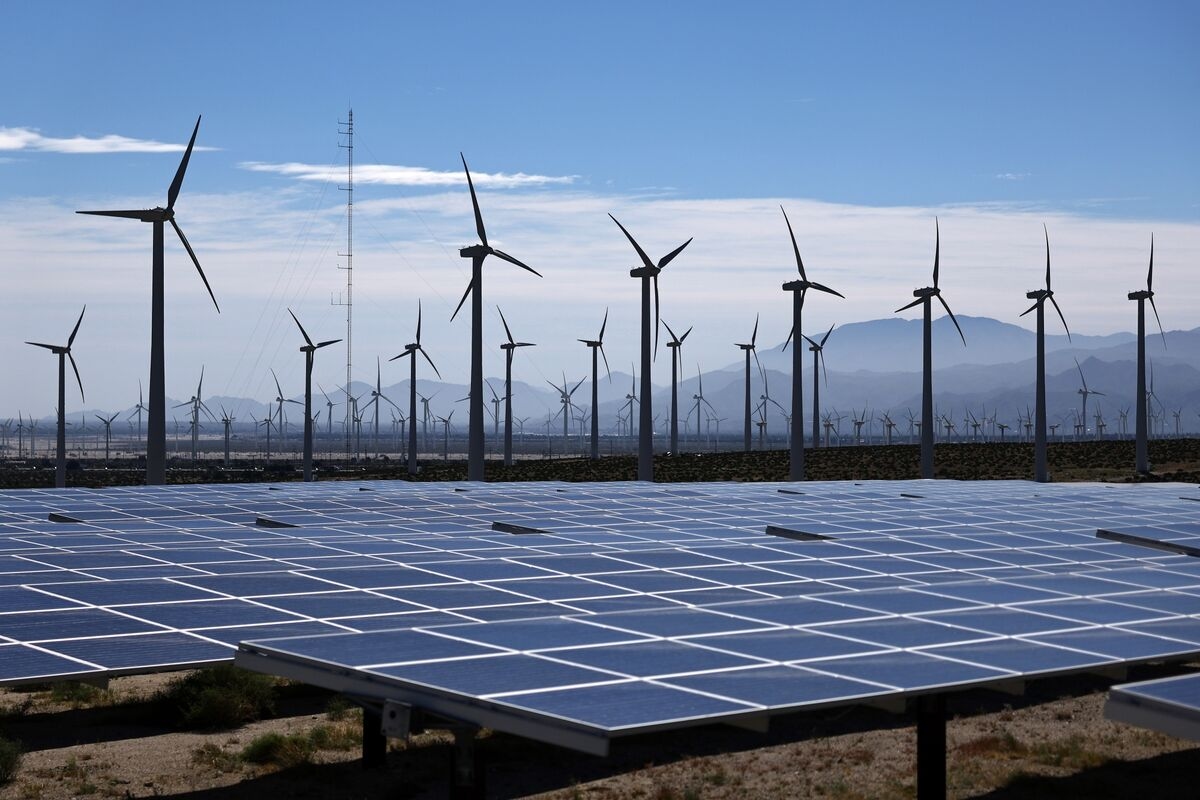
President Donald Trump is escalating his attacks on wind and solar power from the rhetorical to the tangible, mounting a rapid-fire campaign that exceeds the industries' worst fears. In just the past few weeks, the Trump administration instituted permitting reviews that threaten US wind and solar developments. It imposed standards that would essentially prevent new developments on federal land. It rescinded Biden-era decisions earmarking coastal waters for future wind turbines. And on Wednesday it yanked approval for a massive planned wind farm in Idaho. The pace and range of strikes against renewables -- alongside several other actions that serve to prop up fossil fuels and nuclear power -- have whipsawed wind and solar developers that had grown accustomed to federal support. The policies have already helped contribute to the cancellation or delay of more than $22 billion clean energy projects since January and the loss of thousands of jobs, a majority in Republican states, according to an analysis from the E2 advocacy group.


Forbes
28-07-2025
- Business
- Forbes
Trump Just Triggered The Largest Data Center Buildout In History
Data Center IT Specialist and System administrator Talk, Use Tablet Computer, Wearing Safety Wests. ... More Server Clod Farm with Two Information Technology Engineers checking Cyber Security. If there's one thing I've learned after decades in the investment world, it's that government policy is a precursor to change. What's unfolding right now with artificial intelligence (AI) in the U.S. is a full-blown industrial revolution, and it's being backed and subsidized by the federal government like few things I've seen before. Last week, President Donald Trump signed an executive order that could mark the beginning of a new era in U.S. manufacturing and energy. With the stroke of a pen, the White House declared AI data centers and their supporting infrastructure—semiconductors, transmission lines, power generation and more—a national priority. What this means is faster permitting, regulatory rollbacks, access to federal land and potentially hundreds of billions in new investment flowing into this industry over the coming decade. The Rise of the AI-Industrial Complex I believe that what's happening right now with AI is similar in scale and ambition to the defense buildout of the Reagan years or the shale revolution of the 2010s. The Trump administration's new executive order, signed on July 23, seeks to streamline the development of large-scale AI data centers that consume more than 100 megawatts of power. That's a massive amount of compute muscle, but it's necessary to train and run next-generation AI models. Trump's EO also prioritizes projects with $500 million or more in capital expenditures, fast-tracking them through what used to be a years-long regulatory slog. In short, the White House is telling the tech industry: 'Build it, and build it fast.' Trump Touts Billions in Private Investment at Energy Summit One of the more ambitious announcements so far came earlier this month during the Pennsylvania Energy and Innovation Summit, where Trump unveiled more than $90 billion in new private capital pledges for AI and energy infrastructure. That includes $25 billion from Alphabet (Google's parent company) and another $25 billion from alternative investment firm Blackstone, all dedicated to developing AI data centers and natural gas facilities in the Keystone State. Why was Pennsylvania selected? The state sits atop the Marcellus Shale, one of the largest natural gas deposits in the world. These new AI centers are energy-hungry, and gas is abundant and cost-effective. A $6.7 Trillion Infrastructure Boom According to McKinsey, the global price tag to scale AI data centers could hit a staggering $6.7 trillion by 2030. Of that, $5.2 trillion would be earmarked for facilities designed to handle AI workloads. That's an unfathomably large number. To put it in perspective, that's more than twice the size of Germany's GDP. Estimated global data center capacity demand In February, Goldman Sachs projected that AI-driven data centers could push global electricity demand up 165% by 2030. That's in a world where many utilities have seen flat demand for decades. Now, they're scrambling to add new capacity, and Goldman estimates the U.S. will need over 500,000 new power-sector workers just to keep pace. Wall Street's Money Is Following Washington's Lead In many ways, it seems as if AI is eating the world. According to PitchBook, AI startups in the U.S. alone raised $104 billion in the first half of 2025, nearly matching their total for the entire year of 2024. That represents more than 60% of all venture capital raised nationwide. Elsewhere, Facebook's parent company Meta is raising $29 billion from private credit firms to build out data centers, including a new 20-year agreement to power its AI efforts with nuclear energy from Illinois. Elon Musk's xAI is reportedly on pace to burn through $13 billion this year as it builds custom AI infrastructure from scratch. Even private equity is getting in on the act. The American Investment Council (AIC) reports that over $1 trillion has been invested in AI infrastructure since 2020, from data center buildouts to semiconductor fabs to clean energy projects. AI Adoption Still in the Early Innings A recent survey conducted by the Census Bureau found that just 9.2% of American companies are using artificial intelligence today. That's up from 7.4% in the first quarter of this year and 5.7% at the end of 2024. AI adoption rate among U.S. firms continues to rise To put that in perspective, it took e-commerce nearly a quarter of a century to cross the 10% adoption threshold. AI is about to do it in just a few years. This tells me we're still in the early innings. While Wall Street may have already priced in some of the hype around AI, the actual adoption across the economy is just beginning. The American AI Century I believe we've entered a new industrial age—one where data is the new oil, and compute is the new horsepower. Washington is signaling that America's future competitiveness depends on winning the AI race, and they're laying the legal and financial groundwork to do just that. I'm paying attention to policy. The last time we saw this kind of coordinated push was during the Space Race and the Reagan defense expansion. Both were followed by generational investment opportunities. The AI revolution won't be built overnight, but it's already under construction. As always, the early movers stand to reap the biggest rewards.
