


Latest news with #fig


Telegraph
 5 days ago
- General
- Telegraph
Fig trees are perfect for the lazy gardener. Here's how to grow them
If I could only grow one fruit tree, it would have to be a fig. Partly because it is so simple to produce delicious figs – so much so, their nickname is 'the lazy man's fruit'. You do not have to have a bright sunny spot, but shelter helps. Extraordinarily, gardeners even grow them in areas where temperatures can be as low as -34C. But my main reason for loving home-grown figs is that shop-bought figs are not a patch on freshly picked, ripe fruit. This is because figs damage in transit extremely easily, so as a result they are picked for shipping when 50 per cent ripe and, unusually, they do not ripen after picking, which means the sugar content is low and the flavour and texture pretty grim. A common misconception is that figs are less hardy than they really are. Admittedly, in very cold areas gardeners use winter protection or clever methods such as laying the plant on the soil (by cutting the roots on one side) and heavily mulching, but you can grow successfully without winter protection, even in areas where you experience temperatures of -15C. Pavlina Kapsalis, who looks after the national collection of figs at RHS Wisley, where they have 43 different varieties, finds that figs fruit well in sheltered, semi-shady positions – often better than those that are in a sunny, exposed position. In her own garden she has successfully planted them by a hedge. The best varieties Ficus carica 'Brown Turkey' is the variety commonly sold here, but I find it fairly bland; other varieties taste better and are more fruitful. I much prefer 'Desert King', a fig that thrives in cool climates and reliably produces large, early crops. 'Little Miss Figgy' is also excellent, and produces well in droughts apparently. It's a dwarf variety, though mine in its second year is getting on for nearly 10ft high. I want to try 'Negronne', which is a dwarf variety with a delicate raspberry flavour and is hardy even in Dumfries in Scotland. 'Panachée' has fruit that look like striped hot-air balloons, but it rarely ripens outside with me and apparently it is best to grow inside in late summer to ripen. Pavlina kindly offered to give me cuttings of her two favourites, notably 'Bourjassotte Grise' and 'Califfo Blue'. My mission is to get a good range of varieties for my garden. The varieties that do best in the UK are those that have a reliable breba crop – the first crop which ripens on the shoots grown on the previous year's wood. The fruit of the breba crop appears in late summer and overwinters as tiny fruit, about the size of your little fingernail or smaller. These are most often the only ones to ripen in the UK, in late summer the following year. The second crop, which appears in early summer on the current year's growth, usually doesn't get enough sun to swell and ripen in the UK, unless it is grown under cover. It is advised to remove these in the autumn. That said, I have never had the time or patience to do this and am still very happy with my fig production. When and how to prune your fig The pruning and planting as advised in the old books can be extremely convoluted. I have discarded this advice in the main. I have decided to grow a couple of figs as large trees in the open ground, having chatted to Pavlina, who says a few of those at Wisley which are grown this way are extremely productive. Elsewhere, my objectives are to keep the size of each tree or plant – whether in the polytunnel, greenhouse or against a wall – at around 6ft to 10ft high, so that it is easily manageable. This involves quite heavy pruning. In the winter, I thin out the branches. Last year I did this drastically, but made sure some branches with the tiny fruit were kept, as these are the ones ripening now. In the spring I then shortened the new growth back just past the last mini fruit. This forces the new shoots to grow away from the base of the branch. Then the following winter I will cut back the branch that has fruited this year. The idea is that at every spur a young shoot will be produced the following year to replace the one you cut away in the preceding winter. The main stem can grow to any height you like. You might fan-train the branches against a wall, or if you are growing them in a pot, then you may produce a standard or bush form, a little like an apple, and keep it to a good height for you. I do remove a fair amount of unproductive foliage in the growing season to allow lots of sun in to ripen the fruit. The branches also need sun to ripen the wood so that they can produce next year's fruit. Getting back from holiday last week, I removed a ton builder's bag full of foliage and new wood from a 40-year-old fig against a south wall that is grown in the ground in pretty poor soil. How to grow figs in pots Figs in pots are easier to keep restricted in size. The traditional advice is to restrict the planting pocket to reduce the growth. I have never done this, but if I did decide to do this I would use a Rootex Root Control bag, which only allows fine roots to penetrate into surrounding soil. These are available from Pomona Fruits. On most of my figs I have removed the bases from the pots, except in the polytunnel, where I can easily throw on a can of water daily with some liquid fertiliser as I tend other plants there. The pots are cheap ones, and when the plant becomes too root-congested I heave or cut it out and repot it. Figs are extraordinarily tolerant of having their roots (and tops) heavily manicured. By removing the bases of pots on those grown outside, I don't have to feed or water the plants once they are established, and by heavily pruning the top you are restricting the amount of roots that develop too. In colder countries, many growers bring the plants into garages or sheds in winter for extra protection. Fig trees do need to go dormant in winter, so if you go down this route, wait until the tree or bush is dormant before you move it; let it enjoy two to three frosts first. When to pick figs I usually pick the fruit around mid September in my garden in the East Midlands. Having said that, I was picking my first ripe figs in early July this year, from a 'Little Miss Figgy' plant grown in my polytunnel, but admittedly it has been a hot, early summer. A simple way to check if figs are ripe is to check the neck of the fruit. It should feel soft. Also, you may see the skin start to crack and the neck droop a little. They can stay on the tree for a fair few days like this, but we usually pick before the wasps, ants and blackbirds spot them. How to propagate figs I propagate my figs in my hydropod propagator and they root rapidly in two or three weeks. Before this I used to take cuttings in late summer, and rooting took a few months. I am gradually increasing my collection – they are definitely benefiting from global warming here. And they are so versatile: delicious in a fig and cardamom pavlova, with cheese, in salads with parma ham, or just on their own. If you have too many, they can simply be dried. Growing tips Select your most sheltered site: maybe against a south-facing wall, or failing that, a fence. It can be partially shaded. In order to restrict the amount of pruning necessary (unless of course you want a large tree), plant in a root control bag or pot. Feed well if in a pot: a slow-release fertiliser is ideal. Water generously as the fruit develops in the summer. If you have room, get several different varieties. If you are short of space, a small, standard fig on a terrace is not only highly attractive but also gives a delicious harvest. Avoid touching the foliage in sunshine without gloves: it is quite common for the foliage to cause phytophotodermatitis, an allergic skin reaction.

India.com
30-06-2025
- Health
- India.com
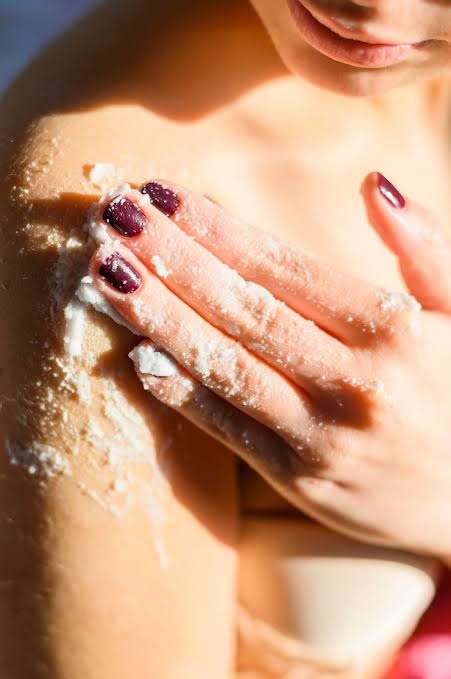
Scalp & Body Scrub with Sugar Crystals and Coconut Oil
Zee Media Bureau Jun 30, 2025 The Wild Oak Himalayan Salt Body Scrub is a powerful detoxifying exfoliator crafted from mineral-rich Himalayan pink salt. Order Now The Cuccio Sea Salt Scrub combines the gentle exfoliating power of sea salt with the antioxidant benefits of pomegranate and fig extracts. Order Now Zeoveda's Vanilla Bliss Sugar Scrub offers a deeply hydrating exfoliation experience with natural sugar crystals and shea butter. Order Now MITVANA's Body Polish Scrub blends the brightening power of orange with the healing properties of turmeric, making it perfect for dull or uneven skin. Order Now The OUAI Scalp & Body Scrub is a dual-purpose exfoliator designed to revive both your scalp and skin. Infused with fine sugar crystals, it gently removes dead skin cells, product buildup, and impurities. Order Now At IDPL, we help you stay up-to-date with the latest trends and products. It should not be construed as an endorsement to buy. IDPL may make a very small commission from its sale if one chooses to buy the product from any of the links in this webstory. Read Next Story


Express Tribune
07-02-2025
- Politics
- Express Tribune
USAID's imperial long con
As US President Donald Trump continues to strike blows at the heart of American soft power, stripping away every last fig and vestige of imperial pretence, one can't help but recall the old adage: 'Never interrupt your enemy when he's making a mistake!' By choosing to disembowel USAID and pull out of global institutions, Trump's Washington seems to prefer a chaotic exit over confronting the inevitable collapse of an ever-more-expensive post-war hegemony – while Europeans still remain on the sinking ship. America First! With millions of lives on the line and conflict zones growing ever more vulnerable on the soil of its own allies, it hardly comes as a shock that this relic of the Cold War is potentially meeting its end, evoking a sense of 1990s déjà vu. The newly minted US secretary of state, Marco Rubio, who has been now appointed as the acting administrator of the aid agency, made it clear while admitting that there were many "multi-great powers in different parts of the planet". He also grumbled about how "the postwar global order is not just obsolete; it is now a weapon being used against us". For decades, traditional leftists – those who once opposed the Iraq War, the Washington Consensus, and rallied against institutions like the IMF, WTO and free trade agreements – have persistently denounced USAID as 'humanitarian imperialism', a vehicle of neo-liberalisation of development. If one were to be arm-twisted into praising Trump's touted honesty, the words of his executive order speak for themselves. Issued on his first day back in office, the order temporarily suspends all American foreign aid programs for 90 days, stating that the foreign aid programmes 'serve to destabilise world peace by promoting ideas in foreign countries that are directly inverse to harmonious and stable relations internal to and among countries'. Established in 1961 by President John F. Kennedy under the noble guise of aiding developing nations, USAID was, in many respects, an instrument during the Cold War to counter Soviet influence and keep the 'Third World' from crafting its own socio-economic model. As the developing countries emerged from de-colonisation, the whole aid story served as a convenient alibi for capitalist exploitation, a trick to sweep away any hint that Western powers might have had a hand in the South's misery. The agency has supported regimes friendly to US interests, funnelling vast sums to fortify military dictatorships in several countries including Pakistan and Taiwan. In the 1960s, Afghanistan ranked among the highest per capita recipients of foreign aid. By the late 1980s, however, Peshawar – then the epicentre of US-funded 'jihad' in Pakistan – had become home to more transnational NGOs than anywhere else in the world. A textbook example of the shift often described as a transition 'from empires to NGOs'. Take for instance Chile in the early 1970s when behind the scenes, a US-backed coup overthrew the socialist government, setting the stage for a military dictatorship that was as much about imposing neoliberal reforms as it was about quelling dissent. Even as brutal regimes took hold, Western donors poured cash into local NGOs –groups that, on the surface, championed human rights and social relief. But underneath, these efforts often served to dilute more radical, grassroots movements that threatened the status quo. The double policy later came to be known as Operation Condor, a campaign designed to neutralise leftist challenges across the region. By the 1990s, as the leftist revolutionary fervour dimmed, US agencies like USAID stepped up their game, funnelling millions into projects ranging from micro development in rural Paraguay to 'democracy-building' initiatives in Haiti and Bolivia. The European Union also joined the fray by launching its own 'civilian power' experiments in war-torn Colombia and beyond. The campaigns and covert operations locked in long-term economic ties and secured political influence. 'Graduate school for the CIA' On November 3, 1961, USAID was established to manage America's foreign aid programs. However, its mission was never just to dole out cash. Under President Harry S. Truman, US aid was designed to cut poverty in order to create consumer markets and spread capitalism—a move aimed squarely at undermining socialism and communism. It wasn't long before the CIA spotted an opportunity to extend its reach. In 1962, USAID launched its Office of Public Safety to send agents around the world under the guise of 'training police officers'. But as it turned out, the trainers were busy teaching enhanced interrogation techniques—a euphemism for torture. The scandal broke in 1966, and although the office was finally shut down in 1974, the dark practices persisted within military and intelligence circles. Similarly, during the same period, as historian Bradley Simpson's research on US military and development aid in 1960s Indonesia reveals, the development, military assistance, and counterinsurgency often blurred together. Amid Cold War tensions, USAID, the State Department, the CIA and US capitalists – both official and private – actively or tacitly backed the violent purge of Communists and the overthrow of Sukarno in favour of Suharto's military dictatorship. Simpson notes that aid for domestic police training and military-led rural infrastructure projects ''fudged the line between counterinsurgency and civic action,'' with USAID and the CIA collaborating on training efforts. The US soon embarked on an ambitious, if ethically questionable, project: global population control. USAID established its Office of Population, making it clear that poorer nations could only receive aid if they set up population control programmes. This led to the creation of a worldwide network promoting mass sterilisation and abortion. The fallout was stark as by 1993, USAID's involvement in Peru's national health system culminated in the forced sterilisation of roughly 300,000 indigenous women, a policy that only ended in 1998 and left deep, lasting scars on rural communities. By 1980, USAID Administrator John Gilligan was candid enough to describe the agency as nothing more than a 'graduate school for the CIA'. 'At one time, many aid field offices were infiltrated from top to bottom with CIA people,' he said. 'It was pretty well known in the agency who they were and what they were up to … The idea was to plant operatives in every kind of activity we had overseas, government, volunteer, religious, every kind.' Father George Cotter, a priest who had collaborated with USAID on several occasions, later dubbed it 'the CIA's little sister'. In the 1990s, USAID boldly announced that it would help manage Russia's transition to a market economy, channelling funds through the Harvard Institute for International Development. However, the project soon bogged down amid conflicts of interest and corruption scandals, leading Harvard University to settle a lawsuit with the US government for $26 million. Meanwhile, in 2005, USAID was busy funding 'democracy' seminars in Brazil—a strategy eerily similar to that employed by the National Endowment for Democracy in Hong Kong. While Brazilians eventually clapped back and edged out the foreign interference, Hong Kong's less politically savvy population would pay the price in the years that followed. A Harvard study in 2006 revealed a startling trend: nations that held seats on the 15-member UN Security Council received significantly more aid from the US – only to see funding evaporate once their term ended. Critics argued this was a textbook case of 'aid for votes,' a charge that USAID steadfastly denied. Between 2009 and 2012, USAID embarked on a notorious programme designed to trigger regime change in Cuba. The initiative consisted of two prongs: one, the creation of an anti-government digital social network called ZunZuneo; and the other, dispatching CIA agents disguised as aid workers and tourists to stir up anti-government sentiment. In the end, the multi-million-dollar venture fell flat. By 2012, many nations had caught on to USAID's true colours. Countries including Russia, Venezuela, Cuba, Ecuador and several Caribbean states moved to bar the organisation from their territories, with Bolivia officially ejecting it in 2013. In 2014, the Associated Press reported that an Obama administration USAID programme secretly dispatched young Latin Americans to Cuba using the cover of health and civic programs to provoke political change. The plot thickened in 2016. As the so-called Panama Papers scandal unfolded, it became apparent that the leak had a curious focus on US adversaries like Russia, Syria and China. WikiLeaks later revealed that the journalism group behind the leak was funded by USAID along with entities controlled by billionaire George Soros, infamous for backing anti-Eastern media narratives. Fast forward to 2024, when it was uncovered that USAID was a major benefactor of BBC Media Action—a 'charity' that trains journalists to uphold Western standards of moderation, dismissing the proven success of tighter controls in places like Singapore and China. Ironically, the BBC's international development charity was founded in 1999, evolving from earlier BBC initiatives, including the 'Marshall Plan of the Mind'—a programme launched in the 1990s to promote "high standards of journalism" in the former Soviet Union and Eastern Europe. Economic exploitation In tandem with overt military interventions and political meddling, a quieter and insidious economic exploitation has played out in the name of aid money. The tools of 'informal imperialism' have not only opened markets for American interests but have also locked recipient nations into cycles of dependency. For instance, at a time when the US and Britain were busy launching an invasion of Iraq, and the Bush administration had just helped unseat Haiti's progressive leader Jean-Bertrand Aristide while quietly backing a coup against Venezuela's Hugo Chávez, the West was already on a long streak of heavy-handed meddling that dated back to Eisenhower's era in the 1950s. However, despite all that, the steady trickle of aid was paraded as the ultimate proof of Western kindness. It may be recalled here that in 2022, former French ambassador to Haiti, Thierry Burkard, told The New York Times that France and the US had effectively staged a coup against Aristide by pressuring him into exile. Just a year before his overthrow in 2004, Aristide had demanded that France—Haiti's former coloniser—pay $21 billion in restitution for the 90 million gold francs Haiti was forced to hand over between 1825 and 1947 as compensation for French property, including enslaved people, seized during the Haitian Revolution. The $128 billion in aid disbursements is indeed on the books. But when set against the massive flow of money moving in the opposite direction, it turns out to be just a drop in the bucket. At the end of 2016, US-based Global Financial Integrity (GFI) and the Centre for Applied Research at the Norwegian School of Economics released eye-opening data. Unlike earlier studies that only tallied aid, foreign investment and trade flows, their analysis also factored in debt cancellation, remittances and capital flight—the most complete picture of resource transfers between rich and poor nations to date. The findings for 2012 showed that developing countries received a little over $2 trillion from abroad, while roughly $5 trillion flowed out in the same year. In other words, these countries sent $3 trillion more than they received. Looking back from 1980 onward, the net outflows add up to a staggering $26.5 trillion—roughly equivalent to the combined GDP of the United States and Western Europe. According to Jason Hickel, an anthropologist and professor at the Autonomous University of Barcelona, a large chunk comes from debt payments. Today, developing countries pay over $200 billion a year in interest to foreign creditors—much of it on decades-old loans that seem to be repaid over and over, and some on debts amassed by greedy dictators. Since 1980, these nations have forked over about $4.2 trillion in interest—a figure that far outstrips the aid they've received. Neoliberalisation Since its inception, the agency's ties with the private sector have only grown stronger. In its early decades, USAID focused on launching programs and building infrastructure abroad to attract foreign investment. This involved 'easing trade regulations, offering loan guarantees to businesses, providing scholarships for students to study in the US, and creating agricultural development programs that opened the markets of poor countries to large agribusiness'. Later, in the early 2000s, USAID shifted gears toward a more hands-on approach with the private sector. Marked by the creation of its Global Development Alliance, the change was touted as 'a partnership where USAID and the private sector work together to develop and implement market-based approaches to solve development challenges'. In practice, this meant USAID now collaborated closely with private firms, awarding multi-million-dollar contracts to US corporations to carry out 'development' and aid projects in the Global South. Serving as an extension of US corporate interests and broader imperial ambitions, the agency sought to break into new markets and generate profits for Western-based corporations. This involves contracting out humanitarian aid and development projects – often in the wake of a natural disaster or catastrophe – thus opening these countries to foreign capital and fattening the coffers of the US capitalist elite at the expense of local economies. A classic case of the 'shock doctrine'. In fact, 80% of all USAID funding goes to just 75 organisations, while only 6% reaches the recipient countries directly. Perhaps the most crass and shocking example of this comes from Iraq. Long before the first shots were fired in the 2003 US invasion of Iraq, USAID was already laying the groundwork for post-war reconstruction, inviting bids from corporations eager to cash in on the chaos. Among the frontrunners was Bechtel, a San Francisco-based construction giant with deep pockets and even deeper connections. Smelling profit in the air, Bechtel's Senior Vice President Jack Sheehan leveraged his perch on the Defense Policy Board to nudge the Pentagon toward war, all while drumming up public support for the invasion. Meanwhile, the company and its employees greased the wheels in Washington, pouring $1.3 million into campaign coffers between 1999 and 2002 – an investment that helped ensure lawmakers would vote in its favour when the time came. The brutal gamble paid off handsomely. USAID handed Bechtel a staggering $1.8 billion in contracts to rebuild Iraq's gutted infrastructure, from sewage and water systems to electrical grids. However, as the dust settled, it became clear that Bechtel was more interested in padding its bottom line than in actually fixing what the war had broken. The company drew heavy criticism for mismanagement, delays and shoddy execution – infamously failing to complete a children's hospital in Basra after running a year behind schedule. By the time Bechtel packed its bags, it had raked in over a billion dollars in taxpayer money, leaving the country in ruins with unfinished projects.
