


Latest news with #recessionfears
Yahoo
 06-08-2025
- Business
- Yahoo
MarketAxess beats profit expectations as market volatility drives record trading
(Reuters) -Bond trading platform MarketAxess beat Wall Street estimates for second-quarter profit on Wednesday, as heightened market volatility sparked record trading results. WHY IT'S IMPORTANT Shifts in U.S. trade policy under President Donald Trump and changing expectations for Federal Reserve rate cuts have roiled bond markets, spurring investors to reposition portfolios amid rising recession fears. MarketAxess' results offer an insight into the bond market, widely viewed as a more reliable indicator of recession than the stock market. CONTEXTMounting recession fears have sparked greater bond trading volumes as investors aggressively rejig their portfolios to hedge risks. The New York-based firm expects continued market volatility and bets on its recent product enhancements like new portfolio and block trading capabilities to strengthen its share of the U.S. credit market in coming quarters. KEY QUOTE "Our new initiatives, along with a supportive market environment, contribute to record revenue and ADV (average daily volume) across most products and regions during the quarter," said MarketAxess CEO Chris Concannon. BY THE NUMBERS On an adjusted basis, MarketAxess earned $2 per share in the three months ended June 30, beating Wall Street expectations of $1.96, according to data compiled by LSEG data. Total ADV jumped 43% to record $49 billion in the quarter. Credit products, which generate about 90% of MarketAxess' revenue, posted a 22% rise in ADV to a record $16.80 billion, driven by strong trading activity across U.S. credit, emerging markets, and eurobonds. Sign in to access your portfolio


Reuters
06-08-2025
- Business
- Reuters
MarketAxess beats profit expectations as market volatility drives record trading
Aug 6 (Reuters) - Bond trading platform MarketAxess (MKTX.O), opens new tab beat Wall Street estimates for second-quarter profit on Wednesday, as heightened market volatility sparked record trading results. Shifts in U.S. trade policy under President Donald Trump and changing expectations for Federal Reserve rate cuts have roiled bond markets, spurring investors to reposition portfolios amid rising recession fears. MarketAxess' results offer an insight into the bond market, widely viewed as a more reliable indicator of recession than the stock market. CONTEXT Mounting recession fears have sparked greater bond trading volumes as investors aggressively rejig their portfolios to hedge risks. The New York-based firm expects continued market volatility and bets on its recent product enhancements like new portfolio and block trading capabilities to strengthen its share of the U.S. credit market in coming quarters. "Our new initiatives, along with a supportive market environment, contribute to record revenue and ADV (average daily volume) across most products and regions during the quarter," said MarketAxess CEO Chris Concannon. On an adjusted basis, MarketAxess earned $2 per share in the three months ended June 30, beating Wall Street expectations of $1.96, according to data compiled by LSEG data. Total ADV jumped 43% to record $49 billion in the quarter. Credit products, which generate about 90% of MarketAxess' revenue, posted a 22% rise in ADV to a record $16.80 billion, driven by strong trading activity across U.S. credit, emerging markets, and eurobonds.

Yahoo
01-07-2025
- Business
- Yahoo
As stocks notch records, sentiment lags behind, but 'Fed put' to support bulls
-- Stocks are reaching for the skies, clinching fresh records even as a key gauge of investor sentiment lags behind, with recession worries still simmering beneath the surface. But Yarndeni Research says the bull run is far from over, as the 'Fed put' is back in play and should cushion any fallout from tariff-driven hits to growth. 'Despite the latest record highs for the S&P 500 and Nasdaq, the Investor Intelligence and AAII Bull-Bear Ratios remain relatively low… This suggests that stock investors remain wary. It's as though they're chanting Roseannadanna's mantra: '[I]t's always something—if it's not one thing, it's another,'' Yarndeni Research said in a recent note. Investors have found fresh relief as the Israel-Iran conflict cooled and optimism builds for a resolution to Trump's trade war, even as talks with Canada hit a snag. Offsetting that setback, the U.S. and China resolved a rare earths dispute, and new trade agreements are reportedly in the pipeline. The S&P 500 and Nasdaq both closed at record highs on Friday, with the S&P 500 up 5% year-to-date. Yet, under the surface, sentiment remains cautious. The Investor Intelligence and AAII Bull-Bear Ratios are still subdued, reflecting persistent recession fears and a string of weaker-than-expected economic indicators. The Citigroup (NYSE:C) Economic Surprise Index has stayed in negative territory, and Q1 GDP was revised down to -0.5%. Personal income and spending both dipped in May, while unemployment claims remain low but continuing claims are creeping higher—a sign it's taking longer for the jobless to find work. Still, Yarndeni's take is that these are signs of a 'soft patch,' not a full-blown slowdown. Four of the five best-performing S&P 500 sectors so far this year are cyclical—Industrials, Communication Services, Financials, and Information Technology—underscoring long-term optimism around tech capex, onshoring, and capital markets. The report expects consumer spending to rebound as stock prices hit new highs and tariff turmoil moderates. Yarndeni argues, however, that the 'Fed put' is back: if the economy stumbles, the Federal Reserve is likely to cut rates twice before year-end. Even if the base case is for resilience without Fed help, the futures market is already pricing in two cuts over the next six months and four in the next year. That safety net, Yarndeni says, should keep the bull market intact—even if growth wobbles. Related articles As stocks notch records, sentiment lags behind, but 'Fed put' to support bulls Circle applies for U.S. trust bank license after successful IPO Elon Musk criticizes spending bill, calls for new political party Sign in to access your portfolio
Yahoo
27-05-2025
- Business
- Yahoo
Political views driving economic perceptions, Detroit Chamber poll finds
Hill Street Studios via Getty Images Political polarization has dramatically shifted voters' perceptions of the economy despite a lack of major economic change at the national level, Detroit Regional Chamber President Sandy Baruah told reporters while introducing the chamber's latest polling data released in concert with Tuesday's start of the 2025 Mackinac Policy Conference. The 2025 poll points to a continuing trend in the chamber's polling, with Richard Czuba, the president of the Chicago-based Glengariff which conducted the poll, telling reporters during a discussion of the 2024 data that political affiliation is a major factor in economic perception. While last year's assessment saw a more negative perception of the economy from Republicans and a more positive assessment from Democrats and independents, the 2025 assessment saw the opposite. 'Democrats have gone from 62% in January, thinking the economy is growing to now 17%. Independents have dropped from 35 to 25[%] but Republican base voters have jumped from 22 to 64[%] that think the economy is growing,' Czuba said. SUBSCRIBE: GET THE MORNING HEADLINES DELIVERED TO YOUR INBOX Of the 600 registered voters polled, 62.4% see a weakening economy, while 34.4% say it's growing. Fears of a recession have similarly jumped, rising from 20.5% in September to 27.2% in January and 38.2% in April, a shift Czuba attributes to Democrats and independents. 'Democrats' concern of a recession has gone from 43 to 73[%],' Czuba said. 'Independents have gone from 22 to 40[%], so doubled amongst independents. But base Republicans, fear of a recession has fallen from 15 to six[%],' he said. On inflation, Democrats' concerns have increased by 25 percentage points, while concern among independents has jumped by 21 percentage points. Republicans on the other hand saw a two percentage point decrease in their inflation concerns. Despite holding increasingly worse perceptions about the economy, voters aren't reporting big changes in their own situation, Czuba said. 'Right now, 26% say they're worse off than they were a year ago. 17 better, and 56% say the same. That's identical to January. 21% of those who are in the workforce are concerned about losing their job. That also is unchanged since January,' Czuba said. Additionally, 86% of voters polled said they believed their job would still be available in five years, compared to 8% who said it would not be. 'It's interesting who said it would not be. If you are lower income, household incomes under $50,000, you rise to 20% thinking your job will not be there. If you are a respondent in an automotive manufacturing household, it's 16%,' Czuba said. When looking at tariffs, 51% of Michiganders oppose President Donald Trump's tariff policies while 43% support them. However, 30% say they strongly support them while 43% strongly oppose the tariffs. There is no better issue to illustrate the divide amongst voters right now than tariffs, Czuba said, noting that 96% of Democrats oppose them while 92% of Republicans support them. Independent voters were split with 29% in support and 51% opposed. 'You can't get more divided than that,' Czuba said. Automotive households were similarly split with 48% in support and 46% opposed. However, voters across the board said that tariffs will cost them more money, with 78.6% voters in agreement. 'Even a majority of those base Republicans, strong Republicans, believe tariffs mean they pay more. While they agree they pay more, that doesn't stop them from supporting the tariffs. 92% of those base Republicans support the tariffs, while 56% say they will end up paying more,' Czuba said. 'Forty-nine percent of independents support the tariffs, and 87% of independents say they'll pay more. So a third of the voters who say tariffs are going to cost them more still support them.' In light of these tariff concerns, 55% of Democrats and 44% of independents have changed their spending habits. Twenty-one percent of voters overall said they've delayed purchases, while 14% said they sped them up. 'The top delays were automobiles and home improvement. The top sped up purchases were electronics, automobiles and home repairs,' Czuba said. Meanwhile only 7% of Republicans have altered their spending habits due to tariffs. Overall 21% of Michiganders polled said they'd been impacted by tariffs with the majority of that share citing increased costs. Additionally, while 54% of voters say tariffs will be bad for Michigan, 9% of that share still supported the new levies. However, 48% of respondents expected the tariffs would create more manufacturing jobs, compared to 28% who said they would create less and 15% who expected no change. The polling also looks specifically at the auto industry, with 65% of respondents saying it would hurt Michigan if China became the world leader on electric vehicles, with the majority of voters across every demographic group in agreement. Despite these concerns, Czuba noted that 35% of Republicans said it would have no impact on Michigan while 38% of auto manufacturing households gave the same answer, compared to 55% of auto households who agreed China leading the EV industry would hurt the state. While 56.3% of voters said the U.S. should compete for EV manufacturing and 57.9% saying Michigan should compete, 24% of voters who said letting China lead would hurt Michigan's economy still say Michigan should not lead, Czuba noted, with most of these voters being Republicans. Looking across the spectrum 72% of Democrats and 56% of independents agreed Michigan should compete aggressively for EV manufacturing, 54% of Republicans said the state should not compete. Czuba and Baruah also looked at education, with 70% of voters saying a college education is important for making a living wage and supporting a family, compared to 27% who said it's not important. However only 17% of voters said a four year college education is affordable. 'They do strongly agree and understand by a tune of two-thirds that a two year college education is affordable. And that's a good thing, because with the policy work that's been done in Michigan over the last few years, two years of college, either at community college or at a four year institution, is largely paid for, for most students should they choose to do that,' Baruah said. Czuba explained that while there's a large ecosystem telling students that they're crazy for pursuing a four-year degree due to the high cost, they're not hearing information on how to make college affordable, or at least reduce costs. 'So many issues are now getting dragged into the mill of polarization. There used to be a general consensus amongst Michigan voters for a long, long time that college education or further education was a good thing. We're starting to see that's not necessarily the case, because it's being whipped into this polarization mill that we have now,' Czuba said. In revisiting a data point from last year, Czuba also discussed Michigan voter's faith in democracy. 'Back in May of '24 29% were satisfied, 66% were dissatisfied. This year it's largely unchanged,' Czuba said. However, the big shift, once again, came down to political affiliation, with Democrat dissatisfaction jumping from 55% to 85% over the last year, and Independent dissatisfaction increasing from 63% to 75%. Republicans saw a shift in the opposite direction with dissatisfaction decreasing from 81% to 43% while their level of satisfaction increased from 15 to 51%. As Michigan stares down another election year, and what will likely be a hotly contested race for the Governors seat and the U.S. Senate, alongside multiple competitive U.S. House districts, Czuba emphasized one point. 'It's independents who are going to make decisions in Michigan. And so we have to pay particular attention to where they are on all of these issues.'

Daily Mail
15-05-2025
- Business
- Daily Mail
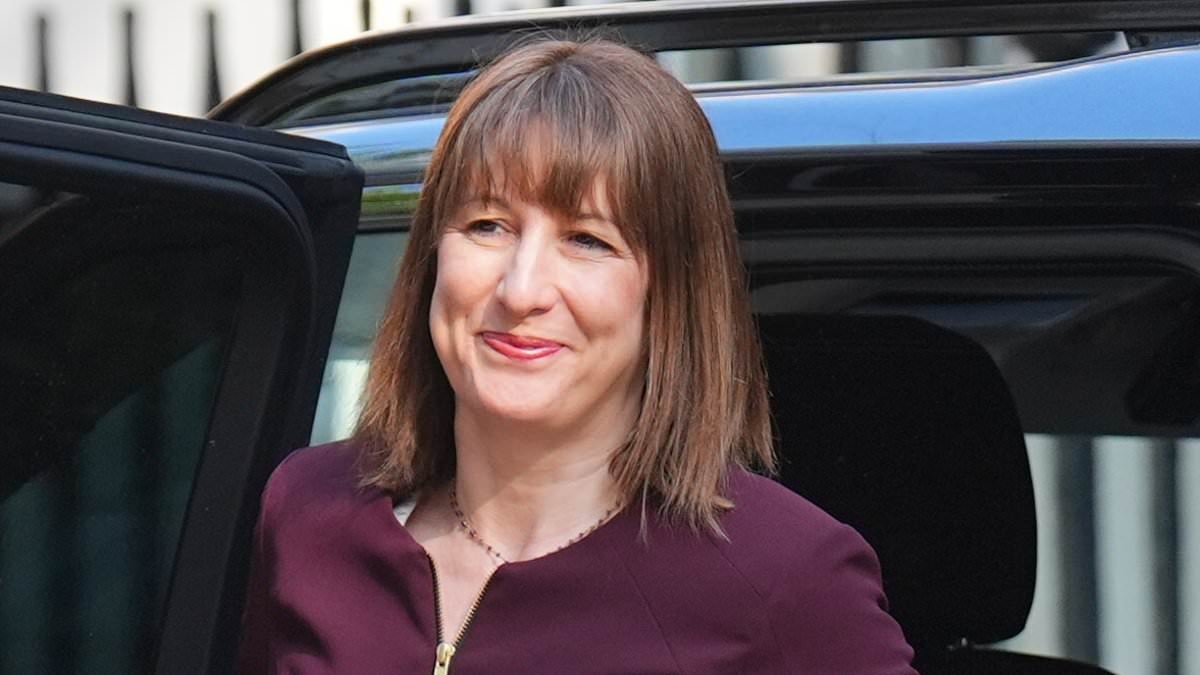
Relief for Rachel Reeves as economy records 0.7% growth in first quarter despite slowdown in March before NICs raid… but ex-No10 aide warns taxes WILL have to go up again
Rachel Reeves breathed a sign of relief today as the economy turned in better-than-expected growth in the first quarter of the year. The Chancellor hailed the 'strength and potential' of UK plc after official figures showed a 0.7 per cent expansion - quelling fears of a looming recession. It was better than the 0.6 per cent analysts had pencilled in, with Keir Starmer wading in to boast that activity had outstripped the US, Canada, France, Italy and Germany. However, there were worrying signs in March, when the rate of improvement in GDP slowed to just 0.2 per cent. Firms have been warning of worse to come as Labour's massive national insurance raid and minimum wage hikes did not take effect until April. The full impact of Donald Trump's trade war has also yet to be felt - with speculation the figures could have been flattered by companies rushing to avoid levies. A former No10 aide warned today that more tax increases are inevitable as Ms Reeves struggles to balance the government's books. Nick Williams, who was in Downing Street until last month, said current public spending plans were 'not credible'. 'The bottom line is that taxes will have to go up,' he wrote in the Times. The 0.7 per cent growth was the highest since the first quarter of 2024, when the economy jumped by 0.9 per cent. The first quarter figures represent the period directly before Donald Trump announced his so-called 'Liberation Day' tariffs on April 2. They also predate the eye-watering increase in employer national insurance contributions, which some economists have said will force firms to cut jobs. The tariffs and tax rises are expected to pull down the economy in the second quarter of 2025. Posting on X, Sir Keir said the figures showed he was meeting his goal of having the highest growth in the G7 group of advanced economies. 'But I know the Tory cost-of-living crisis isn't over – we will go further and faster to deliver for working people,' he added. Ms Reeves said the growth figures showed the Government was 'making the right choices' but acknowledged 'there is more to do'. She said: 'Today's growth figures show the strength and potential of the UK economy. 'In the first three months of the year, the UK economy has grown faster than the US, Canada , France , Italy and Germany. 'Up against a backdrop of global uncertainty we are making the right choices now in the national interest. 'Since the election we have already had four interest rate cuts, signed two trade deals, saved British Steel and given a pay rise to millions by increasing the minimum wage. 'Our plan for change is working. But I know there is more to do and that is why I'm determined we go further and faster to make working people better off.' Shadow chancellor Sir Mel Stride pointed out that major forecasters had been downgrading the UK's prospects. 'While it's welcome the economy is growing, both the OBR and IMF have downgraded the UK's growth,' Sir Mel said. 'Labour inherited the fastest-growing economy in the G7, but their decisions have put that progress at risk. 'Labour's jobs tax, unemployment bill and reckless choices have seen the number unemployed rise by 10 per cent and working families £3,500 worse off. 'Only the Conservatives believe in low tax, free-enterprise and less regulation, giving business the conditions to create good well paid jobs and wealth in our economy.' Liz McKeown, ONS director of economic statistics, said: 'The economy grew strongly in the first quarter of the year, largely driven by services, though production also grew significantly, after a period of decline. 'Growth in services was broad based, with wholesale, retail and computer programming all having a strong quarter as did car leasing and advertising. 'These were only slightly offset by falls in education, telecoms and legal services.' The Bank of England last week upgraded its prediction for the year ahead, forecasting that the economy will grow by 1 per cent in 2025, ahead of its previous 0.75 per cent forecast on the back of a strong start. The Bank's policymakers cut UK interest rates to 4.25 per cent this month after a slowdown in inflation. The GDP announcement comes after recent data which the ONS said pointed to a 'cooling' jobs market in the first quarter of the year. Earlier this week, figures showed that wage growth eased back in the three months to March while Britain's unemployment rate hit a near four-year high.
