


Latest news with #WORD


CairoScene
 12-08-2025
- Entertainment
- CairoScene
Etaf
The Kuwaiti-born artist walk us through the concept behind their latest track 'Hey Habibi', highlighting how it serves as their ideology towards the constant hate they get. Aug 12, 2025 In this episode of our video series 'WORD', UK-based Kuwaiti-Palestinian artist Etaf talk to us about their latest track 'Hey Habibi'. They dissect the song's concept and main themes, highlighting how they created the track as a clapback to the constant hate they get for being unapologetic. They also shared how they see the word 'Habibi' as an ideology of an iconic cool Arab, such as herself, who refuses to be boxed in. Blending traditional khaleeji rhythms with catchy alt-pop songwriting, Etaf navigate body politics, diaspora pride and personal reinvention with sharp wit and swagger. From gym gains to Abdulhaleem references, the track is a self-love anthem and a celebration of Arab identity. Watch the full interview below:

The Spinoff
25-07-2025
- Entertainment
- The Spinoff
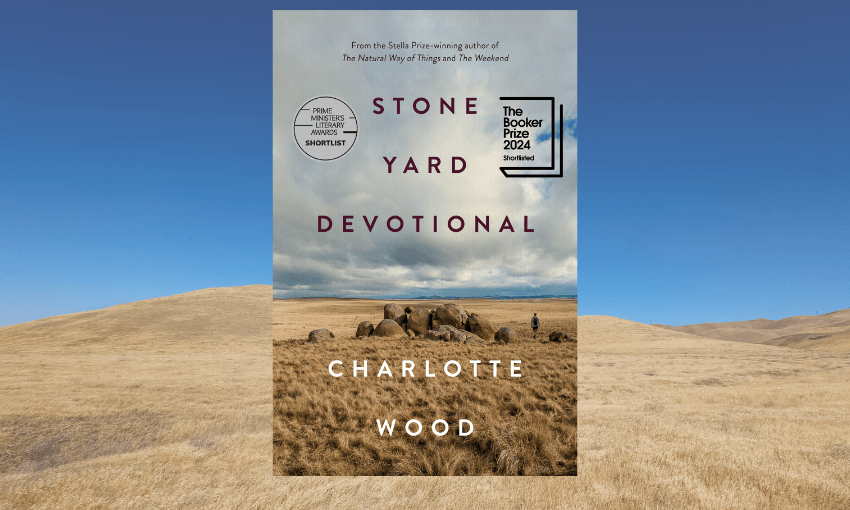
‘Staggered it made that list': a conversation with Booker Prize shortlisted Charlotte Wood
Australian writer Charlotte Wood, the author of Booker Prize shortlisted novel Stone Yard Devotional, is one of the guests at WORD Christchurch this August. Books editor Claire Mabey caught up with her to talk the inspiration behind the book, and why she's so astonished by its success. Charlotte Wood is in her Sydney studio. The walls behind her are white and blank – the bookshelves too are empty. Wood is in the centre of the screen wearing thick-rimmed glasses, red lipstick and short, grey hair swept to one side. Her environment is suitably stripped bare – her latest novel, Stone Yard Devotional, is spacious, with no superfluous detail, only what is needed. Throughout our conversation Wood will look over her shoulder at the books that aren't there – laughing at how odd it is to be in an echoey place without those memory prompts while the room she's worked in for 23 years awaits a fresh coat of white paint. Wood looks exactly as she's appeared on my screen these last months. One Wednesday lunchtime a month for five months, I, along with many others, joined a Zoom masterclass with Wood and New Zealand writer Emily Perkins to listen to them discuss elements of fiction. Together they discussed the topics of voice, texture, time, people and tension. The two writers share an ability to delve into those tools that on the surface appear explicable, even simple, but soon become malleable ideas that shift depending on how they are applied and by who. I was drawn to the course for two main reasons: the bond between Wood and Perkins satisfies a niggle I've long held about the distance between Aotearoa and Australia's literary cultures. Wood agrees: she finds it absurd that we don't have a close creative relationship with each other in the literary world. Very few New Zealand writers become household names over the ditch and vice versa. Seeing Wood and Perkins in deep conversation together, sharing ideas and experiences, was a welcome bridge between us. The other draw was the calibre of the writers themselves. Perkins is one of those household names here in Aotearoa – known most recently for her Ockham-Award winning novel, Lioness. Wood is the author of 11 books including the explosively feminist The Natural Way of Things (2015) and her highly praised book The Luminous Solution, a collection of her writing over 20 years about the creative process. But it was Stone Yard Devotional that propelled Wood's visibility when it was shortlisted for The Booker Prize in 2024, an honour that mystified Wood. Stone Yard Devotional is an intensely introspective novel. It's told in a diary format and is about a middle-aged woman who has suffered great loss (loss of parents, friends; loss of a marriage, loss in her work in conservation) and who returns to the place where she grew up to stay in a monastery. Tension and expansion is created through the narrator's fluid swings between reflections on the present and reflections on the deeper past; and as changes in the environment (including a biblical mouse plague – a real-life, climate-change induced catastrophe that Wood transposed onto her setting) and personnel of the monastery unsettles the steady nature of the community. For Wood, the novel came from a very specific moment. She wrote it as she and her two sisters were diagnosed with breast cancer – what she describes as 'a personal existential calamity' – and were receiving treatment at the same time; and during the Covid lockdowns which followed the 2019 bush fires – the worst Australia had seen. 'I'm really staggered that it got on [the Booker Prize] list because of the kind of book it is,' Wood explains. Stone Yard Devotional is what is called a 'quiet novel' – meaning that it doesn't lean on plot so much as it follows the twists and turns of the inquiring, idiosyncratic mind wrestling with grief, despair, and an intense draw to solipsism, reflection and steady daily ritual (cooking, cleaning, gardening as much as the steady marking of time that the nuns' devotionals offer). The writing is strikingly bare while also alive – even ornate – with the detail of the narrator's cinematic memories and attention to the peculiar qualities of them. 'My instinct was to put nothing trivial in the book, nothing inessential,' says Wood. 'I didn't want to explain anything that I didn't have to explain. I wanted to give the reader credit for being smarter than me and allow them space to have their own life come up to their consciousness as they were reading. I wanted to give a lot of space.' The experience of reading Stone Yard Devotional is to retreat – to attempt, with the narrator, some kind of quest for peace in a world that is overwhelmed with rolling catastrophes and political denial. The fantastic tension in the novel is anchored to the question of whether retreat is avoidance, or whether such a quiet, private existence is doing more work than most. Wood draws out this tension through the character of Helen Parry – an activist nun – a charismatic, intrusive character but a markedly unlikeable one. 'Helen Perry embodies this problem of being in the world versus being out of the world,' says Wood. She wanted to reflect what she calls 'a kind of wild rogue nun' that she's noticed over the years. 'They do cool things – political work and activist work – and they seem to be sole operators.' Wood's conversation and obvious talent for craft, introspection and process is all the more striking in this moment of the juggernaut of AI. Ironically another 'unprecedented' moment among so many long-predicted by scientists and science fiction writers (floods, fires, plagues and pandemics being other such 'unprecedented' yet increasingly common phenomena). Wood, like so many creatives, is grappling with the implications of AI and cites a Guardian article that quotes filmmaker Justine Bateman: 'They're trying to convince people they can't do the things they've been doing easily for years … We will get to the point … that you will essentially become just a skin bag of organs and bones, nothing else. You won't know anything and you will be told repeatedly that you can't do it, which is the opposite of what life has to offer.' Wood will never use generative AI but doesn't believe in throwing up hands against new technologies either. She's played with Claude AI but found it feeble – often incorrect, unoriginal. She has concluded that she's not worried about AI writing novels: 'I don't give a shit about that. Who is going to read it?' Wood is more concerned about the loss of process: 'I think it's obscene to pretend that all we want is result, and it'll be a shit result. When we read a book, we want a human connection with another person, and we want that book to be an outcome of all of that writer's life and thinking and experience and observation and serendipity, and the weather – all of this stuff goes into making something deeply, deeply human.' It's this deeply human experience that makes Stone Yard Devotional so relatable: on the surface it is hard to imagine a book about a woman who goes off to live in a monastery connecting with so many readers to such a heightened degree as it has. But Wood's attention to instinct, to the strange ways of the mind and what she calls 'distorted memory' (after an Elizabeth Hardwick quote that is the epigraph of the novel) is so specific that it becomes universal. It's New Zealand painter Jude Rae who Wood credits with finding the form of her novel. Rae is known for her still life paintings which fascinate Wood because of what she describes as an 'energy in the paint' – a liveliness to the otherwise static arrangement of the work. Rae told Wood that she achieves the effect by breaking up the surface – literally creating gaps where layers of paint show through. 'I tucked that away,' said Wood, 'and that's where the diary form came to me.' Stone Yard Devotional is told in three parts and within each of those parts are fragments – some larger chunks, pages; others short, sometimes just one sentence. Wood said that this novel taught her to trust her unconscious mind – to place information where she felt it needed to go rather than thinking about traditional, rational ideas of where information should fit. A moving life. Wood is joining Perkins live at WORD Christchurch next month where they will be running a live version of their online masterclasses. She's looking forward to being in Aotearoa – particularly in relation to the oddity that is the gulf between Australian and New Zealand literary communities. My parting question is to ask Wood for recommendations – Australian writers she admires. We discuss Fiona McFarlane, Joan London, Helen Garner, Gail Jones, Alexis Wright and Ellen van Neervan. Wood then turns to glance at her empty bookshelves to consult for more and momentarily despairs at their absence, 'so weird when they're not there! I feel out of my head.' Charlotte Wood will appear in multiple events at WORD Christchurch this August including an event on Stone Yard Devotional, an Elements of Fiction masterclass, live with Emily Perkins.

CairoScene
16-04-2025
- Entertainment
- CairoScene
ALKadira
WORD | ALKadira - Elysian Rhapsody In this WORD episode, Syrian-born, Lebanon-grown, and Paris-based artist ALKadira unpacks the spiritual, sonic, and philosophical landscapes behind her debut single 'Elysian Rhapsody', pulled from her upcoming EP MAJOR ARCANA. MAJOR ARCANA is ALKadira's debut offering an ambitious, soul-baring release that blurs the edges between score and song, poetry and production. Rooted in cinematic architecture and poetic defiance, her compositions morph through deconstructed electronic experimentation and intimate vocal delivery, threading together longing, ascendance, and self-discovery. In this episode of WORD, she tells SceneNoise: 'The word Elysium comes from a Greek myth about the Elysium Fields — a place of eternal peace and happiness.' ALKadira describes Elysian Rhapsody as a musical chant, a spiritual transmission, and a sonic spell for change. Through ethereal vocals and fluid spoken word, she bridges classical piano teachings with experimental textures, born from a life lived across geographies, languages, and revolutions of the self. 'It's a rhapsody — structureless and emotional. Because once an emo, always an emo,' she says. 'It's a state of inner clarity… between sorrow and optimism, between the revolutionary inside us and the peace we long for.' ALKadira's mission is to compose from the in-between — from shadow and light — where truth, love, and sound converge.'The intention behind my work is to blur the line between composition and song, between poetry and sound design,' she says. 'Bringing my classical training in piano, guitar, and acoustic instruments into dialogue with the electronic and experimental world.' The full EP, MAJOR ARCANA, promises to expand on these themes: the pursuit of self-fulfillment, the meaning of life, and the serene stillness that can be found amid collective noise.
Yahoo
10-04-2025
- Politics
- Yahoo
Steve Bannon to headline Greenville GOP "America First" event
Yvonne Julian, chairwoman of the Greenville County Republican Party, described the local GOP as an 'America First' collection of activists. The slate of speakers at the party's upcoming convention reflects its hardline support for President Donald Trump's agenda. The Monday, April 14, evening event at the Greenville Convention Center will feature Steve Bannon, a former chief strategist in Trump's first administration and host of the War Room podcast. He is known as a populist with a penchant for provocative commentary. Other speakers include U.S. Rep. Nancy Mace (R-SC 1st District), as well as state treasurer Curtis Loftis, and WORD host Bill Frady. 'The convention – when all Greenville County precincts elect the party's county leadership – will be a massive MAGA Trump event,' according to the party's website. The Greenville GOP has been controlled in recent years by the hard-charging America First caucus. Julian described the group's takeover of the party as 'draining the swamp at the local level.' According the party website, 'Delegate spots are still open and all MAGA voters are encouraged to attend' the convention. For more information about the convention or to reserve tickets, Greenville County residents are encouraged to call 864-243-8528 or email team@ This article originally appeared on Greenville News: Greenville GOP convention promises to be 'massive MAGA Trump event'

CairoScene
30-03-2025
- Entertainment
- CairoScene
Oualid & Zeina
Moroccan singer-songwriter Oualid takes us through the writing process behind his collaborative hit with Zeina. Mar 30, 2025 In this episode of WORD, Moroccan singer-songwriter Oualid breaks down his collaborative hit with Lebanese-Egyptian singer Zeina, 'Allo Min'. He delves into the writing process behind the track, explaining how it came together with Zeina in one spontaneous studio session as well as the messages they intended to convey through the song's catchy hooks. Co-written by Oualid, Zeina and Mbarek Nouali and performed in a Maghrebi dialect, the track is a joyful blend of punchy R&B beats and Maghreb rhythms with pop sensibilities, delivering a refreshing lighthearted take on the theme of love and longing. It became one of the top 5 most Shazamed songs in Egypt in 2024.
