



I know the unsettling truth about the rise in people being diagnosed with ADHD. I have spent decades treating patients... this is what's changed - and why I'm worried for the future: DR CHETNA KANG
Since I started practising more than two decades ago, the number of people being diagnosed with attention deficit hyperactivity disorder (ADHD) in the UK has soared.
In one year alone – between March 2024 and March 2025 – up to 20,000 people were newly referred to mental health services for an ADHD assessment, a rise of 13.5 per cent.
It's now estimated that nearly 2.5 million people have ADHD, according to the latest figures from NHS England. So what's going on?
While the figures do reflect greater awareness about the condition and more people coming forward for assessment, I believe a significant proportion of these people are being misdiagnosed.
Instead, they have what's known as 'pseudo-ADHD' – which I'm seeing more and more of.
It's characterised by similar symptoms to ADHD, including inattentiveness and difficulty concentrating, but only presents in adulthood. And instead of being caused by biological processes, it's brought on by excessive digital media use. In short, today's digital lifestyle and memory overload may be causing ADHD-like symptoms.
Other patients are told they have ADHD – or self-diagnose because of a lack of concentration and planning – which may instead be due to anxiety, PTSD or depression.
Five years ago, most people who came to see me were struggling with problems they had had for some time. Now, more and more are telling me what their diagnosis is and asking me to verify it.
But many who think they have ADHD don't – or actually have pseudo-ADHD.
Dr Chetna Kang says she has noticed that the number of people being diagnosed with attention deficit hyperactivity disorder (ADHD) in the UK has soared over the last 20 years
Although it mimics ADHD – leading to temporary lack of focus and distracted behaviour – it is easily reversed with a digital detox, yet people with pseudo-ADHD can end up needlessly on medication, which carries potential side-effects such as trouble sleeping and high blood pressure.
It's happening more regularly, especially since Covid, when so many day-to-day activities had to switch to online – from education to socialising and even fitness.
Gaming for hours and watching endless streaming videos while replying to social media posts has become a normal part of younger people's lives. Now many aspects of our daily lives take place virtually.
Research has found that people who spend more than five hours a day online may have digitally-induced problems which are interfering with their executive function (mental processes that help you set and carry out goals) and the ability to control their emotions, which also happens when you have ADHD.
Looking at a screen bombards your brain with thousands of stimulants in a few hours, and scrolling through social media can lead to more impulsivity, a key feature of ADHD.
According to a study published in 2014, Facebook use triggers impulsive parts of the brain in the same way as gambling and substance abuse. And digital time can eat into the hours when you should be asleep, leaving you tired and dysregulated. It can also lead to insomnia, irritability and poor organisational skills – hallmarks of ADHD.
But it's crucial that ADHD and pseudo-ADHD are tackled in very different ways – which requires an accurate diagnosis.
To do that involves a detailed history, including how much time people use screens for entertainment, gaming, social media, education and work, as part of a psychiatric assessment.
Many people who think they have ADHD don't. They may actually have pseudo-ADHD, which mimics ADHD
I want to look back to childhood, before the age of 12, with feedback from other family members and teachers, if appropriate, to rule out other potential issues such as mood disorders, including depression, PTSD or autism. Only then should someone do an ADHD assessment.
Unfortunately, an increasing number of private providers of ADHD assessments skip the first crucial bit of psychiatric assessment and do the ADHD part as a standalone.
They don't get the full picture and might misdiagnose someone or – as many clinics now offer a diagnostic service where a psychiatrist is not involved – those making the assessment may have limited training in mental health and may not recognise tell-tale signs of co-existing mental health problems.
Then there are people who self-diagnose from what they have seen on social media or using online tools – including a five-minute test called the The Adult Self-Report Scale (ASRS) Screener. This is useful for diagnosing ADHD among over-18s but should be used in conjunction with a clinical interview to provide additional information – it isn't a diagnostic test.
Social media can convince people they have ADHD when they don't and I see patients who have viewed multiple TikTok videos by neurodiverse influencers (whose brains develop or work differently) and are convinced they too have ADHD.
But lots of the information online is wrong.
In fact, a study in the journal PLOS One in March, found that popular videos on social media discussing ADHD may be misleading in more than half of cases.
It evaluated the claims (accuracy, nuance, overall quality as psychoeducation material) made in the top 100 #ADHD TikTok videos and fewer than 50 per cent of those made about symptoms were judged to align with the Diagnostic and Statistical Manual of Mental Disorders – the 'bible' of mental health problems drawn up by the American Psychiatric Association.
Yet these videos collectively amassed views totalling nearly half a billion.
Unfortunately, misdiagnosis can result in more problems, because medications for ADHD target specific neuro-chemicals that have key jobs in the brain.
Ritalin, for example, can improve concentration and focus if someone has ADHD – but if they don't, it just upsets the balance of chemicals in their brain.
A study in June 2023 in Science Advances found that in people without ADHD, the drugs may actually inhibit performance and productivity.
Researchers at the University of Melbourne looked at 40 healthy participants aged 18 to 35 without a diagnosis and monitored them while they attempted tasks with ADHD medication and without. After taking the drugs, people spent more time and effort solving the tasks, but were less accurate and efficient.
ADHD medications are safe but as with all drugs, they can have side-effects including sedation, drowsiness, and mood changes – so they should only be used by people who really need them.
And another reason for getting an accurate diagnosis is that people who have more than one issue, such as depression as well as ADHD, may need to take drugs in a certain order.
They might, for example, need to start with an antidepressant or an anti-anxiety medication to treat other conditions that may be exacerbating symptoms of ADHD before they consider taking a stimulant like Ritalin.
But for pseudo-ADHD you don't need medication.
A digital detox is a simple and effective treatment – and can also help those with genuine ADHD.
It doesn't mean throwing your smartphone away and never going on the internet again – it's more about limiting your time in the digital world and maximising your life in the real world.
The first step I recommend is to analyse your digital media use, looking at how much time you spend online, and why you do it.
Is it out of boredom, or to unwind and relieve stress? Is it because you are lonely? If so, arrange to meet a friend or join a club or a gym.
The important thing to do is make activities happen in real time. You need to balance digital media use with breath work, (breathing techniques that focus on the breath to improve relaxation) and enjoy outdoor exercise, spending time with friends and family in person, active spiritual practice, and going to the office rather than working remotely.
Some might opt for digital detox wellness retreats, where smartphones and digital devices are banned. But they can be expensive and there is always the question of what happens when you come back to normal life.
Activity tracking apps can also help you reduce social media use as well as motivate you, but the best thing is to swap the fast-paced virtual world for real experiences that match the circadian rhythm of your brain and body –instead of working against it.
No one is saying you can cure mental health problems by going for a walk or a coffee with a friend, but it is part of the solution.
Dr Chetna Kang is a consultant psychiatrist and an ADHD specialist at Central Health London.
Interview by THEA JOURDAN

Try Our AI Features
Explore what Daily8 AI can do for you:
Comments
No comments yet...
Related Articles


BBC News
 22 minutes ago
- BBC News
More weight-loss drugs offered in type 2 diabetes care shake-up
Treatment for millions of people with type 2 diabetes should be more personalised, with greater access to newer medicines, including weight-loss drugs, the healthcare assessment body for England, Wales and Northern Ireland has calls the move "the biggest shake-up" in type 2 diabetes care in a more people the new drugs will prevent complications such as heart disease, strokes and kidney damage, reduce costs to the NHS and potentially save lives, the National Institute for Health and Care Excellence (NICE) says. Around 4.6 million people in the UK are diagnosed with diabetes - of these 90% have type 2, with another 1.3 million likely to be undiagnosed. Having type 2 diabetes means there is too much glucose or sugar in the blood. This makes strokes, heart attacks, heart failure and other health conditions much more of a risk. It is now so common that 10% of the NHS budget goes towards treating which produces guidance for the NHS on how to give patients the best care, recommends a move away from a "one size fits all" approach and towards more personalised is calling for newer diabetes medicines called SGLT-2 inhibitors, which protect the heart and kidneys as well as lowering blood sugar levels, to become the first-choice treatment for all diabetes patients. Around 2.3 million people will be eligible for these 22,000 lives could be saved if 90% of all diabetes patients were prescribed them, NICE says, but access is not equal across the UK. There is evidence that women, older people and black people are less likely to be prescribed them."There is some urgency to find ways to increase the uptake of SGLT-2 inhibitors because if we were to achieve perfect uptake, the nation would be significantly healthier," said Dr Waqaar Shah, chair of the guideline one in five people with type 2 diabetes and cardiovascular disease are currently prescribed the the tablets to more people would particularly benefit those living in poorer areas and ethnic minorities, NICE says. Under the guidance, which is still at a draft stage and needs to go through a consultation, around 750,000 more people with type 2 diabetes will be offered GLP-1 agonists such as semaglutide and liraglutide, which have become very popular as the drugs contained in weight-loss with cardiovascular disease and some who develop type 2 before they are 40 are the groups recommended to be offered drugs can be used both to lower blood sugar levels and to support some people with weight Jonathan Benger, deputy chief executive and chief medical officer at NICE, said the updated guidance was "a significant evolution" in type 2 diabetes treatment which could help prevent heart attacks, strokes and other serious complications before they happen."This guidance means more people will be offered medicines, where it is right to do so, to reduce their future risk of ill health," he guidelines are part of a long-term plan by the NHS in England to reduce health inequalities and focus on preventing ill health in the first charity Diabetes UK said the announcement propelled type 2 diabetes treatments "into the 21st century"."These guidelines could go a long way to easing the burden of living with this relentless condition, as well as helping to address inequities in type 2 diabetes treatments and outcomes," said Douglas Twenefour, head of clinical at the charity.


Daily Mail
22 minutes ago
- Daily Mail
Devastating health impact of vaping revealed in major global study
Children who regularly vape are three times more likely to become smokers later in life, a bombshell report has claimed. Figures have long shown how the proportion of kids using e-cigarettes has exploded amid the decline of traditional smoking, with more than a third of 16 to 18-year-olds now regularly inhaling them. For comparison, less than one in ten were doing so a decade ago. But British researchers now believe the gadgets could pose a worse threat to children than thought. In the largest global review on vaping in young people to date, experts from the University of York and the London School of Hygiene and Tropical Medicine (LSHTM), found that vapers were also more likely to smoke more frequently and intensely. Regularly using e-cigs could also increase the odds of respiratory illness and substance abuse, the scientists said. However, other experts urged caution over the findings noting many of the studies assessed were merely observational and could not prove that vaping alone caused such health issues. In the research, the scientists analysed 56 reviews on 384 youth vaping studies. Of these, 21 looked at use of e-cigarettes among young people and later cigarette smoking. Writing in the journal Tobacco Control, the authors said the data available 'consistently indicated a significant association between e-cigarette use and later cigarette smoking in young people'. They said it was difficult to 'infer causality' from their review, but the 'repeated strong associations in prospective cohort studies are consistent with a causal relationship'. The analysis also suggested an increased risk among young people who vape of developing asthma or asthma exacerbation, they added. Other harmful outcomes linked to youth vaping included pneumonia, bronchitis, lower total sperm counts, dizziness, headaches and migraines. There was also a link identified between depression and suicidal thoughts among young vapers. Dr Su Golder, associate professor in health science at the University of York, said: 'The consistency in the evidence is striking. 'Across multiple studies, young people who use e-cigarettes are more likely to smoke in the future. These findings support stronger public health measures to protect teens from the risks associated with vaping.' Dr Greg Hartwell, clinical assistant professor at LSHTM, said: 'We found consistent evidence around transitions to smoking which of course, in turn, opens the door to the multitude of harms that conventional cigarettes bring. 'As the UK Government's chief medical officer states, marketing vapes to children is always unacceptable, and our review shows exactly why further restrictions on the tobacco industry, who control the vaping market, are so important.' Dr Rebecca Glover, senior author of the study, assistant professor at LSHTM, added: 'Vaping is having a detrimental impact on the health of young people globally and vaping appears to be a gateway to other substances. 'Our study provides the strongest evidence to date that young people globally face a serious range of physical and psychological harms from vaping and are at higher risk of transitioning to smoking.' But other experts today, who weren't involved in the research, labelled the findings 'overspeculation' and warned the studies analysed were observational or low quality. Professor Ann McNeill, an expert in tobacco addiction at King College London, said: 'It reported on 56 systematic reviews of which 53 were rated critically low or low quality, meaning authors should be extremely cautious before making any conclusions. 'The authors reported that the reviews found consistently that vaping was associated with subsequent smoking. 'This replicates the findings of many previous reviews and indeed research I have been involved in. 'However, the authors incorrectly state that this supports "a causal relationship". 'in other words that vaping causes smoking—the so-called 'gateway' effect. It is well-established that consistency does not mean causality.' Meanwhile, Dr Emma Beard, an associate professor in statistics and quantitative methods at University College London, said: 'The conclusion that vaping acts as a "gateway" is an overspeculation, especially when the paper notes that at a population level, smoking rates have generally fallen as vaping has risen. 'While protecting youth is vital, this review clearly shows the current evidence base on this topic has some significant weaknesses.' E-cigs allow people to inhale nicotine in a vapour—which is produced by heating a liquid, which typically contains propylene glycol, glycerine, flavourings, and other chemicals. Unlike traditional cigarettes, they do not contain tobacco, nor do they produce tar or carbon—two of the most dangerous elements. Nicotine's effect on the brain is well known—within 20 seconds of inhalation, it triggers the release of chemical messengers such as dopamine, associated with reward and pleasure. But it also increases heart rate and blood pressure and makes blood vessels constrict. This is because nicotine triggers the release of the hormone adrenaline. Despite NHS chiefs insisting it is safer than smoking, vaping is not risk-free. E-cigarettes can contain harmful toxins and their long-term effects remains a mystery. Experts are also concerned the high nicotine content might increase blood pressure and cause other heart problems. Last year, in world-first guidance setting out possible interventions to help people stop using tobacco products, the World Health Organization labelled the evidence around e-cigarettes as 'complex'. Vapes could not be recommended as way to stop smoking as too little is known about the harms and benefits, the UN agency said. In June, in a bid to tackle the surge in youth vaping, it was made illegal for businesses to sell or supply single-use vapes, such as Elf bars and Lost Mary, in shops and online. Only devices considered reusable—with a rechargeable battery and replaceable coil—are now allowed.
Daily Mail
an hour ago
- Daily Mail
Biggest shake-up in type 2 diabetes care for decade as patients to be offered fat jabs
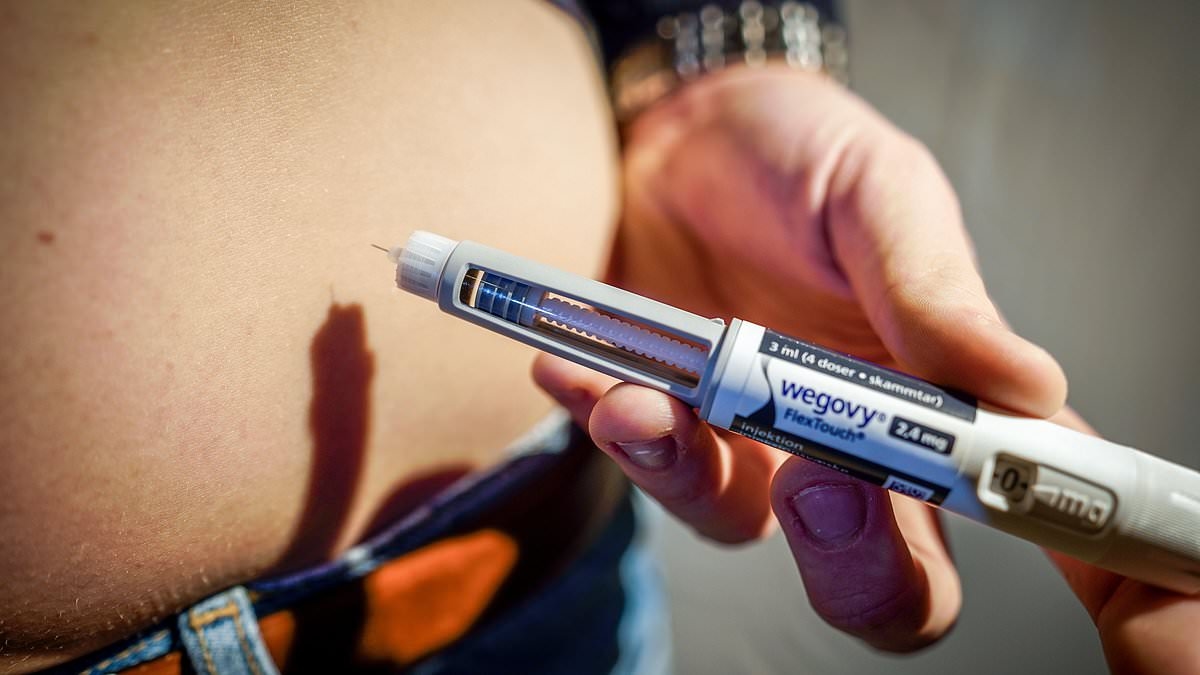
Fat jabs could be offered to people with type 2 diabetes much sooner in the biggest shake up in treatment for a decade. As part of several recommendations by the National Institute for Health and Care Excellence (NICE), patients would receive weight-loss drugs such as Ozempic in the early stages of care, rather than reserving them for the later stages. The new guidance also recommends ditching the current one-size-fits-all approach of starting everyone on the same medication in favour of more personalised care that aims to prevent complications like heart failure and heart attacks. This includes making newer type 2 diabetes drugs, known as SGLT-2 inhibitors, a first-line treatment option in a move that could eventually help save tens of thousands of lives. SGLT-2 inhibitors are once-a-day tablets that reduce blood sugar levels by helping the kidneys remove glucose, which is passed from the body through urine. However, analysis by NICE found these drugs are under-prescribed. The guidelines recommend patients who cannot tolerate metformin – the first-choice type 2 diabetes medication – should start with an SGLT-2 inhibitor on its own. The decision comes after evidence suggested these drugs protect the heart and kidneys as well as controlling blood sugar, NICE said. It is estimated the change could save almost 22,000 lives once uptake reaches 90 per cent of patients. Professor Jonathan Benger, deputy chief executive and chief medical officer at NICE, said: 'This guidance means more people will be offered medicines where it is right to do so to reduce their future risk of ill health. 'This represents a significant evolution in how we approach type 2 diabetes treatment. 'We're moving beyond simply managing blood sugar to taking a holistic view of a person's health, particularly their cardiovascular and kidney health. 'The evidence shows that certain medicines can provide important cardiovascular benefits, and by recommending them as part of initial treatment, we could help prevent heart attacks, strokes and other serious complications before they occur. 'This is particularly important given that cardiovascular disease is the leading cause of death in people with type 2 diabetes.' More tailored care for patients would see semaglutide offered much sooner. Semaglutide, sold under the brand name Ozempic, is licensed in the UK to treat type 2 diabetes, while its other brand Wegovy is also used by the NHS to help obese people lose weight. Around 4.6 million people in the UK are living with diabetes, with nine in ten of those having type 2. However, it is estimated that a further 1.3 million people may have undiagnosed type 2 diabetes. NICE analysed the records of 590,000 people and found SGLT-2 inhibitors are under-prescribed, particularly to women, older people, and black patients. Professor Benger added: 'The evidence from our analysis is clear. There are prescribing gaps that need to be addressed. 'The guideline update published today will help to increase equitable uptake of SGLT-2 inhibitors, which we know can prevent serious health complications.' Dr Waqaar Shah, chairman of the guideline committee, added: 'We know that SGLT-2 inhibitors are currently under-prescribed, and our health economics analysis shows that people living in the most deprived areas would particularly benefit from universal access to these treatments. 'These recommendations could help reduce health inequalities while providing better outcomes for everyone.' Elsewhere, the draft guidance suggests different treatments for diabetes patients with certain characteristics or health conditions. These include adults with cardiovascular disease, who should be offered a triple therapy including weight-loss jabs. Meanwhile, adults diagnosed with type 2 diabetes before 40 should be offered dual therapy before fat jabs are considered, while patients with chronic kidney disease should have tailored recommendations based on their kidney function. A public consultation on the new NICE guidelines is open until October 2. Douglas Twenefour, head of clinical at Diabetes UK, said: 'This long-awaited announcement propels type 2 diabetes treatment into the 21st century. ' Boosting access to newer treatments will be transformative for people with type 2 diabetes, while ensuring the UK keeps pace with the global momentum in treating the condition. 'The majority of people with type 2 diabetes are not currently taking the most effective medication for them, putting them at risk of devastating diabetes-related complications. 'Diabetes is a leading cause of cardiovascular disease, and tailoring treatment based on individual risk could protect thousands against heart attacks and kidney disease. 'These guidelines could go a long way to easing the burden of living with this relentless condition, as well as helping to address inequities in type 2 diabetes treatments and outcomes.'
