


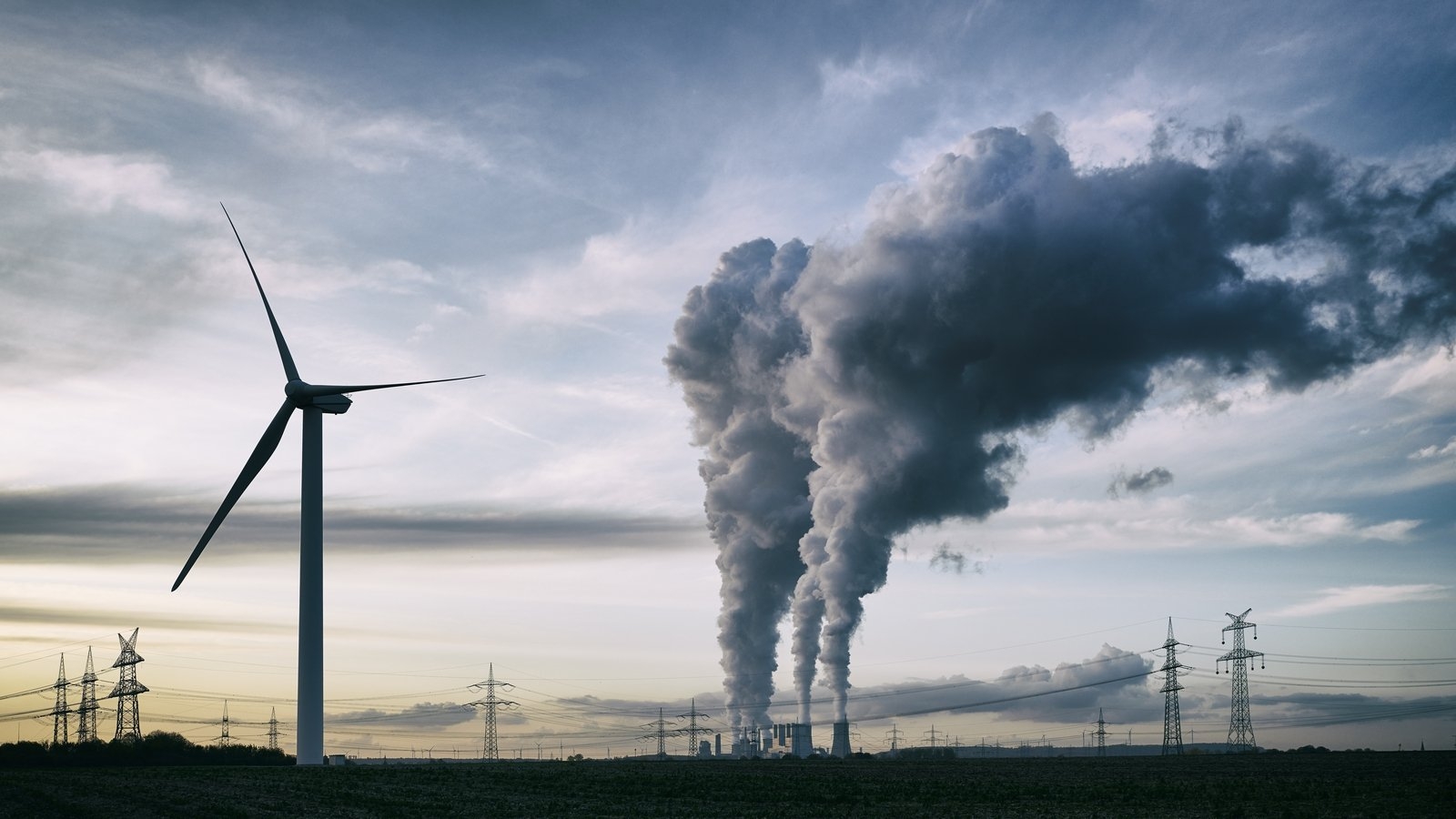
More than €31bn held in fossil fuel investments
Ireland's foreign direct investment model facilitates the investment.
In 2023, the investments made into fossil fuel companies by investment managers based in Ireland generated an estimated 72.5 million tons of carbon dioxide equivalent emissions (CO2e). This is more CO2e than the entire country of Ireland emitted in the same year.
Siobhán Curran, head of policy and advocacy at Trócaire said: "Ireland's facilitation of fossil fuel investment on its shores is more than Ireland's yearly carbon footprint.
"While Ireland has its targets to reduce emissions and phase out fossil fuels, this is being allowed to happen here."
The top financial institutions for fossil fuel investment here were BlackRock (€18.9 billion), State Street (€4.4 billion), and Crédit Agricole (€2.1 billion).
According to the report, 91% of the investments in fossil fuel companies by investment managers based in Ireland were to companies that have plans for fossil fuel expansion.
Trócaire and ActionAid Ireland are calling on the government to tackle the climate crisis through both tax reform and corporate regulation of financial flows through Ireland that fund fossil fuels.
"Governments and financial regulators must impose strict controls on fossil fuel financing, ending tax breaks for the most polluting industries.
"A global financial system that is designed to prioritise profit over planetary survival is one that requires an urgent and deep overhaul," the report says.
The two NGOs say that Ireland and the EU are moving in the "wrong direction" in this area.
"The recently passed EU Corporate Sustainability Due Diligence Directive excluded investments; and now the EU Commission's Omnibus legislative proposal threatens to undo the limited gains made on climate plans, as well as blocking future attempts for stronger action at national level," the report added.
The burning of fossil fuels accounts for more than three-quarters of greenhouse gas emissions and 90% of all carbon dioxide emissions, according to the United Nations.
The more greenhouse gases in the atmosphere, the warmer the global temperatures become.
The Intergovernmental Panel on Climate Change has issued repeated warnings that the world should not warm past 1.5C. For every fraction of a degree above that, there are irreversible environmental consequences including rising sea levels, increased frequency of extreme weather events and ecosystem collapse.
Continuation of current policies on the climate crisis will lead to a "catastrophic temperature rise" of up to 3.1C by 2100, according to the latest 'Emissions Gap' report from the UN Environment Programme.
"Ireland is facilitating the reckless pursuit of profit by financial institutions and corporations, who continue to pursue further expansion of oil and gas in spite of all the warnings and at the expense of the planet," Ms Curran said.
"The massive injustice is that it is the communities Trócaire work with in climate vulnerable countries that are feeling the worst impacts of these decisions. This is grossly unfair and contrary to the Paris Agreement and the Programme for Government," she added.
Hashtags

Try Our AI Features
Explore what Daily8 AI can do for you:
Comments
No comments yet...
Related Articles


Irish Examiner
 22 minutes ago
- Irish Examiner
Siobhán Kangataran: Our migrant communities need your voice
In response to a recent spate of violent attacks against members of the Indian community in Ireland, the Embassy of India issued a warning to its citizens here to 'take reasonable precautions for their personal security and avoid deserted areas, especially in odd hours.' This warning, while well-intentioned, seems misdirected and ineffective in its intended protection against these unwarranted attacks on innocent people. I sincerely doubt the gangs of violent teens undertaking these attacks are carrying out citizenship tests before they pick their unlucky target. Nor would I imagine they are able to discern between Indian, Sri Lankan, Bangladeshi, Pakistani or any person of another South Asian heritage. I am of mixed white Irish, Indian and Sri Lankan descent, but I am often mistaken for being of Mediterranean origins, so should all people with a tan be asked to stay constantly vigilant for fear of clashing with racist attackers? Would it not be more effective for everyone — regardless of ethnicity or citizenship — to stop racism long before it gets to the stage of violence? Racism doesn't start with physical attacks. The Irish Network Against Racism 'Pyramid of Hate' demonstrates how racism begins with bias, stereotyping, and insensitive remarks. Then it progresses through acts of prejudice to discrimination before we get to acts of violence and eventually the ethnic cleansing and genocides that we are seeing in Palestine, Sudan and the Congo. To paraphrase George Orwell, some lives are clearly less equal than others. As a woman of mixed ethnicity, I am very aware of the benefits that brings — I have an Irish first name, an Irish passport, an Irish accent, and am light skinned enough that only Indian people seem to be able to identify my Indian heritage. In the past, I might have kept my head down and avoided speaking out about an issue I could choose to avoid, but if I have learned anything from the Black Lives Matter movement in 2020 and the Palestinian solidarity movement since 2023, it is that the people who are not directly affected by a crisis are often in the best position to effect change. Who are people more likely to listen to? Who is more likely to change people's minds? Is it the people who stand to benefit directly from a change in society — people who may already look, sound or act differently from the majority? Or are we more likely to listen and learn from people who feel familiar to us and can communicate in a way we are open to receiving? People take part in a silent assembly for migrant workers and their families outside the Department of the Taoiseach in Dublin, following the recent attacks on members of the Indian community. Picture: PA One of the reasons I moved back home to Ireland from London after 11 years away was the awe (and envy!) I had for the progressive changes in Irish society. This progress was hard-earned through grassroots movements and conversations over the kitchen table. We still have a long way to go before we achieve full reproductive freedom, but we would not have 'repealed the 8th' if people had not been willing to sit down and have uncomfortable conversations with their nearest and dearest. Similarly, while we are far from achieving full equality and inclusion of our LGBT+ community, we would not be celebrating the 10th anniversary of marriage equality if allies had not listened to their LGBT+ friends, family and colleagues. Working in equality, diversity and inclusion (EDI), it is technically my job to educate people about racism (and sexism and ableism and all the other 'isms and phobias), but that is a choice I have made. Not all members of a minority are willing or able to also be an advocate for their identity. Some people want and need (and deserve!) to just exist, as human beings, without having to also constantly fight for their right to do so in peace. So while in EDI we often say 'nothing for us without us', it's important we all remember that this means listening and learning from people with lived experience (and then taking action), rather than leaving it to a minority to solve a problem that is not of their making. Racists have recently become more emboldened in society, fuelled by high-profile public figures and politicians playing identity politics to point the finger at more marginalised groups. Blaming immigrants for issues within a government's control turns all black and brown people (regardless of their citizenship) into vulnerable targets, scapegoated for problems caused by people in power. While we have not quite descended to the depths of the racist immigration raids in the US, we cannot ignore the increasing encroachment of subtle but harmful racism into Irish politics In 2024, then taoiseach Simon Harris made comments that were problematic, to say the least, erroneously linking asylum seekers to homelessness in Ireland. This not only conveniently shirked any responsibility for the government to solve the housing crisis, it further fuelled the disinformation peddled by people pushing racist 'Ireland for the Irish' rhetoric. (For anyone not aware, international protection applicants are not included in the homelessness figures — sadly we have plenty of unhoused Irish people before we even get to those vulnerable people fleeing their home countries seeking a safer place to live). Angela Davis, the Black American academic, philosopher, and activist once said: 'In a racist society, it is not enough to be non-racist, we must be anti-racist.' If you do not support racism, it is not enough for you to stay silent while racists get louder and more brazen. If you do not want to see racist acts committed in your town, county or country, then you must take action to stop them from happening wherever you see it. Name it. Call it out. Condemn it. Hold people accountable for it. You may feel awkward at first, and you will make mistakes, but you will get better with practice. Surely a little discomfort is a small price to pay to make society safer for everyone?

Irish Examiner
22 minutes ago
- Irish Examiner
Sarah Harte: When positivity meets reality, sometimes you have to choose
Last week, I had to stay positive when several challenges presented themselves. As my own humdrum existence was unfolding, I followed Gareth Sheridan's candidacy for the presidential election, watching him being buffeted by searching questions and probes. He is, by any metric, a positive person, a quality I generally admire. The origin story for his wealth and success is a familiar one of hard work, gumption, self-sacrifice, and a supportive partner willing to set off on the hero's journey with him. It's the primary narrative arc we are fed in American movies and self-help books. Sheridan seems like somebody who would live his life by positive nostrums extracted from those self-help business books. He is also only 35. He is now seeing the dark side of the bright side. Headlines like Sheridan plays down, Sheridan denies, Sheridan minimises links to… While the political arena is widely acknowledged to be gladiatorial, I don't enjoy watching people being torn asunder. I imagine we have lost out on highly qualified presidential candidates because they smoked some dope in college or nicked some money from the collections box in the church when they were small, or took an ill-advised photo on a wild night out where they departed from their otherwise sane existence. We have swapped places with America. Now, they can have presidents with limited personal morals and rap sheets as long as their arms, but here you have to be a paid-up shining beacon of puritanical morality with a flawless family, which used to be the case in America. We all have relatives we hope stay in the background. Some of us are luckier than others in this regard. A balance in what we ask of Irish presidential hopefuls would be positive. Anyway, at the weekend I came across a quote in American writer and Pulitzer Prize finalist Adam Haslett's new book Mothers and Sons. A character says, 'There's this myth that we're endlessly elastic. It's propaganda. Capitalist, patriarchal propaganda. Stay positive! Work hard! Find that extra little efficiency that lets you do more and more in less time... Because if you try hard enough, anything is possible, and we're never going to die, so there's always time. But there isn't.' Blunt but true. Gareth Sheridan may be learning his hero's journey is more complicated than he first conceived. When he graduates to a later stage, he may realise there is no hero's journey. There is hard work for sure. A modicum of intelligence helps. Even more helpful is a degree of self-knowledge; this one is harder to come by, especially for those with entrepreneurial drives. The very thing that drives them on can be the thing that prevents them from accepting defeat or even identifying or acknowledging their own personal weaknesses. Putting a positive spin on everything does not get you through every situation and can be toxic. Those who do not learn this often go on to cause great destruction around them because this over-positivity derails a person's ability to be in touch with reality, facts, and feelings appropriate to the given moment. These characters' tragedy is that they are often talented in their way. But no amount of knockbacks can stop them from chugging on, and it often ends badly for anyone hapless enough to be in their path. As I write this, an image of the Black Knight in Monty Python's The Holy Grail flashes through my head. All his limbs hacked off by King Arthur, he threatens: "I'll bite your legs off." Rational people are required sometimes to accept defeat, acknowledge regret, fold the tent and go home to lick their wounds. When you're at home reflecting on what you could have done differently, one comfort should be the fact there is no heroic journey. There is a limited degree of control over your destiny. Hard work, intelligence, strategy, and ambition play a part here. And then there is good and bad luck. We don't think about this too much because we'd go mad if we focused on the random nature of chance. We go around the place pretending things can't change, like clicking our fingers. Safety is an illusion. Three occasions last week required me to reflect on random bad news (hopefully this will come out the right way), random good luck in making it through an unexpected bad luck situation, and on the harsh reality of a persistent failing of mine. Parking the first one, the random bad and good luck one was that I was eating a steak on Saturday night, when I, quite literally, nearly choked to death — such a simple thing. Eating too quickly (blame a brain that was stressed and speeding), eating a too-big bite of steak (blame greed), and the steak obstructed the larynx. I couldn't breathe and staggered to my feet, wondering, Is this how it ends. My random good luck came into play in that I was eating with a restaurateur who calmly got up and swiftly and effectively administered what used to be called the Heimlich manoeuvre. It is now called an abdominal thrust. The steak (and other stuff, I'll spare you) rocketed out of my mouth. I felt fortunate she was there, and she didn't break my ribs (she's very strong). Although what's a few broken ribs compared to the alternative? Google Maps has its merits, particularly in the city, where it can be a Godsend, but it does mad things in rural Ireland, sending you down crazy routes. What I also appreciated was that the people I was eating with didn't put a ceaselessly positive spin on what happened when it wasn't called for. It was a close shave, and like stunned mullets, we acknowledged the reality. The reality of a personal lacking and where it leads me, never mind time wasting, came into play on the way back from Ennis to Cork, where I had been working. Basically, I have no sense of direction. I own it. There's no sugar-coating this or saying, well, all things considered, you did pretty well. It's like a chip is missing in my brain. This has led me down many long, winding roads, as it did last week. I will say the multiple road closures across the country, with no alternative routes signalled (thanks), played their part. Google Maps has its merits, particularly in the city, where it can be a Godsend, but it does mad things in rural Ireland, sending you down crazy routes. The app needs to get a handle on this. We don't want to drive down famine roads that are overgrown for centuries or cling to the side of cliffs. When it happens, I try to stay positive. I begin thinking, 'Ah, the Irish countryside is beautiful on this sunny day.' 'You never drove through Broadford before.' 'It was a chance to see Kanturk (three times).' This always wears off and leaves me feeling defeated. I face the fact that the odyssey will culminate in a late arrival home and barely suppressed mirth from family members and sly questions about what took me so long. It's called reality, and it's always better to be acquainted with it, whatever the context, big or small, personal or even presidential. Positivity will only get you so far.


RTÉ News
an hour ago
- RTÉ News
Ó hAnnaidh due before London court over terrorism charge
A member of the Irish rap trio Kneecap is due to appear before Westminster Magistrates' Court in London later. Liam Óg Ó hAnnaidh, also known by his stage name Mo Chara, was charged with a terrorism offence last May. He is alleged to have displayed a flag in support of Hezbollah at a gig in London last year but denies the charge. Mr Ó hAnnaidh appeared before Westminster Magistrates' Court last June and was granted unconditional bail. During his appearance, his legal team argued that the terrorism charge brought against Mr Ó hAnnaidh was done so later than the six-month limit to bring such a charge. It is therefore his argument that the case should be dropped. The court will decide on this matter later today. According to London's Metropolitan Police, the terrorism offence is alleged to have happened at a gig last November at the O2 Forum in Kentish Town, north London. The 27-year-old is accused of displaying a flag "in such a way or in such circumstances as to arouse reasonable suspicion that he is a supporter of a proscribed organisation". Mr Ó hAnnaidh has described the charge as "political" and insisted that the flag was thrown on stage. Kneecap has also branded the charge a "carnival of distraction" from the crisis in Gaza. A large crowd, comprising well-known activists and artists, are expected to gather outside the court this morning ahead of his appearance. Mr Ó hAnnaidh will also be accompanied by a high-profile legal team which includes Gareth Peirce, solicitor for WikiLeaks founder Julian Assange, and Rosalind Comyn, who has represented Extinction Rebellion protesters in court. His team also includes Darragh Mackin from Phoenix Law, Brenda Campbell KC, Jude Bunting KC and Blinne Ní Ghrálaigh KC, who was part of South Africa's legal team in its case against Israel, accusing the country of genocide.
