



India-China talks yield broad breakthroughs
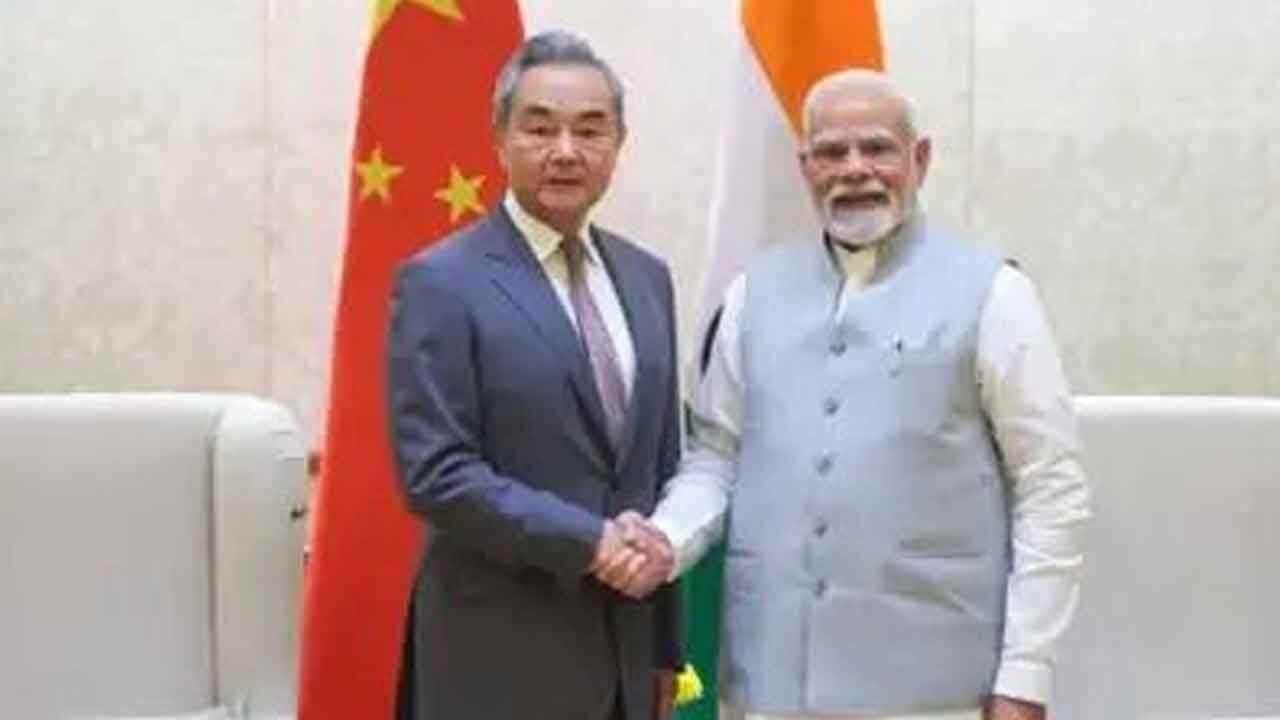
The measures were announced following visiting Chinese foreign minister Wang Yi's talks with National Security Adviser (NSA) Ajit Doval under the Special Representatives mechanism and his meeting with external affairs minister S Jaishankar, and came ahead of Prime Minister Narendra Modi's trip to China at the end of this month to attend the Shanghai Cooperation Organisation (SCO) Summit. The Prime Minister confirmed his presence in Tianjin after meeting Wang on Tuesday evening.
Both Doval and Wang pointed to steady progress in bilateral relations and easing of tensions on the border after the understanding last October to end the face-off on the Line of Actual Control, reflecting the growing thaw in ties amid geo-economic churn caused by the trade policies of the US administration.
At the meeting of the Special Representatives, the two sides agreed to create an expert group under the Working Mechanism for Consultation and Coordination (WMCC) on border affairs to explore 'early harvest in boundary delimitation', and to set up another working group under the WMCC to 'advance effective border management' and maintain peace and tranquillity, the external affairs ministry said in a statement.
The two sides will create 'general level mechanisms' for the eastern and middle sectors of the border, which cover Arunachal Pradesh and Uttarakhand, Himachal Pradesh and Sikkim, respectively. These will be in addition to the existing general level mechanism for the western sector, which covers Ladakh, the scene of the standoff which lasted well over four years. The two sides also agreed to hold an early meeting of the mechanism for the western sector.
The two sides further agreed to use diplomatic and military mechanisms to carry forward border management and discuss de-escalation, beginning with principles and modalities, the statement said.
India and China emphasised the need for a 'political perspective of the overall bilateral relationship while seeking a fair, reasonable and mutually acceptable framework' for settling the border issue in line with the Agreement on Political Parameters and Guiding Principles for Settlement of the India-China Boundary Question signed in 2005, the statement added.
Several other initiatives were finalised at Wang's meeting with Jaishankar on Monday, including resumption of direct flights 'at the earliest' and finalisation of an updated air services agreement. Direct flights stopped during the Covid-19 pandemic and this continued after the face-off on the LAC. Both sides also agreed to facilitate visas for tourists, businesses, media and other visitors.
Besides reopening border trade through three designated points at Lipulekh pass, Shipki pass and Nathu La, both sides agreed to facilitate trade and investment flows between the two countries through concrete measures. India had restricted foreign direct investments from China through Press Note 3 in April 2020.
The two sides will also continue and expand the pilgrimage to Mount Kailash and Manasarovar lake in the Tibet region, starting from 2026. The pilgrimage resumed after a gap of five years in April.
The two sides agreed to 'give full play to the role of India-China Expert Level Mechanism on Trans-border Rivers' and discuss the renewal of relevant MoUs. 'The Chinese side agreed to share hydrological information during emergency situations based on humanitarian considerations,' the statement said against the backdrop of Indian concerns about China's plan to build a mega dam in Tibet.
Both sides also agreed to support each other in hosting diplomatic events. For instance, China will support India's presidency of Brics in 2026, and India will back China in hosting the 2027 Brics Summit. They will resume bilateral dialogue mechanisms and exchanges to address each other's concerns and manage differences, including holding a meeting of the High-level Mechanism on People-to-People Exchanges in India in 2026.
The Chinese side welcomed Modi's attendance at the upcoming SCO Summit in Tianjin, and the Indian side looked forward to a successful summit with fruitful outcomes. Both sides agreed a stable, cooperative and forward-looking relationship is in the mutual interest of both countries to 'realise their development potential fully'.
India and China also agreed to uphold multilateralism, enhance communication on major international and regional issues, maintain a rules-based multilateral trading system with the WTO at its core, and promote a multipolar world that safeguards the interest of developing countries.
In what appeared to be a reference to the trade policies of the US administration, a Chinese foreign ministry statement quoted Wang as saying that the two sides reached consensus on 'deepening mutually beneficial cooperation, upholding multilateralism, jointly addressing global challenges, and opposing unilateral bullying'.
Wang also said the two sides reached a new consensus on the border issue, including 'properly handling sensitive points and initiating boundary demarcation negotiations where conditions permit'.
The 24th round of talks under the Special Representatives mechanism focused on 'de-escalation, delimitation and boundary affairs', the external affairs ministry said. Wang was quoted by the Chinese foreign ministry as saying that the two sides should 'set goals in border control, demarcation negotiations and cross-border exchanges'.
Wang is the first Chinese minister to visit India since the two sides ended a standoff on the LAC last October and agreed to revive mechanisms to normalise ties. Both Doval and Wang acknowledged the Special Representatives' meeting had assumed greater significance as it was held ahead of Modi's visit to China for the SCO Summit.
Doval said India and China have benefited from peace and tranquillity on the border since the end of the face-off and made progress in various areas. Pointing to an 'upward trend' in relations over the past nine months, he said: 'Borders have been quiet, there has been peace and tranquillity, our bilateral engagements have been more substantial.'
Wang described the border situation as 'stable and improving' and said the setbacks experienced by India and China in the past few years were not in the interests of the people of both sides. The meeting between Modi and President Xi Jinping in October last year 'provided impetus for the proper settlement of the boundary question', he added.
'We are heartened to see the stability that is now restored in the borders,' Wang said. 'The Chinese side attaches great importance to the Prime Minister's visit to China to attend the SCO Summit at our invitation.'
Despite the signs of a thaw, there were also indications of continuing concerns on the Indian side, including cross-border terrorism emanating from Pakistan, a close ally of China, and Beijing's plans to build what will be the world's largest hydropower dam in Tibet that could affect the flows in the Brahmaputra river.
The Indian side strongly raised all forms of terrorism, including cross-border terrorism, while recalling that one of the original objectives of the SCO, which is currently led by China, was to counter the 'evil of terrorism', the external affairs ministry said in a statement. Wang 'concurred that countering terrorism should be given the highest priority', the statement added.
External affairs minister S Jaishankar, who met Wang on Monday, 'underlined India's concerns with regard to the mega dam construction being undertaken by China in the lower reaches of the Yarlung Tsangpo (Brahmaputra river), which will have implications for lower riparian states,' the statement said.
Jaishankar strongly underlined the 'need for utmost transparency' on this project, it added.
The two Special Representatives met even as a senior Indian government official said Wang had assured Jaishankar at their meeting on Monday that China is addressing India's concerns regarding restrictions on the export of rare earth minerals, fertilisers and large tunnel boring machines.
Hashtags

Try Our AI Features
Explore what Daily8 AI can do for you:
Comments
No comments yet...
Related Articles

Hans India
 20 minutes ago
- Hans India
'Stable, predictable, constructive ties': Modi, China's Wang Yi discuss steps to ease tensions
New Delhi: Prime Minister Narendra Modi on Tuesday met Chinese Foreign Minister Wang Yi at the latter's official residence, 7 Lok Kalyan Marg, in New Delhi, as India continues efforts to ease tensions in ties with China. The meeting took place against the backdrop of US President Donald Trump's recent move to impose tariffs, including a 50 per cent tariff on India. Modi stressed the need for peace and stability along the India-China border and reiterated India's commitment to a fair and mutually acceptable boundary resolution. The PM wrote on X after meeting Chinese FM Wang Yi: "Glad to meet Foreign Minister Wang Yi. Since my meeting with President Xi in Kazan last year, India-China relations have made steady progress guided by respect for each other's interests and sensitivities. I look forward to our next meeting in Tianjin on the sidelines of the SCO Summit. Stable, predictable, constructive ties between India and China will contribute significantly to regional as well as global peace and prosperity.' Renowned for his claims of mediating peace between rival nations, Trump may have inadvertently set the stage for an unexpected thaw in India-China ties. Despite Beijing's backing of Pakistan during Operation Sindoor after the Pahalgam terror attack, the recent easing of strains between New Delhi and Beijing is seen, in part, as a fallout of Trump's actions, though he has taken no credit. According to the ministry of external affairs (MEA), Wang Yi is in India at the invitation of National Security Advisor (NSA) Ajit Doval to take part in the 24th round of Special Representatives' (SR) Talks on the India-China boundary issue. During his two-day visit, Wang Yi also held bilateral discussions with External Affairs Minister Jaishankar. Sources indicated that China has promised to address three of India's concerns - rare earths, fertilisers, and tunnel-boring machines. During his public remarks, Jaishankar underlined that 'differences must not become disputes, nor competition conflict,' adding that the visit offered both sides an opportunity to review bilateral ties and exchange views on global and regional developments.


Indian Express
20 minutes ago
- Indian Express
Why China has constructed a rail line between restive Xinjiang and Tibet
Earlier this month, China established the Xinjiang-Xizang Railway Co Ltd, which state media described as a 'significant step in the development of one of China's most advanced transport projects'. The planned railway is important because it will connect two historically restive Chinese border regions adjoining each other — the Xinjiang Uyghur Autonomous Region in the northwest, and Tibet, officially Xizang Autonomous Region, in the south of the country. Both autonomous regions are large, have unique demographics, and harsh terrain and climatic conditions that make the construction of infrastructure projects challenging. Increasing access inside these regions, however, has been an important Chinese policy goal in recent decades. The proposed line will run close to the Line of Actual Control (LAC). The plan to connect Xinjiang with Tibet has been mentioned in Chinese official documents for years, and is part of China's policy to boost rail infrastructure in the region. China opened the high-elevation Qinghai-Tibet Railway in 2006, linking Tibet with the rest of the country by rail for the first time. The line, the highest in the world, is a remarkable feat of engineering — according to the government, about 85% of the route passes at an altitude of more than 4,000 metres, where the average annual temperature is below zero, and air oxygen content is only 50-60% of the standard in lowland areas. The Xinjiang-Xizang line will run 'from Hotan in northwest China's Xinjiang Uygur autonomous region to Shigatse and Lhasa in Xizang', and will be 'part of China's five planned railway corridors into Xizang', a report in China Daily said. Suyash Desai, a Non-Resident Fellow at the US-based Foreign Policy Research Institute, who studies China's defence, foreign, and nuclear policies, said that a larger connectivity loop is planned across these regions. 'The Hotan-Shigatse railway line will be one part of a route that goes around Tibet-Xinjiang, Southern and Central Xinjiang, and Golmud in Qinghai province,' Desai said. The railways constitute one layer of this connectivity loop; the other is an extensive road network. The new company has a registered capital of $13.22 billion, but the estimated cost of the project remains unknown. The project has multiple aims, from facilitating the movement of soldiers to harnessing untapped economic potential in these regions. 'China has been engaged in a lot of big-ticket projects for decades, but its minority regions still have the capacity to absorb additional infrastructure,' said Jabin Jacob, associate professor at the Department of International Relations and Governance Studies at Shiv Nadar University, Greater Noida. 'It is also about knitting together far-flung, politically unstable, economically weak provinces more strongly to the central authority, and is intended to generate easier population movement into these provinces', he said. Desai pointed out that the railways, which now extend to many far-flung regions, facilitate the large-scale mobilisation of troops and movement of defence equipment. This military objective is important in the desert-like parts of Xinjiang, where the conventional economic incentive for investment is not strong. 'When you bring development, the restiveness in these regions could go away,' Desai said. 'This has happened to an extent, with jobs bringing a noticeable element of prosperity in eastern Tibet in particular. Historically, these regions have lagged behind the more prosperous eastern coast of China,' he said. The minority Muslim Uyghurs and Buddhist Tibetans have long been subjected to an official policy of 'Sinicisation', or a centering of the cultural practices of the majority ethnic Han Chinese. The state has typically employed a carrot-and-stick approach towards these populations, which has ensured that no major protests or uprising-like incidents have occurred in more than a decade and a half, Desai said. Jacob said this relative calm suggests that 'draconian measures such as constant surveillance, destruction of religious sites and control of places of worship, have succeeded to a large extent'. 'Infrastructure development in minority regions is part of the effort to reorient their economic development towards centrally directed pathways, to improve control, and 'Sinicise' under pressure of both state control and Han migration into these regions,' he said. These infra projects picked up steady pace about two decades ago. 'China started looking towards its western region with a 'Go West' strategy in 2000. They identified 12 provinces for attention, including these two (Xinjiang and Tibet),' Desai said. Official data show that between 2000 and 2016, the government invested 6.35 trillion yuan ($914 billion) in 300 major projects, mostly in the infrastructure and energy sectors, in China's western region. As it emerged strongly as a global economic force, China started to take a more assertive approach all-round. 'Earlier, they largely believed in the philosophy of 'hide your capability and bide your time' propounded by [the architect of China's economic miracle] Deng Xiaoping,' Desai said. The assertiveness crystallised and became more conspicuous after Xi Jinping became general secretary of the Chinese Communist Party in 2012, he said. Among the reforms that were introduced in the People's Liberation Army (PLA) was a stronger focus on the western region. The new railway could pass through Aksai Chin. Though lagging behind China, India has made an infrastructure push of its own over the last several years, including after the 2020 Galwan clash. In 2023, Defence Minister Rajnath Singh inaugurated 90 border infrastructure projects, from a tunnel in Arunachal Pradesh to a military airfield in Ladakh.
&w=3840&q=100)

First Post
20 minutes ago
- First Post
'To bring Ukraine war to end': US says Trump's 'intent' behind India tariffs was to pressure Russia
The White House has said that the 'intent' behind 50% tariffs on India was to pressure Russia to end the war in Ukraine. US President Donald Trump speaks after signing an executive order on creating a White House 2028 Olympics task force in the South Court Auditorium of the White House in Washington, DC, on August 5, 2025. (Photo: Brendan Smialowski/AFP) US President Donald Trump wants the war in Ukraine to end at the earliest and that is why he has put sanctions on India, according to the White House. Trump has slapped 50 per cent tariffs on India — 25 per cent on July 31 as part of the rollout of tariffs for more than 60 countries and additional 25 per cent on August 6 over the purchase of Russian oil. He has accused India of driving the Russian war machine. STORY CONTINUES BELOW THIS AD White House Press Secretary Karoline Leavitt on Tuesday said that Trump has put 'tremendous public pressure' to end the Russian war in Ukraine and his actions on India are a part of that. 'The President has put tremendous public pressure to bring this war to a close. He has taken actions as you seen sanctions on India and other actions as well. He has made himself very clear that he wants to see this war and he has rejected the ideas of others that have been raised that we should wait another month before any meetings takes place. The President wants to move forward and bring war to an end as quickly as possible,' said Leavitt. However, Trump has not imposed any tariffs or sanctions on Russia so far. Instead, he has continuously accepted Russia's terms and put Ukraine in a tough spot. VIDEO | Washington DC: Addressing a press briefing, White House press secretary Karoline Leavitt refers to sanctions on India while talking about ending Russia-Ukraine war. She says, "The President has put tremendous public pressure to bring this war to a close. He has taken… — Press Trust of India (@PTI_News) August 19, 2025 STORY CONTINUES BELOW THIS AD ALSO READ: Trump's 50% tariffs may cut exports to US by 60%, lower GDP growth by 1%, say analysts Trump's tariffs on India along with a host of other actions, such as the meddling in the Kashmir issue, undermining India on Operation Sindoor, and aligning himself with Pakistan, have driven the India-US relationship to the lowest point in years. Trade talks between the two countries have also stalled. In July, India and the United States were close to finalising a draft for a deal but Trump intervened and made new unrealistic demands that led to a stalemate.
