


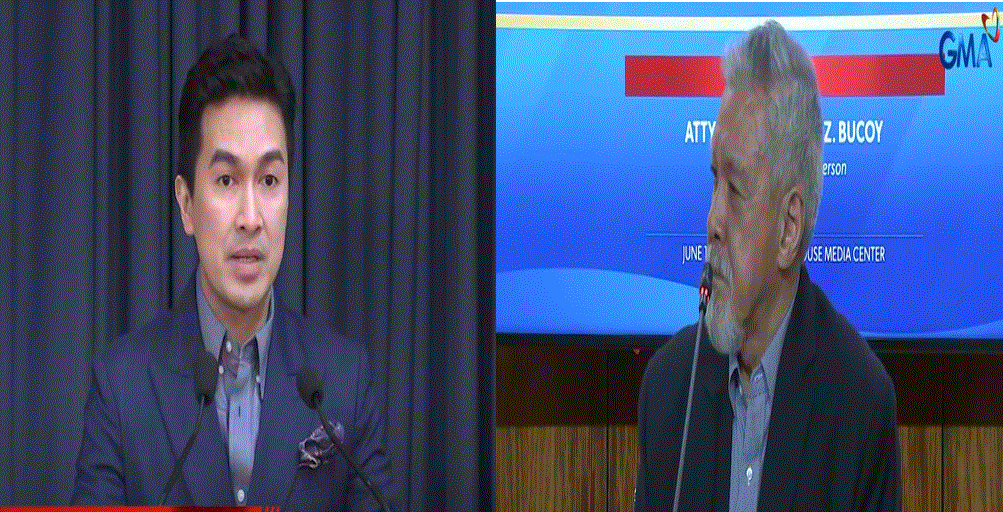
House prosecution says impeachment court spox should not speak for VP Sara
Bucoy was reacting to Tongol's comments on Thursday when he said that there is a high chance that the Vice President will make a motion to dismiss the impeachment complaint.
Tongol said, 'Ang action na ini-expect natin from the defense by filing an ad cautelam appearance—na magpa-file sila ng either answer with affirmative defense questioning the jurisdiction, or a motion to dismiss the case for lack of jurisdiction.'
(We expect the defense to question the jurisdiction of file a motion to dismiss the case for lack of jurisdiction.)
'As spokesperson, he is the mouthpiece of the court. He expresses the mindset of the court. [But] he's telegraphing the defense to file a motion to dismiss,' Bucoy told GMA News Online in a text message.
'Recall that the partiality of some members of the court had already been raised as an issue. I priorly stated that while I am prepared to give the judges the benefit of a doubt, the spokesperson's subject statement convinces me otherwise,' Bucoy added.
House spokesperson Princess Abante agreed.
'Do not speak for the defense. Speak for the impeachment court,' Abante said of Tongol.
'That is why we are saying that what we want is a Senate impeachment court that is ready to accept the evidence, listen to the evidence and decide based on the evidence presented,' Abante added.
In a "24 Oras" report by Saleema Refran, Tongol said, "Hindi pag-aabogado sa isang panig o paglilito sa publiko ngunit pagsagot lamang sa scenario setting na tanong sa akin nang naayon sa aking karanasan sa litigation."
"Ito ay bahagi ng ating tungkulin hindi lamang bilang spokesperson ngunit bilang abogado rin upang ipaliwanang ang legal proceedings sa lahat," he also said.
"The Impeachment Court is committed to neutrality, fairness and due process. Respect for the court is fundamental to democracy, so it is vital for the stability of this democracy for all to work together with mutual respect…and for litigants to avoid unnecessary attacks that only serve to hinder our collective efforts to proceed with the impeachment process," Tongol added.
In a separate statement, House lead prosecutor and 4Ps party-list Representative Marcelino Libanan commended the senator-judges who uphold decorum and refrain from public commentary, but he did not mention names.
'We commend our senator-judges who have chosen the high road of restraint. Silence, in the context of an ongoing trial, is not passivity—it is professionalism,' Libanan said.
'In this highly charged political moment, those who speak least may actually understand the gravity of their judicial role the most. They recognize that the Senate, sitting as an impeachment court, is a constitutional tribunal—not a venue for political theater," Libanan added.
Libanan then cited the Constitution's demand for neutrality from judges in any legal or quasi-legal proceeding.
'Every statement a judge makes outside the courtroom is a potential challenge to fairness inside it. The discipline shown by some senators is therefore not just admirable—it's essential,' Libanan said.
'We urge all senator-judges to uphold the same level of discretion. Let the facts and the Constitution—not noise—shape the outcome of this process,' he added.
Over 200 lawmakers endorsed the impeachment complaint against Vice President on February 5, accusing her of betrayal of public trust, culpable violation of the Constitution, graft and corruption, and other high crimes.—LDF, GMA Integrated News

Try Our AI Features
Explore what Daily8 AI can do for you:
Comments
No comments yet...
Related Articles


GMA Network
 10 hours ago
- GMA Network
Civil society groups want more active role in budget process
The House of Representatives begins its scrutiny of the proposed P6.793-trillion national budget for 2026 on August 18, 2025. Photo: House of Representatives Civil society organizations (CSOs) are calling for a more active participation in the budget process. Last month House leaders said CSOs—defined by the UN as non-profit, voluntary citizens' groups organized on a local, national or international level, driven by people with a common interest, such as non-government organizations—would be allowed at the deliberations on the national budget, from the committee and plenary level to the bicameral conference committee, with one saying that their presence would not be "token participation." On Tuesday, CSOs stressed this point. "What we had po in mind was really genuine participation. Yung hindi lang po dekorasyon or hindi lang token, hindi lang observer kumbaga. Ang prinopose po talaga namin ay may role po ang civil societies na magbigay ng inputs, magbigay ng feedback doon sa budget process," People's Budget Coalition advisor Adolfo Jose Montesa said in an online interview. (What we had in mind was really genuine participation. Not just being there as decoration or as tokens, not just as observers. What we proposed is a role for civil societies to give input and feedback on the budget process.) "Gusto po sana namin ay posibleng maging resource persons sa mga committee hearings, posibleng mag-submit ng position papers, at makarinig ng feedback mula sa committee chairs, " Montesa added. (We would like to be resource persons at committee hearings, possibly submit position papers, and hear feedback from the committee chairs.) Social Watch Philippines agrees. "Yung sinasabi namin na magiging resource person, yun po ay during the budget deliberations sa committee level," the group's senior budget specialist Alice Quitalig said (When we say being resource persons, we mean during the budget deliberations at the committee level.) According to a memorandum circular issued by House Secretary General Reginald Velasco, CSOs accredited to take part in the budget process are allowed to "observe budget deliberations both at the Committee and Plenary levels, access budget briefing documents/materials presented during the Committee and Plenary deliberations, submit written position papers or recommendations within specified deadlines, present consolidated sectoral positions during designated stages of the process." 'Opportunity to speak' CSOs were acknowledged at the opening of the budget deliberations at the session hall of the House of Representatives on Monday morning. But when the deliberations were transferred to the Romualdez Hall in the afternoon, Akbayan Party-list Representative Perci Cendaña noted their absence. The CSOs were allowed to enter afterwards. "Doon sa nakita natin na initial na implementation kahapon, bitin na bitin tayo in terms of genuine transparency and participation," he said in an online interview. "Ang mangyari, baka benchwarmer sila." (From what we saw in the initial implementation yesterday, we were left wanting in terms of genuine transparency and participation. They might end up just being benchwarmers.) Cendaña wants the current guidelines improved. "Dapat meron silang opportunity to speak during the budget process. Kasi doon sa current guidelines, lumalabas na parang sila ay magsa-submit lamang na kanilang mga position papers at wala ngang malinaw na proseso kung paano i-consider yung mga position papers na yan," he said. (They should be given the opportunity to speak during the budget process. In the current guidelines, it looks like they can only submit position papers and there is no clear process on how these papers will be considered.) Asking questions CSOs also want to be involved in the budget process at the bicameral conference committee level. "Ang panawagan namin diyan ay open bicameral conference committee. Ibig sabihin po, kami po ay maiimbitahan sa lahat ng sessions ng bicameral conference committee," Quitalig said. "Siyempre, kailangan meron din yang transcript ng meeting. And hopefully, kahit kami rin, gusto namin meron ding annotation ng legislators' amendment. Yun po yung transparency part," she added. (Our request is an open bicameral conference committee. What we mean is that we are also invited to all the sessions of the bicameral conference committee. And we must have a transcript of the meeting and annotations of the legislators' amendments. That would be the transparency part.) One workaround suggested by the CSOs is to request members of the House Committee on Appropriations to ask questions for them. "Well, pupuwede na habang hindi pa napaplantsa nang maayos itong proseso, ang pwedeng stopgap measure natin ay mag-yield kami bilang mga members of the House ng aming time para makapagtatanong yung mga civil society organizations o kaya naman padaanin sa amin yung kanilang mga tanong. So that is workable. Pero sa dulo, ang gusto natin ay institutional reform. Kasi pagka ganyan, parang depende na naman doon sa whims ng representative kung iyi-yield ba niya o hindi, na para bang utang na loob pa nila na binigay sa kanila yung oras," Cendaña said. (Well, while the process has still not been ironed out, a stopgap measure could be for us to yield our time so that the CSOs can ask questions, or ask the questions through us. That is workable. But in the end, wheat we want is institutional reform. Because if the CSOs have to depend on the whims of the representative on whether they would yield their time or not, it would come off as they would be owed a debt of gratitude for giving them the time.) People's review CSOs also want a longer period to conduct a People's Budget Review. Appropriations Committee Chair Mika Suansing of Nueva Ecija earlier said CSOs would be given one day for this. "We should organize, we will organize a People's Budget Review pero hindi lang dapat siya naka-encapsulate sa one day. Kasi ang daming concerns ng different sectors. Nandiyan yung health, education, environment, transportation. So baka magkulang ang isang araw. We need to allocate more time and space para discuss lahat ng issues na ito," Montesa said. (We should organize, we will organize a People's Budget Review, but it should not be encapsulated in just one day. There are so many concerns from different sectors: health, education, environment, transportation. One day might not be enough. We need to allocate more time and space to discuss all these issues.) "One day will not be enough. It has to be a constant presence. Yung civil society organizations have to be a constant presence in the whole budget process para tiyakin na transparent talaga ito [to ensure that this process is actually transparent]," Cendaña concurred. — BM, GMA Integrated News

GMA Network
12 hours ago
- GMA Network
VP Sara asks SC to dismiss House appeal on impeachment complaint
Vice President Sara Duterte has asked the Supreme Court (SC) to dismiss the House of Representatives' (HOR) appeal on its ruling that declared the impeachment complaint against her unconstitutional. In her comment, Duterte said the House's arguments were 'mere diversions obsessed with trivia and blind to the decision's genuine core reasoning.' 'This fixation on peripheral details downplays the legitimate issue in this case, namely, that the HOR committed grave abuse of discretion and deliberately did away with constitutionally imposed limitations to its power to impeach,' the comment said. Three impeachment complaints were filed against Duterte in December 2024, all of which were connected to the alleged misuse of confidential funds. It was the fourth impeachment complaint that was endorsed by over one-third of lawmakers from the House of Representatives and was later transmitted to the Senate as the Articles of Impeachment. In its July 25, 2025 ruling, the SC said the first three complaints were deemed terminated or dismissed when the House endorsed the fourth complaint. It ruled that the one-year ban on multiple impeachment proceedings is reckoned from the time a complaint is dismissed or is no longer viable. As a result, the SC said the Senate did not acquire jurisdiction over the impeachment proceedings. The House filed the motion for reconsideration a day before the Senate archived the impeachment complaint in light of the SC ruling. The House argued that the archiving of the first three complaints was done after the transmittal of the fourth complaint, thus not initiating the one-year ban. Duterte said that while this is true, it is misleading to suggest that the court based its ruling on a misapprehension of the sequence. Aside from this, she said that the SC did not err when it said that the fourth impeachment complaint was transmitted to the Senate without a plenary vote. 'A perusal of its own Rules on Procedure in Impeachment Proceedings betrays the HOR's assertions. A plain reading of Rule II, Section 2 thereof, reveals that even the second mode of impeachment requires a subsequent referral to the Committee on Justice,' she said. Duterte said that it was 'more absurd' for the House to claim that the first three impeachment complaints were not dismissed even after the transmittal of the fourth complaint, as the House still had numerous session days ahead. 'This contention collapses under the weight of its own logic and the HOR's own record. The archival of the first 3 prior impeachment complaints on February 5, 2025, after it had already decided to push forward with its preferred fourth impeachment complaint, was a deliberate act of disposition by the HOR itself,' she said. 'Whether the adjournment of that session was temporal or sine die is immaterial. The fact remains that the respondent HOR, by its own doing, formally set those complaints aside.'' The vice president said the arguments presented by the House have all been thoroughly considered and resolved by the high court. Duterte also said that the argument of the House that a new ruling on impeachment cases should be applied prospectively is wrong. "Jurisprudence dictates that prospectivity shields those outside the case from what might be unfair consequences for them. It does not grant blanket amnesty to the parties whose conduct is precisely found to be constitutionally void, as in this case," she said. "To permit respondent HOR to claim shelter under the prospectivity application of doctrine is to condone, rather than correct, their grave abuse of the impeachment process." –VBL, GMA Integrated News
GMA Network
13 hours ago
- GMA Network
Political dynasty ban should cover up to 2nd degree of consanguinity
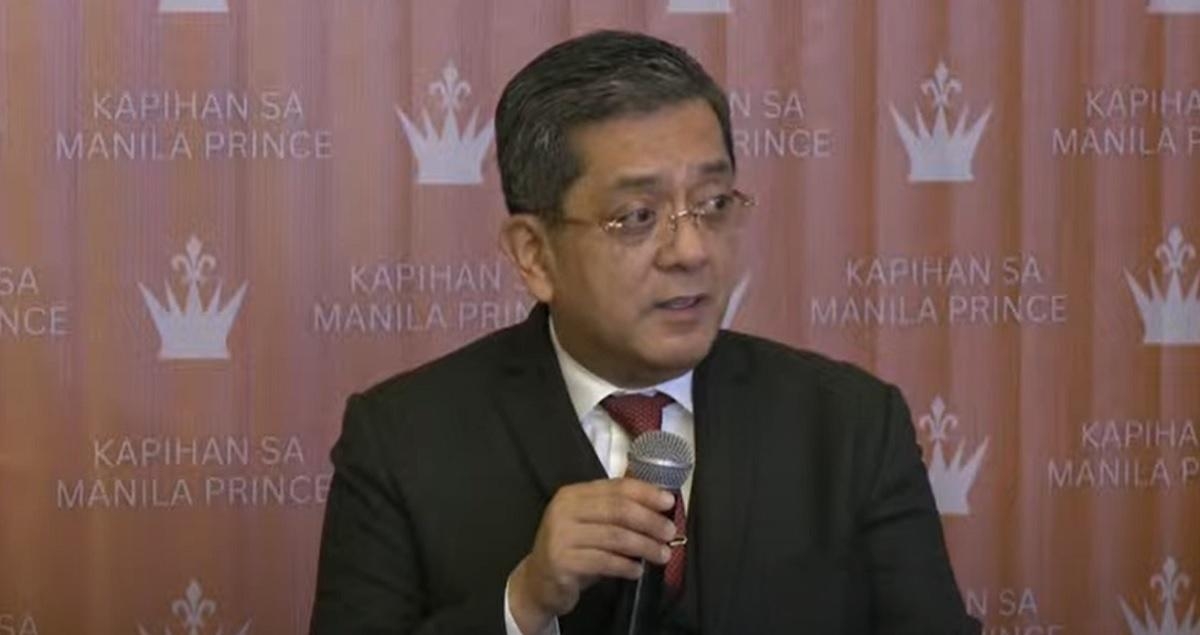
An anti-political dynasty law should prohibit family members of incumbent officials up to the second degree of consanguinity from seeking public office, the Commission on Elections (Comelec) said Tuesday. 'Sa amin pong palagay ang second degree of consanguinity ang mas practical at mas reasonable in order not to deprive others of the opportunity to run for public office,' Comelec Chairperson George Erwin Garcia said at a Senate committee on electoral reforms hearing. (For the Comelec, the second degree of consanguinity is the more practical and reasonable option in order not to deprive others of the opportunity to run for public office.) Second degree of consanguinity refers to blood relatives, including siblings, grandparents, grandchildren, aunts, uncles, nieces, and nephews. 'Kung magkakaroon tayo ng national policy at law sa political dynasties, at least yung second degree para consistent sa lahat. But again, ang issue na ito, the question of to what degree is a policy decision, and it is for Congress to determine,' said Garcia. (If there will be a law and national policy on political dynasties, we want the second degree for consistency. But again, this issue is a policy decision, and it is for Congress to determine.) Section 26 of the 1987 Constitution explicitly prohibits political dynasties in the country, but an enabling law has yet to be passed. Nonetheless, efforts have been made to implement the provision. Republic Act 10742 or the Sangguniang Kabataan (SK) Reform Law states that a candidate must not be related within the second civil degree of consanguinity or affinity to any incumbent elected official. Likewise, the Bangsamoro Election Code imposed a ban on political dynasties. According to the poll body, the Comelec 'effectively implemented' the ban under the SK Reform Law, as at least 1,000 candidates were prohibited from running in the October 2023 polls due to the provision. 'Nakapag-prevent sa mga makakamag-anak na mag-file. To a certain extent, it drove away those who intended to file, although may relationship na mali base sa definition ng political dynasty,'' Garcia said. (The provision prevented candidates with a second degree of relations from filing their candidacy. To a certain extent, it drove away those who intended to file, although may relationship na mali base sa definition ng political dynasty.) Garcia further proposed that legislators allow a registered voter as well as the Comelec to motu proprio initiate a petition to cancel the candidacy of erring aspirants. The poll chief also urged lawmakers to clarify if violating the ban would be considered an election offense and its possible implication on nuisance candidates. 'Maganda ring mailagay natin sa batas na maliwanag that those who will be filing their candidacies in violation of the anti-political dynasty law shall be liable as an election offense, even including those who will be filing their candidacies as nuisance candidates,' he added. (It would be better if the law would clarify if those who will be filing their candidacies in violation of the anti-political dynasty law shall be liable for an election offense, even including those who will be filing their candidacies as nuisance candidates.) Lawyer Christian Monsod, one of the framers of the 1987 Constitution, proposed that aspirants must not be related within the third degree of consanguinity to any elected official. 'I think the Congress owes it to the people to pass an anti-dynasty law,' he said. 'When we were writing the Constitution, we trusted that Congress would carry out this mission and duty on their part and that the Congress would have the capability and the courage to change it as our democracy changes,' Monsod added. –VBL, GMA Integrated News
