



Advance academic excellence through transformation and internationalisation at SA universities
In recent public discourse, questions have been raised about South African universities prioritising hiring foreign academics over local talent. These claims, though understandable in the broader context of our country's unemployment problem, require deeper interrogation and a nuanced understanding of the higher education landscape, history and its purpose. The little-understood or even misunderstood concept of internationalisation of higher education in South Africa also needs to be clarified.
As context for our higher education system, South Africa is an open economy and an integral part of the global academic community. As the world becomes increasingly interconnected, our universities must remain at the cutting-edge of international developments to maintain their relevance in society, and to foster their excellence, globally, and general sustainability.
In today's knowledge-driven economy, learning is no longer bound by geographical borders. Institutions of higher learning must therefore actively work with global scholarly pursuits to ensure South Africa remains locally relevant while retaining competitiveness in global research, innovation and intellectual contributions.
Data from the Higher Education Management Information System shows that foreign nationals constitute just over 12% of academic staff at South Africa's 26 public universities, with higher concentrations in science, engineering and health faculties. Data on international mobility of European researchers in higher education in 2019 shows a decrease in the share of internationally mobile researchers from 2012 to 2019. For those mobile for three or more months, the share fell from 31% in 2012 to 27% in 2019. For short-term mobility, the decrease has been more dramatic, from 41% to 32% in the same period.
Excellence in academia transcends national boundaries. Talented people from all backgrounds drive innovative research, scientific progress and interdisciplinary knowledge. This global collaboration is at the heart of what is known as the internationalisation of higher education — an intentional effort to integrate global perspectives into higher education. Such efforts aim to enhance the quality, goals, and delivery of higher education and research. Neglecting this international dimension risks stagnation and missed opportunities for growth. Cross-border partnerships offer access to cutting-edge expertise, diverse viewpoints, and varied learning methods, fostering the cross-pollination of ideas essential for advancing knowledge.
South Africa has long embraced internationalisation as a mechanism to enrich its academic content and environment. Our institutions benefit from global networks that facilitate funding opportunities, research partnerships which seek to advance new knowledge and innovations, and scholarly exchange programmes — all critical components of a thriving higher education ecosystem. These international connections are not a luxury but a necessity in ensuring that South African universities maintain their standing in global competitiveness and intellectual discourse.
The modern academic landscape is shaped by the seamless exchange of ideas, facilitated by technology and international collaborations. No country can develop its knowledge economy in isolation, and South Africa is no exception. Higher education must occur within an environment where leading experts share discoveries and emerging trends without geographical constraints.
Transformation an imperative
Several factors contribute to the current staffing situation within our institutions.
First, under apartheid, the majority of South Africans were systematically excluded from pursuing qualifications and careers in fields such as science, engineering and medicine. The legacy of these discriminatory policies persists today, making it necessary for universities to rely on foreign nationals to fill critical academic roles. As a result, the importation of advanced skills remains an ongoing reality for South African higher education, notwithstanding the need for internationalisation to enhance quality higher education and development of local skills.
Second, academic careers have not always appealed to local professionals, particularly when the private sector offers significantly higher salaries for roles requiring fewer qualifications. Additionally, the widespread use of temporary contracts — accounting for about half of universities' staff — creates uncertainty that discourages those seeking long-term job security for themselves and their families. These conditions have contributed to the fact that only just over half of academics at South African universities hold PhD qualifications, which is a necessity for development of new knowledge, growth of higher education and also still falling short of the National Development Plan's goal of 75% by 2030.
The historical exclusion of the majority population led to legislation promoting employment equity and workplace transformation to which our universities remain compliant. While universities strive to attract and retain local academics in pursuit of diversity, equity, and excellence, the scarcity of qualified local candidates often makes international recruitment a necessary strategy.
Benefits of internationalisation
Internationalisation and the development of local academic talent are not opposing goals. Rather, they are mutually reinforcing: each enhances the other's value and effectiveness. Prioritising opportunities for local scholars should go hand in hand with recognising that their growth is strengthened through international expertise. The presence of foreign academics in our institutions fosters mentorship, collaborative research and skills exchange, ultimately benefiting both local scholars and students. The cross-pollination of ideas and methodologies enriches academic discourse and drives innovation that serves both South Africa and the global community.
Moreover, internationalisation does not equate to sidelining South African academics. On the contrary, many of our brightest minds have flourished through international exposure, and our universities remain committed to nurturing local talent through initiatives such as grants, postdoctoral fellowships, and programmes like the New Generation of Academics Programme, Nurturing Emerging Scholars Programme, and Future Professors Programme. These initiatives specifically support historically under-represented groups. Furthermore, many South African scholars have gone on to contribute meaningfully to global scholarship.
Thus, the current public discourse, which seeks to dismiss the importance of links to international academic risks leading the nation down a harmful path. We cannot forget the damaging effects of apartheid-era academic isolation. As we continue to rebuild from that legacy, we must resist being misled by those who, under the guise of protecting national interests, advocate for a narrow and inward-looking approach.
Our goal should not be exclusion but integration — creating dynamic universities where diverse, talented minds converge to shape a better future.
A collaborative future
Instead of viewing internationalisation as a threat to local employment, we should see it as an opportunity for shared progress. South African universities must continue to cultivate local academic talent while embracing global perspectives that drive innovation, research, and thought leadership. The focus should be on merit, strategic value, and academia's role in tackling societal challenges.
As South Africa competes in a global knowledge economy, our institutions must stay internationally connected to ensure students and scholars benefit from the best expertise, regardless of national origin. Integrating international knowledge is not a dismissal of local talent but a strategic move to enhance our intellectual capacity.
We must remember that true academic progress does not thrive on exclusion; it flourishes through diversity, shared inquiry and an unwavering commitment to excellence. By welcoming global perspectives while fostering homegrown talent, South African higher education will continue to drive effective solutions, groundbreaking discoveries, and transformative leadership that benefit not only our nation but the world.
The question is not whether we should work internationally; it is how boldly we will position ourselves as a knowledge powerhouse in the years to come, drawing on both local and international talent. South Africa's universities have a choice: to insulate themselves or to lead. The path forward is clear — leadership through knowledge, collaboration and a global vision.
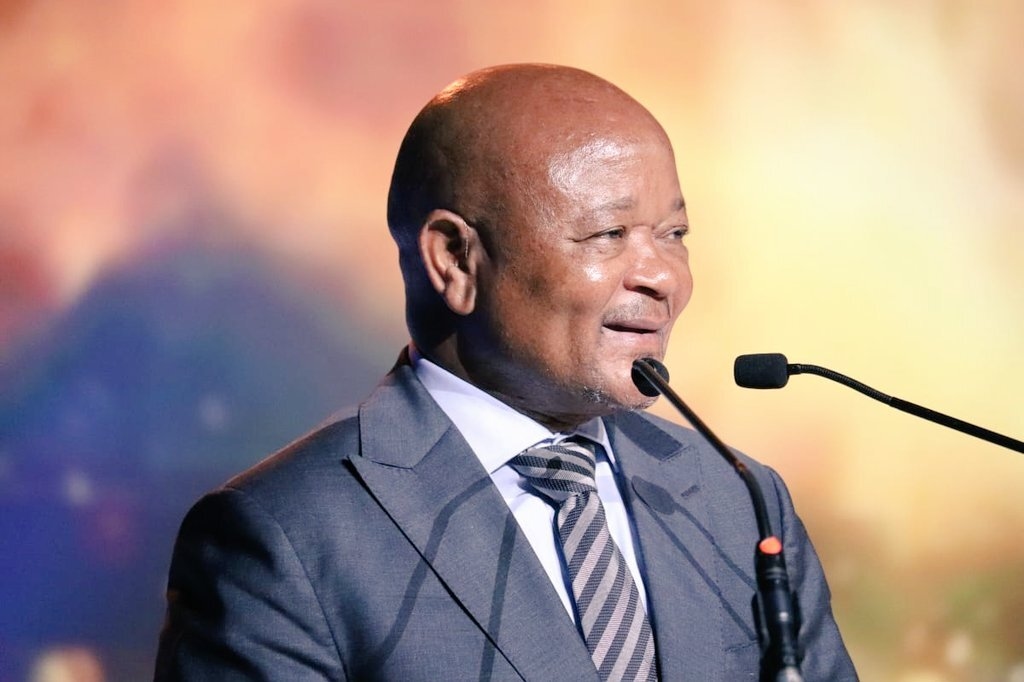
Dr Phethiwe Matutu is the chief executive of Universities South Africa.
Hashtags

Try Our AI Features
Explore what Daily8 AI can do for you:
Comments
No comments yet...
Related Articles

Mail & Guardian
 10 hours ago
- Mail & Guardian
ANC to discipline Malusi Gigaba and Senzo Mchunu over public criticism
Suspended Police Minister Senzo Mchunu. (@Senzo_Mchunu/X) The In a statement, ANC spokesperson Mahlengi Bhengu-Motsiri said their conduct 'represents a flagrant violation of ANC internal communication protocols and undermines the fundamental discipline of the movement'. 'These comrades acted outside of any sanctioned organisational mandate or collective structure,' she said. 'Their remarks do not reflect the views of any legitimate structure of the movement and must be seen as an opportunistic assault on the collective image, credibility and cohesion of the African National Congress.' In an interview published in the Sunday Times , Gigaba said the NEC had failed to meet its responsibilities and that the ANC shouldn't have gone into a coalition with the Democratic Alliance after losing the general elections last year. 'I think we are [too] preoccupied with our little corners, our little groupings,' he told the publication. 'There doesn't seem to exist the possibility for us to get up briefly from these little groupings, so that we can now discuss what is … in the best interest of our country, of our movement, of our people, so that we achieve a postcolonial society. And until we are ready to do that, I think we are failing in our duty.' Mchunu came under fire last week after he said the ANC risked losing relevance if it was not successful in next year's local government elections. 'If we do not win municipalities in the upcoming local government [elections] next year, come the national government elections, we will be history,' Mchunu said at the tombstone unveiling for struggle stalwart Nokuhamba Nyawo in northern KwaZulu-Natal. Bhengu-Motsiri said Gigaba and Mchunu were 'casting aspersions on the character and unity of the ANC, portraying the organisation as divided, incoherent and collapsing'. 'These actions serve only the strategic agenda of counter-revolution and weaken the people's confidence in their movement.' 'No comrade will be exempt from the discipline of the organisation, which demands unity, discipline and revolutionary morality from all,' she added. 'The renewal programme cannot coexist with ill-discipline; we have no tolerance for conduct that seeks to weaken the collective.' The ANC has instructed the two not to make further unsanctioned public statements. Gigaba, who was a strong defender of Jacob Zuma during the state capture period, has criticised ANC veterans, including former Robben Island prisoner Ahmed Kathrada, for calling on the former president to step down. He said he still respected Zuma as a former ANC leader despite his decision to form his own party outside of the ANC. Zuma's uMkhonto weSizwe party drew away a large swathe of ANC votes in the May 2024 elections. Mchunu was placed on special leave by President Cyril Ramaphosa after corruption allegations against him made by KwaZulu-Natal provincial police commissioner Nhlanhla Mkhwanazi. Mchunu has denied any wrongdoing.

IOL News
15 hours ago
- IOL News
Musk's SpaceX seeks exception to South Africa's black ownership rules
Elon Musk's SpaceX urged South Africa to consider an alternative to Black ownership rules for telecom companies that want to operate in Africa's largest economy. Image: File Elon Musk's SpaceX urged South Africa to consider an alternative to Black ownership rules for telecom companies that want to operate in Africa's largest economy. SpaceX asked the authorities to allow it to operate using an equity-equivalent program as an alternative to the existing requirement that Black people have 30% ownership of businesses operating in the ICT sector, the company said in a letter to the government seen by Bloomberg. It wants such programs to be a standard for the industry, according to the submission. 'Equity equivalent investment programs will provide much-needed regulatory certainty and foster investment in infrastructure,' SpaceX said. 'Uniform empowerment regulation will motivate both current and prospective operators to expand their business activities and network reach.' South Africa's Department of Communications and Digital Technologies has asked the industry regulator to provide an alternative that would allow telecom companies to invest in projects such as infrastructure, local businesses, digital inclusion initiatives or research. This type of exemption is already standard for a number of industries. The proposal is similar to a deal offered to carmakers in 2019. Car manufacturers - including BMW AG, Ford Motor Co. and Toyota Motor Corp. - established a fund that would bring disenfranchised groups into the sector. Starlink has pledged to give 5 000 rural schools free service and provide 2.4 million students high-speed Internet at no cost as an alternative to Black ownership. Video Player is loading. Play Video Play Unmute Current Time 0:00 / Duration -:- Loaded : 0% Stream Type LIVE Seek to live, currently behind live LIVE Remaining Time - 0:00 This is a modal window. Beginning of dialog window. Escape will cancel and close the window. Text Color White Black Red Green Blue Yellow Magenta Cyan Transparency Opaque Semi-Transparent Background Color Black White Red Green Blue Yellow Magenta Cyan Transparency Opaque Semi-Transparent Transparent Window Color Black White Red Green Blue Yellow Magenta Cyan Transparency Transparent Semi-Transparent Opaque Font Size 50% 75% 100% 125% 150% 175% 200% 300% 400% Text Edge Style None Raised Depressed Uniform Dropshadow Font Family Proportional Sans-Serif Monospace Sans-Serif Proportional Serif Monospace Serif Casual Script Small Caps Reset restore all settings to the default values Done Close Modal Dialog End of dialog window. Advertisement Next Stay Close ✕ Ad loading 'Starlink is not seeking any type of special treatment, as these changes would apply to all current and future potential operators,' it said on the Starlink South Africa website. The Department of Communications and Digital Technologies and SpaceX didn't immediately respond to requests for comment. News24, a Cape Town-based news website, reported on the letter earlier. South Africa introduced Black economic empowerment rules after the end of apartheid, an era in which Black people were subjugated and excluded from the formal economy by the ruling White minority. Musk - who was born in Pretoria, South Africa's capital - has persistently criticized the laws, calling them 'openly racist.' Starlink's technology, which relies on a constellation of low-Earth orbit satellites, would be a potential game-changer for South African users who've historically faced expensive or unreliable Internet options. Only 1.7% of rural households have access to the Internet, according to a 2023 survey compiled by the nation's statistics agency. South Africa's National Development Plan is targeting easy access to affordable broadband for 100% of the population by 2030. BLOOMBERG


The Herald
17 hours ago
- The Herald
Municipal elections in 2026 won't change status quo
After the pageantry of the 2026 elections, the winning parties will again promise to hit the ground running. Promises will be made of repairing roads, electrifying the townships, regular water and sanitation provision, housing closer to places of work, attention to the refuse-stricken dormitory townships of the poor and eliminating the endemic corruption that characterises most if not all municipalities in our cities, towns and villages around the country. Writing in April 1994, Phyllis Ntantala-Jordan, mother of Pallo Jordan asked: 'Did the ANC betray SA?' Her answer was an unequivocal 'No'. However, she explained: there is a revolutionary dictum that states: 'No class ever betrays its own interests. What we have is a classical deal: the Afrikaner bourgeoisie ditching the white working class, and the ANC dropping all pretence of ever having represented the black working class and peasantry.' The abolition of racial discrimination in our legislation after 1994 did little or nothing to change the material conditions of the working poor of this country. This should not be surprising, given that race and capitalism have always gone hand-in-glove, and that the 1994 settlement was all about securing the future of capitalism, not about eliminating poverty, not about the jobless situation in our country, and certainly not about equality and justice for all. SA's seventh local council elections are set to take place in 2026. Several paradoxes present themselves. Principal among these are; democracy, as it is known, has failed the working class masses. Finances, rather than the will of the people, control the balance of power. (He who pays the piper calls the tune). The trade union movement largely allied to the ruling party share the ideals and objectives of the party. Many reasons have been advanced for the working class seemingly legitimising elections from 1994 onwards. These include the mass of the people treasuring the 'franchise' as a hard-won right in the victory over apartheid. However, what we have in SA is a qualified franchise. The demand by the libratory organisations was for the full franchise — this encompasses the right to vote, that there be a resolution of the national question, that discrimination and inequality in all respects be eradicated, that there be a resolution of the land question, among all other rights. However, it appears that many of the workers are now realising that their dreams of Uhuru are not being met, and less of the working masses are participating in the elections. In fact, the government of national unity (GNU) is a product of the lack of interest in the electoral process; 27.8 million citizens of a possible 42 million registered for the 2024 elections. Of that total, only 16.3 million voted. This constitutes about 38.8% of the population. A huge 26 million citizens did not participate in the elections. The parties comprising the GNU will be pulling out all stops to get voters, and especially the youth, to the polls in the 2026 local elections. Voters will be inveigled to give the ANC one last chance to give effect to their slogan of 'a better life for all' and then declare to the voting public that only the ANC is capable of running the country. The DA will be on their hoary tale of 'rescuing' SA. The smaller parties, mostly nationalist and tribalists (not that the ANC and DA are not), are merely appendages giving credence to the lie that we are living in a democracy. Further to this, the tribalists are retreating into the unreservedly racist parties where they are cowering in their funk holes, where they feel comfortable. The 'new' SA still has vestiges of the colonial days of divide and rule. There has been a vigorous and sustained revival of the outdated system of tribalism and chieftainship — this is encapsulated in the Traditional Leadership and Governance Framework Act that legalises tribalism as part of the of the country's constitutional democracy. With youth unemployment reaching unprecedented heights, violence towards women and children reaching epidemic proportions, allegations of corruption in the judiciary, service delivery at an all-time low, ill-equipped municipal and national governance, there's every likelihood it will be no different to the 2016 and 2021 municipal elections. Spatial apartheid has not been touched. Cities and towns including the dorpies of the Karoo remain largely segregated, with whites, staying closer to the CBD and places of work, while the oppressed still live in the tin towns scattered around the country in townships far from places of work, educational and health facilities. Taxis from KwaNobuhle to the CBD in Kariega cost between R15 and R25, and from Rosedale to the CBD could cost about R47, one way. From New Brighton to the CBD in Gqeberha costs anything between R95 and R118. From some of the areas in these townships two or more taxis have to be taken to get to the required destination. All this is a legacy of the apartheid policy of the Group Areas Act — euphemistically now called zonal planning. Getting to places of work, there and back, can cost as much as two hours or more per day. With a minimum wage of R28.79 per hour, a huge chunk of wages goes on transport. This leaves the poor just where they were before being 'liberated'. The total liberation of the oppressed was never on the cards at Codesa, not in parliament, not in the economy and not even in the much-vaunted SA constitution. The flag changed but the land, the banks and vaults remained in the same hands. There was a carefully stage-managed handover of the reins of political power but all systems remained in place. All those that participated in the talks at Codesa are guilty of conspiring to deceive the masses into believing that by merely giving them the vote, they would be free. The problem with SA is that its democracy promotes passivity among the electorate. It is specifically so designed. It is an indirect form of government, in terms of which the masses are not required to engage in self-government, but in a representative form of government. Voters have to choose any one of the 70 (according to the 2024 provincial and national elections) registered political parties and the parties choose the candidates who will represent 'us', the people. (However, individual citizens may also stand as candidates in the elections as councillors.) The elected candidates in well-paid, comfortable jobs are then accountable to the parties (actually their employers) and not to the people of the country. How can this be the will of the people or more bluntly, how can this be democratic? At present, the representatives pay lip service to carry out the mandates of their constituencies and just act in the best interest of their parties, even if they purport to consult their constituencies. Recent elections (well-meaning though some of the candidates may be) show that parties are littered with candidates that are there just for the money. As the political pantomime will display after the announcement of the elections, those elected board the train of deception with the destination of renewal and a 'better life for all' or rescuing SA, and the masses will only then realise the unfulfilled promises of those in power. In Gqeberha, potholes are being filled with blobs of tar as a show of doing something as part of service delivery in preparation for the upcoming elections. Potholes will temporarily disappear only to become gaping holes after the first rains. It has become dangerous to drive at night, what with potholes, tar peeling from the roads and dark (unlit) streets (apparently, no replacement bulbs are available). Attempts at the provision of water to every household will be made but real change will elude the poor and vulnerable. In Nelson Mandela Bay municipality, estimates suggest that between 42% and 48% of the city's potable water is lost due to leaks and ageing infrastructure. Constant fires, sweltering heat in the tin towns dotted around the country and regular floods will always be the bane of the poor. No proper and planned housing will be provided, the shantytowns, the degradation of township life, gangsterism and drug-induced psychosis in our communities will continue to be the order of the day. In the meantime, councillors (the politicians) will be creaming off millions in salaries and benefits, including travel allowances, pension contributions, and even housing and vehicle allowances. For the oppressed people, participation in these elections will amount to a great leap backward, as did the 1994 national elections. It is the system of capitalism-imperialism that is the root cause of all our ills. In conclusion, Ntantala-Jordan had this to say: 'The agreement cobbled by the SA regime and the ANC at Kempton Park is one of the biggest frauds that was ever sold to a people. 'It was agreed to give the reins of power to the ANC on condition that ... the economic structure was left intact. 'This meant that besides the conglomerates that own the wealth of SA, the 11% of South Africans would still control 80% of the economy.' What the marginalised need is a mass-organised and independent grassroots movement that challenges the status quo, and initiates a shift towards genuine peoples' power. The municipal elections in 2026 will not bring about such transformation. Hammy Peterson is a former school principal and avid The Herald reader and letter writer The Herald
