


The Weirdest Factory Porsche 911 Could Make a Comeback
Road & Track
first drew our attention to fillings
for
"Porsche Flachbau"
and
"Flachbau RS,"
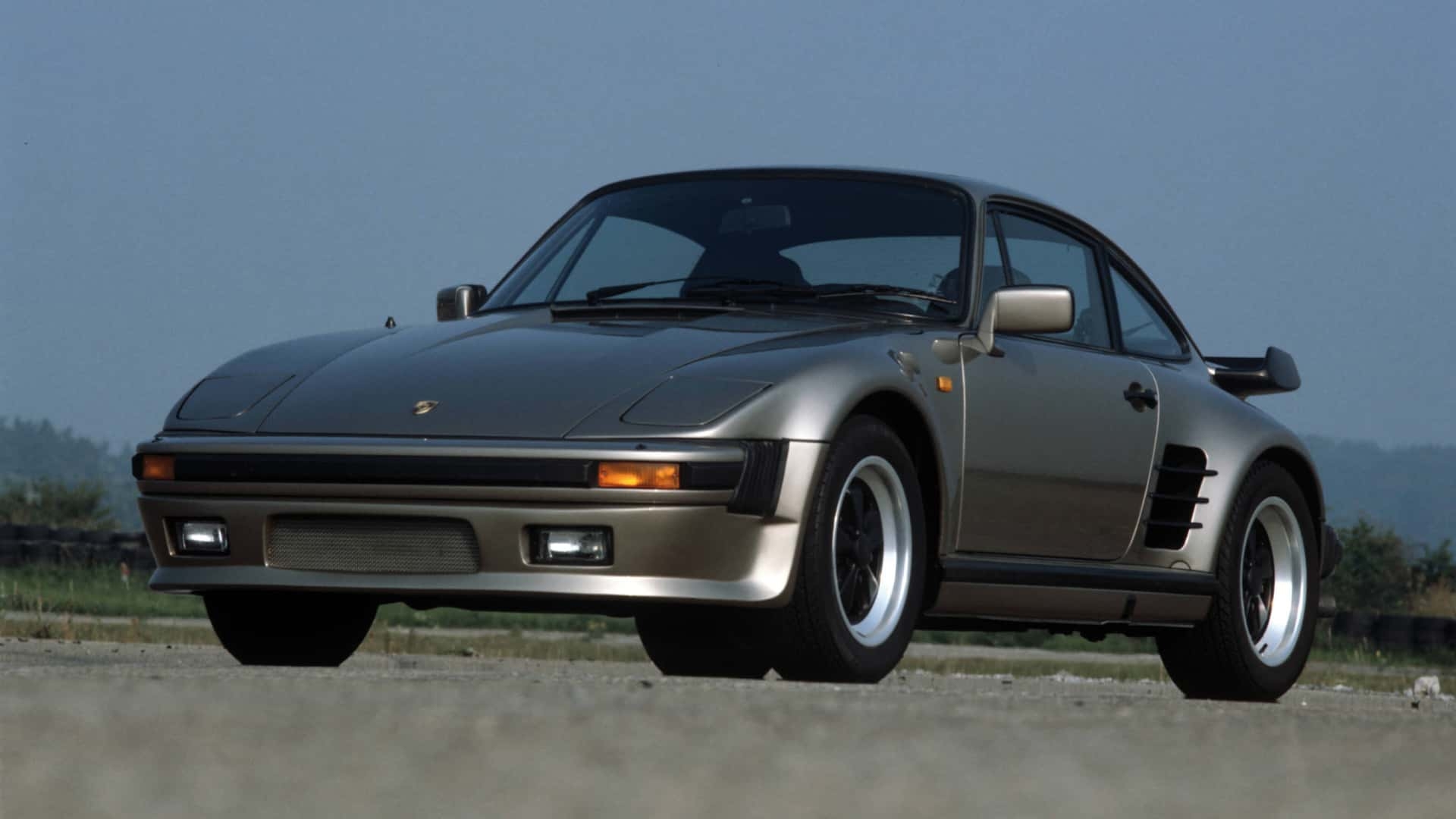
both of which are dated May 14th, 2025. The name translates in English to "slant nose" and refers to a special option for the 911 Turbo that replaced the car's trademark raised fenders and frog-eyed lights with a flat nose and pop-ups that aped the look of the 935 race car. Porsche built the cars in extremely small numbers throughout the 1980s, and revived the option for the 964 Turbo S of 1994, though this time with exposed 928-style pop-up lights.
Of course, automakers trademark old names all the time to protect their intellectual property. But, Porsche has been doing all sorts of retro-inspired 911s of late. Throughout the life of the current 992-generation 911, it's done tribute models to specific decades. The 911 Targa 4S Heritage Design Edition was inspired by the 1950s;
the 911 Sport Classic
referenced models from the 1960s; and
the recently revealed 911 Spirit 70
obviously pays homage to the 1970s. Porsche has said it planned to do four of these models, and a revived Flachbau would be an ideal 1980s tribute.
The name Flachbau RS is especially intriguing, too. We know Porsche is also working on a new 911 GT2 RS, so maybe it's planning a special slant-nose version of that car. If it were to build it, collectors would be tripping over themselves and each other to get an allocation.
This might all be nothing. But, we'd hardly be surprised to see a modern Flachbau. It's almost too good of an idea.
More on Porsche
The Porsche 911 GT2 RS Might Be Back as a Hybrid
Is Porsche Delaying The Electric 718 and Three-Row SUV?
Get the best news, reviews, columns, and more delivered straight to your inbox, daily.
back
Sign up
For more information, read our
Privacy Policy
and
Terms of Use
.
Share this Story
X
Got a tip for us? Email:
tips@motor1.com
Join the conversation
(
)

Try Our AI Features
Explore what Daily8 AI can do for you:
Comments
No comments yet...
Related Articles

Motor 1
 7 hours ago
- Motor 1
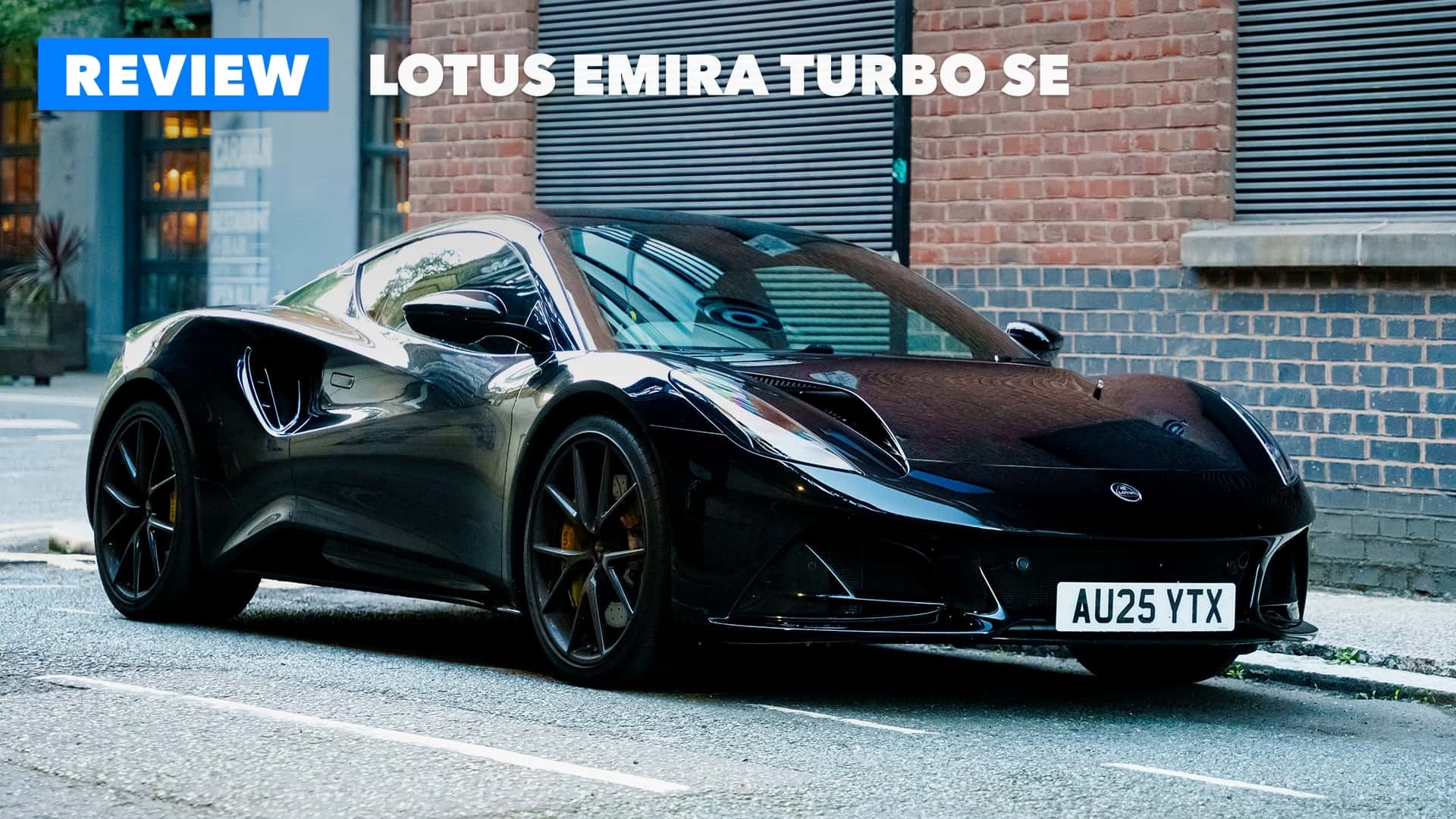
The Lotus Emira Turbo SE Is An Intriguing Porsche Alternative: Review
From the get-go, Lotus had a winner in the Emira. The concept was simple but effective: buyers wanted that iconic Lotus driving feel with a cup holder. They wanted heated seats, but also to feel a bit like Jim Clark on their morning commute. They wanted supercar looks without the price tag. The plan was a serious shot at global sports car dominance. Lotus even had a hardcore "R" variant in the works to further take the fight to Porsche, according to former Lotus Cars Europe CEO Matt Windle. After years of updating Elises, Exiges, and Evoras, Lotus finally had its golden goose. At least, that was the idea. Now, a few years after that initial launch, the picture looks a bit different. Quick Specs 2025 Lotus Emira Turbo SE Engine Turbo 2.0-Liter Four-Cylinder Outpu 400 Horsepower / 354 Pound-Feet Transmission Eight-Speed Dual-Clutch 0-62 MPH 4.0 Seconds Base Price $121,478 Photo by: Alex Goy | Motor1 Lotus recently spruced up the Emira lineup to keep people keen for 2026. There are now three versions to choose from: The Turbo, the Turbo SE, and the V-6 SE. The first and last cars have been around for a while… sort of. The base Turbo gets an AMG-sourced 2.0-liter inline turbo four with 360 horsepower (just like the first inline-four cars), and the V-6 SE uses the same 400-horse, Toyota-sourced 3.5-liter supercharged six that Lotus has been dancing with for years. It ain't broke, don't fix it. The Turbo SE is where things get interesting. The AMG motor's wick is turned up to match the V-6's 400 hp, while besting its torque with 354 pound-feet. It's quicker to 62 miles per hour, too, getting there in 4.0 seconds dead, and it'll still tickle the fun side of 181 mph. Photo by: Alex Goy | Motor1 Pros: Divine Handling, Chuffing Quick, Still Looks Fresh The SE trim is new, though. It essentially throws a bunch of kit at the V-6 and Turbo—stiffer sport suspension, a track drive mode, various driver-assistance things. Lots of stuff. At its core, it's all about choice. With that, the newest member of the lineup is arguably the most fascinating option of the bunch. You see, the Emira's always been a little spendier than, perhaps, it should be. Its initial promised entry fee never quite materialized for reasons best known to Lotus, which means the new lineup can be a tough square to circle. Photo by: Alex Goy | Motor1 Photo by: Alex Goy | Motor1 Photo by: Alex Goy | Motor1 In the UK, the base Turbo kicks off at £79,500 ($107,901), the Turbo SE is £89,500 ($121,478), and the V-6 SE costs £96,500 ($130,974). Not small money. However, the car in the middle comes with lots of toys, and it's the quickest of the lot—for less than the cost of the V-6. Ok, you can't have a purist's special stick shift with the AMG motor, admittedly, but that seems to be the only 'big' downside. No, it's not cheap, but Lotus isn't about that sort of thing these days. Photo by: Alex Goy | Motor1 Cons: Pricey, Slow Gearbox, Odd Paddle Feel The Emira's look hasn't changed much since its launch either. You can get it in new hues (green and purple), but the only telltale that you're in a newer car is the dinky badge on its B-pillar, which tells you what's in the middle. Its interior remains on the tight side, but everything you could possibly need is within easy reach. The infotainment is well thought out, and you won't end up screaming at menus as you leap from thing to thing. Apple CarPlay works well in it, too, and your podcasts will sound suitably tuneful thanks to the car's KEF stereo. The switchgear is pleasing, and, as with most things, easy to reach. Since the beginning of its run, the Emira's start/stop button has been hidden under a bright red cage that needs lifting to get to the good stuff. It's a neat bit of drama that kicks each journey off with some fun. There's a decent noise on startup, but as it's a four-pot, it's not the most dramatic thing in the world. The V-6 certainly bests it there, but that's before you give it some welly. The tweaked turbo four is a chatty thing, happily tweeting and whooshing, letting you know that it's got ol' big turbo that likes to have fun. When you're making progress, it's a joyful thing. But on the highway, it can be a bit much. A simple flick of your ankle makes lots of induction noises happen, fine for blasting around, less so when you want to overtake a slow-moving Honda Civic. Photo by: Alex Goy | Motor1 Photo by: Alex Goy | Motor1 Lotus tried to keep the Emira's weight down, but the days of featherweight Elises and Exiges are long gone. It weighs 3,212 pounds; all the carpets, airbags, and screens do take their toll. But that doesn't mean the good 'ol Lotus sparkle is gone. Far, far from it. Find the right road and the Emira Turbo SE is magical. Lotus' steering remains some of the best in the game. The way it communicates through your fingers, how it tells you everything that's going on under the front, while being perfectly weighted and progressive, is a treat every time. You sit low, close to the front wheels, something that gives the pleasing impression of extra speed. But it's unnecessary; this thing is already plenty rapid. It's the quickest Emira you can buy, and it feels it. 46 Source: Alex Goy | Motor1 The way its chunky torque mingles with the low weight, the Emira glides over the road most delightfully. Where older Lotus sports cars needed their necks wrung to get to pace, the AMG motor just gets you there. There are a handful of drive modes: Tour, for the day-to-day, keeps things quiet (ish); Sport ups the noise and the drivetrain aggression; and Track makes everything angry, bar the traction control, which it gives the day off. None of them changes the damping, though. With plenty of grip, silly torque, and helpfully large brakes, the Emira SE is A Very Good Thing . Sadly, it's not perfect, though. The big one is the gearbox. Not the shifting through forward gears, that's as quick and easy as a dual-clutch will ever be. No, it's two other things. The first is paddle feel. When you choose to swap your own gears, each tug on a paddle isn't rewarded with a click or anything meaningful. It's a sort of heavy squish, which isn't very satisfying at all. The second issue is the amount of time it takes to shift from forward to reverse. If you need to do a three-point turn in the wild, you need to set the car up, apply the brakes, shift the lever in the direction you want to go, and wait. And wait more. Eventually, the 'box will remember what its primary purpose in life is and engage. Photo by: Alex Goy | Motor1 Photo by: Alex Goy | Motor1 If your foot isn't hard enough on the brake, though, the gearbox will refuse to shift entirely and you'll end up impotently revving your shiny sports car at an angle in the middle of a busy road. People will stare. Well, they'll glare. The people you're blocking might honk. It's not a gearbox for people in a hurry. The ride on the turbo SE's Sport setup (a softer 'Touring' spring set is available) doesn't get on brilliantly with the UK's roads. It's a UK problem more than a Lotus problem, but if you're not a fan of harder-riding cars, consider the softer alternative. The price may be tricky for some to overcome; after all, for a car that isn't a Porsche, it's a lot of money. That'll make some people cross, and it'll confuse others. The people who take the plunge, though, will love it, and even enjoy the occasional honk. Competitors BMW M2 Chevrolet Corvette Porsche 718 Cayman Competitor Reviews Is The BMW M2 Still the Best M Car? Video Review The Corvette Stingray Is an American Cayman Killer: Video Review Share this Story Facebook X LinkedIn Flipboard Reddit WhatsApp E-Mail Got a tip for us? Email: tips@ Join the conversation ( )

Motor 1
7 hours ago
- Motor 1
The 2025 BMW M5 Touring Is Absurd and Great: Review
Does any new car come with more baggage than the latest BMW M5 ? The name carries with it the weight of huge expectations, and in case you hadn't heard, the new M5 simply carries a huge weight—5,390 pounds for the sedan and 5,530 pounds for the Touring wagon. A lot of people have made up their minds about this car, and they're not fans. So, it's impossible to go into this car without expectations. The least I can do is approach the M5 Touring with an open mind and judge it on its merits. I'll cut to the chase: The M5 Touring is brilliant. And compromised. Quick Specs 2025 BMW M5 Touring Engine 4.4-Liter Twin-Turbo V-8 Plus Electric Motor Output 717 Horsepower / 738 Pound-Feet 0-60 MPH 3.2 Seconds Base Price / As Tested $125,275 / $140,775 As a quick refresher, the new M5 takes the previous car's formula—twin-turbo V-8, eight-speed automatic transmission, all-wheel drive—and adds hybridity to it. A 14.8-kilowatt-hour battery pack built into the floor powers a 194-horsepower electric motor sandwiched between the engine and transmission. Total output is 717 hp and 738 pound-feet of torque, while the all-electric driving range is 25 miles. Photo by: Chris Perkins / Motor1 Photo by: Chris Perkins / Motor1 Photo by: Chris Perkins / Motor1 The M5 drives like a big M3. BMW's latest generation of M cars have a super sharp front end and wonderfully neutral handling balance. I figured, given its weight and size, the M5 would feel pretty different, but I was astonished at how similar this thing felt. It's agile in a way it has no right to be, and even at reasonable road speeds, it's very throttle-adjustable. I kind of couldn't believe it. On narrow country lanes, it still feels big, of course, but get the M5 out on faster, flowing roads and it comes into its own. The grip is immense, and you get a good sense of what the car is doing through the seat of your pants. Even the steering is good, with a very natural weight buildup off-center that communicates what the huge front Pirellis are feeling. Braking is excellent, too, on these $8,500 carbon-ceramics, and the brake pedal is well-tuned to the point that you don't even know it's blending friction and regenerative braking. Photo by: Chris Perkins / Motor1 Pros: Astonishing Handling, Powerful, Well-Integrated Hybrid, Wagon Practicality / Cool-Factor Then there's the speed. The electric torque helps with transient response, and the engine loves to rev in typical BMW fashion. The twin-turbo 4.4-liter V-8 even sounds pretty tuneful with the eight-speed gearbox cracking off shifts with absolute smoothness and precision. At no point does the M5 feel like it'll stop accelerating either. Triple-digit speeds are all too easy here. But with the M5 Touring, you can't have your cake and eat it, too. The ride is firm, unbearably so at times. BMW doesn't use any fancy suspension tech here—no adjustable anti-roll bars, air springs, or a fully active system like Porsche's —just steel springs and adaptive dampers. The damping is well judged, but there's so much spring and anti-roll bar here to control the weight and make the M5 turn like anything worth a damn. Even expansion joints can send a jolt through the cabin, and on New York City's crumbling streets, the M5 is plain uncomfortable. On some level, I can understand why BMW tuned the M5 like this. The handling is astonishing for a vehicle of this type, and you're never in any doubt that you're in an M car. But at the same time, shouldn't an M5, of all things, offer a blend of ride and handling? It's a luxury car that, in the case of the Touring, costs $127,675. And in truth, the lighter M3 rides better. Photo by: Chris Perkins / Motor1 Photo by: Chris Perkins / Motor1 That's about it for major faults, though. The only other criticism I have is that there are a lot of drive modes to manage when you add in the five settings for the hybrid system on top of the typical customizations for steering, suspension, transmission, etc. Oh, and the driver's seat in this tester was creaky after just 9,000 miles of use. The hybrid system can benefit efficiency, too, despite this surely being one of the only hybrids on the market subject to a Gas Guzzler tax. At least in the kind of driving I do, mixing Metro New York highways and city streets, with a full battery and the lower average speeds typical of the area, you can exceed 30 miles per gallon. Even with a dead battery, I managed 28 mpg on a drive from Westchester back into Brooklyn. It's no Prius, and if you're driving super hard, using the engine to charge the battery, it will drink fuel prodigiously, but it's way more efficient than I was expecting. Photo by: Chris Perkins / Motor1 Cons: Incredibly Firm Ride, Too Many Drive Modes, Need To Keep Battery Charged For Decent MPG With time, I grew fonder of the M5 Touring. I think it being a wagon helped, not just because of the added practicality, but because of the incongruity of the thing. What a strange world we live in, where we've arrived at an enormous, 700-plus-hp BMW station wagon with bulging fender flares, a gaping maw, and a bright orange interior. It's bizarre, and undeniably cool. In this shade of Isle of Man Green, the M5 Touring has serious presence, even making E63 Wagons and RS6 Avants look understated. It gets tons of positive attention, since it isn't like anything else on the road. So much of the hate this car gets online just doesn't translate to the real world, where people aren't so fussed about spec sheets. There's a magnetism here—every time I get out of it, I look back at it. Photo by: Chris Perkins / Motor1 The ride quality is a big drawback here. It's livable on nicer roads, but if you live where the roads are tough, it's too much. But I find myself falling in love with the M5 in spite of it. Nothing else is quite so impressive from an engineering standpoint, while also being downright goofy. An M5 that turns like an M3, a Gas-Guzzling hybrid, a practical station wagon that accelerates like a supercar, a performance car that weighs as much as a full-size pickup. It is ridiculous and sublime. Competitors Audi RS6 Avant Mercedes-AMG E53 Estate Porsche Taycan Cross Turismo Check Out These Reviews BMW M5 Touring vs. Audi RS6 Avant: Performance Wagon Showdown Audi RS6 Avant GT Review: For the Nerds Gallery: 2025 BMW M5 Touring Review BMW Make: BMW Model: URL: BMW 21 Source: Chris Perkins / Motor1 2025 BMW M5 Touring Engine 4.4-Liter Twin-Turbo V-8 Plus Electric Motor Output 717 Horsepower / 738 Pound-Feet Drive Type All-Wheel Drive Speed 0-60 MPH 3.5 Seconds Maximum speed 155 MPH (190 With M Driver's Package) Efficiency 13 MPG Combined (Gas Only) / 54 MPGe (Gas + Electric) EV Range 25 Miles Seating Capacity 5 Cargo Volume 27.2 Cubic Feet / 67.0 Weight 5,523 Pounds Base Price $125,275 As-Tested Price $140,775 Share this Story Facebook X LinkedIn Flipboard Reddit WhatsApp E-Mail Got a tip for us? Email: tips@ Join the conversation ( )


Forbes
7 hours ago
- Forbes
Mercedes-AMG SL 63 S E Performance Adds F1 Power To An Iconic Roadster
The Mercedes-Benz SL roadster, a sleek, luxury-filled convertible, has been an icon of sporty luxury and the pinnacle of top-down driving since it made its debut in 1954. Over the years Mercedes-Benz has retooled the SL adding things like heated arm rests and all wheel drive to ensure the SL is capable and accommodating on all roads in all seasons. But for 2025 the Mercedes-AMG SL takes on a new distinction thanks to the company's F1 experience: electric boosted twin-turbo power that notches horsepower up to 805 and torque to 1,047, putting it solidly in hyper-car territory. Don't let the looks of this demure convertible fool you; it's a thrill. AMG-Only Production Adds To The Mystique Back in the day, Mercedes-Benz produced an SL for all luxury appetites, ranging from smaller powertrains to high performance. But for the current generation the company decided to focus on performance, offering four options produced by the house of AMG, the Affalterbach, Germany-based performance division of Mercedes-Benz. The starting point is the AMG SL 43 Roadster, a 4-cylinder turbo that generates 416 hp and starts at $112,000; the SL 55 increases power to 469 hp and the price to $145,000; the SL 63 Roadster generates 577 hp and is priced from $187,000. The F1-inflected, PHEV boosted SL 63 S E Performance starts at $207000; our test model, equipped with a nice set of upgrades, came in at $225,000, making it a true pinnacle of both luxury and sport driving. External Cues Let You Know This Mercedes-AMG Is A Powerful Machine The iterations of power and luxury are notable by each model name, of course, but the S E Performance gets a little extra panache: A red-backed 'S' badge that signifies its 805 hp and 2.8-second 0-60 MPH acceleration. The red-flecked badge is also seen on the side panels under the V8 Biturbo badge, yet another nod to the roadster's power. On the rear there's a retractable spoiler that deploys when the car hits a minimum speed and needs the downforce assistance, though a button on the control panel under the multimedia screen can deploy or retract it, too. Just under the wing is a small power port for charging. On the front end of the AMG SL 63 S E Performance conveys the luxury of Mercedes-Benz and its AMG Affalterbach heritage with a crest on the hood just above the Mercedes logo badge. The Many Performance Options Allow A Custom Experience The great thing about a performance PHEV is that you get to choose when and how to put the car's power to work: creep out of the neighborhood in silence in hybrid mode; the electric motor will deliver about eight miles of all-electric driving before the gas engine kicks in. Or, turn the drive mode dial on the steering wheel to Sport to crank up both the power and the sound. While owners can charge the Mercedes-AMG SL 63 S E Performance for maximum hybrid range, there's no real need to charge the roadster to ensure there's enough electric power to deliver all 805 hp. The system is designed to maintain a minimum amount of power and to regenerate its charge on its own while you drive. In our first test of its sister S E Performance, the AMG C 63, the battery nearly fully recharged on a day of driving through the mountains of Southern California. Manufaktur Options Increase the Luxury Quotient The luxury of the AMG SL 63 S E Performance starts with the soft-top convertible, a quickly-retracting top that can be operated even while driving. With the top down the cabin feels like chic and refined, not overly windy or loud. With the top up the outside world is hushed thanks to a nicely constructed soft top that dampens outside noise. The heated, cooled massaging quilted leather front seats add to the quiet luxury of the cabin. Buyers who want to really personalize their SL 63 can choose Manufaktur options, bespoke details that include a wider range of colors and trim details for a unique and personal style package. Our model came standard with some of the best Mercedes goodies: Burmester premium sound, 'Hey Mercedes' voice activation, Napa leather massage seats and 'air scarf,' a neck-level vent on the front seats that blows warm air on cold days. This is especially nice when the top is down. Not that the SL 63 S E Performance needed any extras to make it the most desirable SL; its F1 DNA and dynamic drive experience make it a true thrill, adding another dimension to its luxury heritage.
