


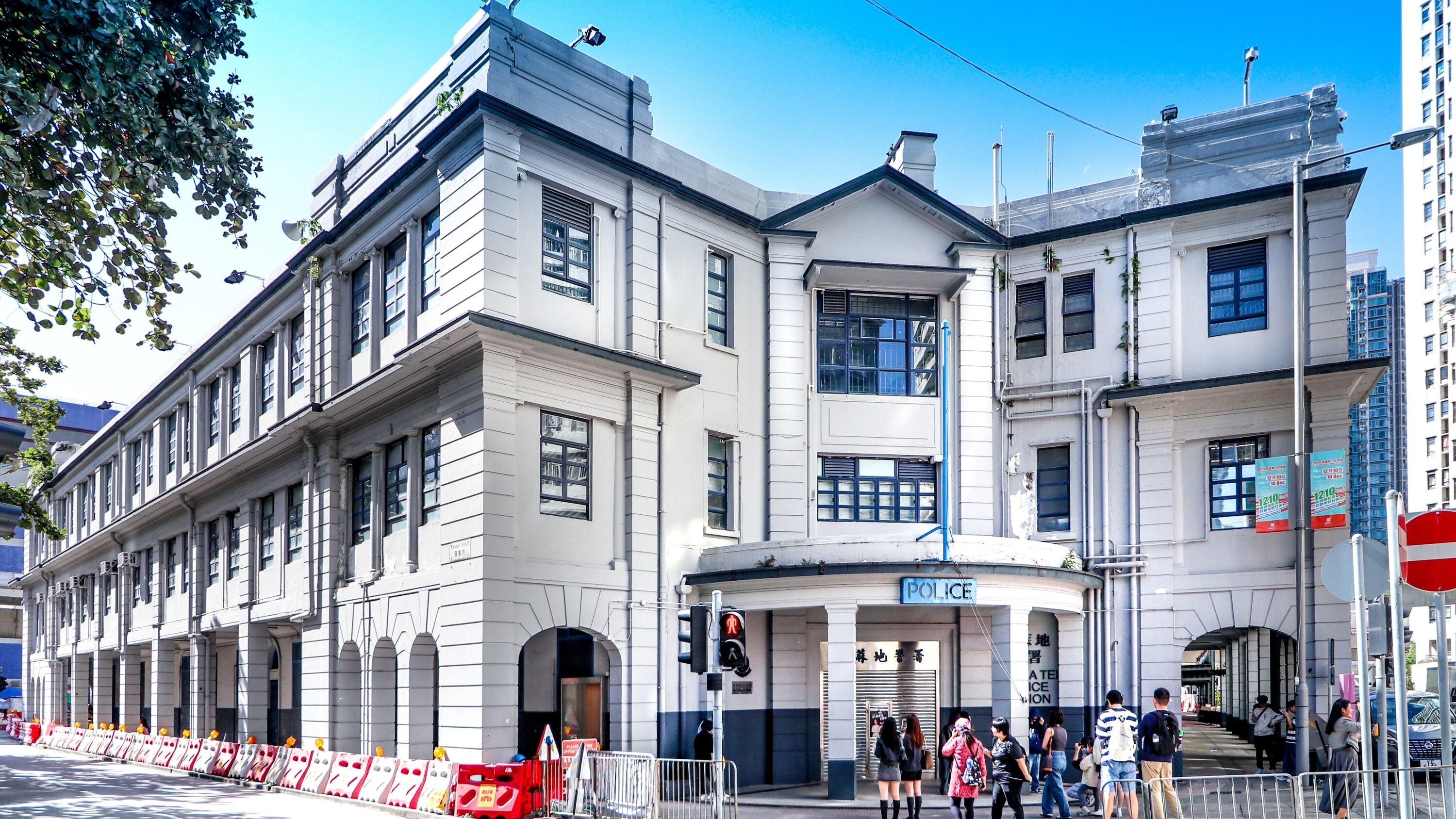
Nine Hong Kong locations have been chosen to become new tourist hotspots
These new tourism projects include setting up regular themed bazaars in Victoria Park, conducting detailed tours of Kowloon City, and opening up the old Yau Ma Tei police station for visits. Ubiquitous Hong Kong sauce makers Lee Kum Kee and Pat Chun, the Kee Wah bakery, and the yoghurt drink brand Yakult will each hold tours of their facilities. There will also be a focus on eco-tourism centred around the nature that can be found in Hong Kong, with offerings on our 'Four Peaks' – The Peak, Lantau Peak, Sai Kung Hoi, and Tai Mo Shan.
This new tourism drive is expected to cost between $20 million to $30 million, and will launch gradually from this year. For example, the tours of local brands are slated to start in the third quarter of 2025, the Victoria Park bazaars to begin in the fourth quarter, while the 'Four Peaks' activations are targeting a launch for late next year. By the end of 2025, seven out of nine tourism projects should be implemented.
Which of these locations are you most excited to see become the new tourist hotspot?

Try Our AI Features
Explore what Daily8 AI can do for you:
Comments
No comments yet...
Related Articles


Press and Journal
 4 hours ago
- Press and Journal
New Elgin dessert parlour to open in former Jimmy Chung's restaurant
Dessert parlour Shakes 'n' Cakes will open its sixth location, expanding into Elgin. Launching on Greyfriars Street, the new cafe looks set to dish up a wide variety of sweet treats. The popular north-east chain has whipped up an 'opening soon' banner over its new premises. The building on Greyfriars Street was previously owned by Chinese restaurant chain Jimmy Chung's. Renovations are under way, but an official opening date has yet to be confirmed. This will be the brand's sixth location in the north and north-east. Other locations include in Aberdeen at Old Aberdeen, Woodside and Great Northern Road, as well as Ellon, Inverness, and now Elgin. The branches sell sundaes, pancakes, waffles, ice cream and hot food. Shakes 'n' Cakes 2022 opening in Inverness had customers queuing in torrential rain. Co-owner Haroon Ahmed says the growing chain is 'Scotland's biggest', and is looking to keep expanding. 'Franchise is something that we are looking at currently,' he says. 'We're trying to build a franchise, but depends on the interest we get.' Opening hours have yet to be confirmed, but many Shakes 'n' Cakes branches stay open late into the evening, with some serving customers in the early hours of the morning. Shakes 'n' Cakes has been contacted for comment.


South Wales Guardian
6 hours ago
- South Wales Guardian
India's Modi meets China's top diplomat as Asian powers rebuild ties
Mr Modi also noted 'respect for each other's interests and sensitiveness' in a statement on social media after meeting Chinese Foreign Minister Wang Yi. China's foreign ministry said the countries have entered a 'steady development track' and the countries should 'trust and support' each other. Mr Wang arrived in India on Monday and has met with foreign affairs minister Subrahmanyam Jaishankar as well as national security adviser Ajit Doval about the countries' disputed border in the Himalayan mountains. India's foreign ministry said Mr Wang's meeting with Mr Doval discussed 'de-escalation, delimitation and boundary affairs'. Relations plummeted in 2020 after security forces clashed along the border. The violence, the worst in decades, left 20 Indian soldiers and four Chinese soldiers dead, freezing high-level political engagements. 'The setbacks we experienced in the past few years were not in the interest of the people of our two countries. We are heartened to see the stability that is now restored in the borders,' Mr Wang said. Mr Modi emphasised the importance of maintaining peace and tranquillity on the border and reiterated India's commitment to a 'fair, reasonable and mutually acceptable resolution of the boundary question', his office said in a statement. The rebuilding of India-China ties coincides with friction between New Delhi and Washington after US president Donald Trump imposed steep tariffs on India, a long-time ally seen as a counterbalance against China's influence in Asia. India is part of the Quad security alliance with the US, along with Australia and Japan. The chill in relations after the deadly clash in 2020 between troops in the Ladakh region affected trade, diplomacy and air travel, as both sides deployed tens of thousands of security forces in border areas. Some progress has been made since then. Last year, India and China agreed to a pact on border patrols and withdrew additional forces along some border areas. Both countries continue to fortify their border by building roads and rail networks. In recent months, the countries have increased official visits and discussed easing some trade restrictions, movement of citizens and visas for businesspeople. In June, Beijing allowed pilgrims from India to visit holy sites in Tibet. Both sides are working to restore direct flights. Last week, the spokesman for India's foreign ministry, Randhir Jaiswal, said India and China were in discussions to restart trade through three points along their 2,167-mile border. 'Settling the boundary issue between the two countries requires political compromise at the highest political level,' said Manoj Joshi, a fellow at the Observer Research Foundation, a New Delhi-based think tank. He also served as a member of the advisory board for India's National Security Council. The thaw between Beijing and New Delhi began last October when Mr Modi and Chinese president Xi Jinping met at a summit of emerging economies in Russia. It was the first time the leaders had spoken in person since 2019. Mr Modi is set to meet Mr Xi when he travels to China late this month — his first visit in seven years — to attend the summit of the Shanghai Cooperation Organisation, a regional grouping formed by China, Russia and others to counter US influence in Asia. Earlier this year, Mr Xi called for India and China's relations to take the form of a 'dragon-elephant tango' — a dance between the emblematic animals of the countries. Last month, India's external affairs minister visited Beijing in his first trip to China since 2020.


North Wales Chronicle
6 hours ago
- North Wales Chronicle
India's Modi meets China's top diplomat as Asian powers rebuild ties
Mr Modi also noted 'respect for each other's interests and sensitiveness' in a statement on social media after meeting Chinese Foreign Minister Wang Yi. China's foreign ministry said the countries have entered a 'steady development track' and the countries should 'trust and support' each other. Mr Wang arrived in India on Monday and has met with foreign affairs minister Subrahmanyam Jaishankar as well as national security adviser Ajit Doval about the countries' disputed border in the Himalayan mountains. India's foreign ministry said Mr Wang's meeting with Mr Doval discussed 'de-escalation, delimitation and boundary affairs'. Relations plummeted in 2020 after security forces clashed along the border. The violence, the worst in decades, left 20 Indian soldiers and four Chinese soldiers dead, freezing high-level political engagements. 'The setbacks we experienced in the past few years were not in the interest of the people of our two countries. We are heartened to see the stability that is now restored in the borders,' Mr Wang said. Mr Modi emphasised the importance of maintaining peace and tranquillity on the border and reiterated India's commitment to a 'fair, reasonable and mutually acceptable resolution of the boundary question', his office said in a statement. The rebuilding of India-China ties coincides with friction between New Delhi and Washington after US president Donald Trump imposed steep tariffs on India, a long-time ally seen as a counterbalance against China's influence in Asia. India is part of the Quad security alliance with the US, along with Australia and Japan. The chill in relations after the deadly clash in 2020 between troops in the Ladakh region affected trade, diplomacy and air travel, as both sides deployed tens of thousands of security forces in border areas. Some progress has been made since then. Last year, India and China agreed to a pact on border patrols and withdrew additional forces along some border areas. Both countries continue to fortify their border by building roads and rail networks. In recent months, the countries have increased official visits and discussed easing some trade restrictions, movement of citizens and visas for businesspeople. In June, Beijing allowed pilgrims from India to visit holy sites in Tibet. Both sides are working to restore direct flights. Last week, the spokesman for India's foreign ministry, Randhir Jaiswal, said India and China were in discussions to restart trade through three points along their 2,167-mile border. 'Settling the boundary issue between the two countries requires political compromise at the highest political level,' said Manoj Joshi, a fellow at the Observer Research Foundation, a New Delhi-based think tank. He also served as a member of the advisory board for India's National Security Council. The thaw between Beijing and New Delhi began last October when Mr Modi and Chinese president Xi Jinping met at a summit of emerging economies in Russia. It was the first time the leaders had spoken in person since 2019. Mr Modi is set to meet Mr Xi when he travels to China late this month — his first visit in seven years — to attend the summit of the Shanghai Cooperation Organisation, a regional grouping formed by China, Russia and others to counter US influence in Asia. Earlier this year, Mr Xi called for India and China's relations to take the form of a 'dragon-elephant tango' — a dance between the emblematic animals of the countries. Last month, India's external affairs minister visited Beijing in his first trip to China since 2020.
