


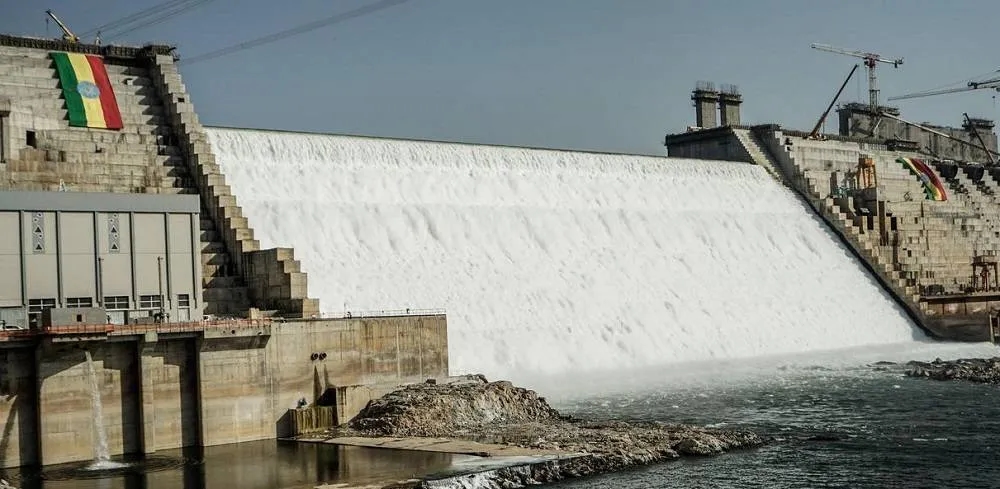
Official to Asharq Al-Awsat: Egypt to Counter Any Threat to Its Water Security
A senior Egyptian official, speaking to Asharq Al-Awsat on condition of anonymity, said Cairo remains committed to securing a binding agreement that regulates current and future projects on the Nile and its tributaries.
'Egypt will act to safeguard its water security in line with international law and treaties governing transboundary rivers,' the official said.
'We have always known Ethiopia has broader ambitions beyond the GERD. That's why we've insisted from the beginning on a binding agreement, not only to limit the harm from GERD but to regulate any future projects as well.'
He added that Egypt considers Nile water a matter of national survival and would 'resist any threat with full force.' Cairo is closely monitoring whether Ethiopia's new dam plans will involve the Nile or other river systems, he said. 'Each case will be assessed accordingly.'
The comments came after Ethiopia's GERD Coordination Office head, Aregawi Berhe, told local media on Wednesday that the dam was 'only the first step' in the country's strategy for water and energy development.
'We cannot rely on just one dam,' he said, calling for additional projects to support agriculture, which he described as the backbone of Ethiopia's economy and food security.
Berhe also said the GERD was built entirely with domestic funding, pushing back on earlier remarks by US President Donald Trump suggesting American financial involvement.
'Vital lifeline'
Egyptian lawmaker Mostafa Bakry described the Ethiopian statements as 'provocative' and accused Addis Ababa of seeking to impose a fait accompli, despite ongoing deadlock over the GERD negotiations.
'Ethiopia is treating the GERD as a closed chapter and is now openly discussing what comes next,' Bakry said. 'Cairo has known from the start that Ethiopia wants to build dozens of dams under the pretext of development and agriculture. But the real goal is to control the river and limit Egypt's water supply.'
'This is an existential matter for Egypt,' he warned. 'We will not tolerate threats to our survival. Ethiopia must reconsider its course before the situation escalates.'
Ethiopia's latest declarations come amid renewed international attention on the Nile dispute, following comments by Trump expressing concern over the dam's potential impact on Egypt. Egyptian President Abdel Fattah al-Sisi welcomed the remarks and reiterated his country's reliance on US mediation to broker a final agreement.
Earlier this month, Ethiopian Prime Minister Abiy Ahmed announced the completion of GERD construction and set September as the date for its official inauguration, inviting Egypt and Sudan to attend. Cairo swiftly rejected the call, denouncing what it sees as Ethiopia's continued unilateralism on Nile issues.
Skepticism
Egyptian water and Africa expert Dr. Raafat Mahmoud dismissed Ethiopia's justification that future dams would support agriculture. 'Most of Ethiopia's terrain is unsuitable for conventional irrigation. It's a rugged highland that relies on rainfall,' he said. 'Even GERD was completed with great difficulty and at high financial cost. Additional dams will face the same hurdles.'
He argued that Ethiopia's ambitions are driven less by development and more by geopolitical aspirations. 'This is about positioning itself as a regional power and countering Egypt's influence in Africa. It's also part of a broader effort to gain access to the Red Sea and build a naval presence there.'
Still, Mahmoud said Egypt is unlikely to take immediate action unless a direct threat to its water supply materializes. 'As long as there's no measurable harm, Cairo will likely stick to diplomacy. But under international law, it reserves the right to act if its vital interests are jeopardized.'
He added that many of Addis Ababa's announcements are aimed more at domestic audiences than at regional planning. 'These public statements are often designed to rally Ethiopian citizens, even when they don't reflect the realities on the ground.'
Hashtags

Try Our AI Features
Explore what Daily8 AI can do for you:
Comments
No comments yet...
Related Articles

Leaders
 6 hours ago
- Leaders
Trump Proposes US Air Support for Ukraine Amid Security Concerns
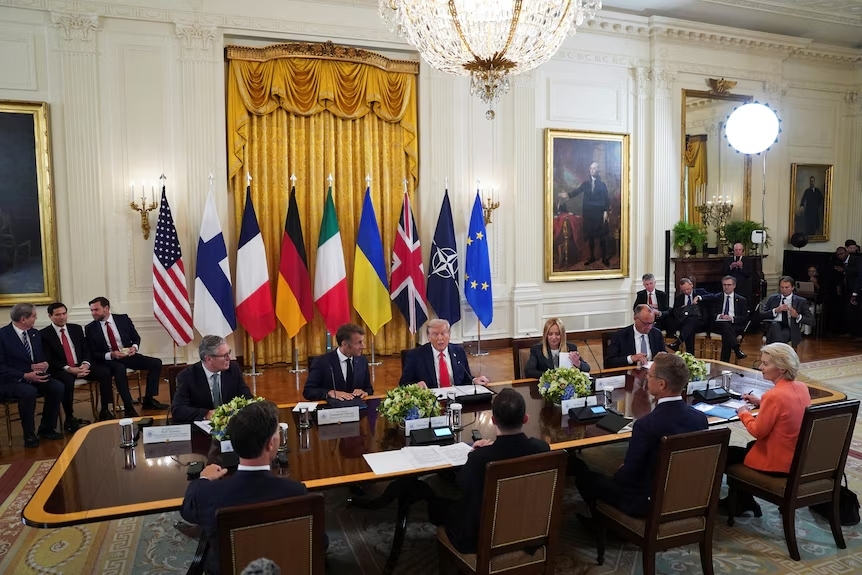
President Donald Trump suggested on Tuesday that robust US air support and European ground forces could form the backbone of future security guarantees for Ukraine, but he simultaneously warned of a 'rough' outcome if Moscow and Kyiv fail to reach a peace agreement. During a Fox News interview, Trump confirmed European allies expressed willingness to deploy personnel on Ukrainian soil following Monday's White House meetings. 'We possess unmatched aerial capabilities that no other nation realistically has,' he emphasized, signaling strong US air involvement. Furthermore, he categorically ruled out deploying American ground troops to Ukraine and dismissed any possibility of Ukraine joining NATO. Kyiv urgently seeks ironclad security assurances after enduring over three years of brutal Russian invasion. Moscow, however, consistently rejects Western military presence on former Soviet territory and fiercely opposes Ukrainian NATO membership. Trump specifically named France, Germany, and the UK as nations prepared to commit 'boots on the ground.' Pushing for Direct Putin-Zelensky Talks Trump revealed he actively pressures both leaders to convene a bilateral summit before he joins a trilateral meeting, stating, 'I spoke directly with President Putin about arranging talks with President Zelensky,' acknowledging potential Russian hesitation. 'I hope President Putin follows through; otherwise, the situation becomes very rough.' He added that Zelensky must also demonstrate significant flexibility during negotiations. The president delivered a stark message regarding occupied Ukrainian land, insisting Kyiv must accept permanent territorial concessions. 'Look at the map: Russia controls a massive chunk of territory, including approximately 79% of Donbas right now,' Trump asserted, urging that Ukraine lacks the military power to reverse these losses against a 'powerful' Russia, ten times its size. Trump framed territorial surrender as the necessary price for peace and stability, stating, 'Ukraine will regain their lives, stop the killing, and secure substantial land returns under this deal.' This position directly addresses the war's central sticking point—the fate of vast occupied regions—while offering Kyiv a path to end the devastating conflict. Short link : Post Views: 35
Leaders
6 hours ago
- Leaders
Israel Weighs Hamas Response to Gaza Ceasefire Proposal
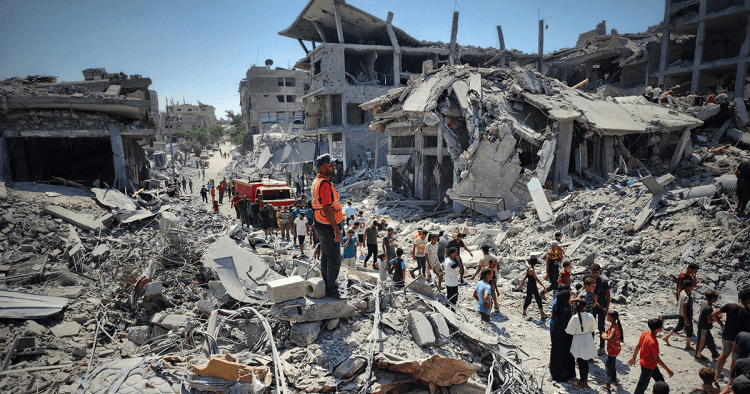
Israel is currently reviewing Hamas' response to a Gaza ceasefire proposal, signaling a potential breakthrough in efforts to de-escalate the conflict that could lead to a 60-day truce and the release of half the Israeli hostages held in the embattled enclave. International mediators have intensified their efforts to restart indirect talks, especially after Israel announced plans for a new offensive in Gaza City. Egypt and Qatar are actively pushing for a US-backed ceasefire plan, aiming to bring an end to the prolonged hostilities. The proposal outlines a significant prisoner exchange: 200 Palestinian convicts, including women and minors, jailed in Israel would be released, with Hamas releasing 10 living and 18 deceased Israeli hostages from Gaza. Hamas has also requested the release of hundreds of Gaza detainees, according to Egyptian security sources, in a comprehensive exchange that aims to address humanitarian concerns on both sides. The agreement also includes a partial withdrawal of Israeli forces from Gaza, where they currently control 75% of the territory to facilitate the entry of more humanitarian aid into the enclave. The 2.2 million residents of Gaza face increasing famine, making humanitarian access a critical component of any ceasefire. Qatar's Ministry of Foreign Affairs spokesperson, Majed Al Ansari, emphasized that the 60-day truce could establish a clear pathway to a comprehensive agreement, ultimately ending the war. Hopes and Skepticism on the Ground Israel had previously agreed to the general framework of this proposal, which US special Middle East envoy Steve Witkoff advanced. However, earlier negotiations stalled over specific details, with the last round ending in deadlock in late July. Displaced individuals in a Khan Younis shelter expressed mixed feelings about the current prospects, with many residents, cooking meals and fetching water, earnestly hope Israel approves the proposal. Despite ceasefire discussions, the conflict continues as Israeli gunfire, tank shelling, and airstrikes killed at least 20 Palestinians on Tuesday, according to Gaza health officials. Israeli forces have taken control of Zeitoun, an eastern neighborhood on Gaza City's outskirts, and continue to pound the nearby Sabra area. Medics reported two women and a man killed in Sabra. Local health authorities stated dozens of people were trapped in their homes due to shelling. The Israeli military is currently checking these reports. Nasra Ali, a 54-year-old mother of five from Sabra, described the nights as one of the worst, with explosions heard throughout the city. She considered leaving if a ceasefire materialized but might stay if nothing happens. Political Pressure and Future Prospects In Israel, the threatened offensive prompted large protests, with thousands urging a deal to end fighting and free hostages. Prime Minister Benjamin Netanyahu is expected to discuss the ceasefire proposal soon. A Palestinian source close to the talks anticipates a response within two days. Netanyahu faces domestic pressure from far-right partners, Bezalel Smotrich and Itamar Ben-Gvir, who demand continued war until Hamas's defeat and Gaza's annexation. Hamas official Izzat El-Reshiq stated the agreed truce is an interim accord, paving the way for negotiations to end the war. Unlike previous rounds, Hamas accepted the proposal without further demands. However, significant gaps remain, particularly Israel's demand for Hamas to disarm and its leaders to leave Gaza, conditions Hamas publicly rejects. The war began with Hamas's attack, killing 1,200 and taking 251 hostages. Israel's offensive has since killed over 62,000 Palestinians, causing a humanitarian crisis and displacing most of Gaza's population. Short link :

Saudi Gazette
10 hours ago
- Saudi Gazette
Trump rules out sending US troops to enforce potential peace deal in Ukraine
WASHINGTON — US President Donald Trump has ruled out sending American troops to help enforce a potential peace deal in Ukraine, despite him expressing an openness to the idea on Monday.. In a phone interview on Fox News this morning, Trump was asked: 'What kind of assurances do you feel like you have, going forward, past this Trump administration, that it won't be American boots on the ground defending (Ukraine's) border?' 'Well, you have my assurance, and I'm president,' Trump responded. A White House official confirmed Tuesday that Trump is 'emphatic' about not sending US troops to protect Ukraine. But, that person added, there are other ways for the US to ensure Kyiv is protected. The official added that conversations regarding commitments on security guarantees are ongoing, and the specifics of what that will look like will continue to be the subject of negotiations between the US, its European allies and Ukraine. Foreign leaders want to know what resources Trump will commit to ensure that, once a potential peace deal is reached, Russia isn't able to regroup and go after more territory down the road. Trump said Tuesday that he still believes European countries are the 'first line of defense' when it comes to Russian aggression in Ukraine, but that the US will be involved in helping to secure the context: Trump was elected in part on a promise to keep American troops out of foreign conflicts, and even some members of his own administration have advocated for a vastly reduced US role in the Ukraine war. CNN
