



Qatar continues its support for Syria's reconstructions
Damascus
The State of Qatar continues its support for the Syrian people through a wide range of humanitarian and development projects carried out by its official and charitable institutions across various Syrian governorates.
The efforts aim to strengthen the partnership between the two countries and response to both urgent and long-term needs in vital sectors, amid the conditions that have followed years of crisis and the ongoing challenges facing reconstruction.
Since the beginning of the crisis in Syria, Qatar Charity (QC), Qatar Red Crescent (QRCS), and the Qatar Fund for Development (QFFD) have been at the forefront of humanitarian action. They have swiftly provided emergency and long-term aid in close coordination with international and local humanitarian organizations, and official institutions. Their interventions span sectors such as health, shelter, education, food security, infrastructure, and economic empowerment projects.
Speaking to Qatar News Agency (QNA), Director of Qatar Charity's office in Turkiye and Syria Karam Ali said that since the beginning of the Syrian crisis, the QC has implemented more than 4,800 projects, with a total cost of around QR750 million. These projects, he said, have focused on health, shelter, food security, and education. He noted that the immediate response to the February earthquake amounted to around QR 70 million, providing emergency shelters such as tents and prefabricated homes, along with food baskets and other essential supplies.
Ali explained that Qatar Charity used various mechanisms, either directly or through partners in Turkiye and Syria, in line with UN Security Council resolutions on cross-border humanitarian operations, as Northern Syria has been a primary focus of these efforts. Among QC's key achievements in the region is the establishment of 'City of Hope', which houses 1,400 families and includes schools, health centers, a kindergarten, a market, and integrated service facilities. More than 2,000 homes have been built, either individually or as part of residential communities, he added.
As part of its Ramadan campaign, Qatar Charity hosted the 27th Night last year to rebuild 1,500 homes, he said, pointing out that work has already begun on 600 of these homes in Syria's Al-Ghab Plain and Maarrat Al-Nu'man, with preparations underway to complete the remaining houses in northern rural Aleppo. Karam Ali noted that Qatar Charity manages Bab al-Hawa Hospital and implements economic empowerment projects targeting poor families and orphan mothers through training and support for small businesses.
He underlined that Qatar Charity has started new projects in coordination with Syria's Ministries of Health and Education, printing schoolbooks for grades one through nine, renovating schools, and providing medicines and medical supplies. Plans are also under way to establish solar power stations and maintain water and sewage facilities, he added. Ali also explained that food security programmes remain a priority, focusing on supporting the wheat value chain and livestock, in addition to sponsoring and operating 12 health centers and supplying the ambulance system with 18 vehicles.
He emphasized that project selection and implementation are carried out in coordination with the Syrian government, local authorities, and humanitarian organizations to ensure aid reaches the most vulnerable people and areas.
Head of QRCS's representation mission in Syria and Turkiye Mazen Abdullah Salloum told QNA that since 2012, the mission has provided a comprehensive response to the Syrian crisis across eight vital sectors, benefiting over 13 million people with total expenditures exceeding $160 million.
Salloum said that QRCS was the first humanitarian organisation to deliver relief aid across the border into Syria following the devastating earthquake, in coordination with Qatar Fund for Development, as aid was distributed both in Syria and Turkiye.
Qatar Red Crescent also deployed medical convoys that performed more than 300 specialized surgeries and operated four mobile clinics serving displaced persons. Additionally, the Qatar Red Crescent established 15 residential villages in northern Syria comprising approximately 3,500 apartments benefiting over 60,000 people, alongside repairing hundreds of damaged homes, he added. Plans are under way for additional restoration projects and the construction of new villages, aligned with government reconstruction efforts, he noted.
Salloum emphasized that Qatar Red Crescent balances urgent relief with sustainable projects, including providing medicines and medical supplies, establishing cardiac catheterization units and dialysis centers, supporting hospitals, building bakeries, and rehabilitating irrigation stations all supported by the Qatar Fund for Development.
He expressed confidence that the State of Qatar will remain a key humanitarian partner for Syria and plans to expand work to more Syrian governorates as stability returns.
For his part, President of the Syrian Arab Red Crescent Dr Mohammed Hazem Baqleh told QNA that cooperation with Qatar Red Crescent has notably developed since Dec. 8 last year, including support for poor families with food baskets, conducting heart surgeries for children, and seasonal projects such as sacrificial offerings during Eid al-Adha and Ramadan support.
Baqleh noted that QRCS was active in emergency situations in southern Syria, supporting shelters with food baskets, adding that projects related to infrastructure and sustainable development are currently being prepared through joint meetings, paving the way for a memorandum of understanding covering most Syrian governorates.
Cooperation between the two sides also extends to digital technology in humanitarian work, following the Syrian Arab Red Crescent's participation in a related conference in Qatar, Baqleh said, stressing that the next phase will see more partnerships and projects serving various Syrian regions. In this context, Minister of Social Affairs and Labour Hind Kabawat expressed Syria's pride in its relationship with the State of Qatar, praising the humanitarian, moral, and material support Qatar provides to the Syrian people.
She noted full coordination between the ministry and Qatari institutions to identify priorities and needs, with continuous exchange of expertise and reports. Cooperation programs, she said, cover social protection, education, youth support, and small projects aimed at shifting from aid dependency to economic empowerment, along with vocational training projects and consultations on developing labor and protection laws.
This firm and principled Qatari commitment to the Syrian people emphasises the State of Qatar's humanitarian and developmental role, moving from immediate relief to building resilience through sustainable projects, including residential villages, hospitals, agricultural and water resource support, and economic empowerment for families.
These efforts also reflect Qatari institutions' readiness to continue working in coordination with the Syrian government and local and international partners to meet the growing needs of the post-crisis phase, enhancing humanitarian security and opening pathways for the recovery in Syria.

Try Our AI Features
Explore what Daily8 AI can do for you:
Comments
No comments yet...
Related Articles

Qatar Tribune
 2 hours ago
- Qatar Tribune
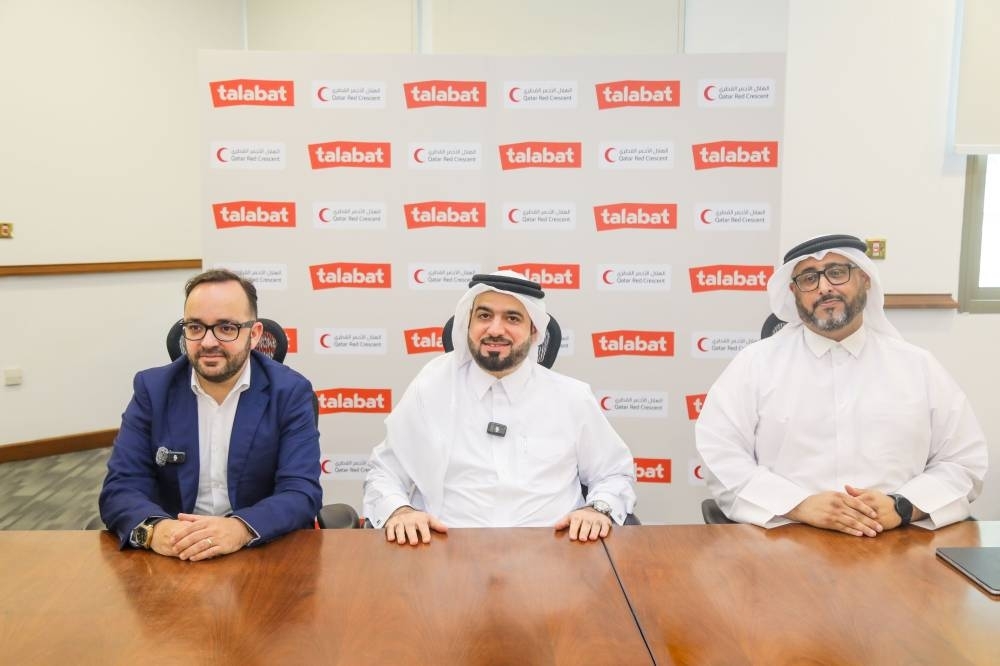
QRCS, talabat raise over QR 300,000 for Gaza
Tribune News Network Doha A joint campaign co-implemented by Qatar Red Crescent Society (QRCS) and talabat, the leading on-demand delivery platform in the MENA region, has successfully raised over QR 300,000 for Gaza relief efforts. The one-month campaign received a stronger-than-expected response from talabat customers, who chose to redeem and convert their reward points into donations on the talabat app. This contribution will go to QRCS, in support of its ongoing efforts to provide the blockade with every possible form of relief assistance, including water, food and medical care, amid such an unprecedented humanitarian calamity. In a statement, Faisal Mohamed Al-Emadi, Secretary-General of QRCS, expressed his sincerest gratitude to the benevolent people of Qatar, who made the campaign a remarkable success with their donations and compassion. 'It was another impressive episode of solidarity and support from the people of Qatar towards their Palestinian brothers and sisters,' said Al-Emadi. 'Even the smallest donation can make a real difference in the lives of the affected people of Gaza.' This is not the first time QRCS and talabat join hands for charity. In November 2024, a similar campaign raised over QR 1.1 million in donations, to support relief interventions for the war victims in both Gaza and Lebanon.
Qatar Tribune
2 hours ago
- Qatar Tribune
Up to 300,000 Syrians possibly missing under Assad family rule
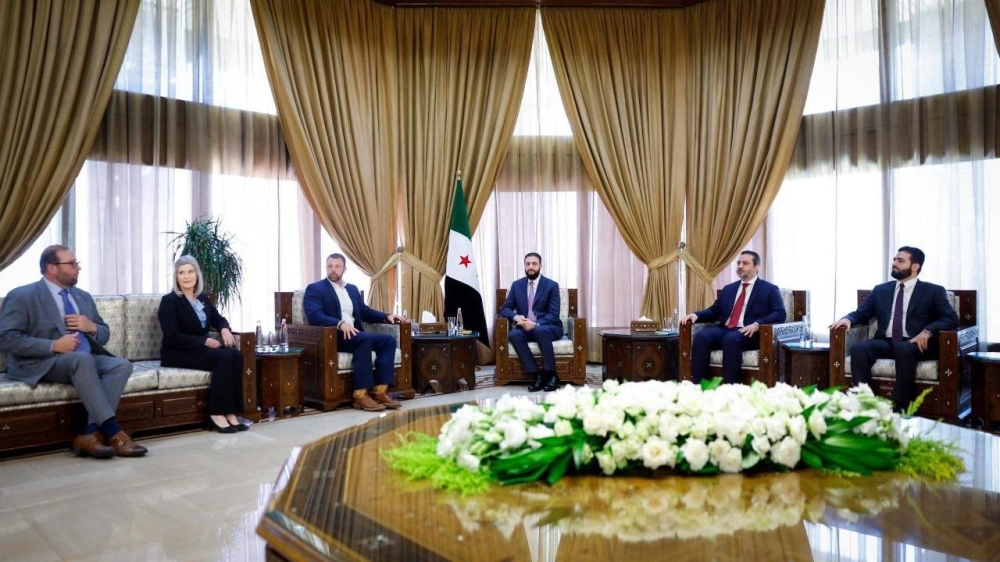
dpa Damascus A Syrian commission for missing persons estimated that between 120,000 and 300,000 people have gone missing during more than five decades of authoritarian rule by the Al Assad family. Mohammed Reda Jalkhi, the head of the National Commission for Missing Persons, said on Monday evening that between 120,000 and 300,000 people have gone missing since 1970. 'But the actual number may be much higher,' he told state news agency SANA. He said that the governmental commission mandate covers the period from 1970 until now. Hafez Al Assad served as president of Syria from 1971 till his death in 2000, after which his son, Bashar Al Assad, took over until he was overthrown by an rebel alliance in December. Jalkhi said that the commission, which was formed in May, has so far documented 63 mass graves and they have received information about other locations that are yet to be verified. Tens of thousands of people disappeared after the 2011 pro-democracy protests against Al Assad's regime escalated into a full-scale civil war, displacing some 14 million people and killing more than 300,000 civilians, according to UN estimates. The Syrian Network for Human Rights has previously said that around 157,000 went missing since March 2011. Since Bashar al-Assad fled to Moscow in December, the country has been ruled by a transitional administration led by President Ahmed al-Sharaa.
Qatar Tribune
a day ago
- Qatar Tribune
Qatar continues its support for Syria's reconstructions
QNA Damascus The State of Qatar continues its support for the Syrian people through a wide range of humanitarian and development projects carried out by its official and charitable institutions across various Syrian governorates. The efforts aim to strengthen the partnership between the two countries and response to both urgent and long-term needs in vital sectors, amid the conditions that have followed years of crisis and the ongoing challenges facing reconstruction. Since the beginning of the crisis in Syria, Qatar Charity (QC), Qatar Red Crescent (QRCS), and the Qatar Fund for Development (QFFD) have been at the forefront of humanitarian action. They have swiftly provided emergency and long-term aid in close coordination with international and local humanitarian organizations, and official institutions. Their interventions span sectors such as health, shelter, education, food security, infrastructure, and economic empowerment projects. Speaking to Qatar News Agency (QNA), Director of Qatar Charity's office in Turkiye and Syria Karam Ali said that since the beginning of the Syrian crisis, the QC has implemented more than 4,800 projects, with a total cost of around QR750 million. These projects, he said, have focused on health, shelter, food security, and education. He noted that the immediate response to the February earthquake amounted to around QR 70 million, providing emergency shelters such as tents and prefabricated homes, along with food baskets and other essential supplies. Ali explained that Qatar Charity used various mechanisms, either directly or through partners in Turkiye and Syria, in line with UN Security Council resolutions on cross-border humanitarian operations, as Northern Syria has been a primary focus of these efforts. Among QC's key achievements in the region is the establishment of 'City of Hope', which houses 1,400 families and includes schools, health centers, a kindergarten, a market, and integrated service facilities. More than 2,000 homes have been built, either individually or as part of residential communities, he added. As part of its Ramadan campaign, Qatar Charity hosted the 27th Night last year to rebuild 1,500 homes, he said, pointing out that work has already begun on 600 of these homes in Syria's Al-Ghab Plain and Maarrat Al-Nu'man, with preparations underway to complete the remaining houses in northern rural Aleppo. Karam Ali noted that Qatar Charity manages Bab al-Hawa Hospital and implements economic empowerment projects targeting poor families and orphan mothers through training and support for small businesses. He underlined that Qatar Charity has started new projects in coordination with Syria's Ministries of Health and Education, printing schoolbooks for grades one through nine, renovating schools, and providing medicines and medical supplies. Plans are also under way to establish solar power stations and maintain water and sewage facilities, he added. Ali also explained that food security programmes remain a priority, focusing on supporting the wheat value chain and livestock, in addition to sponsoring and operating 12 health centers and supplying the ambulance system with 18 vehicles. He emphasized that project selection and implementation are carried out in coordination with the Syrian government, local authorities, and humanitarian organizations to ensure aid reaches the most vulnerable people and areas. Head of QRCS's representation mission in Syria and Turkiye Mazen Abdullah Salloum told QNA that since 2012, the mission has provided a comprehensive response to the Syrian crisis across eight vital sectors, benefiting over 13 million people with total expenditures exceeding $160 million. Salloum said that QRCS was the first humanitarian organisation to deliver relief aid across the border into Syria following the devastating earthquake, in coordination with Qatar Fund for Development, as aid was distributed both in Syria and Turkiye. Qatar Red Crescent also deployed medical convoys that performed more than 300 specialized surgeries and operated four mobile clinics serving displaced persons. Additionally, the Qatar Red Crescent established 15 residential villages in northern Syria comprising approximately 3,500 apartments benefiting over 60,000 people, alongside repairing hundreds of damaged homes, he added. Plans are under way for additional restoration projects and the construction of new villages, aligned with government reconstruction efforts, he noted. Salloum emphasized that Qatar Red Crescent balances urgent relief with sustainable projects, including providing medicines and medical supplies, establishing cardiac catheterization units and dialysis centers, supporting hospitals, building bakeries, and rehabilitating irrigation stations all supported by the Qatar Fund for Development. He expressed confidence that the State of Qatar will remain a key humanitarian partner for Syria and plans to expand work to more Syrian governorates as stability returns. For his part, President of the Syrian Arab Red Crescent Dr Mohammed Hazem Baqleh told QNA that cooperation with Qatar Red Crescent has notably developed since Dec. 8 last year, including support for poor families with food baskets, conducting heart surgeries for children, and seasonal projects such as sacrificial offerings during Eid al-Adha and Ramadan support. Baqleh noted that QRCS was active in emergency situations in southern Syria, supporting shelters with food baskets, adding that projects related to infrastructure and sustainable development are currently being prepared through joint meetings, paving the way for a memorandum of understanding covering most Syrian governorates. Cooperation between the two sides also extends to digital technology in humanitarian work, following the Syrian Arab Red Crescent's participation in a related conference in Qatar, Baqleh said, stressing that the next phase will see more partnerships and projects serving various Syrian regions. In this context, Minister of Social Affairs and Labour Hind Kabawat expressed Syria's pride in its relationship with the State of Qatar, praising the humanitarian, moral, and material support Qatar provides to the Syrian people. She noted full coordination between the ministry and Qatari institutions to identify priorities and needs, with continuous exchange of expertise and reports. Cooperation programs, she said, cover social protection, education, youth support, and small projects aimed at shifting from aid dependency to economic empowerment, along with vocational training projects and consultations on developing labor and protection laws. This firm and principled Qatari commitment to the Syrian people emphasises the State of Qatar's humanitarian and developmental role, moving from immediate relief to building resilience through sustainable projects, including residential villages, hospitals, agricultural and water resource support, and economic empowerment for families. These efforts also reflect Qatari institutions' readiness to continue working in coordination with the Syrian government and local and international partners to meet the growing needs of the post-crisis phase, enhancing humanitarian security and opening pathways for the recovery in Syria.
