


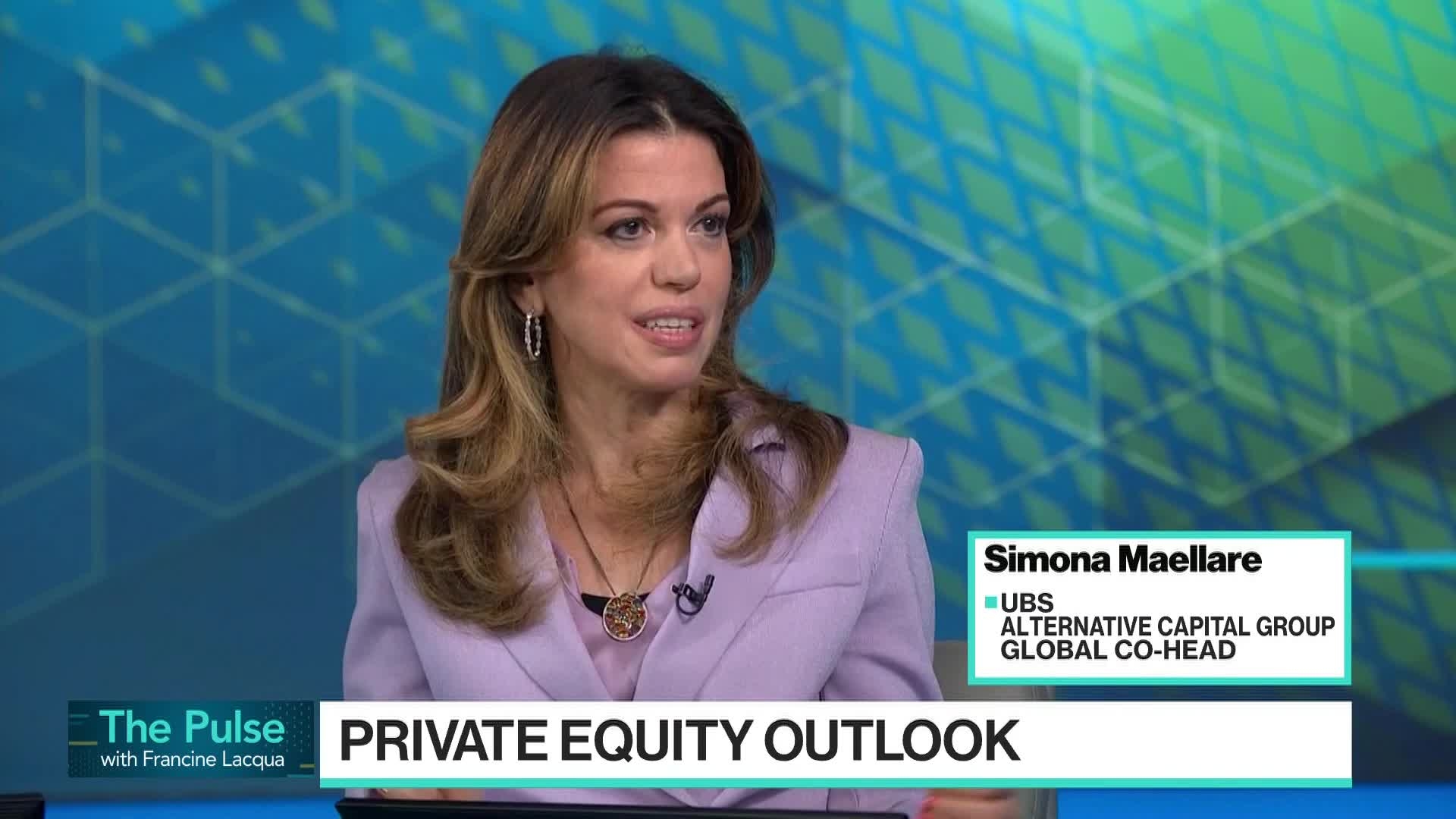
Winners and Losers in Fundraising Game, Says UBS's Simona Maellare
Hashtags

Try Our AI Features
Explore what Daily8 AI can do for you:
Comments
No comments yet...
Related Articles


Forbes
 40 minutes ago
- Forbes
NFL Great J.J. Watt Enjoys Honeymoon Period As Espanyol Shareholder
Dawn is breaking at Espanyol in Spain's La Liga. Fans of the Parakeets, a team less followed and with more grounded aims than local colossus Barcelona, hope it won't be a false one. Meanwhile, ex-defensive end J.J. Watt has a role to play. Now turning his attention towards being an NFL game analyst this coming season at CBS Sports, dissecting a game he knows inside out, Watt got a first taste of another new role—in soccer—last weekend. The 36-year-old looked on from the stands, fists pumping, as Espanyol fought back to beat Atlético Madrid in the surprise result from the opening matchday. The former Houston Texans player is a shareholder of Velocity Sports Limited (VSL), an investment branch of ALK Capital, which is led by U.S. managing partner Alan Pace. VSL acquired Espanyol from the Rastar Group, controlled by the Chinese businessman Chen Yensheng, for a reported €130 million ($152 million) in July (though Rastar retains some input). VSL also controls Premier League club Burnley. Much optimism surrounds Watt's arrival. El Mundo has gone as far as calling him Espanyol's new idol (Spanish). Much of that is down to the American ingratiating himself after saying a couple of phrases in Catalan, enjoying a beer with supporters outside the stadium, and getting behind the players inside it. Watt says he can't return there until February because of work commitments on Sundays, yet it's already a shift from the previous owners, who were rarely present and oversaw two relegations despite initially eyeing a place in the Champions League. Is The Future Bright For Espanyol? There's a peculiarity with ownership in soccer today. Many, even those who attend every fixture or know their side's history back to front, will understand that a foreign executive arriving on the scene doesn't. But if they stay involved, not least by investing in the squad, that's good enough. Very much the face of VSL in Espanyol right now, Watt has made a good impression. Then again, it's the honeymoon period, and at a club whose main target will still be avoiding demotion to the second division. How Espanyol does under U.S. guidance in the long term is what matters. It's worth noting that while Burnley and Espanyol are part of the same investment group, and therefore could be deemed part of the growing multi-club ownership model, the Spanish entity stressed that each will remain independent. Still, when interests are diversified, does Espanyol become the priority, or is that consolidating Burnley's place in the Premier League? Then, there's a cultural angle; Watt may have donned the blue and white scarf, but VSL is adapting to a different division in a different country, and everything that entails. U.S. Links To Spanish Soccer Are Tightening Of course, U.S. majority ownership in European soccer—Spain in this instance—is nothing new. Notably, top-tier Mallorca has former tennis player Andy Kohlberg at the top, while Leganés—relegated to the Segunda in 2024/25—is led by Blue Crow Sports CEO Jeff Luhnow. All the while, the Spanish soccer federation (RFEF) has approved controversial plans to host a first La Liga game on U.S. soil (Miami) this December. As the games and seasons progress, with Espanyol set on taking more scalps after the fast start against Atlético, it will become clearer whether the Catalans benefit from their end of the deal. At least the initial signs are promising.
Yahoo
an hour ago
- Yahoo
What SoftBank, Government Investments Could Mean for Intel's Business—and Stock
Key Takeaways Intel on Monday said Japanese investment giant SoftBank had agreed to buy $2 billion of the chipmaker's stock, boosting hope on Wall Street that the Trump administration and allies will throw the beleaguered chipmaker a lifeline. Tech analyst Patrick Moorhead said the SoftBank deal may pave the way for more deals with potential foundry customers, and could signal SoftBank's own chip ambitions. UBS analysts said in a note Tuesday that Intel stock could reach $40—up from $25 on Tuesday—if the White House can entice companies to contract with Intel's foundries. Intel (INTC) shares jumped on Tuesday as investors responded to signals the Trump administration may throw the company's troubled foundry business a lifeline. Intel on Monday evening announced Japan's SoftBank agreed to invest $2 billion in the chipmaker, making it Intel's fifth-largest shareholder, according to FactSet data. In addition, Commerce Secretary Howard Lutnick on Tuesday told CNBC that Intel should give the U.S. an equity stake in exchange for the CHIPS Act grant committed by the Biden administration. The updates come after The Wall Street Journal last week reported that the federal government was mulling taking a 10% stake in Intel as part of broader efforts to shore up domestic chip manufacturing and give America a leg up in the global artificial intelligence arms race. Intel, 'for better or worse, remains the only US-headquartered prospect for leading edge semiconductor chips and processes,' wrote Bernstein analysts in a note last week. Shares of Intel closed 7% higher on Tuesday, making the stock the biggest gainer in the S&P 500. The stock has risen 26% since the start of the year, after losing nearly 60% of its value in 2024 as the once-storied chipmaker's problems mounted. What Do Investments Mean for Intel Foundry? Patrick Moorhead, founder and chief analyst at Moor Insights & Strategy, on Tuesday morning said he expected SoftBank's announcement to pave the way for the federal government's investment and other deals. 'I also think there's going to be other investors,' Moorhead told Yahoo! Finance on Tuesday. Those could include chip designers like Nvidia (NVDA), Broadcom (AVGO) and AMD (AMD), or hyperscalers like Microsoft (MSFT), Amazon (AMZN), and Alphabet (GOOG), which are all developing their own chips. The investment could also be a sign of SoftBank's chip ambitions. The most likely rationale for the investment is that 'SoftBank companies are intending to build its rumored Arm CPU tiles and AI XPUs and Ampere chips related to Stargate,' Moorhead told Investopedia. Contracting with Intel to make those products could count toward Masayoshi Son's commitment to invest $100 billion in the U.S., he added. Foundry Customers Key to Stock Upside? UBS analysts in a note on Tuesday said that while they maintain their 'neutral' rating and $25 price target on Intel's stock, they can imagine a path for Intel shares to reach $40—'but a lot would have to happen.' The stock closed Tuesday at just over $25. To reach that price, Intel will likely need to land a few major foundry customers, which they say could include Nvidia, Broadcom, and Apple (AAPL). 'An upside case could potentially come to fruition if the US Government pushes these companies to engage more immediately with Intel on foundry services,' the analysts wrote. Bernstein analysts agreed that the government could be instrumental in securing foundry customers. 'One could imagine the US government attempting to help with this, either directly through force (or at least heavy encouragement), or indirectly through tariff policy or other regulation,' the analysts wrote. But Can Intel Make the Chips Trump Wants? According to Bernstein, the White House's investment and efforts to nudge chip designers toward Intel foundries may not be enough to secure a self-sufficient American AI chip industry. Intel will also need to regain the technological edge that once made it the most valuable chipmaker in the world. 'Without a solid process roadmap,' a U.S. investment in Intel 'would be economically equivalent to simply setting 10s of billions of dollars on fire,' the analysts wrote. 'And there is unfortunately less that the US government can do directly to help with this.' Earlier this year, Taiwan Semiconductor Manufacturing Co. (TSM), the world's largest contract chipmaker, was rumored to be discussing a joint venture with Intel through which it would provide expertise and training. TSMC denied the report at the time, but 'we wonder if we might see some of that news flow resurrected,' said Bernstein. Read the original article on Investopedia Sign in to access your portfolio

Forbes
an hour ago
- Forbes
From Hype To High-Speed: How To Make Blockchain Work For Real Markets
Blockchain technology is a chain of encrypted blocks to secure cryptocurrencies and bitcoin for online payments and money transaction getty The blockchain industry has long promised to rival traditional finance in speed, efficiency, and transparency. But that promise has often been delayed by one bottleneck: performance. While centralized systems can clear trades in milliseconds, blockchains have historically lagged due to consensus overhead, latency, and scalability trade-offs. A new wave of decentralized physical infrastructure networks (DePIN) is changing that equation. DePINs coordinate real-world resources like compute power, storage, and connectivity, in a blockchain-native way. In 2024 alone, these networks attracted more than $200 million in venture investment with applications ranging from decentralized AI training to electric vehicle charging grids. If you can prove ownership, usage, and performance of physical resources on-chain, you can build markets for them that are as fast and transparent as financial trading. That makes the latest research from 0G Labs especially timely. Their paper demonstrates the first decentralized training framework capable of handling models with over 100 billion parameters (ten times larger than Intellect-1 from PrimeIntellect) over constrained 1 Gbps bandwidth. For a sector where scaling often means sacrificing decentralization, that's a breakthrough. Michael Heinrich, CEO of 0G Labs, calls it a milestone for open collaboration. "Training models this large without centralized infrastructure means AI can now be built in a collaborative, decentralized manner," he says. "It's not only cheaper and more private, it's verifiable by design." In finance and AI, speed alone isn't enough; data must be provable, compliant, and secure. That's where technical achievement meets the harder challenge of market readiness. Consider Helium's decentralized IoT network or Europe's blockchain-based EV charging pilots . Both show DePINs can scale in real-world environments. But institutional finance operates under far stricter rules than consumer mobility or connectivity. Here, speed alone won't win. Andrei Grachev of DWF Labs explains: "You can't just look at block time and call the job done. Trading firms, funds, and asset managers need infrastructure that gives them legal comfort. A fast chain without compliance guardrails is just fast, not investable." Frameworks like the EU Data Act and the US GENIUS Act are shaping how decentralized systems interact with data privacy, reporting, and oversight. For DePIN blockchains to support real-world asset flows, from tokenized bonds to cross-border FX, they must meet technical benchmarks and regulatory standards. Ana Carolina Oliveira, Chief Compliance Officer at Venga, emphasizes the gap. "Finality on-chain doesn't equal finality in practice. You still need layers of verification: AML checks, identity validation, and cross-border compliance. These take time and coordination. Real money doesn't move until those boxes are checked." She also notes the upside: "If DePIN networks can integrate compliance into their core protocols, you could see same-day settlement become the norm for cross-border trade finance, without sacrificing security or oversight." In Singapore, regulated stablecoin pilots are settling tokenized deposits between banks in minutes. In the UAE, blockchain-enabled commodity platforms are integrating IoT sensor data directly into settlement smart contracts, reducing fraud risk and paperwork. Even in energy markets, platforms are using DePIN principles to allow peer-to-peer energy trading, settling transactions almost instantly based on smart meter data. These real-world deployments show that when technical capability aligns with regulatory frameworks, adoption can follow. For Heinrich, these are signs of the road ahead. "We've proven that decentralized systems can handle complex workloads like AI model training. Now the challenge is making these systems usable by institutions, not just developers. That means bridging the gap between verifiable computation and regulated capital." The road from data availability to market liquidity is as much about institutional alignment as technical prowess. The future of DePIN may be less about replacing traditional systems outright and more about complementing them, offering new rails for asset classes, industries, and geographies where transparency and composability offer clear advantages. The takeaway is clear: sub-second finality is no longer science fiction for blockchains. But without custody, compliance, and legal frameworks, speed risks becoming a headline metric with little market impact. DePIN's best chance at competing with Wall Street speed is to export not just data, but trust.
