



Gold prices fall on US-Japan trade deal
'Trade deals like the one between the US and Japan mitigate macroeconomic concerns and may dampen safe haven demand. This could lead to a continuation of the recent push and pull in (gold) prices,' said Nikos Tzabouras, senior market analyst at Tradu.com. US President Donald Trump struck a trade deal with Japan on Wednesday that lowers auto tariffs, marking the most significant agreement his administration has negotiated since announcing the tariffs in April. However, the longer-term prospects for gold remain favourable, Tzabouras added.
'Dollar weakness could persist amid mounting concerns over the Fed's independence and worries over the US debt. This could exacerbate the dedollarisation trends and lead to higher gold holdings by central banks.' Bullion tends to thrive in periods of uncertainty and also in low-interest-rate environments because the opportunity cost of holding a non-yielding asset is reduced.
The markets do not expect an interest rate cut from the US Federal Reserve in July, but the Fed's independence appears under threat from mounting political interference, according to a clear majority of economists polled by Reuters.
Among other metals, spot silver rose 0.2% to $39.35 per ounce, a near 14-year peak. 'The recent rally in silver is being driven by a combination of strong industrial demand, persistent supply deficits, and increased investor interest,' said Alexander Zumpfe, a precious metals trader at Heraeus Metals Germany. 'A decisive push past $40 could come from a further breakout in gold prices, renewed weakness in the US dollar, or signs of deeper supply tightness – especially if physical premiums start to rise again in key Asian markets.' Platinum fell 1.4% to $1,420.92 and palladium was down 0.4% at $1,269.60.—Reuters
Hashtags

Try Our AI Features
Explore what Daily8 AI can do for you:
Comments
No comments yet...
Related Articles

Business Recorder
 2 hours ago
- Business Recorder
Preparations for PM's visit, CPEC JCC session reviewed
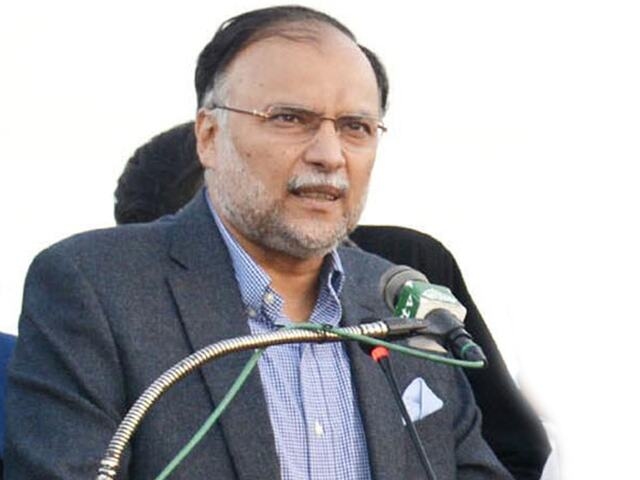
ISLAMABAD: Federal Minister for Planning, Development and Special Initiatives, Professor Ahsan Iqbal, on Tuesday, chaired a high-level meeting to review preparations for the upcoming Joint Cooperation Committee (JCC) session of the China–Pakistan Economic Corridor (CPEC) and the prime minister's planned visit to Beijing. The minister said that the future of CPEC should focus on quality over quantity, stressing that only well-planned, high-impact projects will move forward to ensure sustainability and strengthen Pakistan's institutions. Sharing details of his recent visit to China, he said that, on the prime minister's behalf, he invited President Xi Jinping to visit Islamabad in 2026 to celebrate 75 years of diplomatic relations between Pakistan and China. He added that the prime minister's upcoming trip to Beijing will formally launch CPEC Phase-II, during which, both sides are expected to set clear priorities and agree on concrete, measurable outcomes. The minister stressed the need to expand Pakistan's trade and exports to China and directed that visa processing for genuine businesspersons be expedited to avoid unnecessary delays. He also called for a practical, results-oriented plan to diversify exports, strengthen industrial linkages, and fully utilise the expanded market access available under CPEC. On human resource development, Iqbal stressed the need to make full use of the 10,000 training opportunities offered by China in various sectors. He directed that a transparent system be put in place to ensure the right people are selected for the right training, in line with institutional needs, so Pakistan can achieve lasting capacity-building and organisational benefits. The meeting reviewed progress on key priority areas, including the Multan–Sukkur Motorway, training programmes for IT graduates, artificial intelligence infrastructure, industrial relocation, special economic zones, mining, and agriculture. The minister directed that detailed, data-based studies be carried out on China's industrial relocation patterns and that Pakistan's export strengths be carefully matched with Chinese market needs. Noting that China imports goods worth over US$2 trillion annually, he stressed that Pakistan should set a clear target of capturing at least US$30–50 billion of this trade by improving competitiveness and preparing its key sectors. He directed that an outcome-oriented study be completed to identify high-potential sectors and products for export to China, with the objective of creating an exportable surplus, attracting sustained investment, and strengthening the balance of payments over the medium term. He reiterated the need for policy continuity and institutional reforms to realise long-term CPEC gains, and affirmed close engagement with the private sector, academia, and research institutions in industrial cooperation, technology, agriculture, energy, and human resource development. Copyright Business Recorder, 2025
Business Recorder
2 hours ago
- Business Recorder
India, China agree to resume direct flights, boost business links
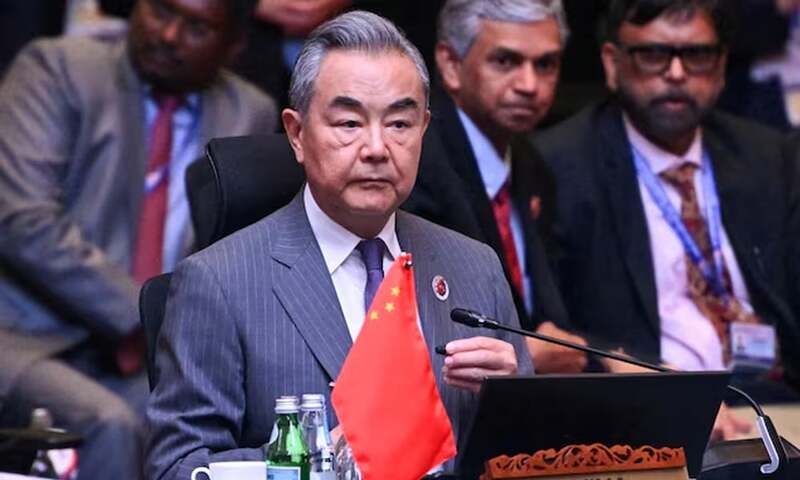
NEW DELHI: India and China agreed on Tuesday to resume direct flights and step up trade and investment flows as the neighbours rebuild ties damaged by a 2020 border clash. The Asian giants are cautiously strengthening ties against the backdrop of US President Donald Trump's unpredictable foreign policy, staging a series of high-level bilateral visits. The latest statements came at the end of Chinese Foreign Minister Wang Yi's two-day visit to New Delhi for the 24th round of talks with Indian National Security (NSA) Advisor Ajit Doval to resolve their decades old border dispute. The border talks covered issues related to pulling back troops both countries have amassed on their Himalayan border, delimitation of borders and boundary affairs, the Indian foreign ministry said, without elaborating. The talks appeared to have made no major breakthrough on those issues and Beijing said both countries agreed to meet again in China in 2026. But it also said the two countries would resume direct flights and boost trade and investment, along with smooth facilitation of visas. Direct flights have been suspended since the COVID-19 pandemic in 2020. No date was given for their resumption. 'Stable, predictable, constructive ties between India and China will contribute significantly to regional as well as global peace and prosperity,' Prime Minister Narendra Modi posted on X after meeting Wang. Modi is scheduled to travel to China at the end of this month to take part in the summit of the Shanghai Cooperation Organisation - his first visit to the country in more than seven years. TIBET DAM A readout from the Chinese foreign ministry said Wang told Doval that 'the stable and healthy development of China-India relations is in the fundamental interests of the two countries' people'.
Business Recorder
2 hours ago
- Business Recorder
China, Hong Kong benchmarks close lower on profit taking
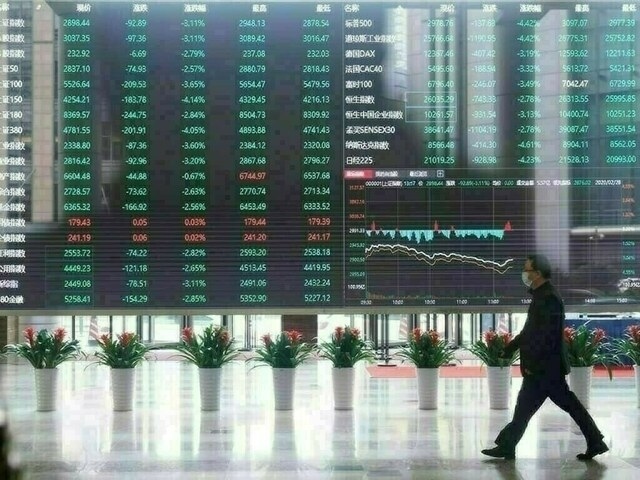
HONG KONG: China and Hong Kong equity benchmarks closed lower on Tuesday, as investors booked profits after a rally on the mainland index, and ahead of a key US central bank meeting this week that could provide clues on its policy path. The Shanghai Composite index was down 0.02% at 3,727.29, while the blue-chip CSI300 index was down 0.38%. Hong Kong's benchmark Hang Seng index closed 0.3% lower, marking a fourth straight losing session. Analysts said market optimism, underpinned by the extension of the US-China trade truce and expectations of a weaker dollar, increased inflows over the past few weeks. Some investors may want to cash out at the high point after the strong rally, they said. 'The national team has a track record of selling into strength, and we believe it will continue to do the same,' Richard Tang, China strategist at Julius Baer, said in a note on Tuesday. Yet the private bank expects 'strong return potential for the Chinese equity market into year-end', as improving liquidity in the onshore market can offset the worsening macro narrative. In Hong Kong, with the benchmark Hang Seng rising over 25% this year, there has been 'mild profit-taking/position-squaring' in the market, said Charu Chanana, chief investment strategist at Saxo. Some investors reduced their risk profile ahead of the Jackson Hole meeting and geopolitical risks, she said. Investors are closely watching the Fed's Jackson Hole conference between August 21 and 23, where Chair Jerome Powell is expected to speak and could offer more clarity on the economic outlook and the central bank's policy framework. By sector, semiconductors and brokers were among worst performers among mainland A-shares, down 1.9% and 1.8%, respectively. Mainland property developers listed in Hong Kong rose 0.6%, after Premier Li Qiang called for forceful measures to stop losses in the sector. The smaller Shenzhen index ended up 0.11% and the start-up board ChiNext Composite index was weaker by 0.17%.
