


31 killed, 13 wounded in attack on Sudan displacement camp
Khartoum
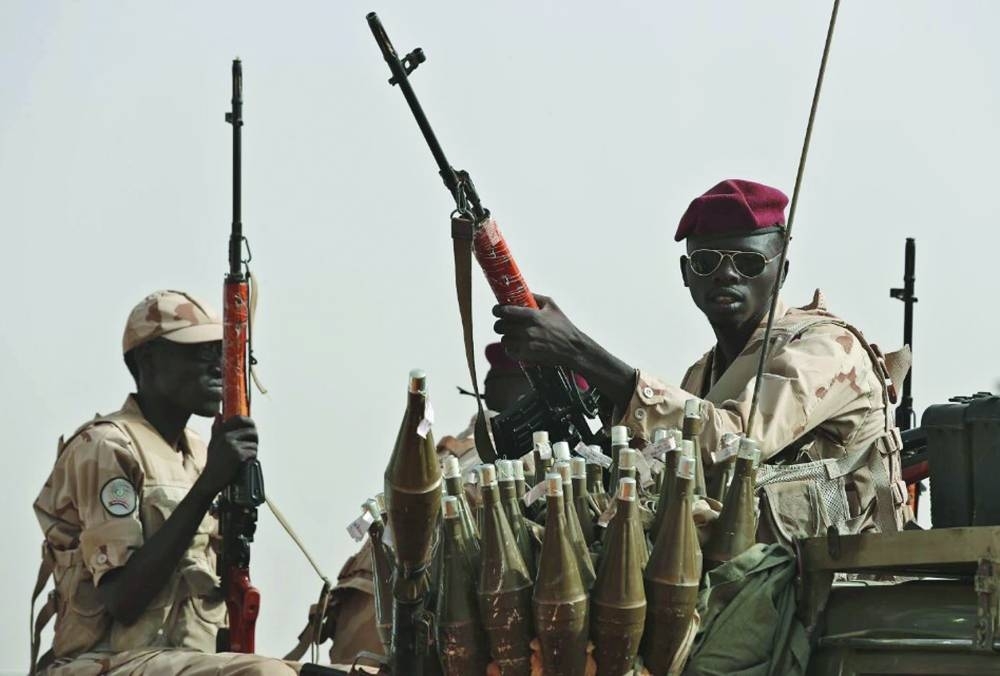
At least 31 people were killed and 13 wounded when the paramilitary Rapid Support Forces (RSF) attacked a displacement camp in the Sudanese region of North Darfur, the Sudan Doctors Network said.
The assault targeted the Abu Shouk camp on the outskirts of El Fasher, the doctors' network said, adding: 'The injured were treated under dire humanitarian and health conditions.' The city has faced severe shortages of medicine, medical personnel and food due to the RSF siege.
The United Nations says Abu Shouk has been attacked by the RSF at least 16 times between January and June, leaving more than 200 people dead and over 100 wounded.
War erupted in Sudan in April 2023 between the RSF and the Sudanese army, displacing millions and creating what the UN describes as the world's worst hunger crisis. About 25 million people - half the population - face acute food insecurity, with 3.5 million women and children suffering from malnutrition.
El Fasher is the last city in North Darfur still under government control. It has been besieged by the RSF since May of last year. All trade routes into El Fasher have been cut, driving prices for scarce goods to extreme levels.

Try Our AI Features
Explore what Daily8 AI can do for you:
Comments
No comments yet...
Related Articles

Qatar Tribune
 2 days ago
- Qatar Tribune
31 killed, 13 wounded in attack on Sudan displacement camp
dpa Khartoum At least 31 people were killed and 13 wounded when the paramilitary Rapid Support Forces (RSF) attacked a displacement camp in the Sudanese region of North Darfur, the Sudan Doctors Network said. The assault targeted the Abu Shouk camp on the outskirts of El Fasher, the doctors' network said, adding: 'The injured were treated under dire humanitarian and health conditions.' The city has faced severe shortages of medicine, medical personnel and food due to the RSF siege. The United Nations says Abu Shouk has been attacked by the RSF at least 16 times between January and June, leaving more than 200 people dead and over 100 wounded. War erupted in Sudan in April 2023 between the RSF and the Sudanese army, displacing millions and creating what the UN describes as the world's worst hunger crisis. About 25 million people - half the population - face acute food insecurity, with 3.5 million women and children suffering from malnutrition. El Fasher is the last city in North Darfur still under government control. It has been besieged by the RSF since May of last year. All trade routes into El Fasher have been cut, driving prices for scarce goods to extreme levels.


Al Jazeera
6 days ago
- Al Jazeera
Cholera kills 40 as Sudan faces worst outbreak in years, says MSF
At least 40 people have died from cholera in Sudan's Darfur region in what medical charity Doctors Without Borders, known by its French initials MSF, described as the country's worst outbreak in years. MSF said on Thursday that the vast western region, already devastated by more than two years of fighting between the Sudanese army and the paramilitary Rapid Support Forces (RSF), is bearing the brunt of an outbreak that began a year ago. 'On top of an all-out war, people in Sudan are now experiencing the worst cholera outbreak the country has seen in years,' the group said in a statement cited by the AFP news agency. 'In the Darfur region alone, MSF teams treated over 2,300 patients and recorded 40 deaths in the past week.' Nationwide, health authorities have reported 99,700 suspected cases and 2,470 deaths linked to cholera since August 2023. The bacterial infection, transmitted through contaminated food and water, can cause severe diarrhoea, vomiting and muscle cramps. It can kill within hours without treatment, though simple oral rehydration or antibiotics can save lives. On Wednesday, health officials launched a 10-day vaccination drive in the capital, Khartoum, to slow what aid agencies warn is a fast-moving outbreak worsened by war, mass displacement and heavy rainfall. MSF said millions forced from their homes by the conflict now struggle to access clean water for drinking, cooking and hygiene. In Tawila, North Darfur, where about 380,000 people have fled ongoing fighting near el-Fasher, residents survive on just 3 litres (3.2qt) of water per day – less than half the emergency minimum of 7.5 litres (8qt) per person. 'In displacement and refugee camps, families often have no choice but to drink from contaminated sources and many contract cholera,' said Sylvain Penicaud, MSF's project coordinator in Tawila. 'Just two weeks ago, a body was found in a well inside one of the camps. It was removed, but within two days, people were forced to drink from that same water again.' Since the army retook Khartoum in March, fighting has intensified in Darfur, with the RSF attempting to seize el-Fasher, the last major city in the region still under army control. The United Nations has described dire conditions for civilians trapped inside. Heavy rains have further contaminated water sources and damaged sewage systems, MSF warned, while people fleeing the fighting are carrying the disease into neighbouring Chad and South Sudan. MSF's head of mission in Sudan, Tuna Turkmen, described the situation as 'beyond urgent'. 'The outbreak is spreading well beyond displacement camps now, into multiple localities across Darfur states and beyond,' Turkmen said. 'Survivors of war must not be left to die from a preventable disease.' Sudan's war, which began in Khartoum in April 2023, has killed more than 40,000 people, displaced an estimated 12 million and pushed millions towards famine.

Al Jazeera
04-08-2025
- Al Jazeera
‘We're suffering': People in Sudan's el-Fasher eat animal fodder to survive
People in Sudan's North Darfur region are forced to eat animal fodder to survive as the paramilitary Rapid Support Forces (RSF) continues to lay siege to el-Fasher – the last urban centre in the region under army control. 'We are suffering, world. We need humanitarian aid – food and medicine – whether by airdrop or by opening ground routes. We cannot survive in this condition,' Othman Angaro, from a displacement camp in el-Fasher, told Al Jazeera. Angaro described how he and his family rely on livestock fodder known as ambaz, a type of animal feed made out of peanut shells. Another woman, veterinarian Zulfa Al-Nour, told Al Jazeera that her family relies daily on a charity kitchen called 'Matbakh Al-Khair' for a single meal, amid a total lack of external aid. She called for urgent international intervention, including airdrops of humanitarian supplies, warning that even the ambaz fodder is nearly depleted. The Integrated Food Security Phase Classification (IPC) last week warned about starvation in the el-Fasher region. Starvation has reached the most severe level on the United Nations-backed food security scale – 'IPC Phase 5', indicating full-blown famine – it said on Friday. The two-month siege of el-Fasher has complicated aid efforts. The RSF has blocked food supplies, and aid convoys trying to reach the city have been attacked, locals said. Prices for the goods smuggled into the region cost more than five times the national average. Outbreak of cholera An outbreak of cholera in the North Darfur state, of which el-Fasher is the capital, has further added to the misery. Deaths due to the water-borne disease have risen to 191 in the region, which has witnessed months of fighting between Sudan's army and the RSF, according to a government official. At least 62 people have died from the disease in Tawila in the North Darfur state, the spokesman for the General Coordination for Displaced Persons and Refugees in Darfur, Adam Rijal, said in a statement on Monday. Nearly 100 people have also died in the Kalma and the Otash camps, Rijal added, both displacement camps located in the city of Nyala in South Darfur state. Some 4,000 cases of cholera have been reported in the region, according to the statement. In recent months, more than half a million people have taken shelter in Tawila, some 60km (37 miles) west of el-Fasher, the state capital, which has been under two months of siege by the RSF rebels. Most of the Darfur region is under the rebel control except for el-Fasher. 'Too weak to survive' Meanwhile, with Sudan in the throes of the rainy season, along with poor living conditions and inadequate sanitation, the outbreak of cholera is only worsening, warn aid groups. Cholera was first identified in early June in Tawila and has since spread to numerous refugee camps, according to NGO Avaaz. Nearly 40 people have died due to cholera in the Jebel Marra area, a district of West Darfur state. Doctors Without Borders, or MSF, is operating two cholera treatment facilities in Tawila housing 146 beds – coordinating nearly the entire medical response to the outbreak. Last month, it warned that 'much more' needs to be done to improve 'access to water, hygiene, and medical care to curb the spread of the outbreak in the midst of the rainy season'. Samir, a former teacher displaced to el-Fasher with his family, told Avaaz last week that the situation was 'catastrophic' and that the cholera outbreak was being exacerbated by widespread hunger. 'People are dying because they are too weak to survive,' he told the NGO. 'Their immune systems are compromised from severe malnutrition. People are starving in the displacement camps.' مدينة الفاشر في ولاية شمال دارفور غرب السودان بتعيش مجاعة قاتلة بسبب فرض الحصار عليها من قبل قوات الدعم السريع المدعومة من الاماراتالمجاعة دخلت المرحلة الخامسة يعني مجاعة كاملة ووضع كارثياتكلموا عنهم#الفاشر_تموت_جوعاََ — Ahmed Elhadary (@Ahmed_hadary77) August 2, 2025 Translation: 'The city of el-Fasher in North Darfur state, western Sudan, is experiencing a deadly famine due to the siege imposed on it by the Rapid Support Forces backed by the Emirates. The famine has reached the fifth stage, meaning a full-scale famine and a catastrophic situation. Speak about them.' Meanwhile, fighting continues. 'The RSF's artillery and drones are shelling el-Fasher morning and night,' one resident told the Reuters news agency. 'The number of people dying has increased every day, and the cemeteries are expanding,' he said. On Monday, Emergency Lawyers, a human rights group, said at least 14 people fleeing el-Fasher were killed and dozens were injured when they were attacked in a village along the route. The UN called for a humanitarian pause to fighting in el-Fasher last month as the rainy season began, but the RSF rejected the call. Fighting between the two groups first erupted in the capital Khartoum in April 2023. It has since spread to several regions of the country as the army chief and de facto head of state, Abdel Fattah al-Burhan, jostles for power with RSF chief Mohamed Hamdan 'Hemedti' Dagalo. The war has killed tens of thousands and displaced nearly 13 million people, according to UN estimates, resulting in one of the worst humanitarian crises in the world.
