


&w=3840&q=100)
Who is Sajid Tarar, the man who facilitated the Donald Trump-Asim Munir lunch?
He is a Pakistani-American businessman living in the Baltimore-Washington area. Reuters/File Photo
US President Donald Trump welcomed Pakistan Army Chief Asim Munir for a lunch meeting at the White House on Wednesday.
This was the first time a US president had hosted the influential head of Pakistan's army, who is seen as playing a major role in shaping the country's national security decisions.
The meeting was arranged by Sajid Tarar, a Pakistani-American businessman, according to reports.
Read Israel-Iran conflict day 8 live updates here.
It came at a tense moment in Washington, with Trump expected to decide in the next two weeks whether the US will join the Israel-Iran conflict.
STORY CONTINUES BELOW THIS AD
So, who is Sajid Tarar? And what happened during the Trump-Munir meeting?
Let's take a look at these details:
Who is Sajid Tarar?
He is a Pakistani-American businessman living in the Baltimore-Washington area.
He was a regular presence at the Republican National Conventions and is known for his strong links to the Make America Great Again (Maga) movement.
Tarar also founded the group 'American Muslims for Trump'.
His closeness to Donald Trump's circle was visible when his son got a role at the US State Department during Trump's first term.
The meeting was reportedly arranged by Sajid Tarar. Reuters/File Photo
Outside politics, Tarar heads the nonprofit Centre for Social Change in Baltimore, Maryland.
He has served on finance teams for state governors and has held senior positions in several business and investment groups.
He came into the spotlight recently for reportedly arranging the lunch meeting between Trump and Asim Munir.
Beyond his work with Pakistani-Americans, Tarar has also praised Prime Minister Narendra Modi and backed the idea of peaceful, cooperative ties between India and Pakistan, a rare stand in a divided diaspora.
He moved to the US in the 1990s, became a citizen, and has since been a prominent Republican voice among Muslim Americans.
ALSO READ | What is Iran's Arak heavy water reactor 'created to build nukes' that Israel struck?
Donald Trump-Asim Munir luncheon meeting
During the lunch meeting on Wednesday, Trump praised Pakistan Army Chief Asim Munir for his 'role' in helping prevent further escalation between India and Pakistan.
Trump said, 'Reason I had him here was I wanted to thank him for not going into the war and ending it…'
STORY CONTINUES BELOW THIS AD
The meeting, held in the Cabinet Room of the White House, lasted over an hour. Pakistan's ISI chief, Lt Gen Asim Malik, also attended alongside Munir.
India and Pakistan agreed to end hostilities on May 10 after four days of heavy cross-border missile and drone attacks.
The meeting came at a time when tensions were rising in West Asia, with the US weighing its role in the growing Israel-Iran conflict.
Pakistan has condemned Israel's airstrikes on Iran, calling them a breach of international law and a threat to regional peace.
'This is for us a very serious issue what is happening in our brotherly country of Iran. It imperils the entire regional security structures, it impacts us deeply,' Shafqat Ali Khan, spokesman for Pakistan's Ministry of Foreign Affairs, said on Thursday.
Smoke rises following an Israeli attack in Tehran. WANA/Reuters
Meanwhile, Israel and Iran exchanged fire again on Thursday, marking the seventh day of the ongoing conflict.
Iranian missiles struck a major hospital in southern Israel and hit residential areas in Tel Aviv, injuring 240 people and causing serious damage.
STORY CONTINUES BELOW THIS AD
Israeli Defence Minister Israel Katz held Iran's Supreme Leader Ayatollah Ali Khamenei responsible, saying the Israeli military 'has been instructed and knows that in order to achieve all of its goals, this man absolutely should not continue to exist.'
Israel also carried out airstrikes on Iran's Arak heavy water reactor in a fresh attack on its nuclear infrastructure. Iranian state media reported that there was 'no radiation danger whatsoever' and said the site had been cleared ahead of the strike.
The White House later said Trump will decide within two weeks whether the US will join Israel's campaign against Iran's military and nuclear targets. Trump, it said, still believes there is a chance to resolve the issue through diplomacy.
With inputs from agencies
Hashtags

Try Our AI Features
Explore what Daily8 AI can do for you:
Comments
No comments yet...
Related Articles

Hans India
 15 minutes ago
- Hans India
Trump tariffs-A dark cloud and a silver lining
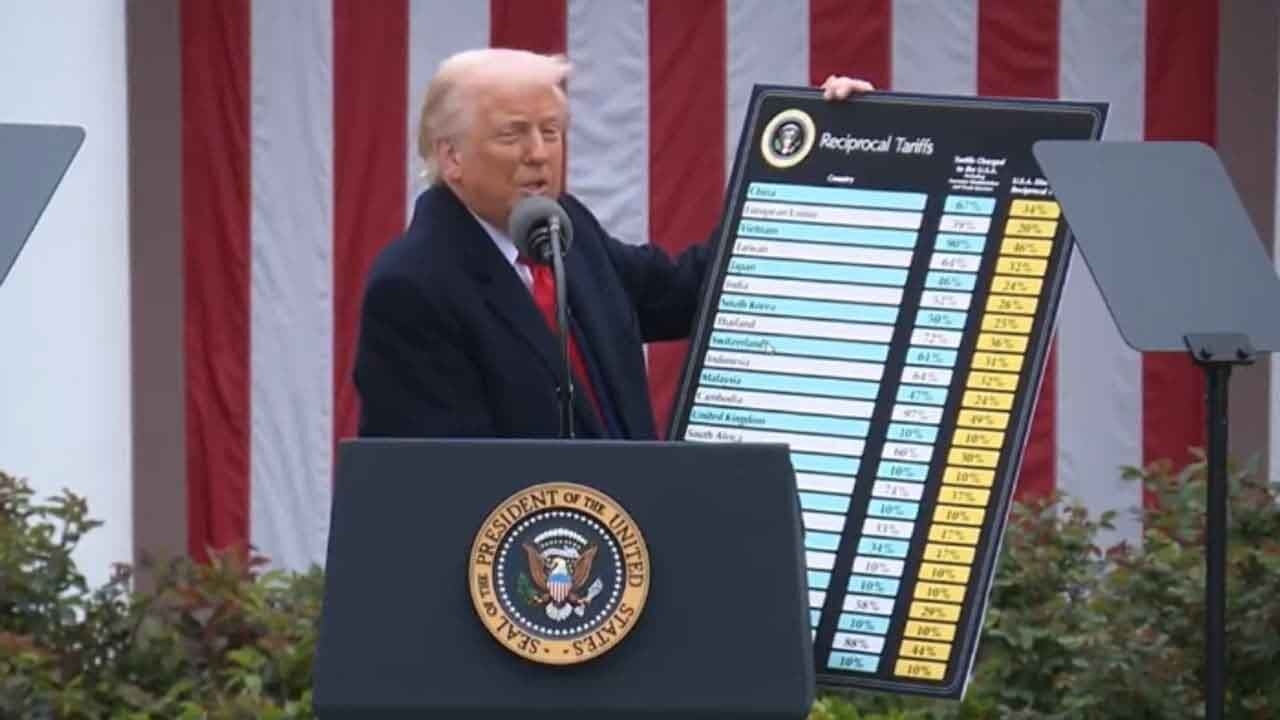
US President Donald Trump has suffered a bad press in India. Still, it is indisputable that the crisis his tariffs have triggered for our economy may not be such a bad thing: it has already goaded the government to reset the GST and FDI regimes. It is a truism that crises force governments into long-overdue reforms, and the present turbulence may, paradoxically, prove to be an inflection point for India's economy. Early signs indicate that Trump's tariffs have broken the policy inertia of the Narendra Modi government; it is rethinking the goods and services tax (GST), foreign direct investment (FDI), and export promotion policies. The government is reportedly working on a 100-day reform agenda prepared by the Commerce & Industry Ministry. It is not merely a firefighting exercise but a comprehensive strategy to improve India's global competitiveness. This is significant because, for too long, India has managed its trade policies reactively, focusing on ad hoc measures rather than laying down forward-looking, structural reforms. Another key area under review is the GST regime. While GST has streamlined indirect taxation, its complexity and compliance burdens have stifled smaller exporters and startups. Rationalising and reducing GST slabs, simplifying compliance, and ensuring quicker refunds could ease liquidity pressures and incentivise export-oriented businesses. If the current crisis accelerates this process, Indian exporters may be better positioned in the medium term, not just against US tariffs but also against rising competition from countries like Vietnam and Bangladesh. Equally important is the prospect of further liberalising the FDI regime. India has already been one of the top global recipients of foreign investment, but procedural hurdles, sectoral restrictions, and unpredictable regulatory interventions have often diluted the benefits. A push to ease investments—particularly from neighbouring countries and emerging Asian markets—signals a pragmatic recognition that India must diversify its capital inflows rather than remain overly reliant on Western investors. Such reforms could open up capital for high-growth sectors like digital infrastructure, renewable energy, and advanced manufacturing. The government's reported plan to provide more tax incentives for startups also reflects an awareness of the shifting global economic landscape. With traditional manufacturing exports facing headwinds, India must increasingly rely on knowledge-driven industries, digital services, and innovative startups to power growth. A supportive tax regime, combined with easier access to foreign capital, could help create globally competitive unicorns and deepen India's digital economy. Then there are proposals to ease certain environmental norms for the leather and footwear sectors. These industries employ millions, generate significant export revenues, and are heavily labour-intensive—precisely the kind of sectors India needs to expand if it hopes to absorb its growing workforce. While the idea is good, the government must ensure that this easing remains focused on cutting red tape; there should be no adverse impact on the environment. On the export infrastructure front, the emphasis on establishing e-commerce hubs and fast-tracking initiatives like BharatTradeNet is timely. Global trade is increasingly digital, and seamless integration of logistics, customs, testing, and certification into unified platforms could sharply reduce transaction costs for exporters. By enabling smaller firms and startups to tap global markets with fewer bureaucratic hurdles, such steps could democratise trade opportunities across sectors and geographies. If all these reforms are implemented effectively, they could make India's export basket more resilient and its domestic economy more attractive for investment.
Hans India
15 minutes ago
- Hans India
'Stable, predictable, constructive ties': Modi, China's Wang Yi discuss steps to ease tensions
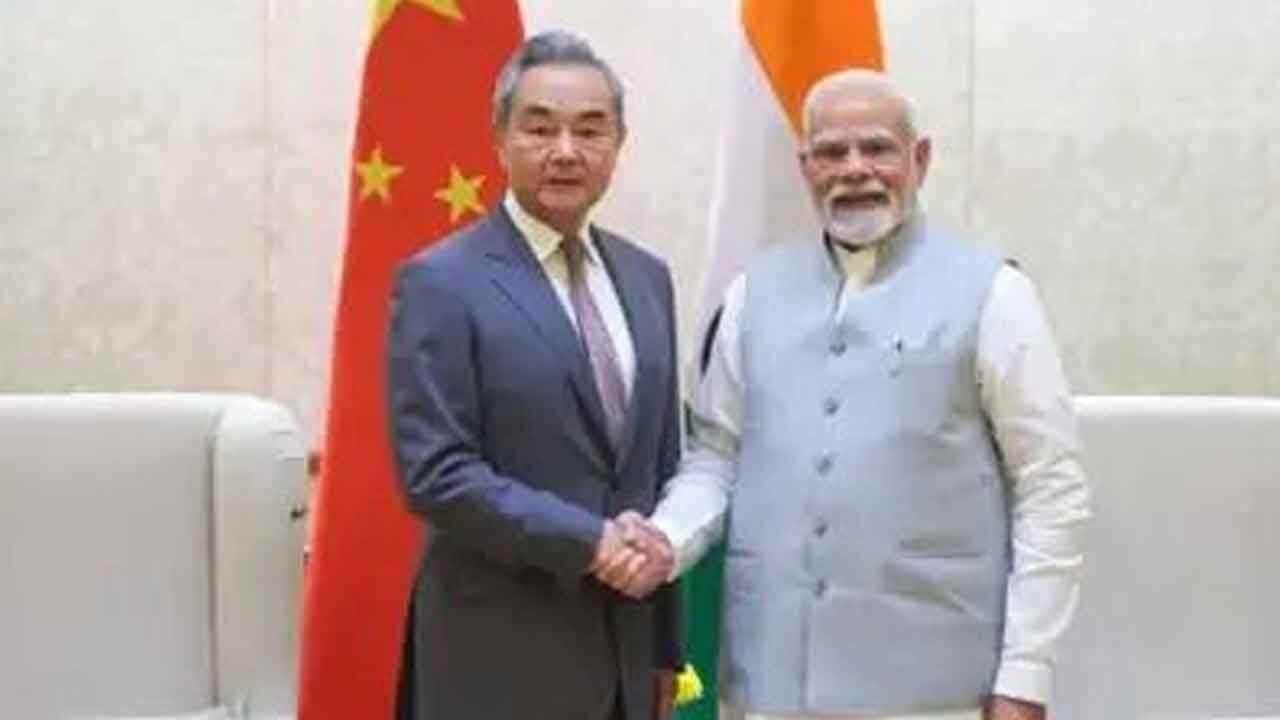
New Delhi: Prime Minister Narendra Modi on Tuesday met Chinese Foreign Minister Wang Yi at the latter's official residence, 7 Lok Kalyan Marg, in New Delhi, as India continues efforts to ease tensions in ties with China. The meeting took place against the backdrop of US President Donald Trump's recent move to impose tariffs, including a 50 per cent tariff on India. Modi stressed the need for peace and stability along the India-China border and reiterated India's commitment to a fair and mutually acceptable boundary resolution. The PM wrote on X after meeting Chinese FM Wang Yi: "Glad to meet Foreign Minister Wang Yi. Since my meeting with President Xi in Kazan last year, India-China relations have made steady progress guided by respect for each other's interests and sensitivities. I look forward to our next meeting in Tianjin on the sidelines of the SCO Summit. Stable, predictable, constructive ties between India and China will contribute significantly to regional as well as global peace and prosperity.' Renowned for his claims of mediating peace between rival nations, Trump may have inadvertently set the stage for an unexpected thaw in India-China ties. Despite Beijing's backing of Pakistan during Operation Sindoor after the Pahalgam terror attack, the recent easing of strains between New Delhi and Beijing is seen, in part, as a fallout of Trump's actions, though he has taken no credit. According to the ministry of external affairs (MEA), Wang Yi is in India at the invitation of National Security Advisor (NSA) Ajit Doval to take part in the 24th round of Special Representatives' (SR) Talks on the India-China boundary issue. During his two-day visit, Wang Yi also held bilateral discussions with External Affairs Minister Jaishankar. Sources indicated that China has promised to address three of India's concerns - rare earths, fertilisers, and tunnel-boring machines. During his public remarks, Jaishankar underlined that 'differences must not become disputes, nor competition conflict,' adding that the visit offered both sides an opportunity to review bilateral ties and exchange views on global and regional developments.


Indian Express
15 minutes ago
- Indian Express
Why Africa wants to ditch popular world map
The African Union (AU) has backed a campaign to replace the 16th-century Mercator map of the world with one that more accurately depicts Africa's size. The projection of the map — used by many governments and international organisations, as well as schools and tech companies — distorts the size of some continents, enlarging North America while shrinking Africa and South America. In 2017, schools in Boston introduced the more accurate Peters projection from the 1970s (also called the Gall-Peters projection) in classrooms. An episode of the American political drama TV series The West Wing (1999-2006), showed a group of socially minded cartographers in the White House explaining the bias implicit in the Mercator map. Gerardus Mercator (1512-94), a mathematician and engraver, created the map in 1569 to help sailors navigate their way around the globe. The map's first version was a set of 18 sheets, which formed a wall-size mosaic 48 inches high by 80 inches wide (Rhumb Lines and Map Wars: A Social History of the Mercator Projection, Mark Monmonier, 2004). Mercator projected the Earth's surface as if unwrapped from a cylinder around the globe. It had a grid pattern with longitudes (or meridians) and latitudes (or parallels) at 90-degree angles. The lines of longitude were evenly spaced, but the distance between the lines of latitude increased away from the equator, which was placed at the centre of the map. This allowed a straight line between any two points on the map to be the correct direction for sailors to follow using their compasses. The Mercator map revolutionised travel and became the standard world map for atlases and wall maps by the 19th century. 'Wall-map publishers readily embraced the Mercator map's rectangular format… [and] schoolbooks and classroom atlases also promoted the Mercator worldview,' wrote Monmonier. In recent years, however, the Mercator map has been criticised for distorting the sizes of the world's continents. When Mercator displayed the near-spherical Earth as a rectangle on a flat surface with the equator at the centre, it left large, confusing gaps near the poles. So, he stretched out the northern and southern ends of the globe to fill them — and thus produced a usable map. However, as a result of this manoeuvre, areas closer to the poles — such as Canada, Russia, the United States, and Europe — appear bigger than they are. And Africa — which straddles the equator — looks smaller than it is. Even tropical countries like India appear smaller than they actually are. And Greenland, which is about the size of the Democratic Republic of the Congo, seems to be of the same size as the whole of Africa. Mercator's projection helped Western cartographers to easily mark towns, cities, and roads in their part of the world. 'In some situations centering a map near the viewer's location is good design. But if you're a humanist well versed in European imperialism's harsh imprint on the Third World, the traditional Greenwich-anchored world map becomes a clear example of Western cultural hegemony, and all the more so when a Mercator projection inflates the size of western Europe,' wrote Monmonier. Critics have argued that the diminution of Africa on the map contributed to its exploitation by the colonial West. 'The standard projection was a political tool that contributed to the scramble for Africa, also known as the partition of Africa when Western European powers colonised the continent. Just as making Africa look small and conquerable then, the Mercator projection makes the continent look small and irrelevant now,' Rabah Arezki, former economist at the World Bank, wrote in Le Monde. The Correct the Map campaign, which was endorsed by the AU last week, urges organisations to adopt the 2018 Equal Earth projection. Selma Malika Haddadi, deputy chairperson of the AU, told Reuters that Mercator map's rejection would help reclaim 'Africa's rightful place on the global stage'.
