



Japan-Australia flagship hydrogen project stumbles
The Hydrogen Energy Supply Chain (HESC) is billed as a billion-dollar attempt to ship liquid hydrogen from Australia to Japan.
However, cold feet about the project in Australia means HESC will source hydrogen from Japan to meet a 2030 deadline for its demonstration phase.
Hydrogen sounds promising on paper: while fossil fuels emit planet-warming greenhouse gases, burning hydrogen creates only water vapour.
But it has not yet lived up to its promise, with several much-hyped projects globally struggling to overcome high costs and engineering challenges.
Hydrogen's climate credentials also depend on how it is produced.
'Green hydrogen' uses renewable energy, while 'blue hydrogen' relies on fossil fuels such as coal and gas, with carbon-capture technology to reduce emissions.
'Brown hydrogen' is produced by fossil fuels without any carbon capture.
The HESC project aims to produce blue hydrogen in the Australian state of Victoria, harnessing abundant local supplies of lignite coal.
With the world's first liquid hydrogen tanker and an imposing storage site near Kobe in Japan, HESC had been touted as a flagship experiment showcasing Japan's ambitions for the fuel.
HESC says it aims to eventually produce enough hydrogen to 'reduce about 1.8 million tonnes per annum of CO2 from being released into the atmosphere'.
Japan's energy sector emitted 974 million tonnes of CO2 from fuel combustion in 2022, according to the International Energy Agency (IEA).
– 'Strong opposition' –
Japan's government pledged 220 billion yen (now $1.4 billion) to HESC's current 'commercial demonstration' phase, which has a completion deadline of 2030.
But to meet this deadline, the project will now source hydrogen in Japan.
That has been blamed on cold feet among Australian officials concerned about the project's environmental payoff.
A spokesman for Japan's Kawasaki Heavy Industries, one of the companies behind HESC, said the decision to shift production to Japan was taken 'chiefly because of delay in procedures on the Australian side'.
The Victoria government did not respond to repeated requests for comment, though Australian officials have told local media that the move was a Japanese 'commercial decision'.
Australia's cooling interest in the project is due to 'strong opposition' from environmental activists and energy experts opposed to carbon capture and storage, said Daisuke Akimoto of Tokyo University of Information Sciences.
'The main problem the project faces is the lack of approval of the blue hydrogen project by the Victorian government,' Akimoto said.
Kawasaki said it has not yet decided what type of hydrogen it will procure in Japan and downplayed the project's challenges.
'We are very positive' about HESC and 'there is no change' to the goal of building a new supply chain, the spokesman said, declining to be named.
– 'Evidence gap' –
However, sourcing the hydrogen locally leaves 'a critical evidence gap at the middle of the project' — proving carbon capture and storage work — explained David Cebon, an engineering professor at the University of Cambridge.
That is 'difficult and challenging and not being done successfully anywhere', Cebon said.
Kawasaki has said it will continue 'feasibility studies' for the HESC project, but Cebon believes it will 'quietly die', partly because of the cost of shipping hydrogen to Japan.
To be transported by sea as a liquid, hydrogen needs to be cooled to -253 degrees Celsius (-423.4 Fahrenheit) — an expensive, energy-intensive process.
'I think wiser heads in the government just realised how crazy it is,' said Mark Ogge from the Australia Institute think-tank.
Japanese energy company Kansai Electric has separately withdrawn from a different project to produce 'green' hydrogen in Australia.
A company spokesman declined to comment on reports that the decision was due to ballooning costs.
– 'It will take decades' –
Resource-poor Japan is the world's fifth largest single-country emitter of carbon dioxide.
It already produces some hydrogen domestically, mostly using natural gas and oil or nuclear power, although this is limited and expensive.
Some experts are sanguine about HESC's challenges.
Noe van Hulst, a hydrogen advisor to the IEA, said it was important to take the long view.
'Pilot projects are undertaken to test innovations in practice: learning-by-doing,' he told AFP.
'Yes, it is hard to develop a low-carbon hydrogen market and it will take decades,' as with wind and solar energy, van Hulst said.
Solar in particular has seen costs plummet and uptake soar far beyond initial expectations and at greater speed.
And for now, 'there isn't really an alternative (to) decarbonise these hard-to-electrify sectors like steel, cement, ships and planes', van Hulst added.
Hashtags

Try Our AI Features
Explore what Daily8 AI can do for you:
Comments
No comments yet...
Related Articles

Shafaq News
 6 days ago
- Shafaq News
Oil edges higher on supply risks amid weak market outlook
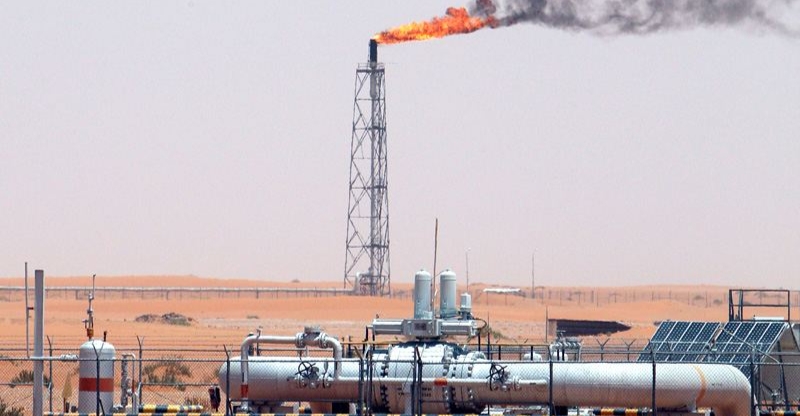
Shafaq News – Tokyo / Singapore Oil prices climbed on Thursday as investors remain cautious the U.S.-Russia summit on Ukraine on Friday will lead to a loosening of Russian crude sanctions and may even result in further action against buyers, while a weak market outlook capped gains. Brent crude futures were up 24 cents, or 0.37%, at $65.87 a barrel at 0356 GMT, while U.S. West Texas Intermediate crude futures rose 21 cents, or 0.34%, to $62.85. Both contracts hit their lowest in two months on Wednesday after bearish supply guidance from the U.S. government and the International Energy Agency (IEA). Trump on Wednesday threatened "severe consequences" if Putin does not agree to peace in Ukraine. Trump did not specify what the consequences could be, but he has warned of economic sanctions if the meeting in Alaska on Friday proves fruitless. "The uncertainty of U.S.-Russia peace talks continues to add a bullish risk premium given Russian oil buyers could face more economic pressure," Rystad Energy said in a client note. "How Ukraine-Russia crisis resolves and Russia flows change could bring some unexpected surprises." Trump has threatened to enact secondary tariffs on buyers of Russian crude, primarily China and India, if Russia continues with its war in Ukraine. "Clearly there's upside risk for the market if little progress is made" on a ceasefire," said Warren Patterson, head of commodities strategy at ING, in a note. The expected oil surplus through the latter part of this year and 2026, combined with spare capacity from the Organization of the Petroleum Exporting Countries, means that the market should be able to manage the impact of secondary tariffs on India, Patterson said. But things become more difficult if we see secondary tariffs on other key buyers of Russian crude oil, including China and Turkey, he said. Expectations the U.S. Federal Reserve will cut rates in September is also supportive for oil. Traders are almost 100% agreed a cut will happen after U.S. inflation increased at a moderate pace in July. Treasury Secretary Scott Bessent said he thought an aggressive half-point cut was possible given recent weak employment numbers. The market is putting the odds of a quarter-percentage point cut at the Fed's September 16-17 meeting at 99.9%, according to the CME FedWatch tool. Lower borrowing rates would drive demand for oil. Oil prices were kept in check as crude inventories in the United States unexpectedly rose by 3 million barrels in the week ended on August 8, according to the U.S. Energy Information Administration on Wednesday. Also holding oil prices back was an International Energy Agency forecast that 2025 and 2026 global supply would rise more rapidly than expected, as OPEC and its allies increase output and production from outside the group grows.

Iraqi News
08-08-2025
- Iraqi News
Accumulating bitcoin a risky digital rush by companies?
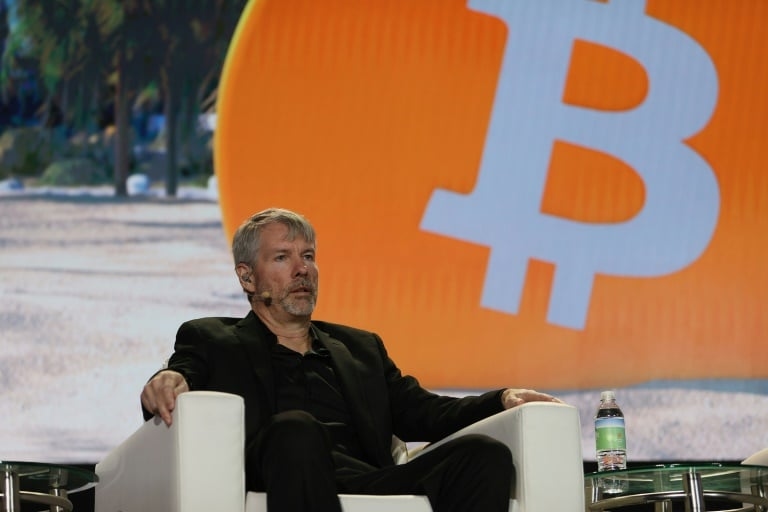
London – US President Donald Trump's media group and Tesla, the electric carmaker owned by tech billionaire Elon Musk, are among an increasing number of companies buying huge amounts of bitcoin. The aim? To diversify reserves, counter inflation and attract investors, analysts say. – Who also invests? – Companies frequently own bitcoin — the largest cryptocurrency by market capitalisation — to take part in sector activities such as 'mining', which refers to the process of validating transactions in exchange for digital tokens. Tesla has previously accepted payments in bitcoin, while Trump Media soon plans to offer crypto investment products. Other players who had core operations totally unrelated to cryptocurrency, such as Japanese hotel business MetaPlanet, have switched to buying bitcoin. US firm Strategy, initially a seller of software under the name MicroStrategy, holds more than three percent of all bitcoin tokens, or over 600,000. Its co-founder Michael Saylor 'created real value for its original set of investors' by offering the opportunity to invest in shares linked to cryptocurrencies, Andy Constan, chief executive of financial analysts Damped Spring Advisors, told AFP. This was five years ago when other financial products allowing investment in cryptocurrencies, without a need to directly own tokens, were not permitted. – Why invest? – Companies collect bitcoins 'to diversify' their cash flow and 'counter the effects of inflation', said Eric Benoist, a tech and data research expert for Natixis bank. Some struggling companies are riding the trend in a bid to 'restore their image' by 'backing themselves with an asset perceived as solid and one that appreciates over time', he added. Strategy's current focus is on accumulating bitcoin, simply to attract investors interested in the currency's potential. Bitcoin can also have a simple practical use, as in the case of the Coinbase exchange, which uses its own reserves as collateral for its users. – The risks? – Bitcoin's value has soared around ninefold in five years, fuelled recently by US regulatory changes under Trump, a strong backer of the crypto sector. However, the unit's volatility is four times greater than that of the main US stock index, the S&P 500, according to Campbell Harvey, a professor of finance at Duke University in the United States. Harvey warns against using a company's cash reserves, 'their safe haven', to buy crypto. Bitcoin's price, currently around $117,000, has in recent years been boosted by large holders of cryptocurrency, referred to as 'whales'. Harvey argues that in the case of 'major buyer' Strategy, liquidating all their 600,000 bitcoin tokens is no simple task owing to the high value. 'Assuming that you could liquidate all of those bitcoin at the market price is a heroic assumption,' he told AFP, adding such a deal would see the cryptocurrency's price plummet. Jack Mallers, chief executive and co-founder of bitcoin-focused company Twenty One Capital, said his business embraced the sector's volatility, adding the market would need to be flooded for the token's price to crash. – A bubble? – According to its own calculation, Strategy's stock is selling at about 70 percent above the value of its bitcoin reserves. The company — which did not answer AFP's request for comment — is growing thanks to bitcoin purchases, which in turn is attracting investors and pushing up its share price. But ultimately it will need to monetise these crypto assets, for example by linking them to financial products, for its business to be sustained. Should Strategy and other so-called 'bitcoin treasury funds' fail to do so, Benoist fears the crypto investment bubble will burst. He points out that the strategy of accumulation runs counter to the original philosophy of bitcoin, which was conceived in 2008 as a decentralised means of payment. Today, 'bitcoins end up in electronic safes that are left untouched', he said.
Iraqi News
08-08-2025
- Iraqi News
Tokyo soars on trade deal relief as Asian markets limp into weekend
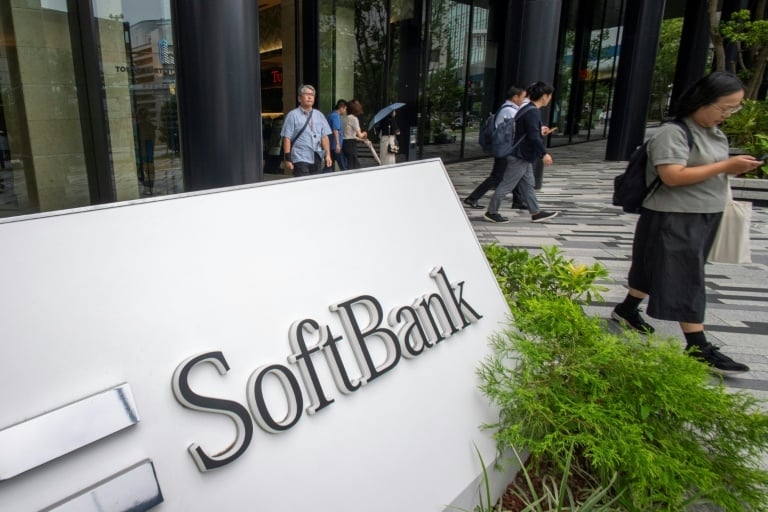
Hong Kong – Japanese stocks rallied Friday on a mixed day for Asian markets, fuelled by relief that Tokyo and Washington had settled a tariff issue that raised concerns about their trade deal. The news compounded optimism sparked by strong earnings from market heavyweights Sony and Softbank that fanned a rally in the tech sector. Meanwhile, expectations that the Federal Reserve will cut interest rates were boosted by Donald Trump's nomination of a key economic adviser to the central bank's policy committee, adding to downward pressure on the dollar. The Nikkei 225 jumped more than two percent after Japan's tariffs envoy Ryosei Akazawa told reporters that Washington is expected to revise an executive order that stacked tariffs on top of each other. It also lowered vehicle tariffs on Japanese autos, a crucial driver of the world's number-four economy. Car titan Toyota jumped almost four percent and Nissan more than three percent. Tech investment giant SoftBank rocketed more than 13 percent to a record after posting a quarterly profit thanks to its booming Vision Fund. And Sony piled on more than four percent — extending Thursday's 4.1 percent gain — after it hiked its annual profit forecasts owing to its gaming business. But while Wellington, Taipei and Jakarta also rose, the rest of Asia struggled, with Hong Kong, Shanghai, Sydney, Seoul, Singapore and Manila all down. Investors are now keeping tabs on talks between Washington and several other trading partners following the imposition Thursday of Trump's tariffs, with India and Switzerland scrabbling for a deal. Also in view are China-US talks to extend a 90-day truce in their stand-off, with their current agreement ending on August 12 and dealers looking on cautiously. 'We think uncertainties in US-China trade relations remain high, and any perception of one side failing to fully uphold its promise could trigger a renewed escalation in tensions,' economists at Bank of America said. 'Moreover, as is the case with India, China could face potential penalties from crude oil imports from Russia,' they added. The dollar held losses on Fed rate cut bets after Trump said he had tipped Stephen Miran, the chair of his Council of Economic Advisers to a governor role recently made vacant. 'He has been with me from the beginning of my Second Term, and his expertise in the World of Economics is unparalleled — He will do an outstanding job,' the president wrote on his Truth Social platform. Miran shares Trump's calls for interest rate cuts and has been a critic of the central bank in the past. 'Miran has been very critical of US Fed policy and would likely advocate for cuts. This makes at least two rate cuts by the end of the year much more probable,' said National Australia Bank's Tapas Strickland. The greenback had already been under pressure this week following data last Friday showing US job creation cratered in May, June and July. – Key figures at around 0250 GMT – Tokyo – Nikkei 225: UP 2.2 percent at 41,968.68 (break) Hong Kong – Hang Seng Index: DOWN 0.5 percent at 24,958.15 Shanghai – Composite: DOWN 0.1 percent at 3,636.18 Pound/dollar: DOWN at $1.3438 from $1.3445 on Thursday Euro/dollar: DOWN at $1.1659 from $1.1665 Dollar/yen: UP at 147.31 yen from 147.07 yen Euro/pound: UP at 86.77 pence from 86.76 pence West Texas Intermediate: FLAT at $63.88 per barrel Brent North Sea Crude: UP 0.1 percent at $66.46 per barrel New York – Dow: DOWN 0.5 percent at 43,968.64 (close) London – FTSE 100: DOWN 0.7 percent at 9,100.77 (close)
