



‘Roughly what I expected' – Leaving Cert students react after first day of exams
The Irish Independent caught up with two of these students for their reactions as they exited their exam hall.
Ms Healy said: 'It was roughly what I expected. I really liked seeing Margaret Atwood on the paper. She's one of my favourite authors. And I also liked the personal essay."
The Higher Level paper was topical and current from a reading comprehension on a speech given by Margaret Atwood and extracts from the Man Booker Prize Winner Orbital to a composition assignment tasking students with a podcast script.
For the personal essay, Helena chose question 6 - 'In Text 2 Margaret Atwood refers to cherishing, 'democratic elections'. Write a personal essay in which you reflect on some of the factors that would influence your voting intentions in future elections'.
'I thought it was general enough where you could talk about anything that you were interested in, but it wasn't so broad that you wouldn't have enough ideas. Overall I thought the paper was really nice and hope I did well,' she said.
Fred Movete (18), who sat Ordinary Level English Paper 1, was also happy with his paper.
With love a theme across Ordinary Level paper 1, with Beatles' song 'All You Need is Love' in the mix, writing about universal experiences was key.
He said: 'I definitely felt the pressure but once I started everything was ok. There was maybe one question [that caught me] but I think I will do great.'
Mr Movete is looking forward to his history exam next Wednesday and hopes for an essay on the Nuremberg trials to come up on the paper next Wednesday.
ADVERTISEMENT
"It's my favourite subject, for the research study report I covered the CIA's secret programme MK-Ultra,' he said.
Ms Healy and Mr Movete's year group were in first year when Covid-19 upended the nation.
Nuala Brady, Deputy Principal, said: 'This would be the year group we would have worried for the most because they didn't get the proper foundation initially.'
'It's been a challenging couple of years for all post-Covid.'
Leaving Certificate results this year will once again be artificially inflated through a post-marking adjustment which will be applied after all marking of individual papers has been completed.
This was first introduced to compensate for students who missed out on classes due to school closures during the Covid-19 pandemic.
Tomorrow students will take on English Paper 2 before Geography and Maths Paper 1 on Friday.
Hashtags

Try Our AI Features
Explore what Daily8 AI can do for you:
Comments
No comments yet...
Related Articles


Agriland
 4 hours ago
- Agriland
Thousands of Leaving Cert ag science students prepare for back to school
Thousands of students are gearing up for their return to school in the coming weeks, with many preparing for the Leaving Certificate agricultural science assessment. A spokesperson of the Department of Education and Youth said that in the most recent school year, 2024/2025, there was a total of 23,569 senior cycle students studying agricultural science across transition, fifth, and sixth year in schools. This data is based on information provided by post-primary schools in their 2024 October Returns, the spokesperson said. The data shows there were 3,464 students doing agricultural science in Leaving Cert year one, or fifth year in schools around the country. As part of the Leaving Certificate Vocational Programme (LCVP), there were 4,450 students doing agricultural science in fifth year. These students are expected to enter their final Leaving Cert year, sixth year, in the coming academic year. The Leaving Cert 2025 written exams took place from June 4 to June 24. Results are to be released this coming Friday, August 22. Over 7,100 students sat the Leaving Cert agricultural paper in June 2025, according to the State Examinations Commission (SEC). The exam was taken by 423 students at ordinary level and 6,746 students at higher level. Of the 7,169 students taking the paper, 3,100 were female students and 4,069 were male. There was an increase of 7.7% in the number of students who sat the exam in 2024. A new specification for agricultural science was introduced in September 2019 and was examined for the first time in 2021, the SEC outlined. The examination comprises two components: a written paper and a coursework component. The coursework component consists of a report on an 'individual investigative study' and is worth 100 marks, which is 25% of the overall marks for the subject. The remaining 300 marks (75%) are for the final written examination. The brief is thematic, related to a topic of agricultural significance, and common to ordinary level and higher level. All candidates are required to carry out an investigative study in response to the brief, and to do so in the context of a specific agricultural enterprise, the SEC said. The theme for the 2026 brief is 'explore how an environmentally sustainable food production system could support Ireland's future agricultural competitiveness'. Students are told to "use the theme as a lens to look through while undertaking the learning contained in the specification's strands and crosscutting themes".


Irish Daily Mirror
10 hours ago
- Irish Daily Mirror
Covid symptoms you can't ignore as supercharged variant behind nearly every case
Ireland is facing a surge in Covid cases linked to a fast-spreading new variant with subtle symptoms that could easily go unnoticed. In the past week alone, 461 new cases were reported nationwide, with health officials pointing to the XFG variant - also called Stratus - as the main driver. The latest figures from Ireland's Health Protection Surveillance Centre (HPSC) show the variant's share of confirmed cases has skyrocketed from 33% six weeks ago to 87.5% this week, meaning it now accounts for nearly every confirmed Covid case in the country. According to the HPSC, nine counties reported more than 20 new cases in the past week. Dublin led the way with 108 cases, followed by Cork with 47, Limerick with 34, Galway with 33, Tipperary with 29, Kerry with 23, Waterford and Donegal with 21 each and Wexford with 20. At the other end of the scale, Longford recorded no new cases, while Mayo had 1, Monaghan had 2, Leitrim had 3, Kilkenny and Roscommon had 5 each, and Carlow and Sligo had 7 each. The World Health Organization has flagged Stratus as a "variant under monitoring", warning that while it may not cause more severe illness, it appears to spread faster - which is apparent in Ireland's latest figures. Doctors are also reporting new, subtle symptoms. A hoarse or raspy voice has emerged as an early sign, sometimes appearing before more classic Covid symptoms, making it easier for the virus to spread undetected. Harley Street GP Dr Kaywaan Khan told Cosmopolitan UK that "one of the most noticeable symptoms of the Stratus variant is hoarseness, which includes a scratchy or raspy voice." The timing of this rise in Stratus cases coincides with the massive Oasis concerts held at Croke Park over the weekend, where more than 160,000 fans packed in for the band's Live 25 reunion shows. Health experts had warned that such large gatherings could increase the risk of transmission. Akash Sood from Knightswood Pharmacy advised: "New strands of Covid can infect thousands within metres of one another, so wear a mask if concerned, be safe and enjoy the return of Oasis." Ireland's public health guidelines remain the same: If you have any symptoms of Covid, stay at home until 48 hours after the symptoms are mostly or fully gone. You should also avoid contact with other people, especially people at higher risk from Covid. The HSE is reminding the public of the wide range of Covid symptoms to look out for. These include: fever (high temperature - 38C or above) - including having chills dry cough fatigue (tiredness) loss or change to your sense of smell or taste – this could mean they're completely gone or just different to normal nasal congestion (runny or blocked nose) conjunctivitis (also known as red eye or pink eye) sore throat headache muscle or joint pain (aches and pains) different types of skin rash nausea or vomiting diarrhoea chills dizziness shortness of breath or breathing difficulties loss of appetite confusion pain or pressure in the chest. Subscribe to our newsletter for the latest news from the Irish Mirror direct to your inbox: Sign up here.

RTÉ News
11 hours ago
- RTÉ News
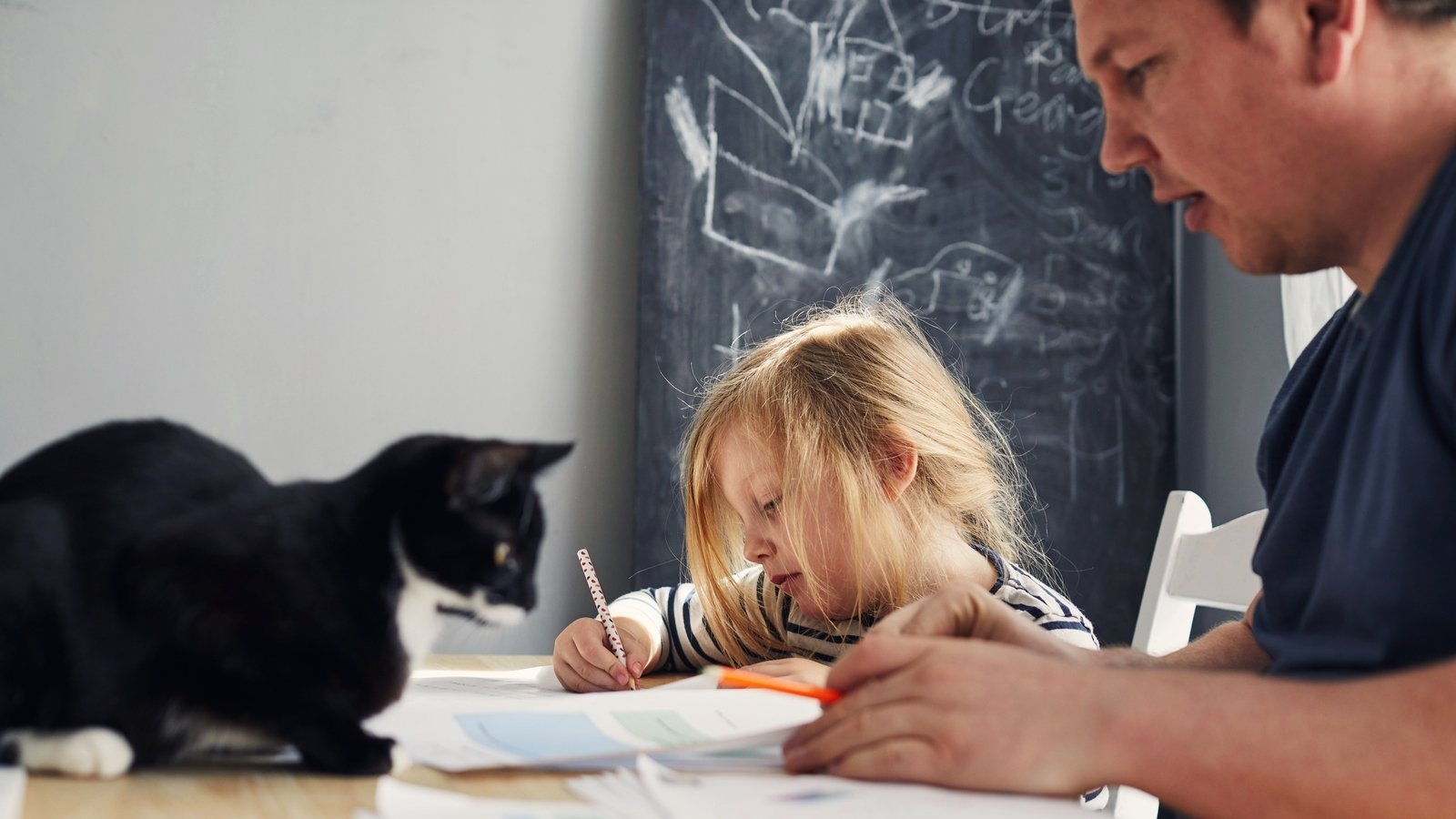
Why are more Irish families choosing to home school their kids?
Analysis: while still a minority practice, the number of registered home-schooled children has grown from 1,507 to 2,499 in recent years What does learning look like when it happens around the kitchen table, in the garden or on a museum visit instead of inside a classroom? It's a question more Irish families are exploring as homeschooling quietly gains ground. Bunreacht na hÉireann offers a unique starting point: Article 42 recognises the family as the child's "primary and natural educator". This principle has long allowed parents to choose how their children are educated, whether in state schools, private institutions, or at home. Ireland's accessibility has also attracted families from countries like Germany, where homeschooling is restricted, and Ukraine, where war has disrupted schooling. But with freedom comes oversight. So how does homeschooling actually work in Ireland? From RTÉ Radio 1's Drivetime in 2021, Catherine Monaghan from the Home Education Network on how the number of parents homeschooling their children has trebled The rise of homeschooling in Ireland Home education in Ireland spans a wide spectrum, from mainstream families to those with health, special needs or philosophical reasons for choosing it over traditional schooling. While still a minority practice, homeschooling is growing steadily. Since the Covid-19 pandemic, the number of registered home-educated children has grown from 1,507 to 2,499. This rise reflects shifting priorities. Some families seek flexibility, others want to tailor learning to a child's pace or interests. For children with additional needs, home education can offer a more supportive and less overstimulating environment. Ireland's constitutional framework, which recognises the family as the child's "primary and natural educator", makes this choice not only possible but protected. Technology has also played a role. Online platforms, virtual tutors and digital curricula have made homeschooling more accessible. While the practice may seem isolating, many families connect through local co-ops or online networks, sharing resources and organising group activities. From RTÉ Radio 1's Today with Claire Byrne, interview with some Irish families who have embraced homeschooling Oversight and assessment But choosing home education isn't just about freedom, it also involves responsibility. That's where the Alternative Education Assessment and Registration Service (AEARS) comes in. While the Constitution protects the right to home education, it also places a duty on the State to ensure that children receive a " certain minimum education, moral, intellectual and social". This balance is maintained through AEARS, which oversees the registration and review of home education provision. A family can begin homeschooling once a valid application is received by AEARS. However, before a child's name is officially placed on the Section 14 Register, the education being provided must be assessed under the Education (Welfare) Act, 2000. This assessment is guided by the Guidelines on the Assessment of Education in Places Other Than Recognised Schools and focuses on literacy and numeracy; breadth and balance across learning areas; and the child's emotional, physical, and moral development. If the education meets the required standard, the child is placed on the register. PJ McNamara, a home school assessor with TUSLA provides some insights into this aspect of homeschooling on a recent episode of the On the Margins podcast. This highlights the tailored learning experiences, flexibilities afforded and offering a solution to students suffering from school related stress and anxiety. From On the Margins podcast, school assessor with TUSLA PJ McNamara provides some insights into homeschooling assessments Challenges and misconceptions Homeschooling often evokes strong reactions. Some imagine a child isolated at the kitchen table, others picture a freewheeling curriculum with no structure, but the reality is more nuanced. Misconceptions Homeschooling is unregulated In Ireland, home education is legally protected but not unregulated. Families must register with AEARS and undergo an assessment to ensure the child is receiving a "certain minimum education". Periodic reviews help maintain standards. Homeschooled children lack socialisation While socialisation can be a concern, many families actively build community through local co-ops, online groups, and shared learning activities. Children often engage in sports, music, and field trips with peers. Home schooling is not necessarily one to one, an educator may cater for their own children, children in the community or a number of parents may have various roles and responsibilities as the children develop. From RTÉ Radio 1's Liveline, listener Monica has home-schooled her six children and is saddened by Micheál Martin's claim that homeschooling is isolating Homeschooling is only for religious or alternative families While some families are motivated by philosophical or religious beliefs, others choose homeschooling for health reasons, special educational needs, or simply because it better suits their child's learning differences. Challenges Navigating the registration process with AEARS can be daunting for newcomers. Accessing resources, especially for subjects like science or Irish, may require support. Balancing roles as both parent and educator can be emotionally and logistically demanding. Financial strains may arise. This has emerged as a considerable issue for children in both mainstream and home school education. It must be noted also the considerable undertaking for a parent, to homeschool. This may lead to a reduction in household income, or parents putting a hold on their careers to focus on their family. Despite this, many families report a deep sense of satisfaction and connection through home education. It's not a perfect fit for everyone, but for some, it's transformative. Home education in Ireland is no longer a fringe choice What's next for home schooling in Ireland? Home education in Ireland is no longer a fringe choice, but a growing, diverse and increasingly visible part of the educational landscape. As more families explore alternatives to mainstream schooling, the conversation is shifting from 'why homeschool?' to 'how can we support those who do?' The challenge now is to ensure that oversight remains supportive, and that families are given the tools and not just the permission to succeed. This includes access to resources, community networks and clear guidance from AEARS and the Department of Education. There's also an opportunity to learn from home educators. Their experiences raise important questions about flexibility, student centred learning and the role of wellbeing in education, questions that resonate far beyond the homeschooling community. As Ireland continues to navigate educational reform, home education offers a quiet but powerful reminder: learning doesn't have to happen in a classroom to be meaningful.
