


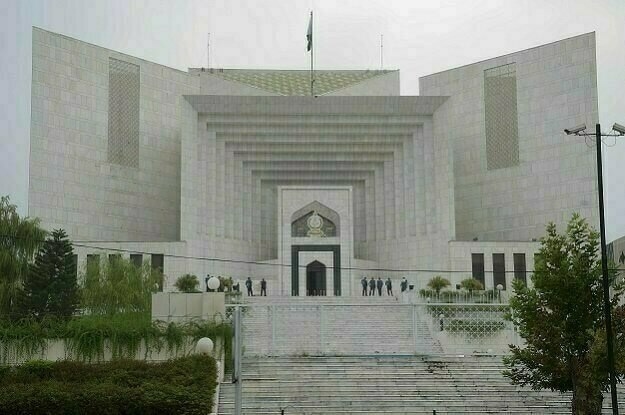
Benami transactions: SC not required to decide pleas on basis of mere suspicion: Justice Mazhar
The judgment, authored by Justice Muhammad Ali Mazhar, said the Court is not required to decide such pleas on the basis of mere suspicion. Moreover, the mode and manner of transaction is to be established by corroborating the intentions of the parties at the relevant time which could be congregated from the surrounding circumstances such as the relationship/association of parties, the motive or aspiration implicit in the transactions including the subsequent comportment and the factum of possession of the property and custody of title documents.
According to the facts of the case, the appellants – daughters of late Nasiruddin Ansari, who died in January, 1985, filed a Civil Suit No.739/1993 for declaration of Benami properties and claimed their share of inheritance in the estate of their deceased father.
Probe into benami transactions, money laundering: FBR transfers spark controversy
The appellants in their Suit entreated declaration that property No. C/35, Block-9, situated at Works Cooperative Housing Society, Gulshan-e-Iqbal, Karachi and House No. A-153, Block-L, North Nazimabad, Karachi, both were owned by their father.
However, their mother Mst. Tahira Begum (respondent No.1) was ostensible owner and she had no title or authority but she sold the Property No. C/35, Block-9, Works Cooperative Housing Society, in November, 1992. Whereas the same plea was taken against the Property No. A-153, Block-L, North Nazimabad, Karachi with the further assertion that their mother had unlawfully gifted the property to her son (Late Rashid Bin Nasir respondent No. 2).
The appellants contended that they were entitled to their share in all the estate of their deceased father but the respondent No. 1 deprived them of their share in the said properties.
The single judge of the Sindh High Court (SHC) decreed the suit after considering all relevant facts and the evidence adduced by the parties in favour of the appellants, but the Divisional Bench of the SHC in appeal upset the findings without any lawful justification. Thus, appeal before the apex court. The main issue before a three-judge bench, headed by Justice Muhammad Ali Mazhar, which heard the case, was whether the mother of the appellants was the ostensible owner and whether the appellants can claim their share on account of inheritance in such properties.
The Court noted that the probe whether the acquisition in the name of the wife by a husband is benami for his own benefit or not, this entirely depends on the intention of the parties at the epoch of buying. The acid test for resolving the character of transactions is obviously the source of funds but it is not always conclusive.
The judgment said even if the properties were purchased through the funds or resources of the deceased husband, then both husband and wife were privy to such arrangements/transactions in their own marital relationship and after passing of several years, the children could not question or challenge the title or ownership of properties in the name of their mother without any cogent proof or trustworthy evidence that she was actually an ostensible owner.
Copyright Business Recorder, 2025
Hashtags

Try Our AI Features
Explore what Daily8 AI can do for you:
Comments
No comments yet...
Related Articles

Business Recorder
 3 days ago
- Business Recorder
Benami transactions: SC not required to decide pleas on basis of mere suspicion: Justice Mazhar
ISLAMABAD: The Supreme Court ruled that in the cases of Benami transactions the burden of proving whether a particular person is a 'Benamidar' is upon the person alleging the same by adducing unimpeachable evidence. The judgment, authored by Justice Muhammad Ali Mazhar, said the Court is not required to decide such pleas on the basis of mere suspicion. Moreover, the mode and manner of transaction is to be established by corroborating the intentions of the parties at the relevant time which could be congregated from the surrounding circumstances such as the relationship/association of parties, the motive or aspiration implicit in the transactions including the subsequent comportment and the factum of possession of the property and custody of title documents. According to the facts of the case, the appellants – daughters of late Nasiruddin Ansari, who died in January, 1985, filed a Civil Suit No.739/1993 for declaration of Benami properties and claimed their share of inheritance in the estate of their deceased father. Probe into benami transactions, money laundering: FBR transfers spark controversy The appellants in their Suit entreated declaration that property No. C/35, Block-9, situated at Works Cooperative Housing Society, Gulshan-e-Iqbal, Karachi and House No. A-153, Block-L, North Nazimabad, Karachi, both were owned by their father. However, their mother Mst. Tahira Begum (respondent No.1) was ostensible owner and she had no title or authority but she sold the Property No. C/35, Block-9, Works Cooperative Housing Society, in November, 1992. Whereas the same plea was taken against the Property No. A-153, Block-L, North Nazimabad, Karachi with the further assertion that their mother had unlawfully gifted the property to her son (Late Rashid Bin Nasir respondent No. 2). The appellants contended that they were entitled to their share in all the estate of their deceased father but the respondent No. 1 deprived them of their share in the said properties. The single judge of the Sindh High Court (SHC) decreed the suit after considering all relevant facts and the evidence adduced by the parties in favour of the appellants, but the Divisional Bench of the SHC in appeal upset the findings without any lawful justification. Thus, appeal before the apex court. The main issue before a three-judge bench, headed by Justice Muhammad Ali Mazhar, which heard the case, was whether the mother of the appellants was the ostensible owner and whether the appellants can claim their share on account of inheritance in such properties. The Court noted that the probe whether the acquisition in the name of the wife by a husband is benami for his own benefit or not, this entirely depends on the intention of the parties at the epoch of buying. The acid test for resolving the character of transactions is obviously the source of funds but it is not always conclusive. The judgment said even if the properties were purchased through the funds or resources of the deceased husband, then both husband and wife were privy to such arrangements/transactions in their own marital relationship and after passing of several years, the children could not question or challenge the title or ownership of properties in the name of their mother without any cogent proof or trustworthy evidence that she was actually an ostensible owner. Copyright Business Recorder, 2025

Business Recorder
3 days ago
- Business Recorder
SC's review board orders govt to release 38 foreign inmates
LAHORE: The Supreme Court' review board on Saturday ordered release of 39 foreign inmates as they have completed their jail term under the charges of smuggling and crossing border illegally. Earlier, 35 men and four women belonging to India, Africa, Kenya, Bangladesh, and other countries were produced before the review board proceeding with the matter at Supreme Court's Lahore Registry. The review board also directed to provide food and medical facilities to the prisoners and ordered to send them back to their respective countries immediately. Superintendent Kot Lakhpat Jail and other relevant officials along with a team of doctors who examined the foreign prisoners, were also present in the court. Copyright Business Recorder, 2025
Business Recorder
4 days ago
- Business Recorder
Justice system's credibility rests in fairness of decisions and timeliness: SC
ISLAMABAD: The Supreme Court declared that a justice system's credibility rests not only in the fairness of its decisions but also in the timeliness with which those decisions are rendered. A two-judge bench comprising Justice Syed Mansoor Ali Shah and Justice Ayesha A Malik stated the courts must evolve into engines of timely, transparent, and citizen-focused justice. This relates to auction of an immovable property carried out by a bank in execution of a money decree dated 26.04.2010. The auction took place in 2011. The petitioner promptly raised objections the same year, which were dismissed. He then filed an appeal before the Peshawar High Court (PHC), which remained pending for 10 years, and ultimately decision was delivered in 2021. The case then reached the Supreme Court in 2022 and was taken up in 2025. The glaring aspect of the case is that after 14 years since the auction and due notice, neither the petitioner nor any authorised representative appeared before the apex court to pursue the petition. The bench, however, dismissed the petition on merits as well as for non-prosecution, and directed the SC office to dispatch a copy of this order to the parties for information and record. The judgment noted that in this case the appeal of the petitioner kept pending before the High Court for 10 years. 'It is beyond cavil that delay in adjudicating cases by the courts at any tier of the justice system corrodes public confidence in the judiciary, undermines the rule of law, and disproportionately harms the weak and vulnerable who cannot afford the cost of prolonged litigation. Delay in adjudication carries severe macroeconomic and societal consequences: it deters investment, renders contracts illusory, and weakens the institutional legitimacy of the judiciary.' The judgment said that the issue of delay is not merely administrative, it is constitutional. The right to access to justice is guaranteed by Articles 4, 9 and 10A of 1973 Constitution. It encompasses within it the right to a fair and timely trial. Delay that renders a remedy ineffective; or a right illusory amount to a denial of due process. Justice, to be real, must be both just and timely. The judgment highlighted that over 2.2 million cases are currently pending before courts across Pakistan, including approximately 55,941 cases before this Court alone, in spite of enhancing the number of judges at the Court. These figures are not abstract; they represent disputes suspended in time. Delay in adjudication is not merely a by-product of docket congestion or branch-level inefficiencies; it is a deeper, structural challenge of judicial governance. The court, as a matter of institutional policy and constitutional responsibility, must urgently transition toward a modern, responsive, and intelligent case management framework. Such a system must, at a minimum, ensure: the early fixation of cases on a non-discriminatory basis; the elimination of 'queue-jumping' and preferential scheduling; the prioritisation of matters involving constitutional, economic, or national importance without compromising the timely resolution of individual claims; the implementation of age-tracking protocols to automatically identify dormant cases; and the judicious use of Artificial Intelligence (AI) tools to assist in scheduling and triage while preserving the sanctity of judicial discretion. Judicial systems across the world have recognised that delay is not an intractable inevitability but a solvable institutional challenge. Countries such as Singapore, the United Kingdom, Brazil, Estonia, Canada, China, Denmark, and Australia have undertaken comprehensive reforms combining technology, structural innovation, and procedural discipline to reduce backlog and enhance judicial efficiency. Through tools such as e-filing, real-time dashboards, automated scheduling, and transparent digital oversight, these jurisdictions have moved from being passive custodians of dockets to active managers of justice delivery. The judgment said these international experiences underscore a basic truth: delays in justice are not inevitable; they are a product of institutional design, and can be remedied with vision, planning, and resolve. The judiciary of Pakistan must draw upon these global lessons and commit to transformative reform that integrates technological innovation, administrative restructuring, and disciplined case management. Copyright Business Recorder, 2025
