



When examining body can't be changed, can teachers be sacked, HC asked
The senior counsel argued that the single judge could not establish the corruption charges against WBBPE despite holding a "roving inquiry". Mitra argued that the judge "misdirected himself" by ordering appointments of those who got marks below the minimum obtained by the last empanelled candidates in the districts.
According to Mitra, 824 candidates whose total marks were below 13 got appointments when the minimum marks obtained by the last empanelled SC candidate in Birbhum was 14.191.
You Can Also Check:
Kolkata AQI
|
Weather in Kolkata
|
Bank Holidays in Kolkata
|
Public Holidays in Kolkata
Mitra cited WBBPE records to argue that the judge considered the marks of the last empanelled candidate under the SC category for Birbhum district only, when the cut-offs were higher in other districts.
"If you feel that the examining body is corrupt, you could have assigned some other body, though there is no guarantee that the new body won't be corrupt," Mitra said.
A division bench of justices Tapabrata Chakraborty and Reetoborto Mitra adjourned the hearing till 2pm on Thursday.
Get the latest lifestyle updates on Times of India, along with
Doctor's Day 2025
,
messages
and quotes!

Try Our AI Features
Explore what Daily8 AI can do for you:
Comments
No comments yet...
Related Articles
&w=3840&q=100)

Business Standard
 20 minutes ago
- Business Standard
Karnataka Cabinet decides to provide internal reservation among SCs
The Karnataka cabinet on Tuesday night decided to provide internal reservation among Scheduled Castes by categorising 101 castes among them into three categories, official sources said. In a special meeting, the Cabinet discussed the recommendations of the Justice H N Nagmohan Das Commission report, aimed at providing internal reservation among Scheduled Castes (SCs). The commission had submitted its 1,766-page report to Chief Minister Siddaramaiah on August 4, and it was placed before the cabinet on August 7. The internal reservation is aimed at slicing up the 17 per cent reservation matrix given to 101 scheduled castes. According to sources, the cabinet decided to accept the Justice Nagamohan Das Commission's report, but made some alterations. Of the 17 per cent reservation that SCs have in the state, as per the internal reservation formula evolved by the Cabinet, the SC (Right) and SC (Left) will get 6 per cent each, while the 'touchable' Dalit communities (Lambani, Bhovi, Korma and Korcha) and most backward and nomadic communities got 5 per cent quota. The commission had reportedly made recommendation for internal reservation in five categories -- 'most backward' communities (group A)- 1 per cent; SC (Left)/Madiga community (group B) 6 per cent; SC (Right)/ Holeya (group C) 5 per cent; 'touchable' communities (group D) 4 per cent, and Adi Karnataka, Adi Dravida and Adi Andhra communities (group E) 1 per cent. The commission's report was not officially made public. Speaking to reporters, Law and Parliamentary Affairs Minister H K Patil said the Cabinet meeting had been "fruitful" and ministers representing all SC communities are satisfied. "The cabinet meeting went on for about two-and-a-half hours.. All of us have come out of the cabinet hall happy and satisfied. The state legislature is in session, and there is no scope for revealing details. The chief minister will make a statement on behalf of the government on the floor of the House tomorrow," he said. However, Minister for Backwards Class Development Shivaraj Tangadagi confirmed that internal reservation has been decided upon by making three groups among SCs -- right, left and others. He termed the cabinet decision "historical". "Reservations provided for these three categories are six, six and five per cent, respectively. After a detailed discussion, we all accepted it. "The most backwards communities categorised under group A by the commission, have been added to the group of 'Touchable' Dalits (Bhovi, Banjara, Korma and Korcha). While group E of the commission have been added to group B and C," he added. According to sources, most backwards and nomadic communities are apparently not happy with the decision. The government, in November last year, set up the Justice Nagmohan Das commission to recommend internal reservation among SCs by gathering empirical data. This came after the Supreme Court last year allowed states to provide internal reservation, and the Karnataka Cabinet agreed to implement internal reservation. In a landmark verdict delivered by the Supreme Court on August 1 last year, it held that states are constitutionally empowered to make sub-classifications within the SCs, which form a socially heterogeneous class, for granting reservation for the uplift of castes that are socially and educationally more backward. (Only the headline and picture of this report may have been reworked by the Business Standard staff; the rest of the content is auto-generated from a syndicated feed.)


Hindustan Times
20 minutes ago
- Hindustan Times
Karnataka Cabinet clears proposal on internal quota for SCs
Bengaluru: The Karnataka cabinet on Tuesday approved a proposal to divide the Scheduled Castes (SC) reservation benefits internally among three broader sub-categories, in a decision aimed at paving the way for the implementation of internal reservation for Dalits. The Karnataka cabinet on Tuesday approved a proposal to divide the Scheduled Castes (SC) reservation benefits internally among three broader sub-categories, in a decision aimed at paving the way for the implementation of internal reservation for Dalits. (HT PHOTO) According to the proposal, the state will divide the 17% SC quota among three sub-categories of communities — 6% for Dalit Right (Holeya), 6% for Dalit Left (Madiga), and 5% for Lambanis, Kormas, Korchas, Bhovis and 59 nomadic groups. Once implemented, Karnataka will become only the fourth state after Telangana, Haryana and Andhra Pradesh, to implement internal SC reservations. 'Chief minister Siddaramaiah will make a statement with this regard in the legislature on Wednesday,' law and parliamentary affairs minister HK Patil said. The decision comes nearly a year after the Supreme Court permitted states to sub-classify scheduled castes, noting that the category is socially diverse and that benefits often fail to reach the most backward groups. Dalit Left communities, for instance, had long complained that only a few dominant sub-castes were cornering opportunities. The government's formula differs from the one proposed by retired judge HN Nagmohan Das, who headed a one-man commission that studied the issue. His report, submitted recently, suggested splitting the 17% quota across five groups — 6% for Dalit Left, 5% for Dalit Right, 4% for touchable castes, and 1% each for nomadic groups and Adi Karnataka, Adi Dravida and Adi Andhra. Instead, the government collapsed the five categories into three, merging nomadic communities with the touchable castes, and placing the Adi groups within Dalit Right. Defending the consolidation of categories, Kannada and culture and backward classes minister Shivaraj Tangadagi said: 'This is a historic decision taken under the leadership of chief minister Siddaramaiah. We are all together. Nobody will be left behind. Earlier, all communities were competing as a pool of 101 castes.' The commission's recommendations were based on a two-month survey beginning May 5, which covered 94% of the state's estimated 11.6 million Scheduled Caste population. But in Bengaluru, it reached just over half of the city's 1.3 million SC residents. Sections of Dalit Right and 'touchable castes' had opposed earlier proposals, claiming their share would shrink compared to what a 2022 cabinet sub-committee, led by then law minister J Madhuswamy, had suggested. The special cabinet meeting to seal the decision was originally slated for Saturday but was pushed to Tuesday amid differences within the government. Home minister G Parameshwar held discussions with five Dalit ministers, and retired officials from Dalit communities also played a role in the consensus-building exercise. The opposition BJP accused the government of delay. Earlier in the day, state party president BY Vijayendra said: 'The Siddaramaiah government has been discussing internal reservation for the last 2.5 years, but still, they have not given any solution. During the previous BJP regime, then chief minister Basavaraj Bommai had increased SC reservation from 15 to 17% and for ST it was increased from 3 to 7%.' He recalled that just ahead of the 2023 elections, the Bommai cabinet had already recommended a distribution formula to the Centre -- 6% for SC Left, 5.5% for SC Right, 4.5% for touchables, and 1% for others. 'BJP's stand is very clear that whatever the previous BJP government had decided, the same thing has to be implemented by Siddaramaiah and no injustice should happen to any SC community,' Vijayendra added.

Indian Express
an hour ago
- Indian Express
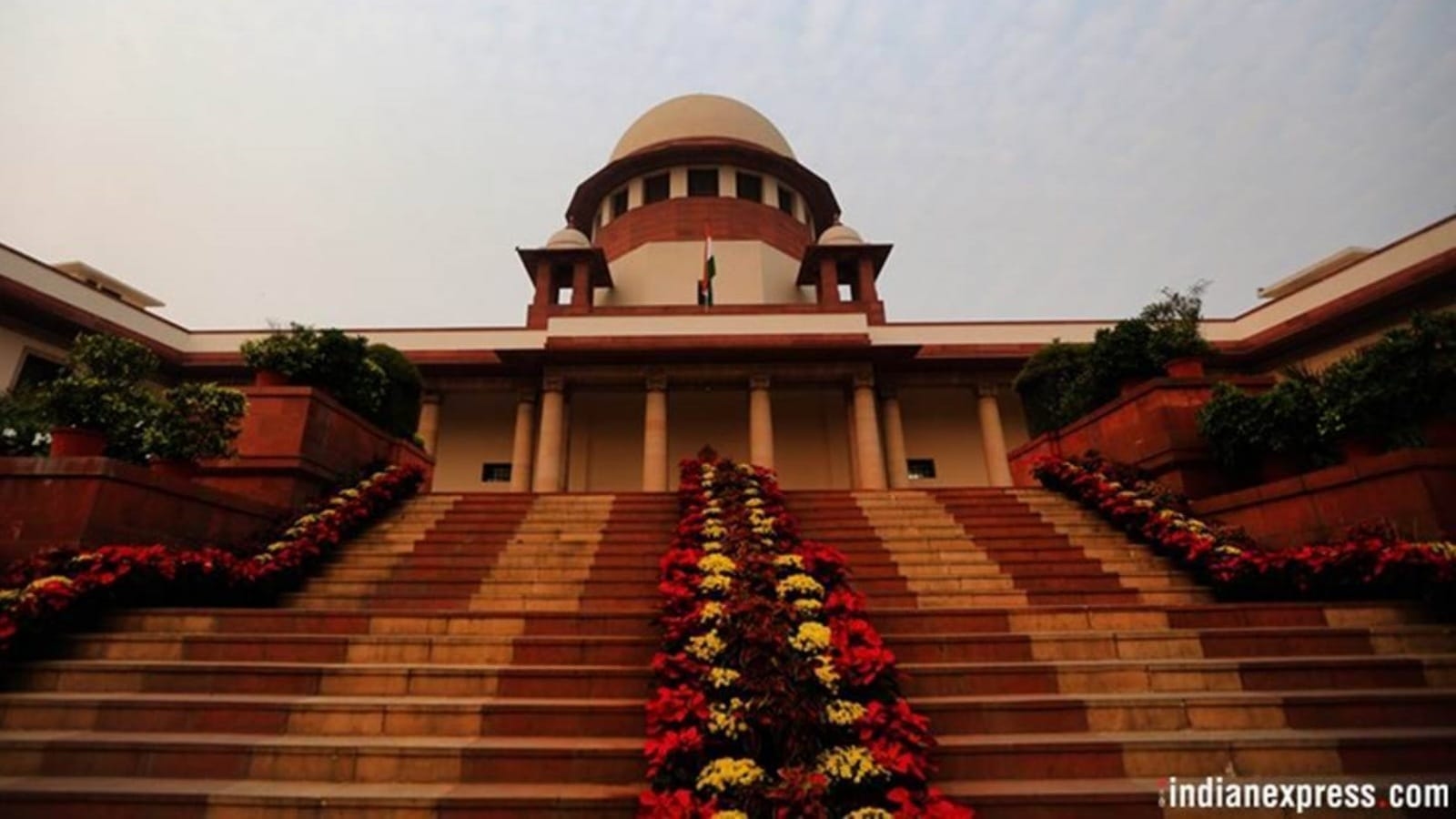
SC success in increasing case disposal rate can serve as blueprint
The Supreme Court of India (SC) has the heaviest docket compared to apex courts worldwide. Widely hailed as a 'people's court', it remains not only the trusted watchdog tasked with preserving our constitutional values but a forum that has expansive jurisdiction. A walk down to the paper books section located underground, underneath the courtrooms, reveals thousands of special leave petitions and appeals in need of attention and listing. A robust machinery is, therefore, essential to resolve the load of 80,000-plus pending cases. Streamlining their disposals in a time-bound manner is pivotal for maintaining the institution's accessibility and credibility. In a bid to clear these cases, a series of steps was taken between November 2024 and May 2025. The outcome is before us: In around 100 days, the Court lowered its pendency in registered matters by 4.83 per cent. We started with 71,223 registered cases, and the load has been reduced to 67,782. If defective matters (needing rectification before listing) are also counted, the reduction was by 2.53 per cent. With an average clearance rate of 341 cases per day, the case clearance ratio (CCR) reached an unprecedented 106.60 per cent — there were 35,870 disposals over 33,639 filings. This is a 9.32 per cent improvement in CCR from just last year. The average for the last three years hovered around 96.59 per cent. It should also be kept in mind that this CCR was achieved while there has been a surge in case filings, with at least a 25 per cent increase since 2022. To expedite hearings and disposals, the relevant listing department (Section 1B) was tasked to accelerate the verification process, cure defective cases, and prompt listing. A team from IIM Bangalore was invited to study the Section 1B procedure and conduct consultations with the Bar and the registry. The case verification time was improved by increasing hours of work and staff strength, preventing out-of-turn verifications, and streamlining the verification procedure. As a result, the average verification of cases per day stands now at 228, compared to 184 last year. Once verified, automatic allocation of cases before benches occurs through the Integrated Case Management and Information System (ICMIS), which limits human interference in the listing process. A second Registrar's Court was reintroduced to ensure faster processing of cases stuck due to procedural defects. Cases listed in the Court but not heard were directed to be relisted within two to three weeks to increase the possibility of them being heard. Lastly, instead of engaging senior advocates to mention urgent matters, advocates were asked to make email requests for urgent listing. This saves judicial time and creates a level playing field for the litigants. It was realised that around 16,000 cases were unlisted for months. Critical constitutional matters are actively pursued on behalf of the litigants and have a satisfactory disposal rate. However, many routine matters remain on the docket. The number of miscellaneous after notice matters — those still at the admission stage had ballooned to 42,206. Some of these were pending for over a decade. Though these miscellaneous cases have the possibility of being resolved swiftly, as many may not even be fit for admission, inadequate time was dedicated to their disposal. Thus, initially, three days, and since January, two days were dedicated to these cases. Differentiated Case Management was introduced. The Centre for Research and Planning, the SC's research wing, was tasked to identify unlisted short and old matters. A dedicated team of 30 members analysed over 10,000 cases. The cases were scrutinised, assessed, and listed for early disposal with a reasoned case brief prepared for the judges. On 'miscellaneous after notice days' (Tuesday and Wednesday), the first 10 identified matters in each bench were listed from this category. Their average disposal time was only around 30-45 minutes. Through this process, around 1,025 main cases with 427 connected cases of the miscellaneous category were disposed of. Simultaneously, old short and unlisted matters were prioritised for regular hearings, too, which led to around 500 main identified matters with 66 connected cases disposed of in just around 15 regular days (Thursday). This is inclusive of the disposal of 376 criminal matters that facilitated the then-running 109 per cent criminal disposal rate. Through collaboration of the bar and bench, a significant milestone was the revamping of the Case Categorisation Framework that now bifurcates filed cases into 48 case categories and 182 sub-categories. This categorisation is to be introduced across all courts in India with appropriate modifications. With transparent sharing of data, remedial steps can be taken by the major stakeholders to reduce the backlogs. For instance, the government, being a major litigant, can take appropriate action or increase staff strength in the relevant ministries to pursue and resolve matters from the identified categories. Judicial forums can create templates of simple matters from specific categories, where possible, and dedicated benches for a time to ensure their clearance. For example, over 500 connected matters that were awaiting disposal, even as the main case had been resolved, were identified and disposed of. Lastly, the use of artificial intelligence, beyond translation and transcribing of judgments and proceedings, can be considered. It can be successfully experimented with to assist in curing filing defects and for creating a synopsis by scrutinising bulky judicial evidence. The results of the initial phase of such an experiment conducted under the SUPACE programme were positive. While pendency is a common concern across judicial forums, there is no panacea for it. Judicial forums must assess the situation before them through careful study and use of empirical data to devise appropriate strategies. This is exactly what was done at the Supreme Court. Ultimately, though, it is the willingness of the judges and the bar that makes the critical difference. The writer is associate professor at O P Jindal University. She served as deputy registrar, Centre for Research and Planning, Supreme Court, and was head of the Pendency Project Team
