



Mauritian PM Hails HM the King's Leadership in Uniting Africa on Ocean Governance
In a statement to MAP on the sidelines of the Africa for the Ocean Summit, co-chaired by Morocco and France, Ramgoolam commended HM King Mohammed VI for "this very significant" initiative of bringing African leaders together to speak with one voice on the preservation of our oceans and maritime resources.
He also praised the numerous initiatives launched by the Kingdom, driven by the Sovereign's leadership, which "play a key role in unifying the voice of Africans."
"This is a first step, particularly for the Atlantic, toward establishing a comprehensive and coordinated policy and strategy."
The "Africa for the Ocean" Summit, co-chaired by HRH Princess Lalla Hasnaa, Representative of His Majesty the King, and French President Emmanuel Macron, was held as part of the third United Nations Ocean Conference (UNOC3), which continues in Nice through June 13.
MAP: 09 June 2025
Hashtags

Try Our AI Features
Explore what Daily8 AI can do for you:
Comments
No comments yet...
Related Articles


Ya Biladi
 36 minutes ago
- Ya Biladi
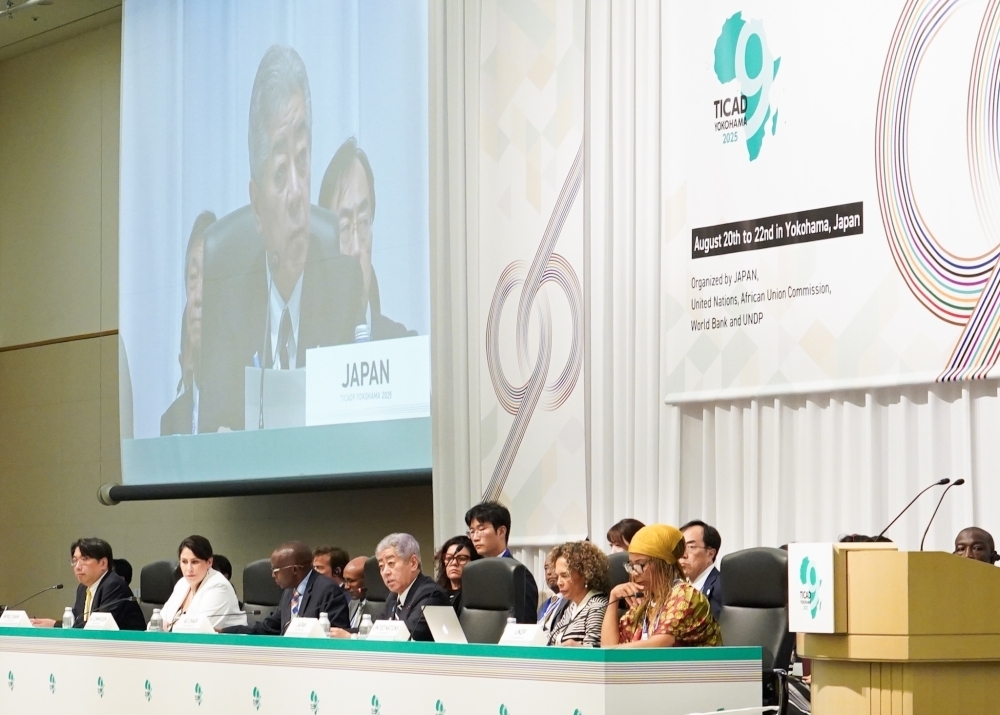
Japan reaffirms stance on Polisario at TICAD 9 in Yokohama
During the opening session of the ministerial meeting at the Ninth Tokyo International Conference on African Development (TICAD 9) on Tuesday in Yokohama, Japanese Foreign Minister Takeshi Iwaya reaffirmed Japan's official stance on the Polisario issue. «I wish to clarify that the presence in this meeting of any entity that Japan does not recognize as a state does not in any way affect Japan's position regarding the status of this entity», Iwaya declared, addressing the African ministers and representatives from international organizations present at the conference. This decisive statement is consistent with Japan's previous positions, reiterated during senior officials' meetings and in public declarations by the country's top diplomat. Japan, firmly committed to international legitimacy, aims to eliminate any ambiguity, stressing that the participation of the separatist entity in meetings held under the African Union (AU) banner does not confer any state legitimacy upon it. This position aligns with that of the United Nations and the vast majority of its member states, who do not recognize the separatist entity and largely endorse the autonomy initiative proposed by Morocco in 2007. TICAD 9 is being held in Yokohama, Japan, from August 19 to 23, focusing on fostering development and cooperation in Africa within a framework of peace and stability.


Maroc
7 hours ago
- Maroc
Dispatching Additional Humanitarian Aid to Gaza Inhabitants Embodies HM the King's Unwavering Commitment to Palestinian Cause
Dispatching additional humanitarian aid to the inhabitants of Gaza embodies once more the unwavering commitment of His Majesty King Mohammed VI, Chairman of the Al-Quds Committee, to the Palestinian cause, said the Communication Director at the Mohammed V Foundation for Solidarity, Sanae Dardikh. Speaking to the press, Dardikh underlined that the Kingdom of Morocco's mobilization, under the Leadership of HM King Mohammed VI, carries on to assist the Palestinian people, particularly civil populations in the Gaza Strip with the dispatch of this new humanitarian aid. Amounting some 100 metric tons, this aid includes basic food items, specifically destined to kids and infants, medicine and surgical products, she explained, recalling the constant and unwavering solidarity of the Moroccan people towards the brotherly Palestinian people. In showcase of the continuous support and tangible solidarity of HM King Mohammed VI, may God assist Him, Chairman of the Al-Quds Committee, towards the brotherly Palestinian people, the Sovereign issued His Very High Instructions to dispatch additional humanitarian aid to Gaza inhabitants. In a statement made public on Monday, the Ministry of Foreign Affairs, African Cooperation and Moroccan Expatriates said that the Sovereign insisted that this humanitarian aid, just as the previous, be transported by air and delivered urgently and directly to beneficiaries among the Palestinian brothers. MAP: 19 August 2025

Morocco World
11 hours ago
- Morocco World
Interpreting TICAD Through Japanese Political Culture
Since its inception in 1993, TICAD has evolved from a donor-recipient model into a structured platform for multilateral cooperation. To understand this transformation, culminating into TICAD 9, we must look beyond policy statements and development metrics. Japanese cultural concepts, such as honne , tatemae , and wa, offer a powerful interpretive lens for decoding both the tone and structure of Japan's engagement with Africa. Japan's engagement in Africa, particularly through the Tokyo International Conference on African Development (TICAD), is often viewed through the perspective of comparative diplomacy measured against actors whose approaches are less subtle. Yet this framing misses the essence of Japan's approach. To understand this reality, one must first decode the cultural grammar that underpins the country's diplomatic style. Japan's diplomacy is shaped by three interlocking concepts: tatemae (public façade), honne (true intent), and wa (harmony). These are not mere social customs, they are strategic tools that guide negotiation, consensus-building, and international engagement. In forums like TICAD, they manifest as quiet leadership, indirect signaling, and a preference for non-confrontational dialogue. 'Tatemae' as Strategic Diplomacy Goals Japan's public stance throughout TICAD has emphasized mutual respect, co-ownership, and African agency. This reflects tatemae , a socially acceptable posture that avoids transactional aid and the neo-colonial stigma often attached to it. Even when Japan pursues strategic interests, such as securing a permanent seat on the UN Security Council, counterbalancing China's influence, or securing resource partnerships, it frames its actions in terms of shared prosperity and inclusive development. The diplomatic language is carefully curated to avoid confrontation and foster trust. Wa' as Multilateral Harmony TICAD's format is deliberately multilateral and inclusive, involving co-organizers such as IMF, World Bank, UNDP, UN Office of the Special Advisor on Africa, and the African Union Commission. This reflects wa , the pursuit of harmony through layered participation. Japan avoids unilateral declarations, instead cultivating platforms like Africa-Converse and youth innovation hubs. These initiatives embody a philosophy of consensus-building, where dialogue replaces dominance and diversity becomes a source of strength. 'Honne' Beneath the Surface Japan's true strategic interests, its honne , are subtly embedded in TICAD's framework. From securing African support for Japan's UN Security Council bid to promoting Japanese technology and supply chain resilience, these priorities are present but never openly. TICAD 9's emphasis on AI governance, climate resilience, and digital transformation mirrors Japan's internal concerns, yet they are presented as collaborative solutions. This duality, between visible altruism and invisible strategy, is a hallmark of Japan's diplomatic style. Understanding the Diplomatic Blind Spots Through Culture These cultural variables that shape Japan's diplomatic style are often misunderstood. Their subtlety, though deliberate, can lead to unfortunate misinterpretations . Yet these concepts reflect a deeply rooted political philosophy, one that privileges harmony over confrontation, and quiet influence over open assertion. To engage meaningfully with Japan, one must read not only the official communiqués, but the cultural grammar beneath them. This cultural grammar is especially relevant in the context of Japan's engagement with Africa. In TICAD, Japan's approach is often misread as passive or overly cautious. Japan's diplomacy favors indirectness and layered meaning . Therefore, to interpret Japan's role in TICAD, one must learn to listen to what is not articulated. Japan's strategic stance also reflects its historical memory and geopolitical positioning. As a non-colonial power in Africa, it carries less historical baggage, allowing it to engage according to a carefully calibrated approach with a diplomatic bottom line 'zero enemy.' A Personal perspective During a Development Management course I took at the American University in Washington, D.C., my professor, Dr. Stephen C. Smith, reminded us that the poor in underdeveloped countries often improve their lives using the means at their disposal, despite limited government resources. At the time, dominant development theories, modernization and dependency among others, offered binary strategies. Structural adjustment programs imposed by the IMF and World Bank were seen as panaceas, yet often led to unemployment, reduced access to services, and social unrest. Against this backdrop, Japan launched TICAD in 1993, marking a departure from 'checkbook diplomacy' toward a more structured and socially resonant approach. TICAD's emphasis on African ownership and inclusive governance echoes the ideas articulated in the book 'Direct to the Poor' by T. K. Oommen, which advocates for empowering local institutions and culturally sensitive, community-driven strategies. This convergence suggests that diplomatic frameworks, like TICAD, when attuned to grassroots realities, can evolve into collaborative platforms grounded in consensus-seeking strategies. The Participation Format: TICAD's Achilles' Heel Despite TICAD's principled emphasis on neutrality and partnership, its participation format has become a source of ambiguity and arguably its Achilles' heel. This vulnerability was exposed during recent Ministerial Meetings and Summits, where confusion arose over the presence of representatives from the so-called 'sadr.' Although Japan does not recognize this entity and has never formally invited its 'delegates' to TICAD, individuals have entered Japan to attend TICAD's meetings using Algerian diplomatic passports, exempt from visa requirements. This maneuver, orchestrated by Algeria and South Africa, under the umbrella of the African Union Commission, circumvents Japan's official stance and disrupts the clarity of TICAD's invitation protocol. Such actions risk politicizing a forum that was designed to foster inclusive, development-focused dialogue, free from divisive geopolitical agendas. Clarifying Japan's Position: A Disclaimer Rooted in Principle I recall that in the lead-up to TICAD 2019, concerns over the participation of the so-called 'SADR' against Japan's will prompted reflection about how to neutralize any potential diplomatic gains sought after by the enemies of Morocco's territorial integrity. At that time, I advocated for the inclusion of a preemptive disclaimer to be delivered by the Japanese Minister of Foreign Affairs to reaffirm Japan's principled neutrality and clarify that the presence of the so-called 'SADR' did not imply recognition or legitimacy. The adoption of this disclaimer marked a subtle but strategic shift, aligning Japan's posture with the growing international support for Morocco's Autonomy Initiative . It was more than procedural. It was a gesture of diplomatic clarity, preserving the integrity of TICAD's founding spirit while quietly reaffirming Japan's respect for Morocco's territorial integrity. Yet disclaimers, however well-intentioned they may be, cannot mask deeper concerns. Tolerating 'officials' of a non-state entity to enter the Japanese territory under Algerian diplomatic cover, while openly declaring themselves as representatives of the so-called 'SADR', amounts to bypassing Japanese law and protocol by these intruders. I believe that this practice undermines the very neutrality the disclaimer seeks to uphold. It is not enough to state non-recognition; Japan could ensure that its legal and diplomatic frameworks are not abused by Algeria and South Africa in an attempt to confer rampant implicit legitimacy on entities it does not recognize. Strategic coherence, in my view, is best served not only through disclaimers, but through a careful alignment of principle and practice. Japan's longstanding commitment to neutrality and procedural integrity remains highly commendable. Yet as diplomatic realities evolve, so too must the mechanisms that uphold them in ways that strengthen Japan's role as a principled and pragmatic actor in international development. Between Technocracy and Politics: The Co-organizer Debate The ambiguity of the participation format is partly rooted in a deeper institutional shift. The decision to include the African Union Commission (CUA) as a co-organizer, while intended to reflect continental ownership, was not universally welcomed. Several international partners had favored the African Development Bank (AfDB), valuing its technocratic neutrality over the political posture of the AUC . This shift introduced new complexities into TICAD's format, blurring the lines between development dialogue and geopolitical signaling. The shift toward a political body like the AUC introduced complexities, particularly in maintaining TICAD's founding principles of neutrality and inclusive development. This divergence in preference underscores a deeper tension: whether TICAD should remain a pragmatic, partnership-driven forum or evolve into a more politically symbolic platform. Yet this arrangement also serves Japan's strategic interests. The AUC's political weight within the African Union makes it a crucial channel for Tokyo's broader diplomatic agenda , particularly its bid for a permanent seat on the UN Security Council. By maintaining the AUC's co-organizer status, Japan secures access to continental consensus mechanisms even as it risks diluting TICAD's original focus. Unlike China's FOCAC and the Korea-Africa Forum, the US-Africa Forum, the Russia-Africa Forum and others, which maintain clear boundaries between political agendas and development cooperation, TICAD, in my humble opinion, has allowed the African Union Commission to exert disproportionate and undue influence over a platform originally designed for development partnership. This has made TICAD vulnerable to agenda hijacking, where political disputes risk overshadowing developmental priorities. The Duality of TICAD: Development Platform and Diplomatic Springboard TICAD stands at the intersection of principle and strategy. On one hand, it offers a structured platform for African development grounded in partnership, capacity-building, and inclusive dialogue. On the other, it serves as a diplomatic springboard for Japan, enabling it to cultivate influence, build coalitions, and quietly advance its global aspirations . This dual vocation is neither contradictory nor opportunistic. It reflects Japan's layered diplomatic culture, where 'tatemae' and 'honne' coexist, and where clarity is pursued not through simplification, but through intentional complexity. TICAD's architecture invites us to see development not as a technical fix, but as a prudent political process. In other words, TICAD is not merely a development conference. It is a strategic platform where Japan engages Africa not only through cooperation, but through diplomacy aimed at reshaping its global governance. By cultivating support from Africa, the largest voting bloc within the United Nations, Japan seeks to quietly advance its longstanding bid for a permanent seat on the Security Council. Furthermore, among TICAD's foundational pillars is Peace and Security in Africa , reflecting Japan's commitment to stability and its recognition of Africa's central role in shaping the global peace architecture. This is not incidental. It is a deliberate alignment of values and interests, expressed through a diplomatic grammar that is uniquely Japanese. TICAD deserves to remain apolitical, anchored in partnership, not entangled in contested representation. Japan's continued tolerance of the self-proclaimed Sahrawi Arab democratic republic 'SADR' sits uneasily within this principle. Though Japan does not formally recognize the so-called 'sadr,' its participation in TICAD events, justified by African Union membership, raises legitimate concerns. That membership, granted through an administrative maneuver in 1984 rather than a political consensus, remains a point of contention across the continent. It should be underscored that major actors, including the United States, Russia, South Korea, India, and Turkey, have excluded the so-called 'SADR' from their Africa Ministerial meetings and summits, citing concerns over legitimacy, governance, and regional coherence. Japan's continued divergence, however well-intentioned, risks being perceived not as neutrality but as strategic misalignment, especially as Africa's diplomatic landscape evolves. Recent developments in the U.S. Congress, notably the proposed ' Polisario' Front Terrorist Designation Act , underscore rising concern over the group's ties to Iran and Hezbollah. Japan's own intelligence services were ahead of the curve, having classified the Polisario as a terrorist entity in 2011 and 2013 due to its links with Al-Qaeda in the Islamic Maghreb and AQAP. These assessments are echoed by testimonies from former Polisario founders who returned to Morocco, revealing the movement's origins in Soviet-aligned revolutionary networks sponsored by Algeria and Libya. Japan is not alone in reassessing its stance. A growing coalition of 38 African countries refrains from recognizing the so-called 'SADR', with many going further by opening consulates in Morocco's southern provinces Laayoune and Dakhla. These diplomatic gestures reflect a continental shift toward pragmatic engagement and support for Morocco's Autonomy Plan as a credible path to regional stability. This African momentum, rooted in sovereignty and realism, offers Japan an opportunity to recalibrate TICAD's posture, aligning it with the principles of constructive diplomacy and shared development. Japan's current positioning may be construed as unintended legitimization, an outcome shaped less by deliberate endorsement than by procedural entanglement. Morocco's diplomatic momentum offers a compelling alternative. Through initiatives like the Nigeria–Morocco Gas Pipeline and the Atlantic Initiative for landlocked Sahel countries, Rabat is actively reshaping Africa's development architecture, grounded in connectivity, pragmatism, and regional solidarity. These projects are not mere infrastructure; they are strategic lifelines, linking energy, trade, and opportunity across borders. Morocco's absence from recent TICAD sessions was met with regret by several African nations, underscoring its central role in the continent's future. For TICAD to sustain its undisputed relevance, Japan may benefit from a quiet recalibration, one that aligns more closely with current developments surrounding the Moroccan Sahara issue. This would involve gently distancing itself from patterns imposed by outdated alignments and geopolitical reflexes, shaped by Cold War legacies sustainably promoted by Algeria. Such a shift would not signal rupture, but renewal: an opportunity to reaffirm Japan's commitment to partnership, pragmatism, and regional resonance. In this light, Morocco's vision offers a promising horizon. Grounded in cooperative pragmatism and continental integration, Rabat's initiatives invite a shared path where Japan and Morocco could work hand in hand to support Africa's development architecture with joint clarity, mutual respect, and strategic coherence. Japan's approach is not loud or transactional. It is layered, principled, and deeply cultural. Through tatemae , it offers respectful partnership; through wa , it builds inclusive platforms; and through honne , it quietly pursues strategic interests. This triad reveals a diplomacy that performs with intentional subtlety where meaning is often found not in declarations, but in the choreography of engagement. And those subtleties, rooted in Japan's cultural grammar, are not merely academic. They are essential for those entrusted with stewarding Japan–Africa relations. To misread them is to risk compromising the very architecture that differentiates TICAD within the global development landscape. The TICAD process invites us to rethink development not as a formula, but as a dialogue where meaning lies in a way outcomes are genuinely pursued by those entrusted to achieve them. Its strength lies in pioneering clarity. And clarity, in diplomacy, is not the absence of complexity, but the ability to navigate it with lucidity, dedication, and insight. Tags: JapanPolisariopoliticsTICAD
