


Indus Waters Treaty will stay suspended until Pakistan stops ‘support for terrorism': New Delhi
On April 23, a day after the Pahalgam terror attack in which 26 persons were killed, India suspended the 1960 agreement on water sharing, citing Islamabad's support for 'sustained cross-border terrorism'.
On Tuesday, Debashree Mukherjee, secretary in the Water Resources Ministry, reiterated in the monthly report to Cabinet Secretary TV Somanathan that the treaty was kept in 'abeyance' in the aftermath of the 'Pakistan-sponsored' attack.
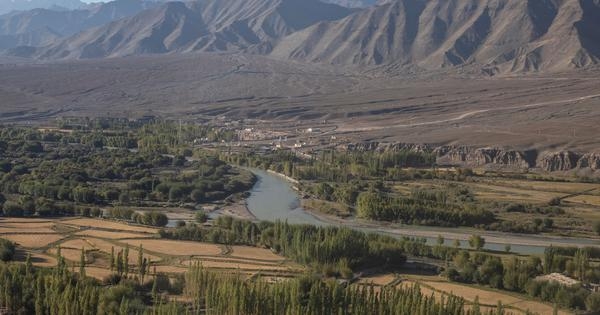
The treaty sought to divide the water of the Indus river and its tributaries equitably between the two countries. Under the treaty, water from three eastern rivers – Beas, Ravi and Sutlej – were allocated to India and from the three western rivers – Chenab, Indus and Jhelum – to Pakistan.
The treaty permitted both countries to use the other's rivers for certain purposes, such as small hydroelectric projects that require little or no water storage. It allowed for the harnessing of the Chenab, which is one of the western rivers in the Indus Water system, for power generation.
Pakistan had earlier said that India's suspension of the Indus Waters Treaty was an 'act of war' and warned that it would respond with 'full force across the complete spectrum of national power'.
Islamabad called New Delhi's actions 'unilateral, unjust, politically motivated, extremely irresponsible and devoid of legal merit', according to a statement of Pakistan's National Security Committee published by Dawn.
On May 10, India and Pakistan reached an 'understanding' to halt firing following a four-day conflict.
Tensions between New Delhi and Islamabad had escalated on May 7 when the Indian military carried out strikes – codenamed Operation Sindoor – on what it claimed were terrorist camps in Pakistan and Pakistan-occupied Kashmir.
The strikes were in response to the terror attack in Jammu and Kashmir's Pahalgam.
The Pakistan Army retaliated to Indian strikes by repeatedly shelling Indian villages along the Line of Control in Jammu and Kashmir. At least 22 Indian civilians and seven defence personnel were killed.
Hashtags

Try Our AI Features
Explore what Daily8 AI can do for you:
Comments
No comments yet...
Related Articles


Deccan Herald
 6 minutes ago
- Deccan Herald
The rhetoric and real costs of trade wars
India misread the tariffs brought on by the United States and, at a broader level, the Trump administration. We were one of the first to approach the US on this matter, and we continued to believe that we would have a favourable deal till recently, given what we felt was a great rapport between Modi and Trump. Mainstream electronic media houses were complicit in driving this narrative. To understand why India got it wrong, it would be useful to connect two disparate data dots. Top that with India's misreading of Trump's desire to be seen as a look at the first irritant and its impact. India exports roughly $90 billion, paying approximately 2 per cent tariffs currently, and imports roughly $45 billion at 12 per cent tariffs. The trade deficit of $45 billion carries a tariff differential of $5 billion per year in India's favour after adjusting for exempted products. We should have seen this imbalance in America's trade deficit and tariffs long ago and proactively addressed this. Modi is now overhauling the tax rates in a bid to boost the economy. This is expected to cost $20 billion, four times the tariff differential India was enjoying. .The other irritant is oil imports. In 2021/22, India imported roughly 2.5 million barrels of oil every day. Under the tacit approval of the West, India's imports from Russia grew from 2 per cent then to 40 per cent today. India buys 45 per cent of the exported oil from Russia, a growth of 1900 per cent from pre-war levels. China buys the same percentage, a growth of 50 per cent from pre-war levels. So why did India need this extra oil suddenly? It was because we processed this extra oil and sold it for a profit overseas. Therefore, the rhetoric is misplaced, as we are profiting and fuelling the Russian war machine. Predicting the flow of events, we should have scaled down our offtake back to the 2022 levels and with that, justify our need to fuel the Indian economy and keep inflationary tendencies in check. We have now started to do this, drawing a balance between the US and predict that the impact of tariffs at 25 per cent is likely to be in the region of $11-12 billion per annum on tariffed goods and about 0.25 per cent on GDP. In the earliest days of cranking up our imports of oil, the difference was around $30 a barrel, leading to a gain of $16 billion. That has now come down to around $5 a barrel after accounting for logistics, etc. The benefit we get is estimated today to be only $3.5 billion, a delta of $8.5 billion from what we lose out on with the long commentators have suggested many responses, ranging from the knee-jerk to keeping the long-term in mind. The real issue is what we do now. There is no pattern in the madness. Why have the four treatments of the BRIC countries been different? Because there is a different playbook with each one. With Brazil, the US has a trade surplus. Why then, do they have tariffs of 50 per cent, which is higher than China and equal to India? Bolsonaro? With China, 150 per cent was brought down to 30 per cent; here, it is about the rare earths. For the quantities required, the ecosystem is expensive, and the returns don't work out for a commercial operation. The CCP subsidised this for leverage and their long-term plans to pursue electric mobility and clean energy. This leverage on supplies was used to resolve the $650 billion of trade at stake between the US and China. .India made public its hypocritical treatment at the hands of the US, as it bought palladium, uranium, etc. from Russia. However, the reality is that US imports from Russia were at best $3 billion, down some 45 per cent from the previous year. India's imports from Russia stood at $70 billion, almost twice what it imports from the must now not get caught in the whirlpool of its rhetoric. And it certainly must not seek to appease China and Russia in a hurry and on the rebound. One can expect that this is short-term. There are many moving parts – Russia and Ukraine could arrive at a truce as early as next month. India has already started to demonstrate it is willing to reduce its import of Russian oil while not displeasing Russia. The midterms in the US could go against Trump, and the US courts could reverse Trump's executive decisions. Importantly, Trump does not define the long-standing US relationship with India. Trump himself may not have a long-term view on this the US, it seems clear. The average tariff on its imports has seen inflows of $28 billion, three times post these levies were collected in June. This aggregates to $350 billion. Add to this DOGE cuts and some others, and we have $500 billion being saved or added to the US treasury. This pays half its annual interest cost of $1 trillion, which, if left alone, is not sustainable. This is good for no one, as it is the world's biggest market by the short term, one sees no harm in subtly managing the relationships and dynamics at play and being practical. In the long term, anyway, as economist John Maynard Keynes said, we are all dead..(The writer is the former managing director of a Tata Company and now runs a Bengaluru-headquartered corporate finance practice)

India.com
6 minutes ago
- India.com
‘Weaponised Law' To Unseat PMs, CMs, Ministers? Jail-Held Leaders Must Quit Or Face Disqualification After 30 Days
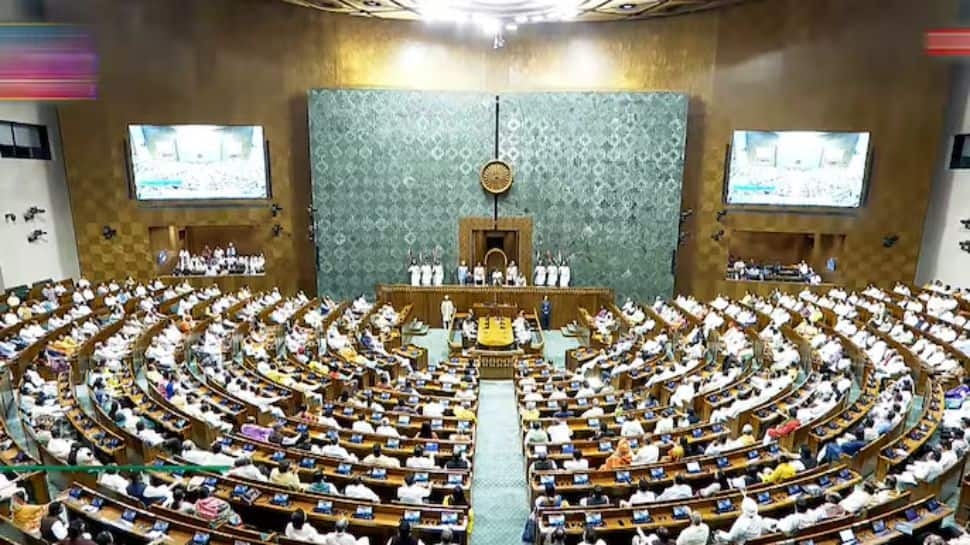
New Delhi: Parliament braces for a heated session on Wednesday, August 20. The government will introduce three bills in the Lok Sabha that propose a framework for the removal of the prime minister, union ministers, chief ministers and ministers in states and union territories. The draft laws focus on arrests in cases of serious criminal charges. Conviction is not required. Union Home Minister Amit Shah will move the bills. He will also propose referral to a joint parliamentary committee, PTI reported. Strong opposition is expected. Recent arrests have set the backdrop. Former Delhi Chief Minister Arvind Kejriwal and incumbent Jharkhand's Hemant Soren both spent weeks in jail on corruption allegations. The bills carry a clear clause. If a PM, CM or minister is arrested and remains in custody for 30 consecutive days for an offence carrying at least five years' jail, they must resign by the 31st day. Failure to resign will lead to automatic removal. The Bills On The List The government business circulated by the parliamentary affairs ministry listed three names: The Constitution (One Hundred and Thirtieth Amendment) Bill, 2025; The Government of Union Territories (Amendment) Bill, 2025; and The Jammu and Kashmir Reorganisation (Amendment) Bill, 2025. There is no confirmed provision on restoring statehood for Jammu and Kashmir in this package. What Happens Next The constitutional amendment covers the PM, union ministers and ministers in Delhi's NCT government. It requires a special majority, at least two-thirds of the total strength of Parliament. The BJP-led NDA does not currently hold that number. The UT-related bills need only a simple majority. Even then, resistance is likely. The concern is that the Centre could remove state leaders based only on accusations. What The Text Says The UT amendment cites a gap in the 1963 law. It says no mechanism exists to remove a CM or minister arrested on serious criminal charges. Hence the change is required. The Constitution amendment covers Articles 75, 164 and 239AA. The J&K amendment revises Section 54 of the Reorganisation Act. PTI reported that the reasoning sections of all three bills echo each other. Political Climate The timing of the move is charged. The Opposition continues its attacks. Leaders accuse the government of 'vote theft'. They also oppose the Special Intensive Revision of voter rolls in Bihar. Monsoon session debates have been disrupted by protests on these issues.


India Today
11 minutes ago
- India Today
Should India play cricket with Pakistan? Here's what survey reveals
In this edition of Political Stock Exchange, the focus is on India's decision to play Pakistan in the upcoming Asia Cup scheduled for September 14th. All this after the Pahalgam terror attack, after Operation Sindoor, after the valour and the might of our armed forces, after India defining a new normal with Pakistan. So should India play cricket with Pakistan? Should India's bat answer Pakistan's bullets or should India pick national pride over sporting spirit? Does the resumption of cricket with Pakistan insult the sacrifices of the armed forces? These were some of the questions posed to respondents in the C-Voter survey. So watch to find out what the survey revealed.
