



Fall Asleep In Five Minutes Or Less With These 8 Surprising Strategies
Sleep is one of those things we often take for granted. Yet it's the foundation for our mental and physical health, job performance and career success. Odds are you're part of the whopping 52% of Americans who say work stress interferes with sleep. If you're having trouble falling asleep or not getting enough, that can spell trouble. Sleep experts suggest eight strategies to fall asleep in five minutes or less when your mind is wide awake but your body has called it quits.
8 Strategies To Fall Asleep In Five Minutes
Studies show that if you don't get enough sleep, you're at greater risk of heart attack or stroke, and your risk of death from heart disease more than doubles. Lack of sleep is linked to depression, impaired immune system function, weight gain, hypertension and Type 2 diabetes.
Sleep deprivation makes you grumpy and more likely to nod off at your desk. Sleep experts advocate midday power naps at work to reset your brain and recharge your batteries for the remainder of the day.
Research shows that a good night's sleep supports brain health, clearing away the plaques--one of the six factors that can prevent cognitive decline. If your mind is still wide awake long after your body has called it quits, Rosie Osmun, certified sleep science coach at Amerisleep, reveals eight unexpected strategies you can use before you hit the hay to catch more z's, claiming some work in less than five minutes.
"Breathing patterns play a significant role in our autonomic nervous system," Osmun says, recommending the 4-7-8 breathing method as a highly effective technique: "Place the tip of your tongue against the ridge behind your upper teeth, exhale completely, then inhale through your nose for four counts. Hold your breath for seven counts, and exhale slowly through your mouth for eight counts," she explained.
Osmun notes that this method can calm the nervous system in just a few cycles, making it ideal for those looking to fall asleep quickly.
Complete darkness is essential for triggering your body's natural sleep response, according to Osmun. "Our ancestors slept in completely dark environments, and our bodies still respond best to these conditions."
She recommends removing all sources of light from the bedroom, including electronic devices that emit blue light. "Even small amounts of light from phones or alarm clocks can disrupt melatonin production and make falling asleep much harder," Osmun added.
Osmun points to research showing that cooler temperatures significantly improve sleep quality and reduce the time it takes to fall asleep. 'Setting your bedroom temperature between 60-67 degrees Fahrenheit creates ideal conditions for sleep.'
She explains that body temperature naturally drops as part of the sleep cycle, and a cooler room helps facilitate this process. 'Taking a warm bath about 30 minutes before bed can amplify this effect, as your body temperature will drop more dramatically afterward.'
One surprising technique involves doing the opposite of trying to fall asleep. "When you try too hard to sleep, it often backfires," Osmun points out. 'Instead, try to stay awake with your eyes open while lying comfortably in bed.'
She explains that this reduces sleep anxiety and performance pressure that many insomniacs experience. "By removing the pressure to fall asleep, many people find they drift off much faster," she adds.
For those whose minds race at bedtime, Osmun recommends purposeful visualization. "Instead of worrying about tomorrow's meetings or replaying today's events, visualize yourself in a peaceful setting like a beach or forest."
She adds this technique breaks the cycle of rumination that keeps many people awake. "The key is to focus on sensory details in your imagined scene—the sounds, smells and feelings—to fully engage your mind."
Osmun refers to research that consuming simple carbohydrates four hours before bedtime can improve sleep quality. "White rice appears particularly effective at promoting faster sleep onset." But she cautions against eating too close to bedtime when digestive discomfort can counteract any potential sleep benefits.
Finding the proper mattress firmness for your specific sleep position can dramatically reduce the time it takes to fall asleep, according to Osmun. "Side sleepers typically need a softer surface to relieve pressure points, while back and stomach sleepers benefit from firmer support."
The sleep expert emphasized that becoming fixated on falling asleep quickly often backfires. "The average person needs 15-20 minutes to fall asleep naturally," Osmun says. 'Watching the clock and worrying about not falling asleep fast enough creates a cycle of anxiety that keeps you awake.' She recommends removing timepieces from view and accepting that the process takes time.
A Final Wrap On Strategies To Fall Asleep In Five Minutes
Sleep deprivation affects millions of Americans, with approximately 70 million people suffering from chronic sleep problems according to health authorities. Consistent sleep habits are the foundation for falling asleep quickly. Going to bed at the same time and getting up at the same time keeps your body regulated and make sit easier to fall asleep.
Many sleep experts like brain scientist, Jill Bolte Taylor, recommend sleeping until your brain wants to get up. Taylor told me that if you're not sleeping until your brain wakes you up, then you're not getting enough sleep. 'One of the worst things we can do is have an alarm,' Taylor insists. "A typical sleep cycle runs between 90 and 110 minutes, so if you're forcing yourself to get up in the middle of a cycle, then you just blew a whole cycle of rejuvenation for your brain. Sleep is about rejuvenating the brain."
Taylor describes how brain cells are constantly working. They eat and create waste, and sleep is the optimal time for the waste to be cleared out between the cells so they can actually function. 'I compare it to when the garbage collectors go on strike, we know how congested the streets become,' she states.
Each night before bedtime, take a chill pill (such as meditation, listening to soft music or reading an inspirational book) instead of a sleeping pill to relax your mind. As you put your mind at ease, your sleep—in the words of William Shakespeare—will mend your raveled sleeve, helping you fall asleep in five minutes.

Try Our AI Features
Explore what Daily8 AI can do for you:
Comments
No comments yet...
Related Articles
Yahoo
 4 minutes ago
- Yahoo
The Wistar Institute Receives $17 Million NIH Grant for Personalized HIV Cure Research
Philadelphia-led consortium is selected to tailor HIV curative strategies to participant Philadelphia, PA, Aug. 19, 2025 (GLOBE NEWSWIRE) -- The Wistar Institute announces the National Institutes of Health (NIH) granted a five-year, $17 million research award to launch iCure Consortium to develop individualized 'cure regimens' for HIV. The Wistar-led, iCure Consortium's objective is to advance strategies to cure HIV through tailored personalized medicine. 'Today 38 million people still live with HIV worldwide, and 1.3 million contract the virus each year,' said Luis J. Montaner, D.V.M., iCure principal investigator, executive vice president of The Wistar Institute and director of Wistar's HIV Cure and Viral Diseases Center. 'For the first time, this grant brings our best team together working towards a cure tailored to each participant by pairing the latest in neutralizing antibody and cell-therapy breakthroughs against the unique, person-specific features of HIV.' iCure Consortium will test a six-part, individually-tailored therapy designed to wipe out the persistent viral reservoir that remains after antiretroviral therapy in an effort to deliver durable, drug-free remission. The project combines six advanced tactics—neutralizing antibodies, mRNA therapy, viral binders, engineered CAR-T and 'Natural Killer' (NK) cells, and precision latency 'wake-up' drugs—all designed against each patient's unique virus. 'Ending HIV demands more than management—it demands eradication,' said Drew Weissman, M.D., Ph.D., iCure co‑principal investigator, 2023 Nobel Laureate and Roberts Family Professor in Vaccine Research at the Perelman School of Medicine at the University of Pennsylvania. 'This project now allows us to apply our breakthroughs in RNA therapy as part of a cure-directed strategy.' How iCure Works• Wake the latent virus• Map and target unique weak spots with tailored antibodies• Destroy infected cells using 'super‑charged' CAR‑T and NK cells• Enhance clearance and block relapse with bispecific binders In the first step, researchers reactivate the virus in a sample of the participant's blood and identify mutations that the participant has not yet developed antibodies against. They then develop a tailored antibody therapy cocktail specifically designed against these specific mutations. In the next stage, researchers focus on preventing HIV from returning. To do this, they develop person-specific antibodies or small molecule binders that can act as 'homing devices' — beacons that can lead immune cells to the latent virus. Then they genetically modify CAR-T cells and NK cells (immune cells that destroy viruses) to express or use these homing devices to better clear infected cells. Finally, researchers further enhance NK cells. First, they develop stronger and more durable cells, called adaptive NK cells, by supercharging their virus-killing ability. Then, they deploy small-molecule drugs called bispecifics, which bind NK cells to the infected cells they are targeting. "iCure takes full advantage of the advances made in understanding how and where HIV hides from the immune system," said Montaner. "We've built on our knowledge and can use that information to identify a first of its kind targeting to a person's unique HIV features." iCure furthers the research groundwork laid by the BEAT-HIV Martin Delaney Collaboratory ( a Philadelphia-based consortium of more than 95 leading HIV researchers co-led by Dr. Montaner. Montaner called the NIH grant a 'once in a lifetime opportunity' that reflects Wistar's track record as a scientific leader in the effort to develop an HIV cure, as well as its grassroots support and collaboration with the HIV community. 'By the end of this study we hope to have a process by which to identify the virus that we need to go after in each person and have a basis to design clinical trials choosing the best of these strategies to move forward,' said Montaner. Other institutions participating in this study include Johns Hopkins Medicine and iCure co-principal investigator Robert Siliciano, M.D., Ph.D., the University of Pennsylvania, Philadelphia FIGHT, the Ragon Institute at Harvard University, George Washington University, Duke University, and Massachusetts Institute of Technology. The iCure program is funded by the National Institute of Allergy and Infectious Diseases, part of NIH, under award number UM1AI191272. ### The Wistar Institute is an international leader in biomedical research with special expertise in cancer research and vaccine development. Founded in 1892 as the first independent nonprofit biomedical research institute in the United States, Wistar has held the prestigious Cancer Center designation from the National Cancer Institute since 1972. The Institute works actively to ensure that research advances move from the laboratory to the clinic as quickly as possible. CONTACT: Darien Sutton The Wistar Institute 215-870-2048 dsutton@ in to access your portfolio

Gizmodo
5 minutes ago
- Gizmodo
Researchers Find Strange Link Between Marathon Running and Cancer
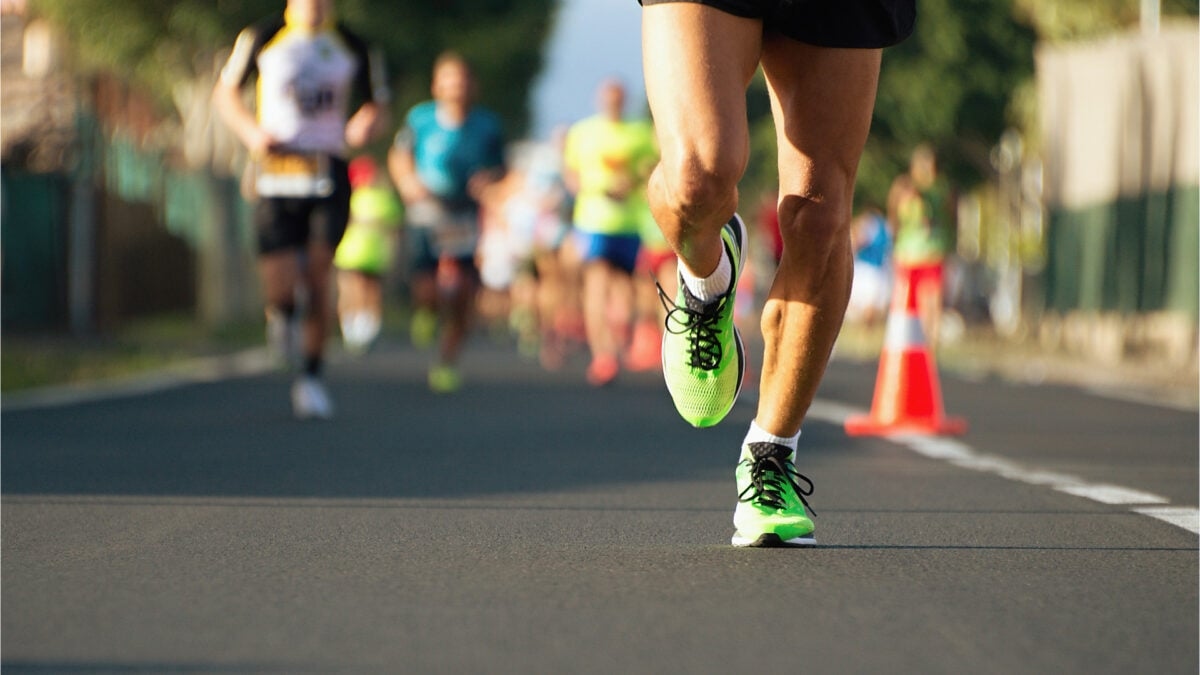
Some of the most physically fit people in the world may have a unique health risk. New research uncovers a possible link between marathon running and colorectal cancer. Oncologists at the Inova Schar Cancer Institute in Virginia conducted the study, which examined the colons of relatively young people who had run several long-distance races. They found these runners had a much higher rate of having potentially dangerous adenomas (a type of polyp) than would be expected for their age. Though the findings are preliminary and require more confirmation, they may point to a real connection between colorectal cancer and extreme physical activity. 'It tells us there's a signal here,' David Lieberman, a gastroenterologist and professor emeritus at Oregon Health and Science University not affiliated with the study, told the New York Times Tuesday. 'We wouldn't have expected these rates of high-risk adenomas, which are cancer precursor lesions, in an age group like this.' Lead researcher Timothy Cannon was inspired to perform the study after he treated three young patients with colorectal cancer, all of whom had run ultramarathons (defined as any race longer than 26.2 miles). Not only were his patients fit, but they were also much younger than the typical case, the oldest being 40. In 2022, Cannon and his colleagues began recruiting endurance athletes for their prospective study. The volunteers had all run at least two ultramarathons or five regular marathons; they also had no family history of colorectal cancer or other apparent risk factors. All told, 100 athletes between the ages of 35 and 50 took part and were given colonoscopies. People Who Are More Flexible Tend to Live Longer, Study Finds The researchers went looking for advanced adenomas in the colons of their volunteers, relatively large or otherwise unusual polyps. Though these growths are themselves benign, they have a higher risk of turning cancerous than other polyps. Then they compared the rate of finding these polyps in their athletes to historical trends. About 1.2% of people in their 40s at average risk for colorectal cancer would be expected to have advanced adenomas, according to the researchers. By sharp contrast, 15% of the runners they studied had them, while nearly half had polyps in general. 'Consideration of refined screening strategies for this population is warranted,' the researchers wrote in their study. The team presented its results earlier this year at the annual conference of the American Society of Clinical Oncology. That means this study hasn't yet undergone the formal peer-review process. The authors are also quick to note their work isn't definitive proof that endurance running can cause colorectal cancer. Assuming this link is causative, there remains the burning question of why. As even weekend 5k joggers will know, running can occasionally trigger bouts of gastrointestinal distress (the namesake runner's diarrhea). These injuries are sometimes caused by temporarily restricted blood flow to the intestines that damages nearby cells. It's possible, the researchers speculate, that extreme runners who regularly experience this blood flow loss can develop the sort of chronic inflammation that makes cancer more likely to emerge. Being a Couch Potato Is Bad for Your Memory, Study Warns At this point, though, that's only one hypothesis for what may be happening here. The researchers say future studies should try to confirm their findings as well as untangle the causes and risk factors that could explain this potential higher risk. All that said, this research shouldn't scare anyone away from running or any other form of cardio. The many health benefits of regular physical activity—which importantly include a lower risk of at least eight different types of cancer—still far outweigh the risks for the average person.

Wall Street Journal
7 minutes ago
- Wall Street Journal
The Necessity of ObamaCare
In 'The Phantom Patients of ObamaCare' (Aug. 18), you write that because millions of Americans 'don't use' their subsidized insurance, they therefore 'don't need' it. Yet as we teach our students every year, this misunderstands the purpose of insurance. Not filing a claim doesn't mean you didn't need insurance. We've never had to use our oxygen masks during decades of flying, but that hardly means they're not essential. Prof. Amy Finkelstein
