


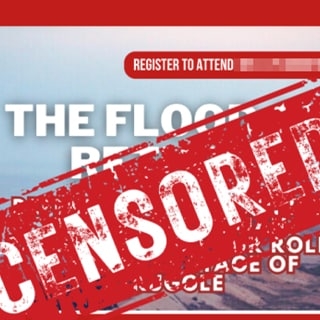
Zoom Bans Planned Webinar By 'Masar Badil' Organization, Led By U.S.- And Canada-Designated Terrorist And PFLP Top Member Khaled Barkat
Masar Badil has been using the Zoom platform to conduct interviews and conferences with the officials of Iran-backed jihadi organizations and international activists, livestreaming the meetings and later posting them to the Masar Badil website. For example, see the following MEMRI reports:
In September Livestream With Hamas Spokesman, PFLP-Affiliated Canadian 'Masar Badil' NGO Continues To 'Amplify Voices' Of Top Terrorists, Incite Protest Escalation – In English And Spanish; Participant Charlotte Kates, Coordinator Of Designated Terrorist Front Samidoun: Activists Must 'Escalate Struggle' To Remove Hamas, PFLP, Hizbullah From Western Terror Lists
'Masar Badil' Organization, Led By Canada-Based Former PFLP Member And Samidoun Affiliate Khaled Barakat, Hosts Interview With Nasruddin Amer, Official In The Specially Designated Global Terrorist Organization Ansar Allah – Houthis – Who Calls October 7 'A Great Victory,' Says 'Our War With Israel And The U.S Is Continuous... Our Struggle With Them Is An Existential Struggle'; You Can Support The Resistance With 'Marches And The Occupation Of Spaces In Universities, Taking To The Street Regularly'
Top Hamas Official Ghazi Hamad In Interview With Pro-Palestinian NGO 'Masar Badil': Protests In West Are 'Much Appreciated,' 'Very Effective'; We Coordinate 'With All The Parties, Not Only With The Resistance Factions In The Region'; 'We Will Never Recognize Israel'; We Have Met With 'Leftist Parties'; Since October 7, 'We Were Able To Expand The Area Of Confrontation With The Enemy' And 'Move In So Many Wide Areas, Politically, Diplomatically, Media-Wise'; 'The World Is Becoming More Pro-Palestinian'
[1] Home.treasury.gov/news/press-releases/jy2646, October 15, 2024.
Hashtags

Try Our AI Features
Explore what Daily8 AI can do for you:
Comments
No comments yet...
Related Articles

Shafaq News
 6 hours ago
- Shafaq News
CF seeks parliament session for PMF Authority Law
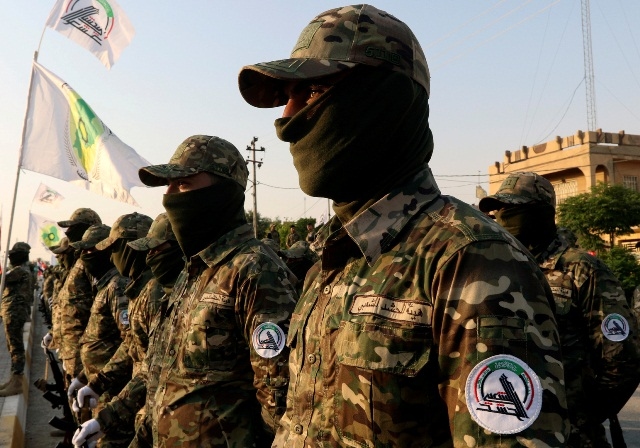
Shafaq News – Baghdad Iraq's Coordination Framework, an alliance of predominantly Shiite parties, put the Popular Mobilization Forces (PMF) Authority Law at the center of its latest meeting, focusing on how to secure a parliamentary session and advance the legislation, political sources revealed to Shafaq News on Tuesday. The meeting, attended by Prime Minister Mohammed Shia al-Sudani and most Framework leaders, examined both the feasibility of passing the Law and the effort to gather 120 out of 329 deputies' signatures in support. Discussions are set to continue, with another Framework meeting scheduled within the next two days, the sources noted. Framework lawmaker Ibtisam Al-Hilali underlined the drive to collect signatures, pointing out that some deputies are prepared to attend the session in PMF military uniforms. However, MP Thaer Mukheef cautioned that collecting signatures alone does not ensure a vote on the PMF law, stressing that while many deputies support a dedicated session for approval, no final consensus has been reached. Parliament has remained paralyzed since August 5. Earlier, MP Jawad al-Yasari confirmed to Shafaq News that no directive has yet come from the speaker's office, and no concrete scheduling has been set to resume legislative sessions on key bills. The latest discussions come amid growing US pressure on the Iraqi government to dissolve the PMF. Formally established in 2014 to fight ISIS, the PMF has since evolved into a powerful paramilitary institution integrated into Iraq's security apparatus, though it is often accused of retaining political and militia loyalties. The proposed Law seeks to regulate its status, benefits, and legal framework—an issue that continues to divide Iraq's leadership. Meanwhile, the US State Department has warned that the legislation could strengthen Iran-aligned factions within the PMF, indicating it would maintain 'appropriate action' against groups it designates as 'terrorist organizations.'


Memri
7 hours ago
- Memri
Messaging In Summer Camp Sponsored By Qatari Sports And Youth Ministry: 'There Is No Israel,' 'The Zionist Entity Is An Enemy'; 'Resistance Is Honor'
The State of Qatar continues to inculcate an ideology that rejects Israel's existence and condones the struggle against it, including in children's summer camps. At a girls' summer camp this August, sponsored by the Qatari Ministry of Sports and Youth, participants were given a gift with a card that read: "There is no Israel," "The Zionist entity is an enemy," and "Resistance [such as Hamas's terror operations] is honor." Another card distributed to the participants featured an image of a rifle and praise for armed struggle against the enemy. The activities at the camp, which was held by the Youth Leaders Academy at the Barzan Youth Center, north of the capital Doha, also featured maps of Palestine from the river to the sea, painted in the colors of the Palestinian flag and including cities located within the state of Israel, such as Nazareth, Acre, Tiberias, Haifa and Beersheba – all of which negates Israel's existence. It should be mentioned that messages of this kind are routinely inculcated by the Qatari education system, and are in line with Qatar's overall policy of rejecting Israel's existence and providing unconditional support for Hamas's terrorist activities.[1] This was also the case at last year's summer camps sponsored by the Ministry of Education and Higher Education and the Ministry of Sports and Youth,[2] and in pro-Palestinian activities held in Qatari kindergartens and schools since the start of the Gaza war.[3] Furthermore, in November 2023 Qatar University opened an art exhibition that included maps of Palestine from the river to the sea, and at an October 2023 rally in solidarity with the children of Gaza, held by an educational organization headed by Sheikha Moza bint Nasser, the mother of the Qatari Emir, one of the displays featured the slogan 'From the river to the sea, Palestine will be free,' calling for the destruction of Israel.[4] In December 2023, Qatar University inaugurated a garden in the shape of a map of Palestine from the river to the sea, which included cities located within Israel, such as Jaffa, Acre, and Beersheba.[5] The Qatari children's magazine Jassim, published by the state-sponsored Dar Al-Sharq Group, incites violence and terror against Israel and contains antisemitic motifs. It too routinely features maps of Palestine from the river to the sea.[6] This report presents the anti-Israel and pro-resistance messaging at this year's summer camp at the Barzan Youth Center, sponsored by the Qatari Ministry of Sports and Youth. Summer Camp Participants Learn That There Is No Israel And That Resistance Is Honor As part of an activity held at the camp in solidarity with Gaza, the campers were given a clicker toy along with a card saying: "Know that Palestine is an occupied state; the Al-Aqsa Mosque is held hostage; the Zionist entity is an enemy; resistance is honor and there is no Israel."[7] Among other cards handed out to the campers was one that shows a rifle and underneath it two lines from a pre-Islamic poem conveying a militaristic message in praise fighters who do not flee the battlefield even when wounded: "We do not withdraw from the battlefield, our wounds drip blood that flows over the front of our legs."[8] Maps Of Palestine From The River To The Sea That Ignore Israel's Existence Activities held at the camp featured maps of Palestine from the river to the sea that include all of Israel's territory and cities within it and thus negate Israel's existence: Campers color a map of Palestine from the river to the sea that includes the cities of Safed, Acre, Nazareth, Haifa, Jaffa, Ramla and Beersheba, all of which are inside Israel ( August 6, 7, 2025) Camper wearing a "Free Palestine" scarf stands in front of a board bearing the text "Free Gaza Free Palestine" and a map of Palestine from the river to the sea ( August 7, 2025) Camper with board showing a map of Palestine from the river to the sea and the text "Free Palestine" ( August 7, 2025)

Memri
7 hours ago
- Memri
Without The SDF Maintaining Stability In Syria, The United States Will Need Boots On The Ground To Defeat The Resurgence Of ISIS
After the fall of the Assad regime, two main military forces now remain in Syria with two opposing ideologies and irreconcilable visions: the so-called Syrian government, which is made up of Turkish-backed jihadi factions, and the Syrian Democratic Forces (SDF), which is comprised of Kurdish, Arab, and Christian forces. While the SDF are pro-West and democratic, the Syrian government is pro-sharia and is ideologically aligned with ISIS. Despite its attempts to project moderation, its extremist ideology and reliance on extremist groups have only fueled sectarian violence and enabled the resurgence of ISIS across Syria. The areas controlled by the Syrian government have witnessed mass violence, systematic ethnic cleansing, demographic changes,[1] sexual slavery,[2] forced conversions, and relentless attacks on religious minorities including the Alawites, the Druze, and Christians.[3] More than a million people have been displaced, thousands of people killed, and hundreds of women abused and enslaved. By contrast, in the SDF-controlled region, officially called the Democratic Autonomous Administration of Northeast Syria (DAANES), diverse religious minorities and ethnic groups live together peacefully under a democratic confederalist system despite ongoing attacks by both ISIS and Turkey aimed at destabilizing their autonomy. Syrian Government Relies On ISIS Elements To Entrench Its Rule In Syria Since the fall of the Assad regime, ISIS has taken advantage of the vacuum and instability in Syria and has carried out increasingly complex attacks. The resurgence of ISIS poses a serious threat to the region, to the West, and to the U.S. in particular. For more than a decade, the U.S.-backed SDF has been the primary force containing ISIS in northeastern Syria. In the past eight months, pro-Qatar and pro-Turkey think tanks and lobbyists in Washington, D.C., and European capitals have tried to rebrand Ahmed Al-Sharaa (Jolani), a former ISIS and Al-Qaeda leader, as a moderate president and have promoted the narrative that the Syrian regime is a viable alternative to SDF, and that, with Turkish support, it could fight ISIS on behalf of the U.S. In reality, however, over the past eight months the Syrian regime under Jolani has shown little willingness to fight ISIS. On the contrary, there is substantial evidence that the Syrian regime has heavily relied on ISIS elements in its attacks against minorities. A notorious example is the so-called "Tribal Forces," which are largely composed of fighters formerly part of or affiliated with ISIS. After the territorial defeat of ISIS, the IRGC regrouped these forces and used them for years against the U.S. and U.S.-backed SDF. After the fall of the Assad regime, these armed groups were incorporated into the Syrian army and are now used by Ahmed Al-Sharaa as proxies against minorities and the U.S.-backed SDF to entrench his rule in Syria. Syrian soldier wearing ISIS patch before entering Druze city of Sweida. (see MEMRI TV clip) Syrian regime forces wearing ISIS flag patches capture an elderly Druze civilian in Suwayda, calling the Druze "pigs." (See video). Syrian regime soldier wearing the ISIS patch. (See video) Turkey's Goal In Syria Is The Ethnic Cleansing Of Kurds, Not Fighting ISIS Turkey has repeatedly claimed that it has the military capability to replace the U.S. in Syria and combat ISIS. However, not only are Turkey's deep ties to ISIS well-documented,[4] but its primary objectives in Syria are territorial expansionism and the destruction of the Kurdish SDF rather than defeating ISIS, which it has strategically used against the Kurds for over a decade. More than 40,000 ISIS terrorists from 110 countries entered Syria through Turkey, along with their weapons and supplies.[5] More recently, in December 2024, ISIS elements participated in the attacks against U.S.-backed Kurdish forces in Manbij city.[6] Turkey continues to serve as a key logistical and financial hub for ISIS. Therefore, the U.S. should not depend on Turkey to combat ISIS.[7] An ISIS fighter was filmed at a checkpoint operated by the Turkish-backed Syrian National Army (SNA) near Manbij during a live broadcast by the Turkish television HaberTürk in December 2024.[8] Erdoğan has made it clear that Turkey's goal in Syria is to radically re-engineer the demographics of Northeast Syria. In an interview with the state-run TRT channel, Erdoğan openly justified the rationale behind his ethnic cleansing of Kurds, saying: "What is important is to prepare a controlled life in this enormous area, and the most suitable people for it are Arabs. These areas are not suitable for the lifestyle of Kurds, because these areas are virtually desert."[9] Turkey carried out two military operations into the Kurdish region in northern Syria from 2018 to 2019, killing, injuring, or maiming thousands of Kurds and uprooting over 500,000 more. Turkey continues to threaten to execute more attacks against the Kurds if they refuse to lay down their arms and surrender to Turkish-backed factions. Jolani's Child Soldiers The Syrian government is actively recruiting, training, and radicalizing hundreds or possibly thousands of children across Syria. Arming children and turning them into suicide bombers is not just terrorism; it is child abuse and a crime against humanity. Child soldiers trained by Turkish-backed factions of the Syrian army. (See video) ISIS Prisoners – A Ticking Time Bomb The SDF manages 28 detention facilities holding around 10,000 ISIS terrorists and 46,000 supporters and family members in camps like Al-Hol and Roj.[10] ISIS considers the fighters held in these facilities to be its greatest asset and has attempted to free them, as demonstrated by its attacks on Ghuwayran prison in Hasaka in 2022 that resulted in hundreds of deaths and hundreds of ISIS prisoners fleeing the prison to Turkey and areas controlled by Turkish-backed factions.[11] U.S. officials have warned about a massive jailbreak if Turkey attacks the SDF. "This is essentially a terrorist army in detention," says retired four-star general Joseph Votel, who led U.S. Central Command from 2016 to 2019 during the fight against ISIS.[12] If the U.S. allows Turkey and the Syrian government to attack the SDF and occupy Northeast Syria, thousands of ISIS members held in detention facilities and camps will be released, allowing ISIS to quickly regain territorial control in Syria. A 2014-Style ISIS Resurgence Since January 2025, ISIS attacks have drastically increased in Syria. Noticeably 94 percent of these attacks have targeted SDF-controlled areas. ISIS elements, whether operating independently or as part of Syria's so-called "Tribal Forces," operate freely in regime-controlled territory where they stage attacks against U.S. allies and then retreat to government-held areas. Recent reports show that ISIS has expanded globally and significantly restructured its organization, its branches IS Khorasan Province (ISKP) and IS Turkey Province have played key roles in several attack plots since 2023. European security forces have disrupted several ISIS plots and analysts and security officials have warned of an increasing risk of ISIS attacks against the West. [13] If the security situation in Syria deteriorates further, and if Turkey continues to intervene in Syria's internal affairs and arm extremist groups, we will soon witness a 2014-style ISIS resurgence that would plunge the entire region into bloodshed. Conclusion: Kurds Are The Last Line Of Defense Against ISIS The SDF, with more than 100,000 battle-hardened soldiers, have served as ground forces for the U.S., keeping the region safe and stable for years. The U.S.-led campaign against ISIS (2014-present) has resulted in 120 U.S. casualties,[14] while the SDF has lost more than 12,000 fighters since 2014. Between 2014 and 2023, alone, the war against ISIS in Syria and Iraq cost the U.S. taxpayers $68.269 billion,[15] despite minimal U.S. military presence on the ground. Any attacks on Kurds by Turkey and the Syrian regime would allow ISIS to regain control over large parts of Syria and launch another wave of terrorist attacks in the West. If this happens, the U.S. would be forced to send tens of thousands of troops to Syria to contain ISIS again. The human and financial costs of the war would be massive, thousands of U.S. soldiers could lose their lives and the war would cost the U.S. tens of billions of dollars. To prevent this, the U.S. should support the SDF and push for a decentralized, federalist Syria that ensures Kurdish and Druze regions remain outside the control of the HTS-led regime and ISIS. Establishing a security corridor linking the Druze region to the Kurdish region in Northeast Syria would isolate Syria's Sunni areas from Iraq's Sunni areas – both are the largest recruitment pools for ISIS in the world. This would further weaken the group's chances of resurgence. The Kurds have proven themselves to be one of the most loyal partners of the West in the Middle East and their sacrifice has safeguarded both regional and global security. Therefore, defending the Kurds means defending Washington, D.C., London, Berlin, and Paris. The fall of the Kurdish autonomous region in Northeast Syria would lead to great chaos in the region with catastrophic consequences for U.S. interests and national security. *Himdad Mustafa is special advisor to MEMRI's Kurdish Studies Project.
