


Mic Check/Price Check: 38% Off the HyperX QuadCast S USB Microphone
Snag a solid $60 off, which translates to a 38% discount, on one of the most streamer-focused out there. The HyperX QuadCast S doesn't just capture your voice with impressive detail but also lights up your setup with customizable RGB effects and comes with everything you need, including a built-in pop filter and shock mount, right out of the box.
Whether you're recording your next podcast episode, chatting on Twitch, or running a virtual interview, this mic will get the job done. You get four polar patterns, including cardioid, stereo, omnidirectional, and bidirectional, which adapt easily to your needs, whether you are doing solo streams, group chats, or two-person recordings. It's plug-and-play for most setups, and you can monitor your sound in real time through the headphone jack. As our expert notes, 'The QuadCast S sounds excellent for spoken words,' which is exactly what you want when your voice is front and center. That's why it earned an 'Excellent' rating and the Editors' Choice award in our 2020 .
What sets it apart is the blend of form and function. The dynamic RGB lighting adds style while the tap-to-mute top cap and onboard gain dial make adjustments intuitive. Its 48kHz/16-bit recording with three internal condensers ensures your voice comes through crisp and clean, while the onboard controls and shock mount help cut distractions and vibrations. You can even tweak lighting and monitor levels using the HyperX Ngenuity app for that personalized touch. If you're ready to upgrade from a headset mic and sound like a pro with minimal fuss, this is the mic to grab.
More Microphone Deals on
More Microphone Deals on
More Microphone Deals on

Try Our AI Features
Explore what Daily8 AI can do for you:
Comments
No comments yet...
Related Articles


Eater
 11 hours ago
- Eater
The Whole Internet Is Mukbang Now
Usually within about 30 seconds of opening the TikTok app on my phone, I can almost guarantee that I will see a video of someone eating. Maybe they're sitting in their car with a sack full of fast food, or perhaps they've just prepared an elaborate meal that they're sloppily plating into bowls, but within seconds, the eating begins. In 2025, it feels like the entire internet is mukbang, and I'm not the only one who can't stop watching. For those who are unfamiliar with the concept, mukbang, which roughly translates to 'eating show,' was first popularized in South Korea in the 2010s. In these eating shows — which usually involve an individual or group sitting down to eat a meal that's already been prepared, camera pointed directly at them — both celebrities and regular folks began attracting massive audiences, who would just hang out and watch their favorite mukbangers eat a giant bowl of noodles or kimchi jjigae on a Twitch livestream. Abundance was always part of the point, creating a visual you just couldn't look away from. But so was sound: Mukbangers largely ate without talking, and many viewers watched mukbang videos hoping to provoke an autonomous sensory meridian response (ASMR), or a pleasant tingly feeling that many people say is the result of listening to the calming, repetitive sounds of someone eating, or tapping their nails, or gently whispering. The trend made its way to the United States shortly thereafter. By 2017, YouTubers like Trisha Paytas started creating their own mukbang videos, telling the camera about their day while eating pizza, chicken nuggets, and Taco Bell. These early American videos already differed from their South Korean counterparts. They usually weren't livestreamed, just posted to YouTube or a Facebook account, and even though they clearly required a lot of prep in ordering the food and setting up a camera, American mukbang videos generally boasted a more impromptu, less structured vibe. 'We've Americanized it to where I'm talking about how I'm feeling that day or telling a story from my past,' U.S.-based mukbanger Ashley Sprankles told Eater in 2017. Early mukbang videos proved that there's a strong human desire to watch (mostly) normal people do (mostly) normal stuff. Nearly a decade later, though, the meaning of mukbang seems to have shifted dramatically. No longer does a creator have to consume enormous amounts of food to qualify as a mukbanger; now, it really just means 'eating in front of a camera.' In this new iteration of American mukbang, ideally the food is messy — dripping with tons of sauce or so juicy that it must be eaten with latex gloves — and visually compelling, like seafood boils tinged bright red with tons of chile oil, or a hot dog dripping with chili and cheese. There's less polish to this generation of mukbangs, too: Instead of a table set with utensils and a homemade meal, it's just someone shoving delivery pizza into their face after dipping it into a giant cup of ranch dressing, remnants of sauce still lingering in the corners of their mouth. Maybe they're even sitting inside their car, a popular filming site for mukbang videos. In the ensuing years since mukbang made its way to the States, the way we consume video has changed dramatically. TikTok parent company ByteDance launched a progenitor in China in 2016; after a merge with the following year, it officially launched in the U.S. as TikTok, emphasizing short videos, under a minute long, in August 2018. By February 2019, the app hit 1 billion downloads. Today, TikTok has more than 1 billion active users per month, and now, you don't have to commit to watching an entire 20-minute (or hour-long!) eating show on YouTube. Instead, you're more likely to half-watch a three-minute mukbang video on TikTok (or its competitor, Instagram Reels, which launched in 2020) while you're waiting for the subway or doomscrolling on the couch. The shorter format has made it easier to buy into this type of content, whether you're the creator making it or the viewer watching it. As current TikTok feeds show, early mukbang videos proved that there's a strong human desire to watch (mostly) normal people do (mostly) normal stuff. We now go to Instagram to watch people put on their makeup in wildly popular 'Get Ready With Me' videos, and gawk while creators do chores and go to the grocery store in 'Day in the Life' TikToks. We watch people restock the groceries in their refrigerators and deep-clean their bathrooms. This is a distinctly mundane type of voyeurism, but one that I often find myself unable to stop engaging in, for reasons I can't quite explain. The widespread popularity of mukbang is just further proof that basically everything we do for fun — or for sustenance — can be turned into content. Social media virality has a way of flattening things, of drilling down concepts like mukbang into their basest, most easily replicable form. You don't need to cook a bunch of food, you just need to swing through a drive-thru. You don't even really have to plan ahead, either — you can just throw open the TikTok app and start eating. When I first reported on the rising popularity of mukbang in 2017, it felt very clear that these videos are, on some level, a way for many people to combat the loneliness that they feel in an increasingly isolated society. Many people eat their meals alone at home, and watching someone else eat and chat while warming up your boring frozen TV dinner creates the illusion of dining with someone else. We're arguably even more isolated now than in 2017. The enshittification of social media platforms like X (formerly Twitter) and Facebook means that we're not even seeing content from our friends and family anymore, just a constant onslaught of AI slop and advertising. That makes mukbang videos, with human faces and voices front and center, even more compelling. Many of these videos lean into creating a friendly, intimate connection between creator and viewer, styled to feel a bit like FaceTime calls. 'Hey besties, let's eat,' one creator cheerily yells as she prepares to dig into a plate of steak and scallops. And while there's nothing inherently wrong with wanting to watch someone eat, I do think that there's a more sinister element to the proliferation of mukbang, one that's intimately connected to our ongoing cultural obsession with the pursuit of thinness. In an era when millions of Americans are taking weight-loss drugs that severely limit their ability to eat at all, there seems to be something uniquely appealing about watching someone else eat all the carbs and fried food that you're denying yourself, whether that's a massive spread of fast food or just an order of fries. 'Either I feel satisfied by watching them eat, or I end up disgusted by the amount of food,' wrote one user on a forum for people with eating disorders. 'Either way I don't feel hungry afterwards.' If it is true that we're all watching mukbangs because we're lonely and terrified to eat 'fattening foods,' that's just the clearest reflection of the society that we're living in that I've ever seen. Everyone is craving comfort and connection and a nonstop dopamine drip, and platforms like TikTok are all too happy to provide them. It's just that, like watching someone eat, a simulacrum of emotional connection doesn't actually fill you up.

Newsweek
12 hours ago
- Newsweek
Gamescom Opening Night Live – Stream Times, Stream Links, and What to Expect
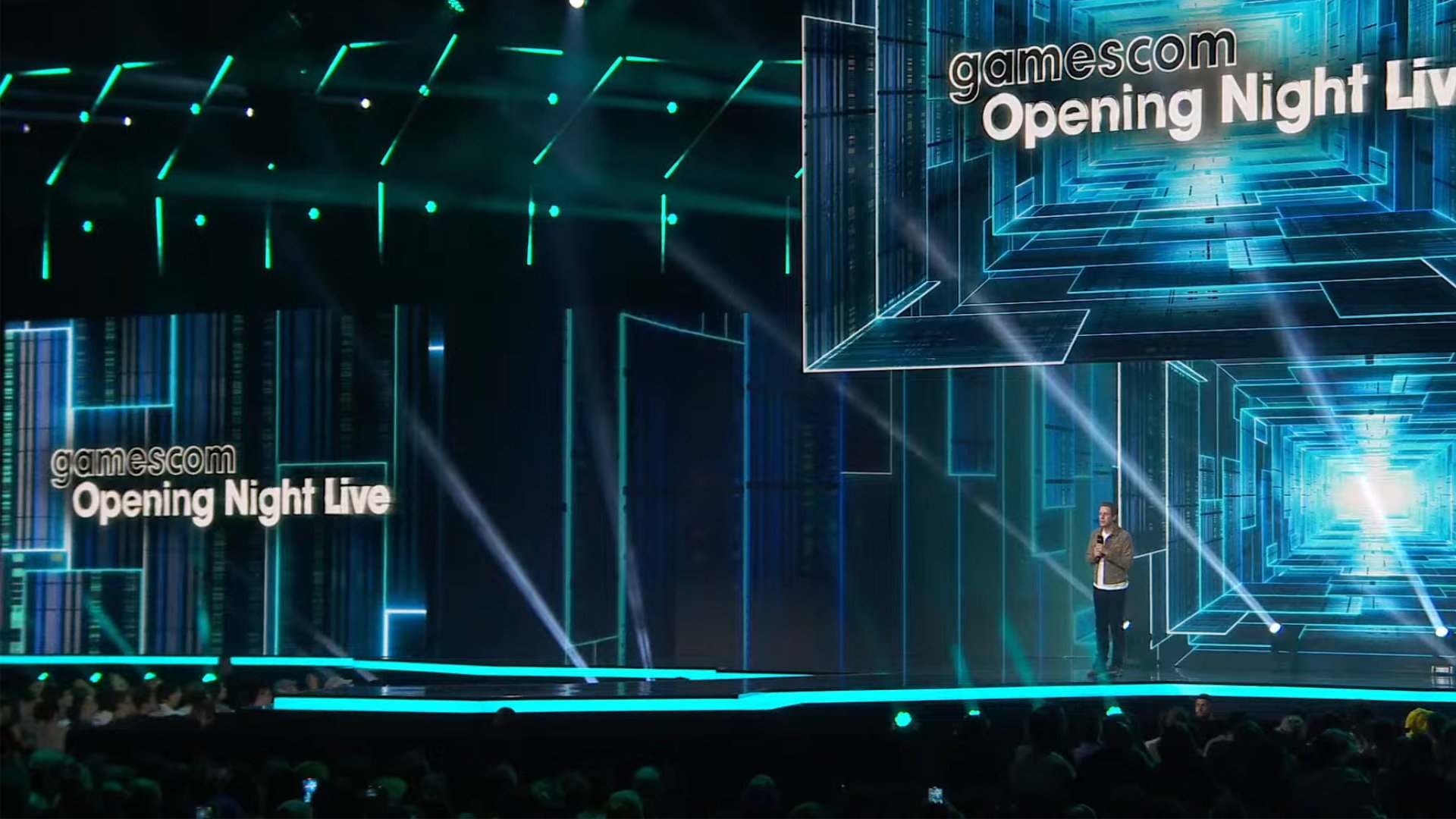
Based on facts, either observed and verified firsthand by the reporter, or reported and verified from knowledgeable sources. Newsweek AI is in beta. Translations may contain inaccuracies—please refer to the original content. Entertainment gossip and news from Newsweek's network of contributors Gamescom, the biggest gaming event in the world, is about to kick off, and it all starts with Opening Night Live, a livestream presented by The Game Awards' Geoff Keighley. Opening Night Live is a fairly sizable livestream that's typically packed with announcements for new games, updates for already released games, and lots of release dates. It usually lasts for a few hours and is a pretty good watch — like The Game Awards but with fewer Doritos ads. Geoff Keighley live on stage during the Gamescom Opening Night Live 2024 presentation. Geoff Keighley live on stage during the Gamescom Opening Night Live 2024 presentation. Gamescom We've put together this handy guide, so you know how and when to watch Gamescom Opening Night Live, including all of the stream links for the show, and what to expect from Opening Night Live. Gamescom Opening Night Live – Stream Times Gamescom Opening Night Live will take place at 2pm EDT today. The official stream will kick off half an hour beforehand, with a preshow set to lead into the show. Here's when the main show will begin in each region: August 19, 2025 PDT – 11:00am EDT – 2:00pm BRT – 3:00pm BST – 7:00pm CEST – 8:00pm IST – 11:30pm August 20, 2025 CST – 2:00am KST/JST – 3:00am AEST – 4:00am NZST – 6:00am Gamescom Opening Night Live – Stream Links Gamescom Opening Night Live will be available to watch live on YouTube and Twitch. The official YouTube livestream embed is available above, and the full links for both YouTube and Twitch are below: Gamescom Opening Night Live – What to Expect The Gamescom Opening Night Live presentation is expected to last for a little over two hours. The entire lineup of the show is not yet known, but Geoff Keighley has revealed a number of titles set to be featured: Call of Duty: Black Ops 7 Resident Evil: Requiem Fallout Ghost of Yotei Ninja Gaiden 4 Silent Hill f World of Warcraft: Midnight The Outer Worlds 2 Keighley has also hinted at other announcements, including one X (formerly Twitter) post that might be hinting at something related to Hollow Knight Silksong. We'll have to wait and see, but it seems like gamers are in for quite the show.


Forbes
a day ago
- Forbes
Silicon Valley Meets Its Match in the Trillion-Dollar Creator Economy
The promise of the internet was simple: anyone could build something and be discovered. In practice, the gates never really opened. For years, Silicon Valley decided who got funded, who scaled, and who had a chance to break through. A Stanford degree helped. So did a Sand Hill Road pitch deck. Without those, the odds were slim. That world hasn't vanished, but it no longer defines the path to success. A new one has taken shape on screens. YouTube stars, Twitch streamers, and TikTok creators aren't waiting for venture backing. They are selling products, shaping culture, and launching companies directly from their channels. For many, a loyal community of followers is worth more than an investor's check. And that's the bigger story: this shift isn't just about entertainment. It's about economics. The so-called creator economy has ballooned into a trillion-dollar marketplace. Its currency isn't institutional capital—it's trust, attention, and community. Those forces are beginning to rival the old guard in Silicon Valley. The question now is timing: how soon does this new system overtake the startup model as the engine of growth? The New Face of Entrepreneurship When Logan Paul and KSI launched Prime Hydration, most observers scoffed. Who would buy a sports drink from YouTubers? Two years later, Prime was beating Gatorade in several major U.S. markets — a result few in the industry saw coming. Around that same period, Emma Chamberlain turned her YouTube following into a coffee label that ended up on shelves at Whole Foods and Target. And then there's MrBeast, whose Feastables chocolate rolled into Walmart almost overnight. Executives later admitted demand was so overwhelming that they scrambled to speed up distribution. This wasn't a side hustle. It was a company built in real time—without the rituals of Silicon Valley: no venture rounds, no board huddles, no polished pitch decks. How Creators Flipped the Startup Playbook For decades, Silicon Valley's rhythm was predictable: secure venture capital, build a product, and buy attention through marketing. Creators flipped that script. They build audiences first, then release products directly into those communities. And it isn't just about star personalities. Platforms like YouTube, TikTok, Instagram, and Twitch have become global incubators—accelerators without walls—where distribution and monetization tools are embedded in the ecosystem itself. Patreon, Substack, and Shopify extend the chain, enabling creators to scale without ever walking into a VC pitch. The traditional pipeline—concept to capital to consumer—has collapsed. In its place stands a flywheel where cultural credibility creates demand before capital ever enters the picture. According to Goldman Sachs, the creator economy could approach half a trillion dollars by 2027, outpacing most traditional startup categories. The MrBeast Effect Jimmy Donaldson, better known as MrBeast, didn't wait for Sand Hill Road. He relied on his 200 million subscribers. When he launched Feastables chocolate, Walmart stocked shelves almost immediately, confident the built-in demand would translate to sales. The lesson? Attention has become the ultimate distribution channel. Where startups once burned millions to gain traction, creators use trust and immediacy to vault over those costs. Why CEOs Can't Afford to Look Away It's tempting to dismiss the creator boom as a cultural fad. But ignoring it risks irrelevance. In category after category—from skincare to fintech—creators are capturing market share faster than most startups. And they're not doing it alone. The ecosystem is compounding: TikTok Shop integrates commerce, YouTube channels subscriptions, Instagram offers direct-to-consumer storefronts. What used to be 'social media' is now full-stack infrastructure for entrepreneurship. The speed of culture now outpaces the speed of capital. Once audiences are trained to expect creator-led velocity, they won't slow down to accommodate traditional rollouts. The New Rules of Leadership Executives hoping to compete in this landscape must adopt a new set of reflexes: What's Coming Next The trajectory is clear. The next decade will bring: The question is no longer whether creators will disrupt your industry. It's whether you're building fast enough to survive when they do. Silicon Valley's startup model isn't just being challenged — it's being replaced by the trillion-dollar creator economy.
