



Safety alert for over-the-counter remedy taken by millions - after pills trigger disease that fuels bowel cancer in healthy 18 year-old
Medics raised the alarm after treating an 18-year-old boy who developed colitis—a type of IBD—after taking over-the-counter allergy and pain relief medication continuously for almost three years.
IBD is a known risk factor for bowel cancer and experts have long warned that those who have had the condition for years are at increased risk of developing the disease.
The unnamed American teen sought medical help for bleeding from his rectum and extreme fatigue—according to doctors who shared his tale in a medical journal.
He told medics he had been taking diphenhydramine, an over-the-counter hay fever medication and a non-steroidal anti-inflammatory drug (NSAID), daily to combat debilitating headaches and allergies for almost three years.
NSAIDs are a class of painkiller—famous examples being ibuprofen, aspirin, and naproxen—which are commonly used to alleviate pain and swelling.
Pills combining diphenhydramine and NSAID are available in both the US the UK under brands like Advil PM and Motrin PM, as pain relief and sleep aids.
While not naming the brand of medication the teenager took, doctors said he had taken the equivalent of 600mg of NSAIDs twice a day.
Brands that make diphenhydramine and NSAID combination pills warn patients not to take more than two tablets in 24 hours, equivalent to around 400mg of NSAID.
Medics then performed a colonoscopy—where a thin flexible camera is inserted into the rectum—and found the tissue inside was severely inflamed.
Writing in the journal Cureus, medics said he was then diagnosed with colitis, a form of IBD which specifically develops in the colon.
They theorised that his frequent use of NSAID drugs had disrupted the production of mucus that protects the digestive system, causing irritation.
Irritation of the digestive system is a known risk of these drugs and as result they can lead to bleeding, ulcers and potentially colitis.
Some studies have linked using NSAID drugs with an 86 per cent increased chance of developing colitis.
The medics who reported the case said these increased risks are why doctors often prescribe a separate medication to patients' who have to take NSAIDs frequently for chronic pain issues, in order to protect their guts from this potential damage.
However, they noted that their patient was an extreme example and occasionally using a medication like ibuprofen will not carry the same risk.
But they added that the risk is something to be aware of given how readily patients are able to take these over-the-counter medications without medical supervision.
'Given the widespread availability of these medications and their over-the-counter accessibility, it is imperative that patients suffering from chronic inflammation or long-term pain be advised to avoid NSAIDs, or to use them only under the direct guidance of a supervising clinician,' they said.
WHAT IS INFLAMMATORY BOWEL DISEASE?
Inflammatory bowel disease (IBD) is a medical term that describes a group of conditions in which the intestines become inflamed (red and swollen).
Two major types of IBD are Crohn's disease and ulcerative colitis.
Ulcerative colitis affects the large intestine (colon) whereas Crohn's disease can occur in any part of the intestines.
Symptoms may include:
Abdominal cramps and pain frequent
Watery diarrhoea (may be bloody)
Severe urgency to have a bowel movement
Fever during active stages of disease
Loss of appetite and weight loss
Tiredness and fatigue anaemia (due to blood loss)
People of any age can get IBD, but it's usually diagnosed between the ages of 15 and 40.
The conditions are chronic and cannot be cured so treatment usually relies on medication and lifestyle changes to manage the symptoms, but may include surgery.
IBD is thought to affect some three million people in the US, over 300,000 Britons, and 85,000 Australians.
Source: Crohn's & Colitis Australia
In the teen's case, once he was stable, he was prescribed anti-IBD drugs and told to stop using NSAIDs.
However, despite being scheduled for a follow-up colonoscopy, he never attended, so medics were unable to determine how successful this had been.
For years scientists have been unsure exactly what causes IBD to develop in some patients but not others.
Earlier this year, however, researchers in London discovered a genetic weakness present in 95 per cent of people with IBD.
An estimated half a million Britons and some 3million Americans are thought to have IBD, with the condition affecting more than 10million globally.
IBD arises when the immune system mistakenly attacks the bowel, causing an array of debilitating symptoms including abdominal pain, diarrhoea and blood in stools.
The disease can also cause sudden weight loss and crippling fatigue.
While no cure is available, symptoms can be managed with drugs. These tend to be most effective when given soon after diagnosis.
Estimates vary on exactly how much having IBD increases the risk of bowel cancer, with some charities citing studies which found it raises it by 7 per cent compared to the general population.
But charities are keen to highlight that the vast majority of patients with IBD won't develop the disease.
They do, however, advise people with IDB to keep in mind other risk factors for the cancer, such as smoking, drinking alcohol and being overweight that could further increase their individual risk.
It comes as experts have repeatedly warned of a concerning and mysterious rise in rates of bowel cancer among under 50s.
A recent global study found rates of bowel cancer in under 50 year-olds are rising in 27 of 50 nations.
England is averaging a 3.6 per cent rise in younger adults every year-one of the highest increases recorded.
While the disease is known to be linked to obesity, experts have noted that the disease also seems to also be occurring in fit and healthy patients.
Some believe the explanation must lie in environmental factors young people have been exposed to more than previous generations.
Signs of bowel cancer include abdominal pain, a lump in the abdomen, bloating and feeling very tired or short of breath.
Bleeding from the back passage, or blood in the stool, occurs when cancerous tumours bleed into the digestive tract.
However, bowel cancer can also appear with no symptoms until it has spread, where it becomes harder to treat.
Overall, just over half of bowel cancer patients are expected to be alive 10 years after their diagnosis.
Hashtags

Try Our AI Features
Explore what Daily8 AI can do for you:
Comments
No comments yet...
Related Articles


Daily Mail
 35 minutes ago
- Daily Mail
Lilo & Stitch actor David Hekili Kenui Bell was battling four devastating health conditions before death at 46
New details about the Lilo & Stitch actor David Hekili Kenui Bell's health prior to his death at 46 have been revealed following the release of his autopsy report. In the report, which was issued by the Hawaiʻi Police Department and obtained by People, Bell had been afflicted with four 'pathological diagnoses' at the time of his death on June 12 on Hawaii's Big Island. The autopsy was reportedly performed a week after his death, on June 19, though the results weren't completed until July 10. Bell's tragic death occurred just weeks after he made his big screen debut in Disney's live-action Lilo & Stitch film, which was released on May 23. According to the report, Bell was determined to have been suffering from acute respiratory failure, sepsis, hypertensive/atherosclerotic heart disease and morbid obesity. According to the Cleveland Clinic, acute respiratory failure occurs when the body's supply of oxygen suddenly dwindles to dangerous levels, or when too much carbon dioxide builds up in the blood. Sepsis is a potentially deadly condition in which the body's immune system defenses are overwhelmed by an infection and begin to attack tissues and organs rather than the infection. Atherosclerosis describes the hardening of the walls of arteries delivering oxygen-rich blood, which is caused by a build-up of plaque comprised of fat and cholesterol. The condition is highly associated with high blood pressure (hypertension). When arteries become too block with plaque, it can block blood flow, potentially triggering a heart attack or other serious medical condition. The increase in pressure in blocked arteries can also cause blood clots or ruptures, which could include a stroke. The report's toxicology screen reportedly showed no indication that Bell had drugs or alcohol in his system at the time of his death. Bell's autopsy report indicates that efforts were made to resuscitate him by medical professionals. The medical examiner reportedly noted that Bell still had defibrillator pads on his chest, while an airway was still present in his mouth. He also still had a blood pressure cuff on his right arm, while an IV line was place in his left arm. The actor had 'complained of difficulty breathing' shortly before dying. The medical examiner also noted the presence of an intraosseous needle in Bell's left leg, which is used to to deliver fluids or medications rapidly when medical professionals either aren't able to access veins or when there is a delay in tapping them, according to the NIH's National Library of Medicine. The report stated that Bell suffered from stasis dermatitis, a form of eczema caused by poor blood circulation in the legs, and edema, which is swelling caused by a build-up of fluid in tissues, usually occurring in the legs, feet and ankles. Despite the details, the autopsy report does not list Bell's cause of death or manner of death. An officer with the Hawaiʻi Police Department reportedly told People that the department's investigation into Bell's death was now complete. A police spokesperson previously told the outlet that the coroner's inquest investigation was standard procedure, and that no foul play was suspected in Bell's death. The actor's obituary in the Hawaii Tribune-Herald, from August 1, stated that a service was held for him at the Annunciation Catholic Church in Waimea on August 9. In a statement obtained by Bell's rep confirmed his death as she described him as a an extraordinary talent and a deeply cherished member of our BLISS ʻOhana (family).' 'David brought light, kindness, and a beautiful spirit to all who had the privilege of knowing him. He will be profoundly missed by everyone whose lives he touched,' she wrote. 'We extend our deepest sympathies to his ʻohana during this incredibly difficult time and are honoring their privacy as they grieve.' She concluded her statement by writing: 'Rest in love, dear David. Your legacy and aloha spirit will live on in the hearts of all of us. A hui hou — until we meet again.' Bell's sister Jalene Kanani Bell revealed the loss with a 'heavy heart' in a statement posted to her Facebook account in June. 'It is with a heavy heart I share that my sweet, generous, talented, funny, brilliant and handsome little brother David H. K. Bell will spend today in the company of our Heavenly Father,' Jalene's post began. 'I've been waiting for the words and mindset to properly express the joy of a human, and Prince of a Man he was, but fate pushed my hand this morning by a pre-scheduled Father's Day newsletter honoring the men in our lives. 'I met my little brother at the age of 18, on my high school graduation day, it was the most amazing surprise which I had been asking for for years, that our mom's made happen for us, and that gift has lasted a lifetime. 'While I didn't grow up with a Father, David gave me all the unconditional love I could possibly ask for and I believe that all his family and friends received the same from him. 'He was always so proud of me, his nieces and his grandnephew, constantly engaged and always coming up with fun activities to get-together. We looked forward to going to Tatihi and the Lindsey reunion together to create more family connections. 'David loved being an actor, doing voiceovers, spending time with Brutus traveling as an ambassador for Kona Brew. The film industry and entertainment was so exciting to him and I loved that he enjoyed the arts. He went to Punahou and Kalani while our dad spoke Hawaiian so his ability to deliver lines with English understanding, Indigenous knowledge and Pidgen to da Max…made him a diamond in the rough. 'You can hear him over the PA system on arrival at Kona Airport where he loved working to create an awesome and safe customer experience. His sister paid a heartbreaking tribute to the actor shortly after his death 'He was and will remain a bright and shining star. He recently made it on to the big screen with an iconic Lilo & Stich momment [sic]. He planned ahead and purchased the best seats in the house for us all to go together to opening night in Kapolei just two short weeks ago. That's one trait we didn't share, planning ahead:) We talked about and were so energized by the fans dressed in L&S gear head to toe, t-shirts, onezees, hats, mask, and the merch galore flying off the shelf as we stood in line for pop-corn. 'I said we should get shave ice after the movie and reenact the sceen but then realized the store was already closed [sic]. To celebrate him and try to ease our grief we went to get shave ice and my grandson's emotion was on point. 'To Aunty Gerry and the Kenui 'Ohana you raised an amazing human who became the most loving and supportive man in my life and I am eternally grateful. 'I share this grief with our older sister Kehau Bell, and my younger sister, Lara Leimana, who while not a Bell, loved and adored him as her own. 'He enjoyed social media and I'll be resharing some of my favorite post he made, and some I am just seeing for the first time that I missed, because they are so funny and heartwarming. 'Hug your loved ones today…our last time together after returning home from the movie was just sitting on my living room couch talking story about life, having a seltzer and doing a little genealogy. Blessed by this and all the big and small moments, I will keep our memories alive.' In addition to his role on Lilo & Stitch, David has also made appearances in Magnum P.I. and Hawaii Five-O. According to his IMDb, he is set to appear in another film as well - The Wrecking Crew, which is currently in post-production. David's last Instagram post was on May 30. He shared an interview with the team behind Kona Brewing's campaign, which won the Pele Award for Best In Show for Advertising. David, an ambassador for the brand, raved in the caption: '2025 Pele Awards Overall Winner! #KonaBrewingHawaii #NMG #NellaMediaGroup.' The actor, who played 'Big Hawaiian Dude' in Lilo & Stitch, had been keeping fans up-to-date on the film on his social media. Last month he shared video of his audition, which saw him humorously failing to eat a fake snow cone. 'My audition had some special effects,' he captioned the post. 'I'm pretty sure that's what did it... Also some random stuff... #LiloAndStitch #Stitch #Disney.'
Daily Mail
an hour ago
- Daily Mail
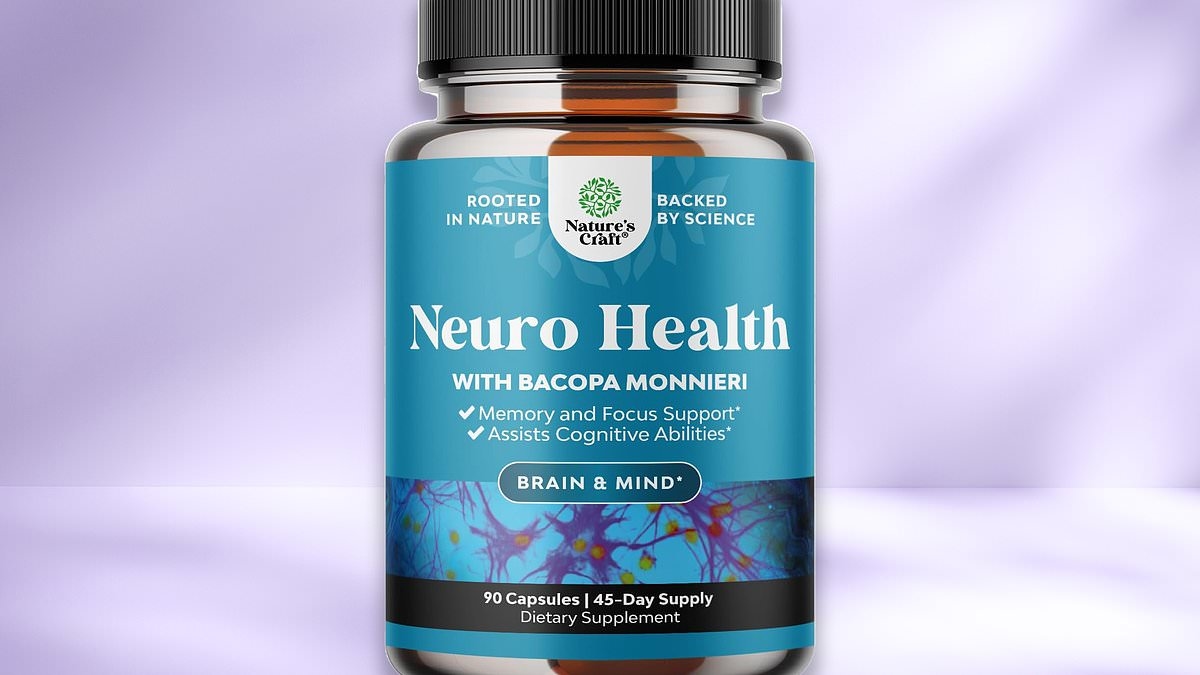
Boost focus and memory with this best-selling brain supplement users are calling a 'Brain fix! - now 20% OFF
Boost focus and memory with this best-selling brain supplement users are calling a 'Brain fix! - now 20% OFF Daily Mail journalists select and curate the products that feature on our site. If you make a purchase via links on this page we will earn commission - learn more Brain fog got ya down? We know life can get messy and, above all, stressful with so many things to do and little time to do them all. With so much on our plates, it can feel overwhelming and thus cause unwanted side effects such as insomnia and anxiety. Luckily, we just found a supplement on Amazon that is changing the game! Nature's Craft Nootropic Brain Supplement (90-day Supply) Do you feel like your brain could use a little boost? This daily supplement helps focus, memory, and so much more with just a small pill! Using a unique formula of nootropics, you can see a difference in everything from studying habits to sleep routines. When you subscribe you can snag a 90-day supply for 10 percent off! Shop Nature's Craft is turning heads with their Nootropic Brain Supplement that uses naturally sourced powerhouses, such as Vitamin A, to support cognitive function. Whether you struggle with brain fog or restlessness, these daily pills may be your new Hail Mary. Using a unique formula, the Nature's Craft Brain Supplements help improve cognitive functions FAST. The bite-sized gel capsules are suited for both men and women and are no larger than a quarter! By taking two a day, you will slowly begin to see changes in your brain health from improved memory retention to better sleep. One user said: ' I have improved focus – I feel more mentally alert and less distracted throughout the day. Better memory retention – I can recall things more easily, which has been helpful for work and daily tasks. Sustained energy without jitters – Unlike coffee or energy drinks, this provides a more natural and steady mental boost without crashes.' The key to success is time! Users start seeing real differences after 90-days of consistent use. Users are seeing real results with incredible stories of success. But like any supplement, the Nature's Craft Brain capsules take time to fully work with most users needing around 90 days to experience the effects. One user said: 'I love this product!!! I swear I have always had a hard time focusing (I truly think I'm undiagnosed ADHD) and this has been a game changer!!' If you have ever found yourself losing sleep, grasping at memories, or unable to finish a task — it is time to give Nature's Craft Brain Supplements a try. Get the five-star rated daily pills now on Amazon and save 10 percent when you subscribe!


The Independent
an hour ago
- The Independent
Type 2 diabetes patients set for major shake-up in care
People with type 2 diabetes in England are to get the biggest shake up of care in a decade which could see them offered treatments, including jabs that aid weight-loss, sooner. The health service should move from a one-size-fits-all approach of starting everyone on the same medication, to more personalised care that aims to prevent complications like heart failure and heart attacks, according to new draft guidance from the National Institute for Health and Care Excellence (Nice). This includes making newer type 2 diabetes drugs, known as SGLT-2 inhibitors, a first-line treatment option in a move that could eventually help save tens of thousands of lives. SGLT-2 inhibitors, which include canagliflozin, dapagliflozin, empagliflozin, and ertugliflozin, are once-a-day tablets that reduce blood sugar levels by helping the kidneys remove glucose, which is passed from the body through urine. However, analysis by Nice found these drugs are under-prescribed. The new guidelines recommend patients who cannot tolerate metformin – the first-choice in type 2 diabetes medication – should start with an SGLT-2 inhibitor on its own. The decision comes after evidence suggested these drugs protect the heart and kidneys as well as controlling blood sugar, Nice said. It is estimated the change could save almost 22,000 lives once uptake reaches 90% of the population. Nice also suggests some groups of patients would also benefit from GLP-1 receptor agonists such as liraglutide or semaglutide sooner, rather than keeping them for the later stages of treatment. Semaglutide, sold under the brand name Ozempic, is licensed in the UK to treat type 2 diabetes, while its other brand – Wegovy – is also used by the NHS to help obese people lose weight. Professor Jonathan Benger, deputy chief executive and chief medical officer at Nice, said: 'This guidance means more people will be offered medicines where it is right to do so to reduce their future risk of ill health. 'This represents a significant evolution in how we approach type 2 diabetes treatment. 'We're moving beyond simply managing blood sugar to taking a holistic view of a person's health, particularly their cardiovascular and kidney health. 'The evidence shows that certain medicines can provide important cardiovascular benefits, and by recommending them as part of initial treatment, we could help prevent heart attacks, strokes and other serious complications before they occur. 'This is particularly important given that cardiovascular disease is the leading cause of death in people with type 2 diabetes.' Around 4.6 million people in the UK are living with diabetes, with nine in 10 of those having type 2. However, it is estimated that a further 1.3 million people may have undiagnosed type 2 diabetes. Nice analysed the records of 590,000 people and found SGLT-2 inhibitors are under-prescribed, particularly to women, older people, and black patients. Prof Benger added: 'The evidence from our analysis is clear. There are prescribing gaps that need to be addressed. 'The guideline update published today will help to increase equitable uptake of SGLT-2 inhibitors, which we know can prevent serious health complications.' Dr Waqaar Shah, chairman of the guideline committee, added: 'We know that SGLT-2 inhibitors are currently under-prescribed, and our health economics analysis shows that people living in the most deprived areas would particularly benefit from universal access to these treatments. 'These recommendations could help reduce health inequalities while providing better outcomes for everyone.' Elsewhere, the draft guidance suggests different treatments for diabetes patients with certain characteristics or health conditions. These include adults with cardiovascular disease, who should be offered a triple therapy including a GLP-1 receptor agonist. Meanwhile, adults diagnosed with type 2 diabetes before 40 should be offered dual therapy before a GLP-1 receptor agonist is considered, while patients with chronic kidney disease should have tailored recommendations based on their kidney function. A public consultation on the new Nice guidelines is open until October 2. Douglas Twenefour, head of clinical at Diabetes UK, said: 'This long-awaited announcement propels type 2 diabetes treatment into the 21st century. 'Boosting access to newer treatments will be transformative for people with type 2 diabetes, while ensuring the UK keeps pace with the global momentum in treating the condition. 'The majority of people with type 2 diabetes are not currently taking the most effective medication for them, putting them at risk of devastating diabetes-related complications. 'Diabetes is a leading cause of cardiovascular disease, and tailoring treatment based on individual risk could protect thousands against heart attacks and kidney disease. 'These guidelines could go a long way to easing the burden of living with this relentless condition, as well as helping to address inequities in type 2 diabetes treatments and outcomes.'
