



The travel writer's dilemma: Share or gatekeep?
What's a travel writer to do? The very premise of the job is to tell you about attractive possibilities that you might not otherwise know about. But as those little-known jewels become better known, readers grow understandably indignant (that quiet and reasonably priced cafe is suddenly unquiet and unreasonably priced), while locals wonder how much to curse the onslaught of visitors and how much to try to make the most of them.
I feel this conundrum ever more painfully because I have chosen to base myself for 37 years around the Japanese city of Kyoto. My first 30 years here, I grieved because nobody I knew ever wanted to visit. Now I mourn because everyone seems to be on their way here.
Each month I receive dozens of messages – from friends, from readers, from complete strangers – asking me to tell them about out-of-the-way Japanese wonders that nobody else knows about. I understand the impulse.
More than 75 million people visited Kyoto prefecture in 2023 and most of them seemed to be walking along the narrow, once-noiseless paths that lead magically up to Kiyomizu temple at the same time.
Of course, a longtime travel writer knows how to come up with diversions. I'll often recommend my second-favourite izakaya, in the same spirit as I tell friends who are thinking of Nepal that they may want to consider the less-developed Himalayan region of Ladakh, or those hurrying toward Kyoto to try quiet and cultured Kanazawa, two hours away, instead.
I will share my favourite secret with a friend and offer a stranger something more generic. Besides, I know that a traveller's real joy comes in discovering a hidden treasure for herself; at best my recommendation may send her along some adjacent path, to somewhere I've never heard about.
Traveling in time
But the abiding hope of travel is that beauty is resilient. Last year I happened to spend three nights in Kyoto right after flying in from California. Every morning I got out of bed at 3.15am and slipped out the door five minutes later (11.20am in my Californian mind and stomach).
The streets were deserted, save for a handful of Japanese kids reeling home after a long night out. I came to know the friendly South Asian men working at the convenience store where I stopped every morning to buy a bottle of hot milk tea and a doughnut. Best of all, I was able to walk up those heart-stopping pilgrims' paths toward Kiyomizu and have them entirely to myself.
As the sky turned indigo an hour later – twilight in reverse – I felt myself wandering alone through a Hiroshige print. In time, some locals began to emerge, to walk their dogs or to enjoy the early-morning freshness. Yet, to a startling degree, I was back in the same silent, pristine world that awaited me when I quit my 25th-floor office in New York City to live in a simple temple in this neighbourhood 37 years ago.
Kyoto has weathered every kind of change in its 1,230 years of history, and I'm often reminded that thousands can walk around Notre Dame every day and few come away disappointed.
Nonetheless, the paradox at the heart of sharing little-known 'secrets' has grown exponentially more intense over the past two decades.
The writer says he feels this paradox ever more painfully because he has chosen to base himself for 37 years around Kyoto. — Simon Bailly/The New York Times
When I first began writing about foreign wonders, I could extol the hidden jewel known as the Lotus Café in Ubud because few people would ever read my account and even fewer would dream, in 1988, of flying to Bali. Now a mention of a 'secret' bar in Barcelona may reach 11 million readers in every corner of the planet, many of whom are on their way to Spain very soon – or at least know of others who will be.
Long lines form outside that Kyoto gyoza joint down the road, whose main claim to fame used to be that it was the haunt of locals. Now, those same locals can't get into the place that has been their second home for decades. And quite a few of those 11 million readers complain that this 'special tip' isn't so special at all.
No reviewer of books or movies faces this predicament, and if an overlooked novel or documentary suddenly wins recognition, most of us rejoice. But destinations are fragile, on several fronts – many can't bear the weight of thousands. While sailing around Antarctica, even as I marvelled at its otherworldly beauty, I was selfishly glad that not many visitors are permitted there, so precarious is its environment.
Sometimes, therefore, I simply delight in the fact that my tastes are not the same as everybody else's. After I wrote about that comfortable hotel on the beach in war-torn Yemen in 2001 – and that delectable pizza-restaurant I discovered in the arts centre in Tehran, Iran, in 2013 – I never heard from any reader who had been to either, let alone found them overcrowded. When I hold forth on the delights of wandering around Singapore at 3am and seeing that well-behaved city's unofficial side – its subconscious, as it were – I'm reminded that not many fly across the globe in search of such arcane pleasures.
At other times, I feel that anyone who has the enterprise and stamina to get to one of my 'secret' suggestions has earned the payoff. Last summer I bumped across 13 miles of barely paved road, inching at times along a narrow path above a four-story plunge, to arrive at the Christ in the Desert monastery near Abiquiu, in New Mexico. It's a site that few visitors will forget, yet happily one that not many will ever get to, as rains render the roads impassable, and the end of the path discloses little more than a simple church, a cluster of small rooms and a desert silence.
Earlier this year, in fact, I published a book about another Benedictine monastery, in California, where I have been staying regularly since 1991. Friends worried that my descriptions might endanger the very air of seclusion and quiet that I was hymning. Yet I had few such fears. Over more than a hundred visits, I've seen the monks build new trailers, expand their facilities, bring many rooms up-to-date. Nothing seems to dent the silence or the radiance. There's still room for only around 20 visitors at a time and I'm convinced that almost anyone who goes will find the peace she's seeking, while also bringing happiness to the monks (who need to raise US$3,000 a day just to keep their community alive).
The sweetest secrets
Here in Japan, my neighbours are of two minds about whether they want to have their secrets divulged or not. On the one hand, older citizens in Kyoto can no longer find space on the local bus because so many visitors are crowding in to visit that back street ramen place they've seen on TikTok. On the other, in a country whose economy has been struggling for 30 years, any revenue is welcome.
Maybe I should just advise readers where not to go (The 405 freeway in Los Angeles between 7am and 10pm on any day for one). Or urge them toward overlooked places that sadly seem likely to remain overlooked: Oman and Ethiopia and Pittsburgh, all of which have afforded me great joy, again and again.
Or maybe I should just stick to fiction. When I set a scene in a novel inside that enchanting woody inn in California where there are no locks on the doors, and the sound of a rushing creek sweetens your night, some readers will smile with recognition – they know the place – while others will simply try to find a similarly atmospheric location of their own.
Life offers few greater pleasures than that of passing on your enthusiasms and secret discoveries. But the greatest pleasure of all may be to uncover something that no one else has mentioned. — ©2025 The New York Times Company
This was originally published by The New York Times.

Try Our AI Features
Explore what Daily8 AI can do for you:
Comments
No comments yet...
Related Articles

Daily Express
 an hour ago
- Daily Express
AirAsia increases Sabah's connectivity with Japan via new Taipei to Fukuoka route
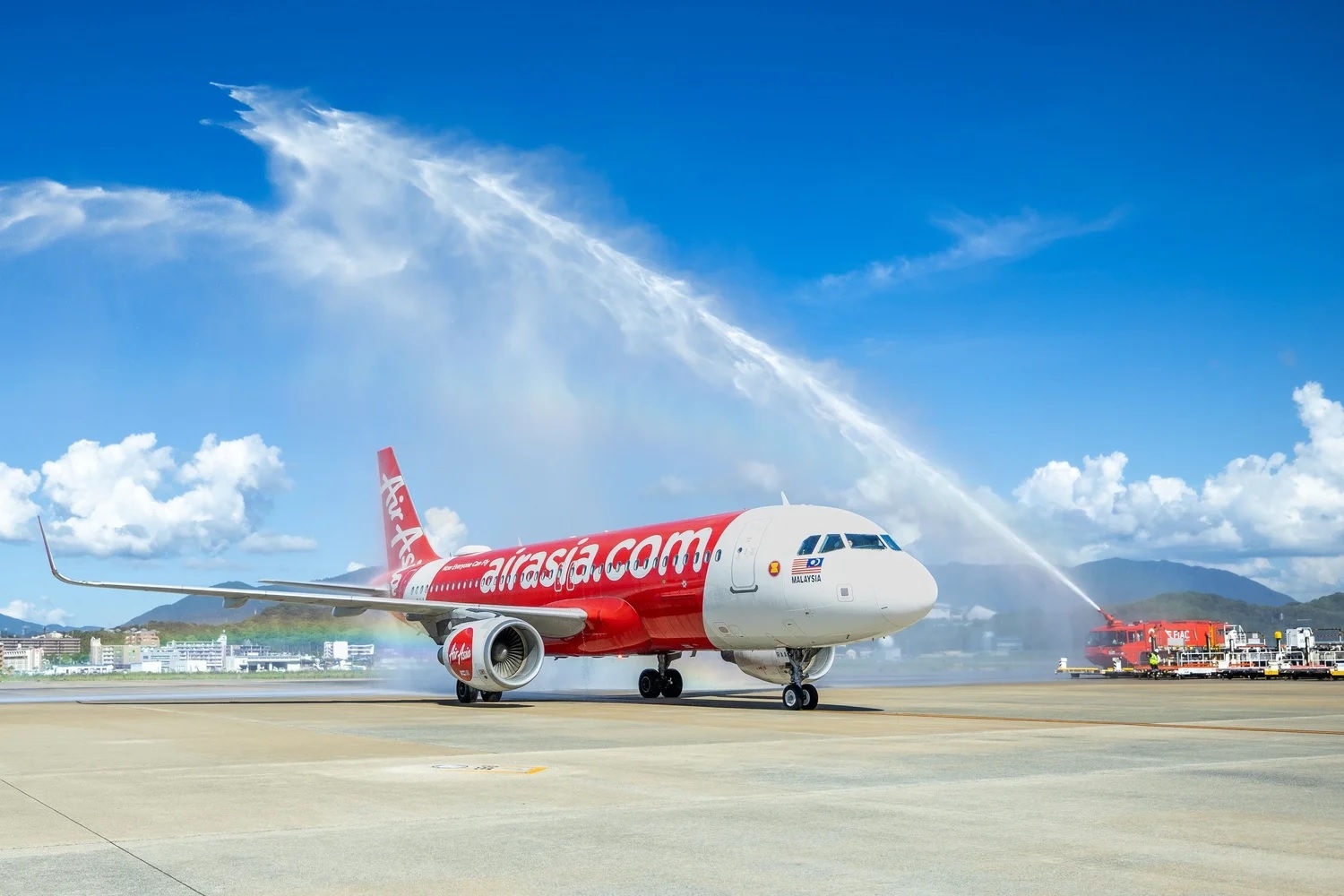
Published on: Tuesday, August 19, 2025 Published on: Tue, Aug 19, 2025 By: Crystal E Hermenegildus Text Size: Fukuoka International Airport President and CEO Shinji Tagawa said the airport was honoured to host AirAsia Malaysia's first Japanese destination, adding that the route would further support tourism, business, culture and education links. FUKUOKA: AirAsia Malaysia has spread its wings further into Japan with the launch of its first-ever fifth freedom route, linking Kota Kinabalu to Fukuoka via Taipei – a move that cements Sabah's standing as a regional hub. The maiden service, Flight AK1510, took off from Kota Kinabalu International Airport at 7.40am on August 15 and landed at Fukuoka International Airport at 3.15pm local time. Advertisement The Taipei–Fukuoka sector was fully booked, while the return flight registered more than 80 per cent load, underscoring strong demand. Passengers departing Taipei for Fukuoka also received a personal send-off from AirAsia Malaysia CEO Datuk Captain Fareh Mazputra, accompanied by members of the cabin crew. At the launch ceremony in Fukuoka, Fareh described the route as a major achievement. 'This is our first fifth freedom route and a significant milestone for AirAsia. It reflects our commitment to developing Kota Kinabalu as a strategic hub in East Malaysia, while offering more flexibility and affordable fares to travellers. 'We are confident this connectivity will open doors for tourism and business between Kota Kinabalu, Taipei and Fukuoka,' he said. He added that Fukuoka was chosen as a natural entry point into Japan, as AirAsia already serves six other Japanese cities. 'This route enhances connectivity between ASEAN, Taiwan and Japan, while giving travellers from Kyushu a direct link to Sabah,' he said. Fareh said the service will also boost Sabah's tourism appeal. 'Travellers can leave Fukuoka in the late afternoon and arrive in Kota Kinabalu the same evening. From pristine rainforests to Mount Kinabalu, Sabah offers unique attractions at affordable prices. This route also opens access to ASEAN through AirAsia's network of more than 130 destinations,' he said. He pointed out that the route goes beyond tourism by creating opportunities for trade and investment. 'We want to connect people, businesses and industries across these three markets. Sabah is famous for its natural beauty, but it can also be a hub for commerce,' he said. The airline revealed that bookings have been highly encouraging, with the Taipei–Fukuoka sector already hitting the high 90 per cent range. 'Today's flight was 100 per cent sold. Between Sabah and Taipei, most flights are already around 80 per cent booked, and with this new link to Fukuoka, we expect numbers to increase further,' said Fareh. He also highlighted the potential of the Muslim-friendly travel market. 'AirAsia is now the only airline directly linking Kyushu to Kota Kinabalu. With Sabah's strong halal food offerings and reputation as a Muslim-friendly destination, this market has great potential to grow,' he said, noting plans to work closely with Tourism Malaysia on this segment. Tourism Malaysia Director in Japan, Syaliza Abd. Aziz, welcomed the development, calling it a timely boost for Sabah. 'Although this is an extension from Taipei, it gives us new promotional opportunities between Taiwan, Malaysia and Japan. With Visit Malaysia Year coming up, we expect more Japanese tourists to fly directly to Sabah,' she said. She also noted that Japan's growing readiness for Muslim-friendly tourism complements Malaysia's global reputation as one of the top destinations for Muslim travellers. 'This connectivity creates a win-win situation and allows us to attract more visitors to Sabah,' she added. The launch was also applauded by regional officials. Consul General of the Taipei Economic and Cultural Office in Fukuoka, Bruce Chen said the service strengthens convenience and people-to-people ties between Japan, Taiwan and Malaysia. Fukuoka International Airport President and CEO Shinji Tagawa said the airport was honoured to host AirAsia Malaysia's first Japanese destination, adding that the route would further support tourism, business, culture and education links. The new service will run daily on Airbus A320 family aircraft, including the A320neo, with 186 seats. Bookings are available from August 16 to 18 for travel until December 15, 2025, via and the AirAsia MOVE app.


The Star
21 hours ago
- The Star
Tokyo ranked World's Best Workation City 2025 for internet speed, safety, and digital nomad visas
BANGKOK: Tokyo tops IWG's 2025 Workation ranking, praised for fast internet, safety, transport, and new digital nomad visa, drawing hybrid workers worldwide. Tokyo, Japan, has been named the world's best city for 'workation' — the blend of working while travelling — in the 2025 International Workplace Group (IWG) 'Work from Anywhere Barometer'. The annual report, now in its third year, evaluates global cities that combine strong working conditions with attractive leisure environments. Tokyo earned the top spot thanks to its high-speed internet, efficient public transport, safety, cultural vibrancy, and the recent launch of a Digital Nomad visa allowing longer stays than traditional visas. These factors have made the city a magnet for hybrid workers seeking flexibility and lifestyle balance. The Japanese capital also benefits from its proximity to mountains, beaches, and national parks, offering professionals the chance to enjoy both a bustling metropolis and nature within easy reach. IWG assessed major cities across 40 countries, scoring them 1-10 across 12 categories: climate, accommodation, food, transport, daily costs, internet speed, happiness index, access to flexible workspaces, cultural quality, digital nomad visa availability and costs, proximity to natural attractions, and sustainability. Two new criteria were added this year - digital nomad visas and access to nature. The survey revealed that 86% of hybrid workers consider access to flexible workspaces a decisive factor in choosing their workation destination. Mark Dixon, IWG's founder and CEO, noted: 'With hybrid working and cloud technology, employees now have the freedom to choose to work from anywhere, at any time.' Global top 10 Workation cities in 2025: Among the newcomers to the list were Tokyo, Seoul, Rome, Paris, and Valletta. Seoul stood out for its fast internet, efficient public transport, and growing digital nomad community, bolstered by South Korea's new visa scheme. Budapest, last year's No.1, fell to third but remains popular thanks to its food culture and high happiness index. Beyond Tokyo and Seoul, other Asian cities ranked highly, including Singapore, Jakarta, Manila, Mumbai, and Hong Kong. Singapore remained a top Asean choice, scoring highly in food, happiness, internet speed, and sustainability. The report highlighted Singapore's nationwide 5G network, seamless public transport, and abundant green spaces as major advantages. IWG also identified six emerging destinations for 2025: Mexico City, Cape Town, Prague, Melbourne, Orlando, and Reykjavik. These cities scored strongly on digital nomad visas and natural attractions. By contrast, Barcelona, Beijing, and Lisbon slipped down the rankings this year despite previous popularity. Dixon emphasised that the workation trend is here to stay. Flexible working and 'work from anywhere' policies are becoming permanent, especially in summer months. It enhances work-life balance, reduces burnout, and boosts productivity, he said. - The Nation/ANN


Focus Malaysia
2 days ago
- Focus Malaysia
Will a million international tourists visit Kelantan this year?
A BERNAMA report recently stated that Kelantan is targeting the arrival of one million international tourists this year, compared with only 595,000 in 2024, with a special focus on the Chinese and Japanese markets. State Tourism, Culture, Arts and Heritage Committee chairman Datuk Kamaruddin Md Nor said: 'If last year we managed to attract over 595,000 foreign tourists, bringing the overall total to 11.1 million, this time we want to draw even more international visitors to Kelantan.' He was speaking at the 'Mmukat' Beach Festival in Pantai Impian Kemasin, which is an initiative to promote Bachok as a tourism town by turning traditional fishermens' activities into experiential tourism products. He said that while the state may not be rich in natural resources, it has natural beauty, beaches, and culture that offer a unique attraction, adding that the state's strong performance last year, exceeding its 10-million tourist target with 10.5 million arrivals. I have been to Kelantan only once, and that was 46 years ago. When I learned that my colleague will be driving a foreign outbound tour operator (commonly referred to as a travel agent) from Kuala Lumpur to Kota Bharu, I decided to accompany them. I remember the operator (who plan and organise outbound tours from his country) was not impressed with Kelantan, and least of all the hyped-up Beach of Passionate Love (Pantai Cinta Berahi), which was later renamed Pantai Cahaya Bulan (Moonlight Beach) in 1990. Norman Vincent Peale (1898-1993) said, 'Shoot for the moon. Even if you miss, you'll land among the stars'. He meant to aim high, and even if you fall short, will still result in a significant outcome. It was inspiring when I first read it more than half a century ago, but no longer. Instead, we ought to be more pragmatic. If targets and challenges are unclear, they will be missed by more than a mile, and exposed when communicating to various stakeholders and the public. For example, there was no distinction made between tourists and visitors. Visitors that stay overnight are tourists, whereas all visitors include both tourists and excursionists who are day-trippers that do not stay overnight at destinations they visit. If there were almost 600,000 tourists to Kelantan last year, where did they stay? If the majority was from South Thailand, many could have stayed with relatives and friends or in private residences booked online. But the majority would have stayed at budget or tourist-class hotels. If so, hoteliers in Kelantan must have been grinning from ear to ear last year. If a million were to arrive this year, the limited number of hotels in Kelantan would be unable to cope with the huge influx of tourists to the state. If so, there would have been a mad rush to build new accommodation or convert existing buildings into hotels or residences for tourists. But the reality on the ground is quite different. In any case, the most accurate indicator is using average hotel occupancy rate multiplied by number of rooms available to derive total number of occupied room nights. Without such data, figures on tourist numbers are plucked from the sky. The number of domestic visitors also needs scrutiny. Visitors to the state can be intrastate or interstate. The former are those who travel from one district to another within the same state, and the latter from other states, but mostly across the border from Terengganu, Pahang and Perak. In any case, it is impossible to identify and count the total number of domestic visitors. Sample surveys produce estimates that will vary greatly according to agenda. Again, the best indicator would be hotel rooms occupied by domestic tourists, regardless of which state they come from. Touting impressive arrival figures is nothing more than a syiok sendiri exercise. The most effective way to develop tourism in any town, city or state is to approach visitors and record their feedback, with the aim of offering them more of the positive and cutting down on the negative. ‒ Aug 18, 2025 YS Chan is master trainer for Mesra Malaysia and Travel and Tours Enhancement Course and an Asean Tourism Master Trainer. He is also a tourism and transport business consultant. The views expressed are solely of the author and do not necessarily reflect those of Focus Malaysia. Main image: The Star
