


Maserati MC20 review: This elegant supercar is a welcome blast from the past
The coupé is listed at £227,930 but this example weighed in at £296,155 including the carbon-fibre pack (is carbon-fibre a premium material?), Giallo Genio paint, blue brake calipers to contrast, a Sonus Faber sound system and the Maserati trident logo stitched into the seats. We can discuss whether Maserati should be charging £550 for heated seats on a car costing almost a third of a million. Likewise £3,250 extra for a nose lift on a car that sits so low that it will beach itself on the average sleeping policeman, or more than £1,000 for a blind-spot alert on a car with parlous over-the-shoulder views.
Once the indignation has faded (it takes a while) there's time to admire the view. This car has been on sale for four years, but head designer Klaus Busse has produced a fantastic piece of industrial design, proper fast-looking, but with a blast from the past. Ferrari F430 perhaps? Maybe even a 1970s Maserati Bora? Either way, it's old-school elegant and curvaceous and you don't need that yellow paint, because from Neptune's Trident on the grille to the aerodynamic Kamm tail lip at the back, the MC20 is a gorgeous interpretation of the mid-engined supercar mien.
While Maserati is busy building battery electric versions of everything else it makes (the Grecale SUV and GranTurismo coupé and cabriolet), the MC20 remains petrol-powered for the moment.
The engine is a twin-turbocharged, dry-sump 90-degree V6 (called Nettuno, or Neptune in Italian) mounted on the bulkhead behind the seats in line with the car. It's a twin-spark unit, with one of the spark plugs firing into a combustion prechamber which helps complete combustion; it's a system used in Formula 1 engines. The fuel-injection system is a hybrid port and direct injection with the piston compressing the air-fuel mixture into the prechamber before firing, which is claimed to reduce emissions and help reduce fuel consumption.
Behind the engine is an eight-speed, twin-clutch gearbox which hangs slightly behind the rear axle line and incorporates an open differential driving the rear wheels, although our test car was fitted with £2,150's worth of electronically-actuated, limited-slip differential. It's difficult to understand why, with 621bhp of power and 538lb ft of torque transmitted to the rear wheels, you'd elect to use a technically inferior open differential.
The carbon-fibre bodyshell is developed by Dallara and loosely based on that of the Alfa Romeo 4C, with all-wishbone suspension which has a single top link.
It's 4,669mm long, 2,178mm wide if you include the door mirrors (1,965mm if you don't), 1,224mm high and has a 2,700mm wheelbase.
Pack light as the luggage space is only 100 litres, with an additional 50 litres under the rear engine cover. It weighs 1,475kg although that's a dry weight; oil, water and a driver will take it comfortably over 1.6 tonnes. Some specialist road tests have placed the MC20 nearer 1.7 tonnes, which is more than some plug-in hybrid (PHEV) rivals with their weighty batteries.
Scissor doors add a sense of occasion and make it easier to climb in than rivals but, having tested Maseratis for more than a quarter of century, the interior feels disappointing. Yes, it's stripped-for-action with motorsport fake suede and bright raised stitching, but there's none of the more traditional gorgeous luxurious leather of old.
The centre digital instrument binnacle is clear, but there's too much information being conveyed. It also contrasts in design and fonts with the central touchscreen, which is tricky to use.
There's plenty of space for the two occupants. The domed roof provides plenty of head room and, being 6ft, I found loads of adjustment to spare, at least until the seat clacked alarmingly as I reduced it to its lowest setting. Someone has lost a pen or it's the structure of the seat; I never found out.
The steering wheel is adjustable and the view out of the front over the low scuttle, between the wheel arches, feels as though you are lining up Arnage corner at Le Mans rather than an exit on the M25.
The sense of control is profound, well apart from the pedal box which defies those with large feet (me) to avoid hitting both pedals at once; dainty left-foot braking starts here…
The huge fixed gearchange paddles feel lovely, but it's a bit of blind man's buff to work out the operation of the indicator and wiper stalks. And is there a radio volume control anywhere? If so, I never found it.
The clickety clack of gravel thrown up into the carbon-fibre wheel arches, combined with the bodyshell stiffness of a kryptonite lintel, makes the MC20 feel race car-like as you manoeuvre around the car park with the nose raised.
The softest GT setting is just about up to the job of coping with the average British pitted and pothole-strewn country lane, but this car needs an A-road to give of its best, if only because of its size.
At low speeds, the engine is buzzy and fizzy, and not particularly memorable. You need to apply some revs to start running with the bulls. Past 4,000rpm and it's making gulping slurping noises behind your head, 6,000rpm and the Minotaur is unleashed, while at 8,000rpm it's bellowing through the carbon-fibre body tub like someone trod on its tail.
With no hybrid system to fill in the gaps in the power delivery, there's a bit of turbo lag, but you get used to driving around it using the gear-change paddles.
Gosh this is a fast car, not just in numbers, but in the margins, too. The twin-clutch gearbox slams in the ratios if you are so moved, but avoid the most extreme Track mode and settle on the milder Sport setting with the suspension on soft, then short-shift upwards and the whiplash torque has you staring out of the windscreen, eyes wide and neck craning for the next corner.
The body's rigidity allows the MC20 to have a soft suspension where it counts, so the impression is far from the occasionally twitchy response of hybrid rivals, but supremely controllable and intuitive. The steering feels beautifully passive and stable, but accurate as well. The result is a sort of hyper-reality, almost like driving a simulator, but old-fashioned and understandable.
On a racing circuit, with a stopwatch, it seems likely that the more powerful hybrid McLaren or Ferrari rivals would lap a little faster, but who would be having the most fun?
The MC20 is old-school in looks, performance and feel, but it's none the worse for that even if it is rather expensive in its class. Its responses are intuitive and (mostly) progressive and the relatively simple drivetrain makes it easy to understand and drive briskly without frightening the driver.
As they say in Italy, il genere drammatico – surely that's what it's all about, isn't it?
On test: Maserati MC20
Body style: two-door two-seat mid-engined coupé
On sale: now
How much? from £227,930, £296,155 as tested
How fast? top speed 202mph, 0-62mph in 2.9sec, 0-124mph in 8.8sec
How economical? 24.6mpg (WLTP Combined), 19mpg on test
Engine and gearbox: 3,000cc 90-degree V6 twin-turbo petrol, eight-speed twin-clutch gearbox, rear-wheel drive
Maximum power/torque: 621bhp @ 7,500rpm/538lb ft @ 3,000-5,500rpm
CO2 emissions: 261g/km
VED: £2,745 first year, £600 next five years, then £190 *
*These rates are set to increase after 1 April 2025, but detailed rates haven't yet been published.
Warranty: three years unlimited mileage with servicing, extendable (at cost) to 10 years
Pretty fabulous hard-top Berlinetta mid-engined plug-in hybrid, mustering 818bhp when the 6kWh lithium ion battery joins the 3.0-litre 120-degree V6 twin-turbocharged engine. Top speed is 205mph, with 0-62mph in 2.9sec.
Very similar specification and performance to the Ferrari, but likeable despite its disastrous launch and slow sales. Under new boss Michael Leiters there have been a host of small changes to sharpen this mid-engined PHEV supercar.
Launched this summer, this V8 plug-in hybrid (PHEV) replaces the Huracán although the 789bhp engine is closely related to the unit in the PHEV Bentley Continental GT and Flying Spur. A 3.8kWh battery boosts power to 907bhp, with a 0-62mph time of 2.7sec and a 213mph top speed.
Broaden your horizons with award-winning British journalism. Try The Telegraph free for 1 month with unlimited access to our award-winning website, exclusive app, money-saving offers and more.
Hashtags

Try Our AI Features
Explore what Daily8 AI can do for you:
Comments
No comments yet...
Related Articles


Newsweek
 5 hours ago
- Newsweek
F1 Insider Questions If Lewis Hamilton Should 'Quit" Amid Ferrari woes
Based on facts, either observed and verified firsthand by the reporter, or reported and verified from knowledgeable sources. Newsweek AI is in beta. Translations may contain inaccuracies—please refer to the original content. Ferrari driver Lewis Hamilton is facing intense pressure both internally and externally this season after a slow start, and Formula 1 analyst Tom Coronel gave his thoughts on the seven-time champion's success. Despite sitting in a solid sixth place in the standings, Hamilton is failing to meet the expectations placed on him. He is yet to win a race or even place on the podium. For a great driver who was excellent at every part of driving, Hamilton has been outclassed in qualifying compared to Charles Leclerc. The Ferrari SF-25 is not a race-winning car and has several flaws, but Leclerc has still managed to secure podium finishes with the car and qualified on pole position as well. Lewis Hamilton of Great Britain and Ferrari walks in the paddock during previews ahead of the F1 Grand Prix of Hungary at Hungaroring on July 31, 2025 in Budapest, Hungary. Lewis Hamilton of Great Britain and Ferrari walks in the paddock during previews ahead of the F1 Grand Prix of Hungary at Hungaroring on July 31, 2025 in Budapest, Hungary. Photo byRight before the summer break, Hamilton was seemingly defeated, going as far as to suggest that Ferrari should change drivers. His attitude and demeanor led many around the paddock to speculate about his future - considering his older age and high standards. One of the loudest voices calling for Hamilton to retire was former F1 boss Bernie Ecclestone. According to Coronel, a former race car driver from the Netherlands, Hamilton's posture concerned him. "No, you shouldn't do that. You shouldn't put yourself down," Coronel told RaceXpress. "Especially not him, he's a seven-time world champion. So let's be reasonable, but you can see that it does get under your skin when things are not going well. "Ultimately, it's all about egos. All drivers have that. And I just know: if you have a really bad day, then you just sleep poorly. He didn't just have one bad day; he just had a really bad season in that red suit. "Leclerc could seriously hurt him every now and then, and that starts to gnaw at you. Ecclestone had a statement of 'man, just quit.' But yes, of course, you would also want to have driven for Ferrari once." Ideally, Coronel would like to see teams opt for younger drivers and usher in a new era of talent, rather than retreading older names. "Just give the youth a chance. Because I do see that: also an Alonso, also a Hamilton, of course, all equally cool, just like a Hülkenberg. But it's time for renewal," he added. Hamilton appears set to finish out this season and 2026 with Ferrari, though his future beyond that remains unclear. While he has struggled, there is still impressive race pace, experience, and craft that can fight at the top of the grid. Ferrari and Hamilton will need to put their best foot forward for the second half of the season. For more F1 news, head on over to Newsweek Sports.

Motor 1
6 hours ago
- Motor 1
The Engineer Behind Senna's F1 Dominance Just Built a Supercar
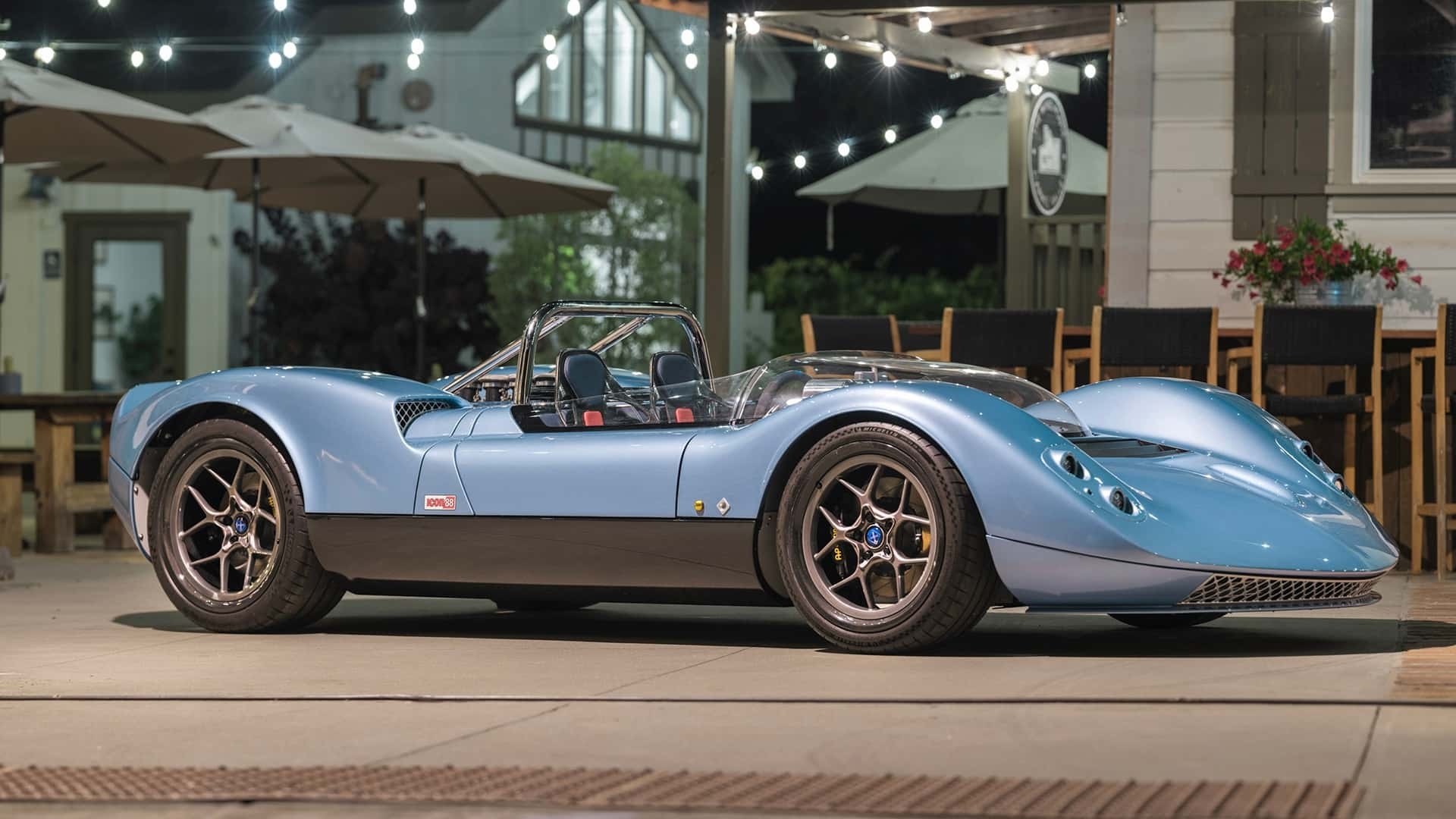
In a world dominated by technology and comfort, there are still companies looking to pay homage to real racing and legendary drivers like Ayrton Senna. During Monterey Car Week this year, hidden among the hypercars and avant-garde prototypes was a new custom-built British car with a Formula 1 pedigree: The Nichols N1A ICON 88. The name "Nichols" probably doesn't mean much to most, but it's deserving of our attention. The car was developed by Steve Nichols, the very engineer who designed the legendary McLaren MP4/4 driven by Ayrton Senna and Alain Prost during their dominant 1988 season. Technically, the N1A is a racing barchetta for the street. The chassis houses a 7.0-liter naturally aspirated V-8 engine, developed from a General Motors LS3 block, but completely revised with bespoke components: pistons, connecting rods, dry sump system, and electronic throttles. The result is 650 horsepower, unloaded to the rear wheels through an in-house-developed six-speed manual transmission. However, the most impressive figure is the weight: just 1,984 pounds thanks to a carbon-fiber body with graphene that's derived directly from Formula 1. This translates into a power-to-weight ratio of about 720-hp per ton, a figure worthy of a real racing car. 6 Source: Newspress In a world where technology and comfort often take center stage, there are a few companies that still pay tribute to pure racing heritage and icons like Ayrton Senna. At this year's Monterey Car Week, tucked between hypercars and cutting-edge prototypes, was one such homage: the Nichols N1A ICON 88—a custom-built British machine with deep Formula 1 roots. The name "Nichols" might not ring a bell for most, but it should. This car was created by Steve Nichols, the engineer behind the legendary McLaren MP4/4—the car that dominated the 1988 F1 season with Ayrton Senna and Alain Prost behind the wheel. Technically, the N1A is a street-legal racing barchetta. Under its lightweight chassis is a 7.0-liter naturally aspirated V-8, based on a GM LS3 block but heavily reworked with bespoke parts—including custom pistons, connecting rods, a dry sump system, and electronic throttle bodies. It cranks out 650 horsepower, all sent to the rear wheels through a bespoke six-speed manual gearbox. Photo by: Newspress Photo by: Newspress But the most jaw-dropping number? The weight: Just 1,984 pounds, thanks to a carbon-fiber body infused with graphene—straight from Formula 1 tech. That gives it a power-to-weight ratio of around 720 horsepower per ton. The N1A's aerodynamics were honed in the MIRA wind tunnel to strike the ideal balance between downforce and drag. Its suspension features a double-wishbone layout with racing-grade components, while braking is handled by motorsport-style multi-piston calipers. Michelin Pilot Sport Cup 2 tires wrap around 19-inch front and 20-inch rear wheels, giving it serious grip. The result? A completely analog, unfiltered driving experience built for those who want to feel every inch of the road. Electronic aids are kept to a bare minimum: traction control is standard, while ABS and power steering are available only as options. Inside, the cockpit takes clear inspiration from the McLaren MP4/4. There's a fully reclined driving position, a single seat, and a gearshift lever reminiscent of the one Ayrton Senna used. Analog gauges, machined aluminum controls, and premium leather trim create a focused, distraction-free environment—everything tailored to the driver. Photo by: Newspress The N1A is the debut model from Nichols Cars, a company founded in 2017 by Steve Nichols and CEO John Minett. Their mission is to build a pure, exhilarating sports car without aesthetic compromise—one that blends classic design cues with modern engineering precision. The N1A is directly inspired by the McLaren M1A, the brand's first iconic racing car from the 1960s. Nichols is launching the car under the 'ICON 88' banner, with the first 15 cars paying tribute to each of the 15 victories secured by the McLaren MP4/4 during the 1988 F1 season. It's a nod not just to Nichols' own engineering legacy, but to one of the most dominant eras in Formula 1 history. More From Monterey Car Week: The Meyers Manx LFG Is Part 911, Part Dune Buggy This Is the New Lexus Supercar Concept—And It Looks Spectacular Stay informed with our newsletter every weekday back Sign up For more information, read our Privacy Policy and Terms of Use . Share this Story Facebook X LinkedIn Flipboard Reddit WhatsApp E-Mail Got a tip for us? Email: tips@ Join the conversation ( )


Forbes
7 hours ago
- Forbes
Mercedes-AMG SL 63 S E Performance Adds F1 Power To An Iconic Roadster
The Mercedes-Benz SL roadster, a sleek, luxury-filled convertible, has been an icon of sporty luxury and the pinnacle of top-down driving since it made its debut in 1954. Over the years Mercedes-Benz has retooled the SL adding things like heated arm rests and all wheel drive to ensure the SL is capable and accommodating on all roads in all seasons. But for 2025 the Mercedes-AMG SL takes on a new distinction thanks to the company's F1 experience: electric boosted twin-turbo power that notches horsepower up to 805 and torque to 1,047, putting it solidly in hyper-car territory. Don't let the looks of this demure convertible fool you; it's a thrill. AMG-Only Production Adds To The Mystique Back in the day, Mercedes-Benz produced an SL for all luxury appetites, ranging from smaller powertrains to high performance. But for the current generation the company decided to focus on performance, offering four options produced by the house of AMG, the Affalterbach, Germany-based performance division of Mercedes-Benz. The starting point is the AMG SL 43 Roadster, a 4-cylinder turbo that generates 416 hp and starts at $112,000; the SL 55 increases power to 469 hp and the price to $145,000; the SL 63 Roadster generates 577 hp and is priced from $187,000. The F1-inflected, PHEV boosted SL 63 S E Performance starts at $207000; our test model, equipped with a nice set of upgrades, came in at $225,000, making it a true pinnacle of both luxury and sport driving. External Cues Let You Know This Mercedes-AMG Is A Powerful Machine The iterations of power and luxury are notable by each model name, of course, but the S E Performance gets a little extra panache: A red-backed 'S' badge that signifies its 805 hp and 2.8-second 0-60 MPH acceleration. The red-flecked badge is also seen on the side panels under the V8 Biturbo badge, yet another nod to the roadster's power. On the rear there's a retractable spoiler that deploys when the car hits a minimum speed and needs the downforce assistance, though a button on the control panel under the multimedia screen can deploy or retract it, too. Just under the wing is a small power port for charging. On the front end of the AMG SL 63 S E Performance conveys the luxury of Mercedes-Benz and its AMG Affalterbach heritage with a crest on the hood just above the Mercedes logo badge. The Many Performance Options Allow A Custom Experience The great thing about a performance PHEV is that you get to choose when and how to put the car's power to work: creep out of the neighborhood in silence in hybrid mode; the electric motor will deliver about eight miles of all-electric driving before the gas engine kicks in. Or, turn the drive mode dial on the steering wheel to Sport to crank up both the power and the sound. While owners can charge the Mercedes-AMG SL 63 S E Performance for maximum hybrid range, there's no real need to charge the roadster to ensure there's enough electric power to deliver all 805 hp. The system is designed to maintain a minimum amount of power and to regenerate its charge on its own while you drive. In our first test of its sister S E Performance, the AMG C 63, the battery nearly fully recharged on a day of driving through the mountains of Southern California. Manufaktur Options Increase the Luxury Quotient The luxury of the AMG SL 63 S E Performance starts with the soft-top convertible, a quickly-retracting top that can be operated even while driving. With the top down the cabin feels like chic and refined, not overly windy or loud. With the top up the outside world is hushed thanks to a nicely constructed soft top that dampens outside noise. The heated, cooled massaging quilted leather front seats add to the quiet luxury of the cabin. Buyers who want to really personalize their SL 63 can choose Manufaktur options, bespoke details that include a wider range of colors and trim details for a unique and personal style package. Our model came standard with some of the best Mercedes goodies: Burmester premium sound, 'Hey Mercedes' voice activation, Napa leather massage seats and 'air scarf,' a neck-level vent on the front seats that blows warm air on cold days. This is especially nice when the top is down. Not that the SL 63 S E Performance needed any extras to make it the most desirable SL; its F1 DNA and dynamic drive experience make it a true thrill, adding another dimension to its luxury heritage.
