


Latest news with #ECSS
Yahoo
 11-06-2025
- Health
- Yahoo
Magellan Healthcare Selected to Administer Louisiana's Early Childhood Supports and Services Program
FRISCO, Texas, June 11, 2025 /PRNewswire/ -- Magellan Health, Inc., a leader in behavioral health, announced today that its subsidiary, Magellan Healthcare, Inc., will serve as the state-wide contractor for the Louisiana Department of Health (LDH), Office of Behavioral Health (OBH) to manage the Early Childhood Supports and Services (ECSS) program. The ECSS program will go-live on July 1, 2025, and operate as a state-wide network of regionally based provider sites that will deliver comprehensive supports and services for children ages zero to five and their families. Services and supports available at each ECSS site will include infant and early childhood mental health treatment and resource navigation for the families of children ages zero to five. This includes the development of collaborative partnerships and coordination with local networks of governmental and non-governmental organizations, local stakeholders, community partnerships, and other collaborations that enhance health and address social determinants of health. "Mental health begins at birth, as our experiences begin to shape our lives. We are proud to partner with the state to ensure that Louisiana's youngest children will have access to services that will enhance well-being and better outcomes for children and families," said Dr. Caroline Carney, M.D., president of behavioral health and chief medical officer of Magellan Health. For questions or additional information about Early Childhood Supports and Services, visit or call 1-800-327-0205 (TTY 711), 24 hours a day, 7 days a week. About Magellan Health: Magellan Health, Inc. supports innovative ways of accessing better health through technology, while remaining focused on the critical personal relationships that are necessary to achieve a healthy, vibrant life. Magellan's customers include health plans and other managed care organizations, employers, labor unions, various military and governmental agencies and third-party administrators. For more information, visit View original content to download multimedia: SOURCE Magellan Health, Inc.

Al-Ahram Weekly
26-02-2025
- Politics
- Al-Ahram Weekly
Egyptian, Arab strategists address biased media narratives on Gaza war at Cairo conference - Foreign Affairs
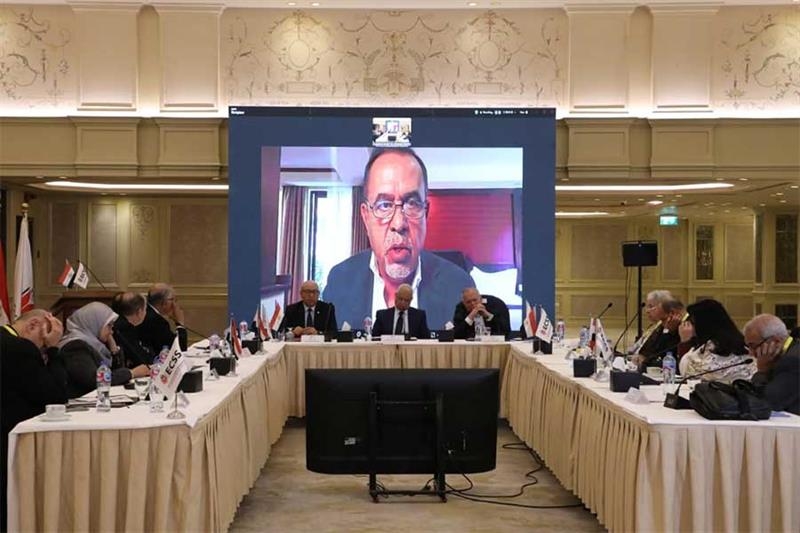
Prominent Egyptian and Arab strategists, politicians, and media experts addressed in a day-long conference titled "Gaza & the Future of Peace and Stability in the Middle East," held on Wednesday, the biased media narratives on the Israeli war on Gaza and the demographic impact of Palestinians' displacement. The conference, organised by the Egyptian Centre for Strategic Studies (ECSS) and the Egyptian Council for Foreign Affairs (ECFA), explored Arab-led counter-initiatives and reconstruction plans in response to US-Israeli proposals to displace Palestinians from Gaza. Western media's pro-Israel bias In the third session, "The US Stance on the Gaza War and its Regional Implications," Ezzat Ibrahim, Editor-in-Chief of Al-Ahram Weekly and Head of the ECSS Media and Human Rights Unit, pointed to a clear pro-Israel bias in Western media coverage. Speaking at a panel titled "US Media Bias in Covering the Gaza War: Analysing Key Biases in US Media and the Convergence of US and Israeli Right-Wing Narratives," Ibrahim argued that the Zionist lobby plays a significant role in shaping how the conflict is portrayed. "Since the war began, about 75 percent of articles have framed it as a fight between Hamas and Israel," he noted, pointing out that Israeli events receive far more media attention than the suffering in Gaza. "The conflict is being framed as a battle between two equal sides, with victimhood narratives exaggerated to justify the occupier's actions," he added, criticising the lack of scrutiny toward Israeli religious discourse. He explained how the media crafts a pro-Israel narrative—by labelling Palestinian attacks as "unjustified" to strip them of context and by downplaying or omitting reports on Israeli aggression. Ibrahim stressed the importance of engaging with major news outlets and using social media strategically to promote a more balanced portrayal of the Palestinian cause. Egypt's role in Gaza reconstruction During another panel, Abdel-Moneim Said, Member of the Egyptian Senate and Head of the ECSS Advisory Board, highlighted Egypt's deep experience in crisis management, calling it the key guarantor in any mediation efforts. Speaking at "The Evaluation of US Efforts in Reconstruction Projects as Part of the Peacebuilding Process," Said argued that the two-state solution must remain at the heart of all Arab and international peace efforts. "The US is the 'present absentee' in this crisis, yet it remains a key player in ceasefire agreements," he said, referencing its historical role in managing regional conflicts and ensuring commitments are upheld. The demographic impact of displacement In the fourth session, "Implications of Displacement and Resettlement Plans for Regional Security," Dr. Mohamed Megahed El-Zayat, Academic Adviser at the ECSS, outlined three competing political projects shaping the region. The first, he said, is Israel's push to displace Palestinians from Gaza and the West Bank while expanding further into Syria. The second is Turkey's ongoing efforts to alter Syria's demographics. The third is Iran's broader regional ambitions. Meanwhile, Dr Khaled Hanafi, an ECSS expert, described the Middle East as one of the world's hardest-hit regions by forced displacement, with one in three global cases occurring there. Speaking at "The Impact of Demographic Change on Crises in the Middle East," Hanafi explored how displacement fuels ethno-sectarian fragmentation across the region. Gulf security amid displacement plans In another session, "The Impact of Displacement and Resettlement on Security in the Gulf," Dr Hassan Abu Taleb, an ECSS Advisory Board Member, called forced displacement a war crime and stressed the need to focus on both its perpetrators and those enabling it. "The displacement crisis has major security implications for the Gulf," he warned, noting that the region's stability is directly tied to the global economy and international interests. Dr. Abdulaziz bin Othman bin Sager, Founder and Chairman of the Gulf Research Centre, reaffirmed Saudi Arabia's firm rejection of any plans to displace Palestinians, calling such actions a blatant violation of international law and Palestinian rights. "The Kingdom views the two-state solution as the only viable path forward," he said, emphasising Saudi Arabia's steadfast support for Palestinian rights and its opposition to any forced resettlement schemes. Held just days before the Cairo emergency Arab summit on Palestine, the event aims to counter US proposals for forced Palestinian displacement while showcasing successful regional and international post-conflict reconstruction efforts that protect native populations. Follow us on: Facebook Instagram Whatsapp Short link:
Al-Ahram Weekly
26-02-2025
- Politics
- Al-Ahram Weekly
Cairo conference on Gaza champions Egyptian, Arab rejection of any Palestinian displacement: Statement
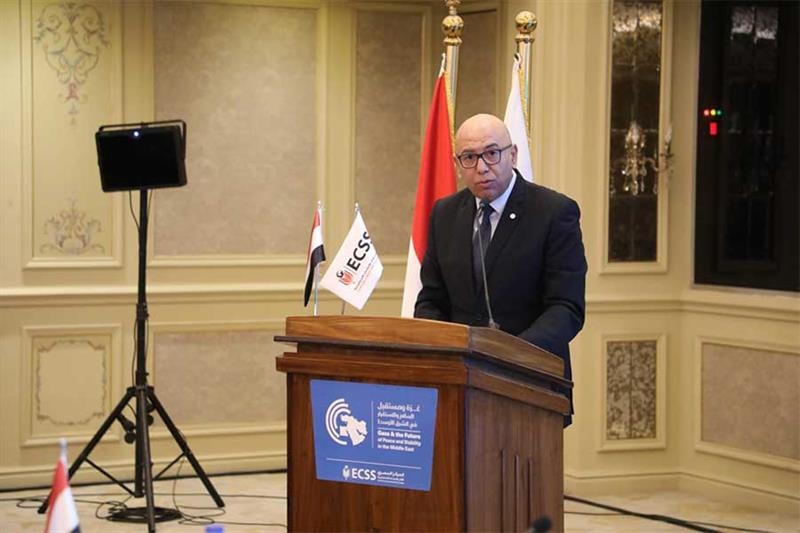
The Gaza & the Future of Peace and Stability in the Middle East Conference, co-sponsored by the Egyptian Center for Strategic Studies (ECSS) and the Egyptian Council for Foreign Affairs (ECFA) in Cairo, issued a final statement after a busy day of panel discussions that featured a broad spectrum of Egyptian and Arab strategic analysts, politicians, and media figures. The statement stressed that recent proposals to displace the Palestinian people from the Gaza Strip should not be viewed solely within the narrow scope of reconstructing Gaza but rather as part of broader attempts to liquidate the Palestinian cause - an approach that aligns with Israeli schemes pursued for over eight decades. The statement commended Cairo's firm political stance in rejecting all proposals and attempts to displace the Palestinian people from the Gaza Strip. It noted that Cairo views any attempts to displace the Palestinians to the Sinai Peninsula as a red line for the Egyptian state and society. The statement condemned floating displacement plans for trumpeting the right of the Palestinian people to self-determination. 'Such plans violate international norms and laws and constitute ethnic cleansing and a crime against humanity that must be prevented and opposed,' the statement read. "Those propagating such plans must be held accountable," it added. Applauding Egypt's plan for Gaza reconstruction The statement commended Egypt's ongoing efforts to formulate a comprehensive project for reconstructing the Gaza Strip without any displacement of the native population. It noted that the Egyptian vision for the reconstruction of the strip would be presented at the upcoming emergency Arab summit, called by Egypt at the request of the Palestinian Authority and set for 4 March in Cairo, to secure collective Arab support for the plan. The statement emphasized that post-war reconstruction and conflict resolution models in various regions worldwide have been based on returning refugees and displaced persons in the native population to their homes. It noted that reconstruction efforts are not fundamentally incompatible with the presence of the native population on their land. The statement praised the US' efforts in reaching the Gaza ceasefire deal between Israel and Hamas, which paused the 15-month Israeli genocidal war on the strip, while looking forward to a leading role for Washington in solidifying the agreement and pushing forward the Middle East peace process. Egypt, Jordan, and other Arab nations have rejected all recent US/Israeli proposals and schemes for the displacement of the Palestinian people from the Gaza Strip, while stressing that the two-state solution is the only guarantee for regional peace and security. Egypt has recently announced that the country possesses the will and capabilities to rebuild the Gaza Strip in three years. Follow us on: Facebook Instagram Whatsapp Short link:
Al-Ahram Weekly
26-02-2025
- Politics
- Al-Ahram Weekly
Trump 'craziest ever' proposal for Gaza will ‘die on its own': Thomas Friedman at Cairo conference on Gaza - Foreign Affairs
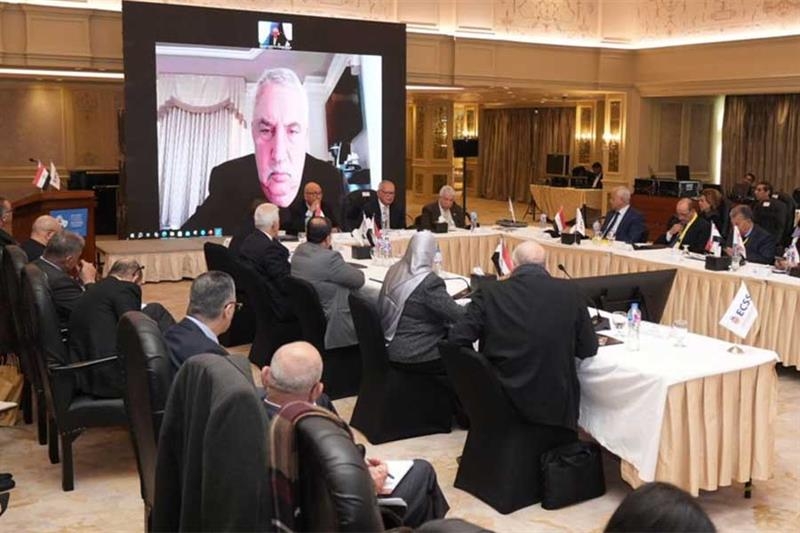
Renowned New York Times columnist Thomas Friedman described President Donald Trump's proposal to 'clean out' Gaza as the 'craziest ever' presented for the Arab-Israeli conflict, stressing that it will 'die on its own.' Friedman made these remarks on Wednesday in a speech before the "Gaza and the Future of Peace and Stability in the Middle East" conference in Cairo, which is organized by the Egyptian Centre for Strategic Studies (ECSS) and the Egyptian Council for Foreign Affairs (ECFA). During the conference's third session, "The US Stance on the Gaza War and Its Regional Implications," Friedman assessed the impact of Trump's Gaza proposal on Middle East peace prospects. He noted that realizing the recklessness of his proposal, Trump had already begun to backtrack. "Trump abandoned his relocation proposal after realizing its irrationality, but tensions remain," Friedman said. He criticized the proposal as "illogical," "impractical," and "unreasonable," emphasizing the crucial role of Arab states in Gaza's reconstruction and security. Earlier in February, Trump proposed that Washington take control of Gaza, forcibly displace its native Palestinian population, and build a "Middle East Riviera." Trump's proposal sparked a global outcry. The US president had cited Egypt, Jordan, and other Arab countries as possible destinations for the Palestinians. Egypt, Jordan, and other Arab nations, in return, immediately rejected the idea, which they perceived to be an unacceptable injustice that infringed on the historical and legitimate rights of the Palestinian people and threatened regional stability. Furthermore, Friedman predicted a "political conflict" between the US president and Israeli Prime Minister Benjamin Netanyahu. "There will be a political conflict between Trump and Netanyahu, as US interests rely on preventing China's expansion in the Middle East and establishing a broad alliance network stretching from East Asia through India to Saudi Arabia, Egypt, Jordan, Israel, and Europe," he said. Friedman reaffirmed his support for the two-state solution, warning that the alternative, "no state," would be "disastrous." He also stressed that preparations for a Palestinian state should involve a Palestinian constitution and institutional reforms, a halt to Israeli settlements in the West Bank, and reduced pressure on Palestinians. In addition, he warned that Trump's insistence on pushing through his proposals would "destabilize Egypt and Jordan," contradict US regional interests, and, therefore, trigger a "diplomatic rift". "With the Middle East serving as ground zero for failed states, Egypt's resilience and strength stand out as an increasingly rare and vital force in the region," Friedman concluded. The conference kicked off earlier on Wednesday to dismantle and refute the American vision of forcibly displacing Palestinians from Gaza. It also highlights regional and international experiences in post-conflict reconstruction without displacing populations. Egypt is preparing a comprehensive plan for the reconstruction of the heavily devastated Gaza Strip without displacing the Palestinians. The plan will be presented on 4 March at the Cairo Emergency Arab Summit. Follow us on: Facebook Instagram Whatsapp Short link:
Al-Ahram Weekly
26-02-2025
- Politics
- Al-Ahram Weekly
History illustrates population displacement exacerbate conflicts: Speakers at Cairo conference on Gaza - Foreign Affairs
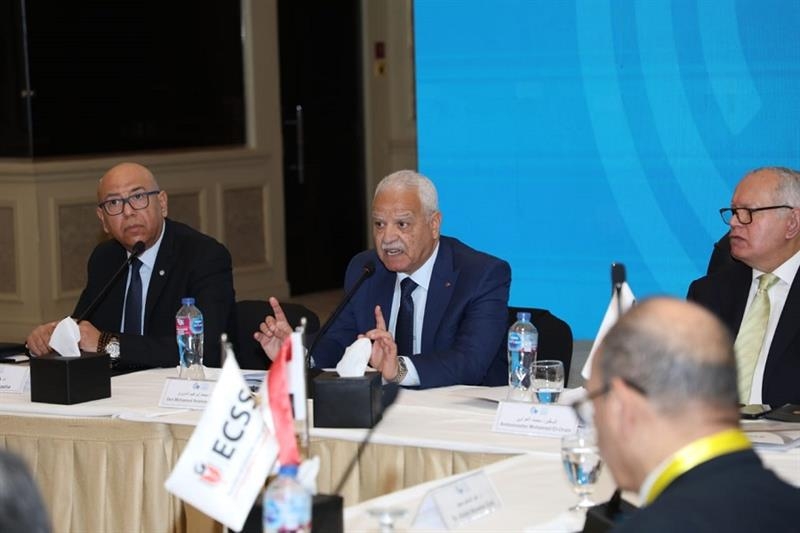
Speakers at the "Gaza and Future of Peace and Stability in the Middle East" Conference in Egypt emphasized that the history of Africa, Europe, Asia, and the Middle East illustrates how populations' displacement from their original lands exacerbates conflicts and expands them to broader arenas. The second session of the conference, organized by the Egyptian Center For Strategic Studies (ECSS), showed how all successful post-World War II reconstruction efforts have prioritized the security of local populations and the development of their homelands. 'In the case of Gaza and the West Bank, there seems to be no distinction between forced displacement and so-called voluntary migration, as both lead to depopulation and loss of homeland,' the session highlighted. Speakers also underscored that US and Israeli projects to displace Palestinians from their land date back to the founding of Israel, describing them as a longstanding Zionist concept. This concept is centred on the return of Jews to their "promised land," Israel, and the expulsion of Palestinians from their homeland. Nakba: An ongoing catastrophe In his speech, Sobhi Essaila, head of the Public Opinion Programme at ECSS, stated that displacement lies at the core of the Palestinian cause. 'No Zionist-Israeli project can exist without the uprooting of Palestinians from their land,' he expressed. Essaila emphasized that the forced displacement of Palestinians has been a fundamental target since the inception of the Zionist project, with over one million Palestinians displaced in 1948 and another half a million in 1967. These efforts continue today through discriminatory policies and laws, he continued. 'The 1948 Nakba was not merely a historical event but an ongoing catastrophe. Israel continues to displace Palestinians and deny them the right of return through killings and racist legislations, worsened by international support for resettlement projects outside Palestine,' Essaila stated. He further stressed Egypt's unshakable stance, rejecting numerous displacement schemes that targeted the Palestinian people throughout the decades. Palestinians will not allow a new Nakba Additionally, Professor of Political Science Jihad Al-Harazin said Palestinians will not allow a new Nakba after over 70 years of suffering since the first Nakba in 1948. He emphasized that Israel seeks to turn the Palestinian cause into a demographic issue as part of a long-term strategy that aims at Israeli demographic dominance at the expense of the Palestinian population. 'Palestinians reject any resolution to their cause that comes at the expense of Arab nations and grants Israel a free pass for expansion at the cost of the Palestinian people and the region,' Al-Harazin added. He also called for a unified Palestinian vision aligned with Egyptian and Arab efforts to reaffirm that the Palestine Liberation Organization (PLO) remains the sole legitimate representative of the Palestinian people, as recognized regionally and internationally. Re-engineering of the Middle East Director General of Al-Quds Centre for Political Studies Oraib Al Rantawi highlighted in his speech the Jordanian perspective on the risks of Palestinian displacement. 'Displacement is not just an attempt to liquidate the Palestinian cause; it is a prelude to the re-engineering of the Middle East,' Al Rantawi noted. He added that although the Arab stance is commendable, it remains insufficient. The Abraham Accords and the consequences of implementing the displacement plan must be balanced. Moreover, Al Rantawi said the displacement project poses an existential threat to Jordan's identity, society, state, and future. 'Jordan firmly rejects displacement and considers it a direct threat to its security and stability, especially given the presence of millions of Palestinians on its territory. This stance aligns with Egypt's position, which serves as a barrier against any attempts to implement the displacement plan, whether from Gaza or the West Bank,' Al Rantawi asserted. He described what is happening in Gaza as merely a trial for a larger displacement scheme in the West Bank. Forced deportation of Palestinians equals the liquidation of the Palestinian cause, Al Rantawi affirmed. "Despite the Palestinian and Arab resilience which has pushed the displacement plan back, particularly from Jordan and Egypt, the idea has not been entirely eliminated. It can be awaiting new circumstances to revive it. Thus, continued Arab vigilance and coordination to safeguard Palestinian rights is a must," he said. Gaza depopulation serves as a "test run," which, if successful, would pave the way for a much more dangerous and far-reaching displacement from the West Bank, especially given that nearly 700,000 Palestinians in the West Bank hold Jordanian documents, he noted. Displacement impact on Egypt-Israel Peace Treaty Any attempt to displace Palestinians into Egyptian territories would violate the Egypt-Israel Peace Treaty and put regional peace at risk, ECSS Deputy General Manager Mohamed Ibrahim Eldawiry said in his speech. He added that confronting these 'dubious schemes' and preventing them from becoming a reality is crucial, as they would only lead to further catastrophes and the dismantling of the Palestinian cause. 'Egypt's clear stance since the beginning of the Gaza war has been a fundamental barrier against the implementation of displacement schemes. Cairo has drawn a firm red line against any attempt to liquidate the Palestinian cause, closing all avenues that would make Sinai part of such schemes,' Eldawiry stated. Egypt has not only rejected displacement but also worked on a plan to rebuild Gaza without displacing its people or endangering the Palestinian cause, he stressed. He clarified that this plan will be presented in full at the 4 March emergency Arab summit, marking a critical step in addressing both Gaza's humanitarian disaster and the Palestinian cause. "The Arab region is facing one of its most difficult times in modern history," he said. 'What is happening in Gaza does not endanger it or the Palestinian cause alone — it has broader and direct implications on Egyptian and Arab national security,' he affirmed. Eldawiry further emphasized that eliminating the Palestinian cause is the ultimate goal of Israeli displacement plans, whether in the past or now, a stance evident in Israel's longstanding rejection of any political solution, especially the two-state solution. European settler-colonial model Palestinians in Gaza and the West Bank are not merely fighting for liberation but for survival, Executive Director of the Egyptian Council for Foreign Affairs Ezzat Saad said. 'The conflict in Gaza and the West Bank mirrors the European settler-colonial model of the early 19th century, which sought to eliminate indigenous populations,' Ambassador Saad said. He also stressed that the 7 October events have been exploited as a pretext to complete what the Zionist movement failed to achieve in the 1948 Nakba. He added that Egypt's approach to the Palestinian cause has focused on three key pillars: an immediate ceasefire, ensuring humanitarian aid flow to Gaza, and preventing forced displacement of Palestinians. In addition, Saad asserted that the upcoming emergency Arab summit must strongly support South Africa's stance in the International Court of Justice regarding Palestine and stress Arab countries' appreciation for this position. Follow us on: Facebook Instagram Whatsapp Short link:
