


Latest news with #PoconoMountains

Daily Mail
 23-07-2025
- Daily Mail
Inside rural Pennsylvania where Bryan Kohberger became a killer
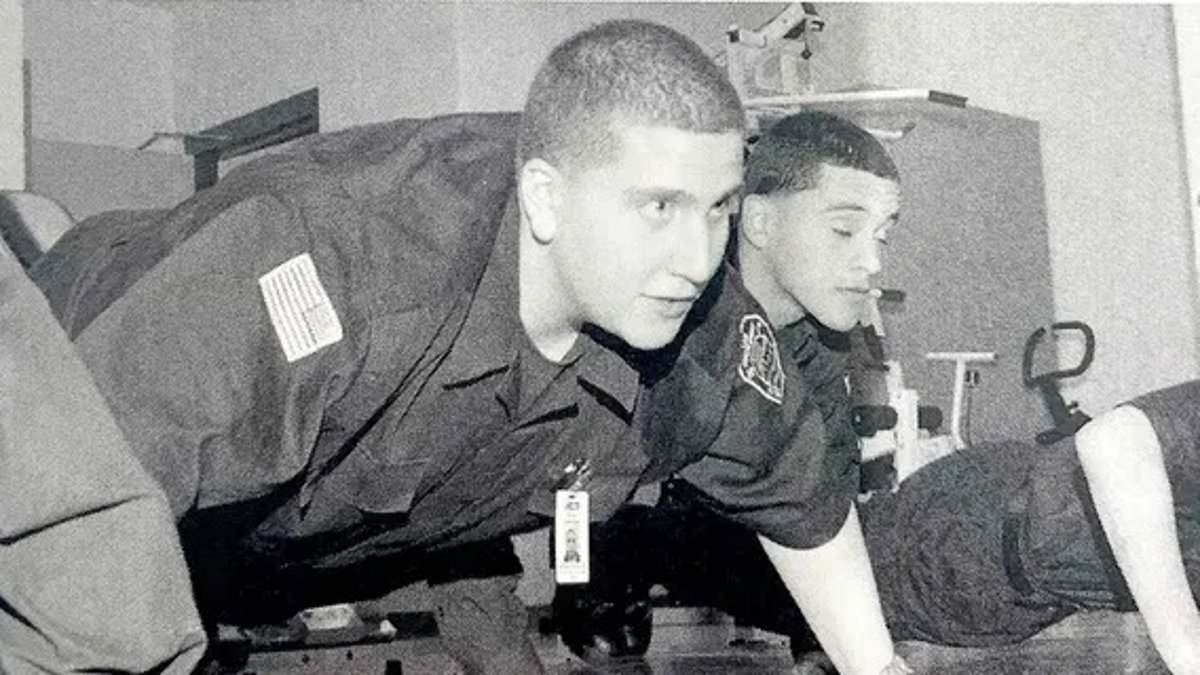
Carolyn Dale happened to glance outside when she noticed something unusual unfolding in front of her home. It was late on December 29, 2022, in Indian Mountain Lake - a quiet, gated community nestled in the Pocono Mountains of Pennsylvania. In the darkness, she saw police cars lining the road with their lights out. Curious, Dale asked her husband to check what was going on. He was quickly ushered back into the house. 'Then all this [expletive] happened,' Dale told the Daily Mail from her front porch. Moments later, a Pennsylvania State Police SWAT team set off flash-bangs and broke down the windows and doors of a two-story home a few houses down. Inside, 28-year-old Bryan Kohberger was surrounded by officers with guns drawn. The tranquility of the neighborhood, where residents largely kept to themselves, had suddenly been shattered by the murders of four students 2,500 miles away in Moscow, Idaho. Six weeks earlier, on November 13, 2022, Kohberger broke into an off-campus University of Idaho home and slaughtered best friends Kaylee Goncalves and Madison Mogen, both 21, and couple Xana Kernodle and Ethan Chapin, both 20. While Moscow locals had feared that the killer was still among them, the people of Albrightsville were celebrating - unaware that he was already back home in their own community. No one there could have predicted the murders that hit headlines nationwide would lead back to their own doorsteps. Now, more than two-and-a-half years on, the broken glass and debris from the raid that dramatic night have long been cleared up. But the memories - and gossip - remain. When the Daily Mail spoke to neighbors and workers inside the community on a quiet, sweltering afternoon in late June, few wanted to speak about that gruesome day or the local man who committed the crime. One worker, who declined to give his name, said he had never believed that Kohberger could be guilty, saying that he was 'too calm' and speaking sympathetically of his 'suffering' parents Michael and MaryAnn. He claimed that Kohberger's 70-year-old father had told him only recently that he just wanted 'to know the truth'. He would not have to wait long. That afternoon, the Kohberger home was silent, except for the sound of a dog barking at the doorbell. Michael and MaryAnn were perhaps already en route to Idaho, given that it had emerged their son was finally going to own up to his crimes. Less than 48 hours later, on July 2, 2025, they sat in the Ada County Courthouse in Boise, their faces ashen, as they watched their only son change his plea to guilty. As part of the deal, Kohberger avoided the death penalty but will spend the rest of his life in prison without the possibility of parole, and has waived all rights to appeal. For his family, the question lingers: how did their youngest child grow up to become a mass murderer ? They are not the only ones. The Daily Mail spoke to several people from his community about their memories of Kohberger, now 30. They paint a picture of a socially awkward, quiet child and teenager who struggled with weight, addictions and interactions with others - but whose interest in crime and law enforcement grew more intense with age. But, while troubled, those who knew him said there was nothing particularly remarkable about his past life or any major red flags to indicate what was to come. Before the family moved to the private community in Albrightsville, Kohberger lived in Effort, a peaceful area of the Poconos with low crime and above-average incomes. His parents worked for the local Pleasant Valley School District, Michael as a maintenance worker and MaryAnn a special needs paraprofessional. Kohberger grew up with his older sisters, Amanda and Melissa, in a two-story home surrounded by trees and grazing deer. Natori Green, 29, who lived four houses down and was in Kohberger's year at school remembers riding the same bus from 4th grade through high school. In elementary school, she told the Daily Mail, he would sit alone at the front. 'He was very sunk into himself until around middle or high school when he began to socialize a bit more,' she said, adding that there was nothing 'off-putting' about the way he interacted with other children. At school, Kohberger was bullied over his weight and Green recalled noticing an 'unrecognizable' change in his appearance during his teens. High school yearbook photos show a drastic transformation between sophomore and senior years. By that point, Kohberger had begun boxing almost daily after school. Jesse Harris, known as 'Coach' to the kids he trained, recalled Michael Kohberger bringing his son to the boxing gym around the age of 15. Over the years, Harris has seen many troubled kids and worried parents come through his doors. While Kohberger was not the most outgoing, sociable teen - and it was obvious that Michael was seeking help in handling him - Harris said nothing alarming stood out at the time. '[Michael] was having some discipline issues with him, and he was overweight, so he had a lack of confidence,' Harris told the Daily Mail. 'His dad needed support guiding him.' It was around this time, between 2009 and 2012, that Kohberger began posting in an online forum about anxiety, depression, [self-murder] thoughts, a 'lack of emotion or remorse' and a condition called 'visual snow' - in which a person sees static-like interference. 'I feel like an organic sack of meat with no self worth,' he wrote in 2011, aged 16. 'As I hug my family, I look into their faces, I see nothing, it is like I am looking at a video game, but less.' Over time, Kohberger's posts became more optimistic. At the gym, he gained confidence and trained more with others. 'I saw a little change in his personality when he lost the weight,' Harris said. He was proud of himself.' Friends told the Idaho Statesman that he developed a severe eating disorder, resulting in hospitalization, and underwent a tummy tuck after losing half his body weight. He also became a strict vegan. But more troubling than his weight issues was his drug use. Kohberger developed a heroin addiction, reportedly stealing from his family to feed the habit. In 2014, his father, Michael, called police after Kohberger, then 19, stole and sold his sister's $400 cell phone to buy drugs, according to court records seen by ABC News. Local Veteran Mark Baylis said that Kohberger was friends with his son Jack and nephew Brandon and the three boys used to hang out at his home in rural Saylorsburg. Starting in 2013, there were several break-ins at his home, he told the Daily Mail. 'Somebody was coming into my house when nobody was home and taking weird things,' he said, including military gear, coins, jewelry and knives similar to the one used years later to murder the students in Idaho. It was only after Kohberger's arrest that Baylis connected the dots. 'Now I know who it was,' he said. Opioid addiction was widespread in the area. Driving from Stroudsburg to Albrightsville, billboards advertise websites to help tackle the fentanyl crisis, and safe needle disposal bins are installed in restrooms of local coffee shops. 'It's sad because a lot of people within our school year were affected by drugs,' Green said. 'Some passed away or went through very traumatic experiences that have set them back in life.' One of Kohberger's closest friends, Jeremy Saba, died of a fentanyl overdose in March 2021 - a year before the murders. The Kohbergers tried to help their troubled son with his addiction, including several stints in rehab. Eventually, after years of drug abuse, it seems that he turned his attention to education. During high school, he had shown an interest in a police or military career - taking part in a law enforcement program at the Monroe Career & Technical Institute. In an early, troubling glimpse into his behavior toward women, he was kicked out of the program following complaints from female students, former school administrator Tanya Carmella-Beers told 'The Idaho Massacre' podcast. So when Kohberger returned to his studies, he focused on criminology. He graduated from Northampton Community College with a major in psychology in 2018, then earned a bachelor's degree and a Master's in criminal justice at DeSales University. He worked part time as a security officer for Pleasant Valley School District while he studied. Josh Ferraro, a fellow student at DeSales , told the Daily Mail that Kohberger very much kept to himself. Ferraro teamed up with him on many projects, including one involving testing for DNA on objects including a keyboard, keys and a student ID. He said he found Kohberger a 'pleasure to work with' but reluctant to get to know his classmates. He would speak to his professors but not his peers, Ferraro said. 'The only times we ever really hung out were for school. It was never personal. I never really got to know him,' he said. Ferraro said he sometimes invited Kohberger to college parties but he always declined. One other thing that he noticed was Kohberger always wore long sleeves, no matter the weather. 'I'll never forget it because I was like: 'Man, it's hot', and this dude's always in a leather jacket or a long-sleeve button-down. That was odd, so I always kept a mental note of it,' he said. He had no idea about his quiet classmate's past drug abuse. But, at the time, Kohberger's social awkwardness was not unusual. After all, he was a 'commuter' - living at home with his parents, and traveling to and from college, rather than living on campus. Fellow classmate Brittany Slaven described him as 'shy' with students but very confident when it came to the subject matter in class room. Slaven found him smart and educated and admitted to once copying his test paper. 'He came across as a normal student. He was interested in the coursework and, maybe looking back, more interested than most students but, then again, that was our curriculum,' she said. 'I never got any red flags, nothing really stood out about him. He was just another student. But now I look back, it's so scary to think about.' As part of the program, students were taught by serial killer expert Dr Katherine Ramsland. They analyzed crime scenes, learned investigative techniques and studied the criminal minds of prolific killers including Ted Bundy and Elliot Rodger. Some classmates now wonder if the coursework might have inspired Kohberger to carry out his own crimes. It was after graduating from DeSales in 2022 that Kohberger enrolled at Washington State University - a decision that saw him move to Pullman, just 10 miles from Moscow. When he formulated his plot to kill, what his motive was and how and why he chose his victims only he knows. During his six-months in Washington, Kohberger's professional performance was dismal, his behavior towards female students was concerning and he was ultimately fired as a teaching assistant at the end of the semester, sources told the Daily Mail. On December 30, 2022, he was arrested. In the Effort neighborhood where he grew up, Green said she felt 'ambushed' by the news that she had gone to school with the killer. 'When it's someone in your backyard, it makes it a reality for you,' she said. But, while she was shocked, she said others who grew up in the area were not. 'A lot of people were alarmed, and then there were a lot of people that weren't,' Green said. 'It was 50-50.' Kohberger returns to court in Ada County, Idaho, on July 23 for sentencing, when the victims' families are expected to deliver impact statements at the hearing. He faces four consecutive life terms without the possibility of parole. As part of the plea agreement, he has waived all rights to appeal.
Daily Mail
23-07-2025
- Daily Mail
Inside rural Pennsylvania where a socially awkward kid grew up to become mass killer Bryan Kohberger
Carolyn Dale happened to glance outside when she noticed something unusual unfolding in front of her home. It was late on December 29, 2022, in Indian Mountain Lake - a quiet, gated community nestled in the Pocono Mountains of Pennsylvania. In the darkness, she saw police cars lining the road with their lights out. Curious, Dale asked her husband to check what was going on. He was quickly ushered back into the house. 'Then all this s*** happened,' Dale told the Daily Mail from her front porch. Moments later, a Pennsylvania State Police SWAT team set off flash-bangs and broke down the windows and doors of a two-story home a few houses down. Inside, 28-year-old Bryan Kohberger was surrounded by officers with guns drawn. The tranquility of the neighborhood, where residents largely kept to themselves, had suddenly been shattered by the murders of four students 2,500 miles away in Moscow, Idaho. Six weeks earlier, on November 13, 2022, Kohberger broke into an off-campus University of Idaho home and slaughtered best friends Kaylee Goncalves and Madison Mogen, both 21, and couple Xana Kernodle and Ethan Chapin, both 20. While Moscow locals had feared that the killer was still among them, the people of Albrightsville were celebrating - unaware that he was already back home in their own community. No one there could have predicted the murders that hit headlines nationwide would lead back to their own doorsteps. Now, more than two-and-a-half years on, the broken glass and debris from the raid that dramatic night have long been cleared up. But the memories - and gossip - remain. When the Daily Mail spoke to neighbors and workers inside the community on a quiet, sweltering afternoon in late June, few wanted to speak about that gruesome day or the local man who committed the crime. One worker, who declined to give his name, said he had never believed that Kohberger could be guilty, saying that he was 'too calm' and speaking sympathetically of his 'suffering' parents Michael and MaryAnn. He claimed that Kohberger's 70-year-old father had told him only recently that he just wanted 'to know the truth'. He would not have to wait long. That afternoon, the Kohberger home was silent, except for the sound of a dog barking at the doorbell. Michael and MaryAnn were perhaps already en route to Idaho, given that it had emerged their son was finally going to own up to his crimes. Less than 48 hours later, on July 2, 2025, they sat in the Ada County Courthouse in Boise, their faces ashen, as they watched their only son change his plea to guilty. As part of the deal, Kohberger avoided the death penalty but will spend the rest of his life in prison without the possibility of parole, and has waived all rights to appeal. For his family, the question lingers: how did their youngest child grow up to become a mass murderer? They are not the only ones. The Daily Mail spoke to several people from his community about their memories of Kohberger, now 30. They paint a picture of a socially awkward, quiet child and teenager who struggled with weight, addictions and interactions with others - but whose interest in crime and law enforcement grew more intense with age. But, while troubled, those who knew him said there was nothing particularly remarkable about his past life or any major red flags to indicate what was to come. Before the family moved to the private community in Albrightsville, Kohberger lived in Effort, a peaceful area of the Poconos with low crime and above-average incomes. His parents worked for the local Pleasant Valley School District, Michael as a maintenance worker and MaryAnn a special needs paraprofessional. Kohberger grew up with his older sisters, Amanda and Melissa, in a two-story home surrounded by trees and grazing deer. Natori Green, 29, who lived four houses down and was in Kohberger's year at school remembers riding the same bus from 4th grade through high school. In elementary school, she told the Daily Mail, he would sit alone at the front. 'He was very sunk into himself until around middle or high school when he began to socialize a bit more,' she said, adding that there was nothing 'off-putting' about the way he interacted with other children. At school, Kohberger was bullied over his weight and Green recalled noticing an 'unrecognizable' change in his appearance during his teens. High school yearbook photos show a drastic transformation between sophomore and senior years. By that point, Kohberger had begun boxing almost daily after school. Jesse Harris, known as 'Coach' to the kids he trained, recalled Michael Kohberger bringing his son to the boxing gym around the age of 15. Over the years, Harris has seen many troubled kids and worried parents come through his doors. While Kohberger was not the most outgoing, sociable teen - and it was obvious that Michael was seeking help in handling him - Harris said nothing alarming stood out at the time. '[Michael] was having some discipline issues with him, and he was overweight, so he had a lack of confidence,' Harris told the Daily Mail. 'His dad needed support guiding him.' It was around this time, between 2009 and 2012, that Kohberger began posting in an online forum about anxiety, depression, suicidal thoughts, a 'lack of emotion or remorse' and a condition called 'visual snow' - in which a person sees static-like interference. 'I feel like an organic sack of meat with no self worth,' he wrote in 2011, aged 16. 'As I hug my family, I look into their faces, I see nothing, it is like I am looking at a video game, but less.' Over time, Kohberger's posts became more optimistic. At the gym, he gained confidence and trained more with others. 'I saw a little change in his personality when he lost the weight,' Harris said. He was proud of himself.' Friends told the Idaho Statesman that he developed a severe eating disorder, resulting in hospitalization, and underwent a tummy tuck after losing half his body weight. He also became a strict vegan. But more troubling than his weight issues was his drug use. Kohberger developed a heroin addiction, reportedly stealing from his family to feed the habit. In 2014, his father, Michael, called police after Kohberger, then 19, stole and sold his sister's $400 cell phone to buy drugs, according to court records seen by ABC News. Local Veteran Mark Baylis said that Kohberger was friends with his son Jack and nephew Brandon and the three boys used to hang out at his home in rural Saylorsburg. Starting in 2013, there were several break-ins at his home, he told the Daily Mail. 'Somebody was coming into my house when nobody was home and taking weird things,' he said, including military gear, coins, jewelry and knives similar to the one used years later to murder the students in Idaho. It was only after Kohberger's arrest that Baylis connected the dots. 'Now I know who it was,' he said. Opioid addiction was widespread in the area. Driving from Stroudsburg to Albrightsville, billboards advertise websites to help tackle the fentanyl crisis, and safe needle disposal bins are installed in restrooms of local coffee shops. 'It's sad because a lot of people within our school year were affected by drugs,' Green said. 'Some passed away or went through very traumatic experiences that have set them back in life.' One of Kohberger's closest friends, Jeremy Saba, died of a fentanyl overdose in March 2021 - a year before the murders. The Kohbergers tried to help their troubled son with his addiction, including several stints in rehab. Eventually, after years of drug abuse, it seems that he turned his attention to education. During high school, he had shown an interest in a police or military career - taking part in a law enforcement program at the Monroe Career & Technical Institute. In an early, troubling glimpse into his behavior toward women, he was kicked out of the program following complaints from female students, former school administrator Tanya Carmella-Beers told 'The Idaho Massacre' podcast. So when Kohberger returned to his studies, he focused on criminology. He graduated from Northampton Community College with a major in psychology in 2018, then earned a bachelor's degree and a Master's in criminal justice at DeSales University. He worked part time as a security officer for Pleasant Valley School District while he studied. Josh Ferraro, a fellow student at DeSales, told the Daily Mail that Kohberger very much kept to himself. Ferraro teamed up with him on many projects, including one involving testing for DNA on objects including a keyboard, keys and a student ID. He said he found Kohberger a 'pleasure to work with' but reluctant to get to know his classmates. He would speak to his professors but not his peers, Ferraro said. 'The only times we ever really hung out were for school. It was never personal. I never really got to know him,' he said. Ferraro said he sometimes invited Kohberger to college parties but he always declined. One other thing that he noticed was Kohberger always wore long sleeves, no matter the weather. 'I'll never forget it because I was like: 'Man, it's hot', and this dude's always in a leather jacket or a long-sleeve button-down. That was odd, so I always kept a mental note of it,' he said. He had no idea about his quiet classmate's past drug abuse. But, at the time, Kohberger's social awkwardness was not unusual. After all, he was a 'commuter' - living at home with his parents, and traveling to and from college, rather than living on campus. Fellow classmate Brittany Slaven described him as 'shy' with students but very confident when it came to the subject matter in class room. Slaven found him smart and educated and admitted to once copying his test paper. 'He came across as a normal student. He was interested in the coursework and, maybe looking back, more interested than most students but, then again, that was our curriculum,' she said. 'I never got any red flags, nothing really stood out about him. He was just another student. But now I look back, it's so scary to think about.' As part of the program, students were taught by serial killer expert Dr Katherine Ramsland. They analyzed crime scenes, learned investigative techniques and studied the criminal minds of prolific killers including Ted Bundy and Elliot Rodger. Some classmates now wonder if the coursework might have inspired Kohberger to carry out his own crimes. It was after graduating from DeSales in 2022 that Kohberger enrolled at Washington State University - a decision that saw him move to Pullman, just 10 miles from Moscow. When he formulated his plot to kill, what his motive was and how and why he chose his victims only he knows. During his six-months in Washington, Kohberger's professional performance was dismal, his behavior towards female students was concerning and he was ultimately fired as a teaching assistant at the end of the semester, sources told the Daily Mail. On December 30, 2022, he was arrested. In the Effort neighborhood where he grew up, Green said she felt 'ambushed' by the news that she had gone to school with the killer. 'When it's someone in your backyard, it makes it a reality for you,' she said. But, while she was shocked, she said others who grew up in the area were not. 'A lot of people were alarmed, and then there were a lot of people that weren't,' Green said. 'It was 50-50.' Kohberger returns to court in Ada County, Idaho, on July 23 for sentencing, when the victims' families are expected to deliver impact statements at the hearing. He faces four consecutive life terms without the possibility of parole. As part of the plea agreement, he has waived all rights to appeal.
Yahoo
10-07-2025
- Yahoo
A new kind of trail for the Poconos: PMVB launches Pocono History & Art Trail
You may know the Poconos for the mountain views and weekend escapes, but beneath the scenic charm is a treasure of untold stories. Now a new trail is flipping the script, and this one doesn't require hiking boots. Now you can travel through time with your phone in hand thanks to the Pocono History & Art Trail, a free self-guided journey launched by the Pocono Mountains Visitors Bureau (PMVB). According to Chris Barrett, president and CEO of PMVB, the trail showcases the region's rich and overlooked contributions to American history. Barrett said the idea grew from the success of the region's beverage trail, which features local brewers and distillers across the Pocono counties. 'One of the things we kept talking about was the historic side of the Poconos,' he said. 'So we thought why not try the same concept with our historical attractions?' With the Pocono History & Art Trail, Barrett said, visitors and locals alike can uncover fascinating stories from America's past. From the Asa Packer Mansion Museum in Jim Thorpe to the Wayne County Historical Society in Honesdale, each stop offers insight into the people and events that shaped the region and the nation. 'The Pocono Mountains is home to some of the most interesting stories of the past that everyone who lives here or visits should experience,' Barrett said. He said that while the region is often thought of as a recreational hot spot, it holds deep roots in American history. 'People realize that Pennsylvania is rich in history, but they don't always think about the Poconos that way,' Barrett said. 'Yet some of the richest men in America lived here during the Civil War. The name 'Pocono' itself comes from a Native American word meaning 'the stream that runs through two mountains.' There's so much beneath the surface.' Barrett said accessing the trail is easy. Just sign up at to receive the free mobile passport, which includes exclusive audio clips that bring the stories to life. Then, check off stops at your own pace — no reservations required, just curiosity. 'This is our way of telling the full story of the Poconos,' Barrett said. 'It celebrates who we are, where we came from, and how this region helped shape American history.' So, if you're ready to take a break from the usual and discover the roots beneath the recreation, this trail is for you. Emmanuella Pierre is the trending and breaking news reporter at the Pocono Record. Reach her at epierre@ This article originally appeared on Pocono Record: Explore Pocono History & Art Trail with mobile passport, audio clips
Yahoo
20-06-2025
- Automotive
- Yahoo
2025 NASCAR at Pocono Raceway: How to watch The Great American Getaway 400, full race schedule and more
If you buy something through a link in this article, we may earn commission. Pricing and availability are subject to change. Pocono Raceway, a.k.a. "The Tricky Triangle", will host the 19th race of the 2025 NASCAR Cup Series. The Great American Getaway 400 will take place this Sunday afternoon in the Pocono Mountains of Pennsylvania. Will 2024 Pocono Raceway winner Ryan Blaney redeem himself after a 14th place finish last week? Will Mexico City winner Shane van Gisbergen pull off his second win in a row? The race this weekend will air exclusively on Prime Video (this is the final race to stream on Prime this season), but you can also catch practices and qualifying races all weekend long on the CW, FS1, and FS2. Here's everything you need to know about this weekend's schedule, including how to watch the NASCAR's The Great American Getaway 400, a rundown of the rest of this weekend's races, and more. How to watch NASCAR The Great American Getaway 400: Date: Sunday, June 22, 2025 Advertisement Time: 2 p.m. ET Location: Pocono Raceway, Long Pond, PA Streaming: Prime Video What channel is NASCAR's The Great American Getaway 400 on? The Great American Getaway 400, as well as the Cup Series Practice and Qualifying race will stream exclusively on Prime Video. An alternate driver-cam will also be available to stream live on Max. Additional Xfinity Series and Truck Series coverage this weekend will air on the CW, FS1 and FS2. Where to stream NASCAR Races at Pocono Raceway: The CW, FS1 and FS2 are available on streaming platforms like DirecTV, Fubo and Sling. But you will need access to Amazon Prime Video to watch this weekend's main event, the Great American Getaway 400, on Sunday. A complete viewing schedule of every race this weekend and how to watch them live is below. Watch select NASCAR races on the CW, FS1 and more Fubo TV Fubo TV gives you access to the CW, FS1 and 100+ more live channels. Starting at $85/month, the live TV streaming service is definitely a big investment for sports fans but it's one of the most comprehensive ways to catch events like NASCAR all year-round, and still leaves you with major savings compared to a traditional cable package. Fubo subscribers also get unlimited cloud DVR storage. Right now you can get $20 off your first month of any Fubo tier. And you can try all this free, too! Try free at Fubo NASCAR Pocono Raceway weekend schedule: Here's the schedule of races at Pocono Raceway this weekend. (All times Eastern.) Friday, June 20 12:35 p.m.: Truck Series Practice (FS2) 1:40 p.m.: Truck Series Qualifying (FS2) 5:00 p.m.: Truck Series Race - MillerTech Battery 200 (FS1) Saturday, June 21 10:00 a.m.: Xfinity Series Practice (The CW App) 11:05 a.m.: Xfinity Series Qualifying (The CW App) 12:35 p.m.: Cup Series Practice (Prime Video) 1:45 p.m.: Cup Series Qualifying (Prime Video) 3:30 p.m.: Xfinity Series Race - Explore the Pocono Mountain 250 (The CW) Sunday, June 22 2:00 p.m.: Cup Series Race - The Great American Getaway 400 (Prime Video) 2:00 p.m.: NASCAR Driver Cam - The Great American Getaway 400 (Max) Other ways to watch NASCAR without cable this season:


Forbes
23-05-2025
- Entertainment
- Forbes
Art Intertwines With Wellness At The Lodge At Woodloch
Kiesendahl + Calhoun Fine Art, Ltd. adds a special touch to The Lodge. 'Taking the time to observe and engage in original art is a thought-provoking act that enhances a sense of wonder and curiosity,' says Nancy Kiesendahl Bloch. 'Allowing ourselves to really observe and explore our feelings when we are in front of a work of art can stimulate deep awareness. Are we drawn to the dynamics of form, color and line? Do we appreciate abstraction or tend towards the more realistic representation of the world? What art interests us or evokes a visceral sense of joy?' These intriguing questions, and the way we respond to them, contribute to the deep, personal feelings emoted by art. No matter the medium, there's no denying that art stirs the senses unlike most forms of expression. Kiesendahl, left, and Calhoun have been curators since 2006. Nancy Kiesendahl Bloch and Camilla Calhoun, co-curators and owners of Kiesendahl + Calhoun Fine Art, Ltd. at the Lodge at Woodloch, an exquisite destination spa in the Pocono Mountains of Pennsylvania, have been curating seasonal exhibits in the gallery hall since the Lodge's inception in 2006. The gallery represents over 80 artists, established and emerging, local and international, whose work, both abstract and representational, offers guests the unique opportunity to enjoy fine art throughout their stay at The Lodge. 'The Lodge at Woodloch is unique in these offerings and the Art Gallery that guests pass through several times a day during their stay is uplifting and is a special part of the shared experience at The Lodge,' explains Kiesendahl Bloch. Calhoun adds, 'Our gallery was first located in Beacon, New York and then the Lodge at Woodloch reached out to us to provide an art experience for their guests. Our guests often comment about how much they enjoy having The Gallery as an additional feature of wellness and that it is very uplifting for them. We try to choose work that involves nature and beauty which help with the wellness and good spirit of The Lodge.' "The Village Garden" by Nancy Campbell. Art and wellness are intrinsically connected, impacting mental, emotional and even physical health. Engaging with art, whether creating or appreciating it, can reduce stress, improve mood, enhance cognitive function and foster social connections, ultimately contributing to overall well-being. As such, The Lodge at Woodloch is the idyllic setting for the works of art that adorn the gallery's walls. 'The Lodge is all about rest, relaxation and enjoyment,' says John Moser, general manager. 'What better way to enjoy the day than to walk through our ever changing gallery and seeing the work of a talented artist. The gallery at the Lodge is such a nice way to spend a few minutes between classes. The curated art is beautiful and clever. I constantly see people taking pictures of the work and many take art home with them. It is a great way to sustain a memory from a wonderful trip.' "Pond Tree" by Lou Schellenberg. Lou Schellenberg, a featured artist at The Lodge, says, 'My paintings express my experiences of being in nature and outside spaces. I try to evoke feelings of beauty, memory and longing in subject matter of somewhat ordinary places and moments. The process is a back-and-forth dialog between inner thoughts, observation and the language of color, shape, light, pattern, composition and more. During the process of creating there can be state of flow, or intense focus and calm. As an artist I am grateful to work with a non-verbal language that gives so much joy to myself and hopefully to others.' Girija Kaimal, a professor at Drexel University and a researcher in art therapy, discovered that engaging in any sort of visual expression results in the reward pathway in the brain being activated. She says, 'Interacting with art, whether through creation or observation, can significantly reduce stress, enhance mindfulness and improve overall mental health." She adds, 'Art is a part of human existence and history. Our artistic practices have been with us since the beginning of our species and are a reflection of how we think and what matters to us as human beings. Art is an externalization of our imagination and need to express ourselves. It gives us an opportunity to play and explore our inner world and sensory experiences, without consequences. These are essential to feeling a sense of safety, calm and relaxation. I would argue that when we relate to a painting, it is because we sense in it the mental state of the artist.' "Pink+Haze" by Lou Schellenberg. Studies have shown that engaging in 45 minutes of creative activity, including painting, sculpting or collages, can significantly reduce cortisol levels. Either creating art or viewing art can improve cognitive abilities, focus, problem solving and emotional regulation, which overall helps with emotional and cognitive resilience. Group art activities, such as visiting museums, may foster improved social connections. Discussing the art and understanding others perspectives deepens connections between people and also helps an individual reflect on their own views. It reduces social isolation, helps people feel more connected with others and understood. Christina Ni, MD, National Interventional Psychiatry Medical Director, Mindpath Health, says, 'Creating or observing art has been known to have a significant positive impact on mental health and general wellness, and this has been established in clinical studies/evidence-backed data. The process of creating art is therapeutic, and art therapy has been firmly established across mental health treatments. Creating art allows individuals to express themselves in ways that they may not be able to adequately do in other ways – like verbal or written communication.' Ni says that the process of viewing art can also be therapeutic. 'Some people connect with the artwork emotionally and it may open up/help them access emotions that they had difficulty accessing or processing, and this may help to advance/deepen psychotherapy,' she explains. 'Some have expressed that art makes them feel connected to a greater world knowing some others may be feeling similar emotions and they feel less isolated. Creating and taking in art can be a positive experience that improves the brain's ability to change neural pathways in a positive way.' Breezy Day by Artist Nancy Campbell. Artist Nancy Campbell says, 'It's more what a particular subject evokes in me that compels me to try to paint it, whether my reaction to sunlight on a tree, a building, shadow-play on grass or snow. I have an emotional response to my surroundings, to the beauty of the ordinary places I am most familiar with that I try to communicate with brush and paint.' Campbell adds, 'I've been drawing since I was too young to read or write, as is the case with many, if not most, young children. As the ancient cave drawings suggest, making pictures is a very basic human need to explain, describe or celebrate what we see around us. To leave a mark, I was here. My artistic development has not been a conscious attempt at self-discovery, but an inherent part of who I am. It happens that when I am involved in making a successful painting, the world falls away, as does self-awareness. It's my little journey into Nirvana.' Guests at the Lodge at Woodloch are treated to their own special Nirvana each time they pass through the Kiesendahl + Calhoun Fine Art, Ltd. at The Lodge at Woodloch. Their visit suddenly becomes much more meaningful.
