



CET set to organise IEEE conference from May 23 to 25
Higher Education Minister R. Bindu will inaugurate the event on May 24. Kadakampally Surendran, MLA, will preside over the function. Director of Technical Education Shalij P.R., CET principal K. Suresh and IEEE Kerala chapter chairman Manoj will also speak.
Prominent speakers at the event will include Akihiko Ken Sugiyama, senior researcher, Yahoo Japan; U.P. Rajeev, Director of Space Transportation Systems, Vikram Sarabhai Space Centre; and Saji S., senior vice-president, Hitachi Energy.
Hashtags

Try Our AI Features
Explore what Daily8 AI can do for you:
Comments
No comments yet...
Related Articles

Business Standard
 08-08-2025
- Business Standard
STRIDE Innovation Summit Boosts Disability-Friendly Tech; Eight College Teams Honoured
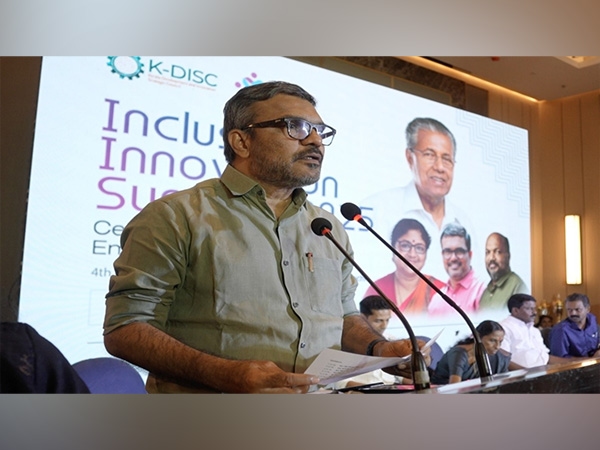
PNN Kochi (Kerala) [India], August 8: The STRIDE Inclusive Innovation Summit, held in Kochi on the 4th of August 2025 and organised by the Kerala Development and Innovation Strategic Council (K-DISC), concluded with honours awarded to eight engineering college teams for their outstanding innovations designed to enhance the lives of differently-abled individuals. The recognised institutions included Vishwajyothi College of Engineering and Technology in Ernakulam, NSS College of Engineering in Palakkad, College of Engineering in Vadakara, St. Gits College of Engineering in Kottayam, Vidya Academy of Science and Technology in Thrissur, TKM College of Engineering in Kollam and Sahrudaya College of Engineering and Technology in Thrissur. The awards were distributed at the summit's closing ceremony, which celebrated youth-driven innovation with social impact. Inaugurating the event, Social Justice Minister Dr. R. Bindu highlighted the potential of inclusive technology to empower individuals with disabilities and make daily tasks more accessible. She said that many differently-abled persons continue to struggle with basic routines and lauded STRIDE for demonstrating how thoughtful innovation can ease these challenges. A major focus of the summit was the presentation of STRIDE's broader vision, to make Kerala India's first inclusive innovation state. The initiative seeks to create a compassionate, sustainable economy by addressing the real-world challenges of vulnerable populations, including the elderly, those in palliative care, the financially disadvantaged and especially persons with intellectual disabilities. Through a multi-sectoral approach, STRIDE (Social Technology and Research for Design Excellence) is developing a comprehensive ecosystem that encourages social innovation. The model integrates government departments, community organisations, academic institutions, and technology partners to work collaboratively on inclusive solutions. Government departments such as Social Justice, Health, Local Self-Government and Education are actively involved in the mission. Community participation is led by Kudumbashree, with support from NGOs, industries and CSR initiatives. On the academic front, engineering and design colleges, polytechnics and psychology departments are being engaged to align student research and projects with real-world social needs. The technology community, particularly IEEE, plays a vital role in mentoring and guiding these innovations. Local Self-Government Minister M.B. Rajesh, speaking at the summit, announced the launch of the STRIDE Makerstudios and reaffirmed Kerala's goal of becoming a national leader in inclusive innovation. He said STRIDE and Kudumbashree are working closely with persons with physical and mental challenges to co-create universally accessible solutions and Kudumbashree has set aside about ₹1 crore this year for establishing Maker Studios. Dr. P.V. Unnikrishnan, Member Secretary of K-DISC, noted that the initiative is built on a co-production model where people with disabilities are directly involved in developing technologies that address their needs. Robin Tommy, Executive Director of K-DISC, added that the aim is to simplify lives through Collaboration, co-creation, design and social innovation. STRIDE's approach also incorporates a circular, sustainable economy by encouraging communities to manufacture assistive and adaptive devices. These low-tech innovations, produced using 3D printing and fabrication technologies, will be created in community hubs such as BUDS institutions and NGOs. The devices not only enhance independence and quality of life for users but also offer income-generating opportunities, promoting a social enterprise-driven gig economy within the state. A Memorandum of Understanding was signed with DC School of Architecture and Design to support the design and establishment of STRIDE Maker Studios, which was followed by the presentation of the Designathon awards. The speakers at the summit included; Radhamani Pillai, Chairperson of Thrikkakara Municipality, presided over the function. Also present were Manoj Moothedan, President of the Ernakulam District Panchayat; Dr. Arun S. Nair, Director of the Social Justice Department; Dr. B. Sreejith, Kudumbashree State Programme Officer; Dr. George Sleeba, Executive Director of the K. Chittilappally Foundation; Dinesh P. Thampi, Vice President and Head of Delivery Center at TCS; Dr. Mini Ulanat, former Chair of IEEE Kerala Section; Dr. Manoj B.S., current Chair of IEEE Kerala Section and independent product strategy consultant Arun Jacob. The summit was held in collaboration with IEEE Kerala Section, Kudumbashree, Kerala Startup Mission, and APJ Abdul Kalam Technological University (KTU), and served as a milestone in Kerala's journey toward a truly inclusive and innovation-driven society. (ADVERTORIAL DISCLAIMER: The above press release has been provided by PNN. ANI will not be responsible in any way for the content of the same)


Indian Express
07-08-2025
- Indian Express
University Visvesvaraya College of Engineering: Know about the first engineering college of Karnataka
The University Visvesvaraya College of Engineering (UVCE) is Karnataka's first engineering college. Established in 1917 by Bharat Ratna Sir M Visvesvaraya, UVCE is currently affiliated with the Bangalore University. The University Visvesvaraya College of Engineering was formerly called the College of Engineering. It is the fifth engineering college in the country. It started with 20 students in the civil and mechanical branches, now has over 3,300 students. The college now offers six engineering courses – electronics and communication, electrical and electronics, mechanical, computer science, information science and civil engineering. Candidates who qualify in the Common Entrance Test (CET) or aptitude test conducted by the Government of Karnataka are eligible for admission to the undergraduate engineering and architecture courses. The selection of candidates to the college is done by counselling at CET centre by the Government. Candidates qualified in Graduate Aptitude Test in Engineering (GATE) and Postgraduate CET (PGCET) by Karnataka are eligible for admission to PG courses. Candidates qualifying in the test held by the Bangalore University (BU) or UVCE are eligible for research programmes leading to Doctoral Degrees. The UVCE traces its roots to the visionary leadership of Maharaja Nalvadi Krishnaraja Wodeyar IV and Bharat Ratna Sir M Visvesvaraya, who together laid the foundation for modern education and industrial growth in the Mysore State. Maharaja Krishnaraja Wodeyar, often called a 'saintly king,' prioritised public welfare through education and infrastructure. Under his reign, Mysore saw significant progress, including the establishment of the Mysore University in 1916 as a unitary university — one of the earliest in India. To meet the growing need for skilled engineers, UVCE was founded in 1917 in Bangalore as the engineering college of Mysore University. Sir M Visvesvaraya, then the Diwan of Mysore and a pioneering engineer, envisioned the college to train local students and future supervisors for India's emerging industrial sector. With the Maharaja's patronage and Sir MV's practical foresight, UVCE became one of India's first engineering colleges, nurturing talent that would drive the state's industrial and infrastructural development.

The Hindu
27-07-2025
- The Hindu
TrEST Research Park-incubated semiconductor start-up Netrasemi secures Series A funding
Fabless semiconductor start-up Netrasemi Pvt. Ltd., incubated at the State-run TrEST Research Park, has successfully raised ₹107 crore in an achievement that could fuel Kerala's deep-tech ambitions. Higher Education Minister R. Bindu said the investment in the start-up's Series A funding round (first round of venture capital funding after a start-up receives initial seed funding) was led by Zoho Corporation and Unicorn India Ventures. 'This is a significant leap for Kerala's growing semiconductor ecosystem. Netrasemi's success adds momentum to the State's deep-tech vision and proves the value of fostering innovation through academic-industry collaboration,' the Minister said. Founded in 2020 by Jyothis Indirabhai, Sreejith Varma and Deep Geetha, Netrasemi is developing a new generation of domain-specific, power-efficient Edge-AI System-on-Chips (SoCs). These chips are being widely adopted in sectors such as robotics, autonomous systems, smart IoT devices and surveillance technologies. Flagship products like Netra A2000 and R1000 are already in commercial use, offering cutting-edge solutions powered by a patented heterogeneous parallel processing architecture capable of supporting over 100 AI/ML applications, the Minister added in a statement. The start-up has also received backing from the Ministry of Electronics and Information Technology (MeitY) under its Design Linked Incentive (DLI) and Chips to Start-up (C2S) schemes. Modelled after the IIT Madras Research Park, TrEST Research Park was established to offer world-class R&D infrastructure and mentorship, and turn academic research into market-ready solutions.
