



Are next-gen GST reforms a done deal?
Since its launch in 2017, the GST regime has unified more than a dozen state and central levies into a single tax system under the slogan 'one nation, one tax, one market.'The GST currently operates with four main tax slabs—5%, 12%, 18%, and 28%—each encompassing a range of goods and services. And some luxury and sin items attracted additional levies beyond the 28% slab.Yet, even after more than eight years, the GST remains complex, with confusing classifications where minor variations in products can incur widely different tax rates.For instance, pre-packaged salted popcorn is taxed at 12% while caramel popcorn is at 18%, and simple Indian flatbread (roti) faces 5% GST, versus 18% on layered varieties. This complexity has drawn criticism and calls for rationalisation.TWO-SLAB GST PROPOSEDThe government aims to simplify GST by slashing the highest 28% slab entirely and collapsing over 99% of products currently taxed at 12% into the lower 5% rate.Small cars and other items like air conditioners, refrigerators, and televisions are proposed to move from 28% down to 18%, potentially lowering prices significantly and boosting demand.Economists expect these changes to ease inflation and sustain consumption—a key driver of India's economy, which accounts for about 60% of GDP.However, the reforms would also reduce GST collections by an estimated Rs 1.74 lakh crore, impacting government revenues.WHY IT'S NOT A DONE DEAL YETThe delay and uncertainty around implementing these changes lie primarily in the federal nature of the country's GST regime.The GST Council, which must approve any reform, is chaired by Finance Minister Nirmala Sitharaman and includes representatives from all states.Since GST revenues are shared between the Centre and states, any change directly affects their financial health.States rely heavily on GST revenues, especially the 18% slab, which accounts for roughly 67% of total GST collections. Any changes to the existing rates and slabs mean lower revenues for them, raising concerns about budget shortfalls and funding public services.Some states may therefore resist sweeping reductions, particularly if compensation mechanisms are unclear or insufficient.Moreover, certain sectors like casinos, lotteries, and online gaming, which currently contribute significant GST revenues and face higher taxes, have historically opposed proposed fixes on their levies. These industries wield political influence, complicating negotiations further.advertisementIt is also worth noting that states have varying economic priorities and political considerations. Achieving consensus across all requires intense negotiation, balancing reform ambitions against regional fiscal autonomy and development goals.After the GST Council's approval, practical implementation involves resetting rates, updating compliance procedures, and managing transitional challenges such as stock relabelling and public awareness.ROAD TO GOOD AND SIMPLE TAXWhile the next-gen GST reforms undoubtedly promise a simpler tax system and cheaper goods, the path to realisation is fraught with negotiation complexities stemming from the shared federal fiscal structure and diverse interests of states and sectors.Simply put, the proposed cuts are not yet finalised and require approval by the GST Council, a consensus-driven body where states hold equal sway.Given the potential revenue impacts on state finances and sectoral pushback, it remains uncertain how quickly and comprehensively the reform will roll out nationwide.- Ends
Hashtags

Try Our AI Features
Explore what Daily8 AI can do for you:
Comments
No comments yet...
Related Articles


New Indian Express
 19 minutes ago
- New Indian Express
Pampa on the path for inclusion in National River Conservation Plan
ALAPPUZHA: The central government has initiated steps to include the Pampa River under the National River Conservation Plan (NRCP), a multi-crore initiative aimed at protecting major rivers in the country. Union Ministry for Jal Shakti has asked the state government to submit a detailed report as part of the inclusion process. Kodikunnil Suresh MP said the ministry sought the report to facilitate conservation efforts for the river, which holds significant environmental and religious importance. 'The Pampa is closely linked to the Sabarimala shrine and major religious gatherings such as the Maramon and Cherukolpuzha conventions, giving it a sanctity comparable to that of the Ganga. We had submitted a representation to the central government requesting its inclusion in the NRCP. After considering my letter, the ministry has asked the state government to prepare and submit a report,' Suresh said. He added that the project can help conserve the river. 'Pollution levels are high on many stretches due to large-scale dumping of waste by local bodies. In several areas, destruction of the riverbank is a major challenge. Inclusion in the NRCP will give a much-needed boost to conservation efforts,' he said. Once the state government's report is submitted, the Centre will prepare a detailed project to prevent wastewater discharge into the river, remove waste, and construct water-purification plants. It will also fund riverbank-protection measures, including the construction of river walls. Technical assistance will also be provided to the state government and local self-government institutions.

New Indian Express
19 minutes ago
- New Indian Express
Nod to Rs 8.3K cr Bhubaneswar Bypass
NEW DELHI: The Union Cabinet Committee on Economic Affairs (CCEA), chaired by Prime Minister Narendra Modi, on Tuesday approved two mega infrastructure projects, including one for Odisha and another for Rajasthan, with cumulative estimated cost of over `9,500 crore. Briefing media after the meeting of the CCEA, Information & Broadcasting Minister Ashwini Vaishnaw said the construction of a 6-lane access-controlled Capital Region Ring Road (Bhubaneswar Bypass) in Odisha with an estimated cost of Rs 8,307.74 crore has been approved. The nod has also been given to the construction of green-field Kota-Bundi airport in Rajasthan with a total estimated capital investment of Rs 1,507 crore, he added. The Minister said, the length of the ring road project for the twin capital city of Bhubaneswar and Cuttack would be 110.875 km and it would be developed on Hybrid Annuity Mode (HAM). 'At present, the Rameshwar -Tangi stretch of the existing National Highway faces severe congestion due to heavy traffic moving through urban centres like Khordha, Bhubaneswar, and Cuttack. The new Greenfield ring road aims to divert heavy commercial vehicles away from these cities, thereby improving freight efficiency, reducing logistics costs, and promoting socio-economic development in Odisha and neighbouring eastern states,' Vaishnaw said. The alignment will integrate with three National Highways (NH-55, NH-57, NH-655) and one State Highway (SH-65), offering seamless connectivity to economic and social hubs across the region, he said.

Hans India
19 minutes ago
- Hans India
Trump tariffs-A dark cloud and a silver lining
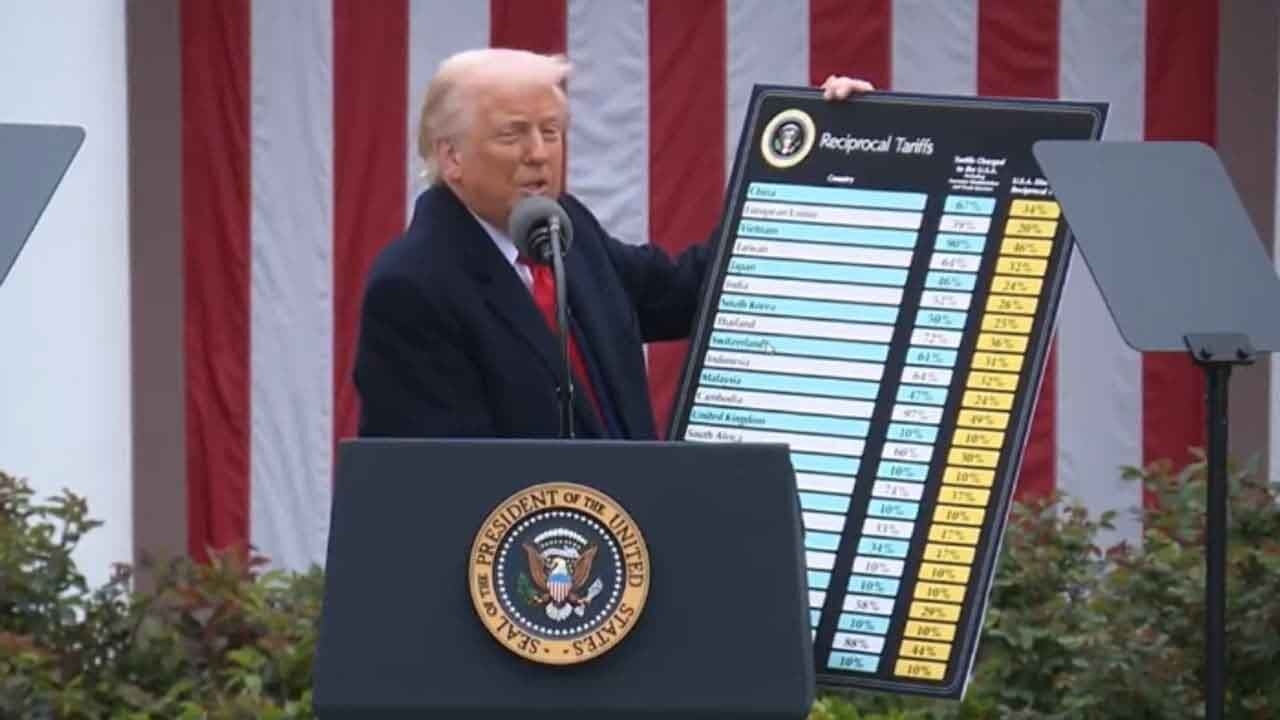
US President Donald Trump has suffered a bad press in India. Still, it is indisputable that the crisis his tariffs have triggered for our economy may not be such a bad thing: it has already goaded the government to reset the GST and FDI regimes. It is a truism that crises force governments into long-overdue reforms, and the present turbulence may, paradoxically, prove to be an inflection point for India's economy. Early signs indicate that Trump's tariffs have broken the policy inertia of the Narendra Modi government; it is rethinking the goods and services tax (GST), foreign direct investment (FDI), and export promotion policies. The government is reportedly working on a 100-day reform agenda prepared by the Commerce & Industry Ministry. It is not merely a firefighting exercise but a comprehensive strategy to improve India's global competitiveness. This is significant because, for too long, India has managed its trade policies reactively, focusing on ad hoc measures rather than laying down forward-looking, structural reforms. Another key area under review is the GST regime. While GST has streamlined indirect taxation, its complexity and compliance burdens have stifled smaller exporters and startups. Rationalising and reducing GST slabs, simplifying compliance, and ensuring quicker refunds could ease liquidity pressures and incentivise export-oriented businesses. If the current crisis accelerates this process, Indian exporters may be better positioned in the medium term, not just against US tariffs but also against rising competition from countries like Vietnam and Bangladesh. Equally important is the prospect of further liberalising the FDI regime. India has already been one of the top global recipients of foreign investment, but procedural hurdles, sectoral restrictions, and unpredictable regulatory interventions have often diluted the benefits. A push to ease investments—particularly from neighbouring countries and emerging Asian markets—signals a pragmatic recognition that India must diversify its capital inflows rather than remain overly reliant on Western investors. Such reforms could open up capital for high-growth sectors like digital infrastructure, renewable energy, and advanced manufacturing. The government's reported plan to provide more tax incentives for startups also reflects an awareness of the shifting global economic landscape. With traditional manufacturing exports facing headwinds, India must increasingly rely on knowledge-driven industries, digital services, and innovative startups to power growth. A supportive tax regime, combined with easier access to foreign capital, could help create globally competitive unicorns and deepen India's digital economy. Then there are proposals to ease certain environmental norms for the leather and footwear sectors. These industries employ millions, generate significant export revenues, and are heavily labour-intensive—precisely the kind of sectors India needs to expand if it hopes to absorb its growing workforce. While the idea is good, the government must ensure that this easing remains focused on cutting red tape; there should be no adverse impact on the environment. On the export infrastructure front, the emphasis on establishing e-commerce hubs and fast-tracking initiatives like BharatTradeNet is timely. Global trade is increasingly digital, and seamless integration of logistics, customs, testing, and certification into unified platforms could sharply reduce transaction costs for exporters. By enabling smaller firms and startups to tap global markets with fewer bureaucratic hurdles, such steps could democratise trade opportunities across sectors and geographies. If all these reforms are implemented effectively, they could make India's export basket more resilient and its domestic economy more attractive for investment.
