


The Heart Behind Breathe Easy Therapy Services: Cynthia Piccini's Story of Empathy and Empowerment
Cynthia Piccini has always seen the world a little differently. As a child in urban New York, her sanctuary was not a therapist's couch or a school counselor's office; it was a grumpy old man's garden. "He didn't like people, didn't like kids," she shares. "But every day, I would ask if I could just look at his flowers." Eventually, the man softened. They formed a quiet bond, and he began to teach her about gardening. That memory, rooted in nature and a silent connection, became a cornerstone of Cynthia's worldview: healing starts with presence.
Today, Cynthia is the founder of Breathe Easy Therapy Services and Breathe Easy Wellness (Breathe Easy), a marriage and family therapist, and a vocal advocate for shifting the way people approach mental health. Her journey here was not linear; it was forged through hardship, community, and a relentless commitment to building spaces where people can heal.
At 21, her life changed when her mother suffered a debilitating stroke. "Watching our community rally around us, seeing how my mom and dad's siblings responded, it made me realize that nature was not enough. People carry deep trauma. We also need each other," she says. That experience forced Cynthia to give up her plans to teach English abroad. She became a caretaker, helping her mother and siblings navigate a new reality while quietly tending to her own emotional wounds.
She eventually returned to school, funding every semester, rent check, and textbook herself. "I had multiple jobs since I was 11 or 12," she says. "My parents did what they could, but I had to work hard to reach my own goals. But I knew I needed to be part of the solution." Her passion for therapy was born not just out of personal struggle, but also out of seeing how systems often fail people at their most vulnerable.
"I didn't want to join a big hospital or agency where I would be restricted by red tape and insurance loopholes. I wanted to create something different, something human," Cynthia explains. That "something" became Breathe Easy, named for her emphasis on breathwork and trauma-informed care. "When you are dysregulated, the breath is your power. It's something you always have access to," she says.
The practice started with just Cynthia and her husband's support. Today, it has grown into a multidisciplinary center that houses therapists, yoga instructors, mindfulness educators, and even a salt cave, all designed to promote healing beyond the traditional talk therapy model.
According to the National Alliance on Mental Illness (NAMI), one in five U.S. adults experiences mental illness each year. Yet a significant percentage of them don't receive any treatment. Cynthia believes that part of the reason is the outdated narrative around therapy. She states, "People think you have to be broken to go to therapy. But therapy is like going to the gym; it's for your mind. It's about growth, not crisis."
That's why Cynthia is redefining what mental health support looks like. At Breathe Easy, one might attend a premarital group workshop, a Yoga class for seniors, or a children's group called "Little People Big Emotions." One will also find therapists trained in complex trauma and chronic illness support. "It's not just about talking," she says. "It's about living. It's about touching your partner during couples yoga and realizing you have not done that in years. That's therapy, too."
Her team is just as intentional as the programs. "Hiring people who are truly passionate about healing was non-negotiable," she says. Her yoga instructor has trained in India, Bali, and Malaysia. Her breathwork specialist teaches nationally and has equipped educators with trauma-informed calming techniques. The team also includes a highly trained massage therapist and an esthetician.
Cynthia's work is personal. Her parents are both now disabled, her mother from a stroke, her father from Parkinson's. She and her sisters have spent nearly two decades supporting them. She's also a mom herself, raising a young daughter while navigating the dual demands of caregiving and business ownership. "It has not been easy," she says, "but it's shown me the value of resilience, love, and having a community to hold you."
Cynthia Piccini's message from Breathe Easy is simple: "You don't need to wait for a crisis to take care of yourself. You deserve to feel good now."
Hashtags

Try Our AI Features
Explore what Daily8 AI can do for you:
Comments
No comments yet...
Related Articles


Local Germany
 01-08-2025
- Local Germany
German word of the day: Zugluft
There is something in the air in Germany. Literally. No matter the time of year - whether it's blazing sunshine or snowing - Germans are on high alert for an invisible, possibly deadly force. And that is Zugluft. The German dictionary describes Zugluft as an "unpleasant (usually cold) air movement in buildings". In English it's a draft (or draught in British English). Die Zugluft - pronounced like this - is made up of the words Zug (train) and Luft (air), and it's no laughing matter. It can enter through windows, doors or even... air conditioning systems. Which is perhaps part of why you don't find many AC units in Germany . There are some strong cultural differences when it comes to this concept. While people in the UK or US might barely notice a stream of cold air, in Germany, exposure to Zugluft – also known as Durchzug or Luftzug – is often blamed for a wide range of health issues. Got a runny nose? The flu? That's probably the Zugluft. Muscle aches? Tension? Sore neck? You guessed it - that's the air. READ ALSO: Are Germany's hygiene obsessions really backed by science? You might also hear another common phrase when Germans are talking about streams of cold air. The phrase "es zieht" translates to "there is a draft" or " it's drafty" in English. It literally means "it pulls". A woman lying on her sofa blows her nose. Photo: picture alliance/dpa/CLARK | CLARK We should point out that it's not just Germans who take drafts of air seriously. In many other countries, including elsewhere in Europe, children grow up warned against this force of nature. They are urged to cover their necks and never, for goodness' sake, go out with wet hair. They might have a point to some extent, but science maintains that viruses and bacterial infections cause colds, not drafts of air. Still, that doesn't deter the Germans. There is a ton of advice out there, including in magazines and online, giving tips on how to avoid Zugluft. You can install a Zugluftstopper for your door or thermal curtains, for example. Advertisement Don't Germans love air streams? To make things a bit confusing (for foreigners), the Germans equally love fresh air. The mandatory airing out of rooms (Lüften) is literally written into rental contracts. On winter days when the temperature drops below zero, Germans still require that you fling your windows wide open and air out the room. Regular ventilation of rooms aids air circulation and even became a key focus during the Covid-19 pandemic. Just make sure when you are performing your Lüften duties that you don't stay in the cold air too long. READ ALSO: Why Germans are obsessed with the art of airing out a room Use it like this: Er hatte von der Zugluft im Korridor eine Erkältung bekommen. He caught a cold from the draft in the corridor. Schnell, mach das Fenster zu! Es zieht! Quick, shut the window! There's a draft!

Int'l Business Times
29-07-2025
- Int'l Business Times
The Heart Behind Breathe Easy Therapy Services: Cynthia Piccini's Story of Empathy and Empowerment
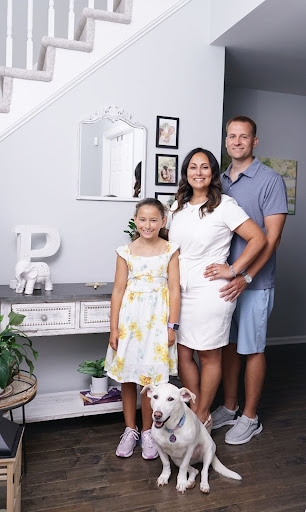
Cynthia Piccini, with her family Jinette Ramos Cynthia Piccini has always seen the world a little differently. As a child in urban New York, her sanctuary was not a therapist's couch or a school counselor's office; it was a grumpy old man's garden. "He didn't like people, didn't like kids," she shares. "But every day, I would ask if I could just look at his flowers." Eventually, the man softened. They formed a quiet bond, and he began to teach her about gardening. That memory, rooted in nature and a silent connection, became a cornerstone of Cynthia's worldview: healing starts with presence. Today, Cynthia is the founder of Breathe Easy Therapy Services and Breathe Easy Wellness (Breathe Easy), a marriage and family therapist, and a vocal advocate for shifting the way people approach mental health. Her journey here was not linear; it was forged through hardship, community, and a relentless commitment to building spaces where people can heal. At 21, her life changed when her mother suffered a debilitating stroke. "Watching our community rally around us, seeing how my mom and dad's siblings responded, it made me realize that nature was not enough. People carry deep trauma. We also need each other," she says. That experience forced Cynthia to give up her plans to teach English abroad. She became a caretaker, helping her mother and siblings navigate a new reality while quietly tending to her own emotional wounds. She eventually returned to school, funding every semester, rent check, and textbook herself. "I had multiple jobs since I was 11 or 12," she says. "My parents did what they could, but I had to work hard to reach my own goals. But I knew I needed to be part of the solution." Her passion for therapy was born not just out of personal struggle, but also out of seeing how systems often fail people at their most vulnerable. "I didn't want to join a big hospital or agency where I would be restricted by red tape and insurance loopholes. I wanted to create something different, something human," Cynthia explains. That "something" became Breathe Easy, named for her emphasis on breathwork and trauma-informed care. "When you are dysregulated, the breath is your power. It's something you always have access to," she says. The practice started with just Cynthia and her husband's support. Today, it has grown into a multidisciplinary center that houses therapists, yoga instructors, mindfulness educators, and even a salt cave, all designed to promote healing beyond the traditional talk therapy model. According to the National Alliance on Mental Illness (NAMI), one in five U.S. adults experiences mental illness each year. Yet a significant percentage of them don't receive any treatment. Cynthia believes that part of the reason is the outdated narrative around therapy. She states, "People think you have to be broken to go to therapy. But therapy is like going to the gym; it's for your mind. It's about growth, not crisis." That's why Cynthia is redefining what mental health support looks like. At Breathe Easy, one might attend a premarital group workshop, a Yoga class for seniors, or a children's group called "Little People Big Emotions." One will also find therapists trained in complex trauma and chronic illness support. "It's not just about talking," she says. "It's about living. It's about touching your partner during couples yoga and realizing you have not done that in years. That's therapy, too." Her team is just as intentional as the programs. "Hiring people who are truly passionate about healing was non-negotiable," she says. Her yoga instructor has trained in India, Bali, and Malaysia. Her breathwork specialist teaches nationally and has equipped educators with trauma-informed calming techniques. The team also includes a highly trained massage therapist and an esthetician. Cynthia's work is personal. Her parents are both now disabled, her mother from a stroke, her father from Parkinson's. She and her sisters have spent nearly two decades supporting them. She's also a mom herself, raising a young daughter while navigating the dual demands of caregiving and business ownership. "It has not been easy," she says, "but it's shown me the value of resilience, love, and having a community to hold you." Cynthia Piccini's message from Breathe Easy is simple: "You don't need to wait for a crisis to take care of yourself. You deserve to feel good now."

DW
19-07-2025
- DW
Why are mentally ill soldiers being drafted in Ukraine? – DW – 07/19/2025
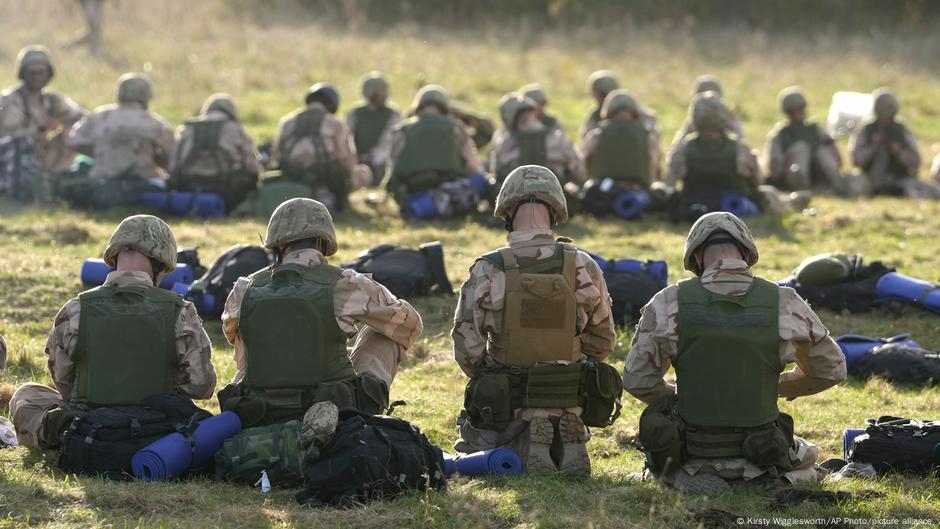
Reports, including from soldiers, suggest that psychologically and physically unfit men are being drafted into the Ukrainian army, where they may endanger themselves and others. How is this happening? Memory lapses, disorientation, confusion about numbers and colors: These are just some of the issues that Vasyl, a 28-year-old from central Ukraine, deals with on a daily basis. In fact, he's been receiving psychiatric care for a personality disorder since 2015. But none of that prevented the man — whose real name is being withheld for privacy reasons — being drafted into the Ukrainian military. According to his partner Olena, Vasyl never really acknowledges his problems and he may well have failed to do so during the physical examination he was given before joining the military. Vasyl was found to be fit for service and recently sent to southern Ukraine for basic training. Olena tried to explain all this to Vasyl's new commanding officer. After first being understanding, he dismissed the 2015 report from a psychiatric clinic that Olena brought him, saying that it was outdated. "But how can that not be grounds for discharge, if his condition is incurable?" Olena asks. DW has seen the report, which includes a list of Vasyl's problems. When he's stressed, the symptoms get worse, Olena notes. That would make him a danger not only to himself but others. There's a Ukrainian databank that military doctors refer to, in order to find out if potential recruits are sick in some way. It's called Helsi and on its website in English, it describes itself as "the most popular medical information system for healthcare institutions and medical portal for patients in Ukraine." But Vasyl's psychiatric diagnosis isn't in that system, says Ukrainian lawyer Yevhen Tsekhmister, because details about psychological illness can only be saved in there if the patient gives permission. If the diagnosis had been there, then according to the Ministry of Defense's Order No. 402, it would make Vasyl unfit for service. Order No. 402 determines what the military medical examination should look for and how to assess a soldier's fitness for duty. Tsekhmister explains that military doctors only trust official documentation because many men fake psychological disorders in order to avoid being drafted. "If legal counsel had been sought more quickly, and more up to date evidence had been provided, Vasyl would not have been drafted," the lawyer said. To view this video please enable JavaScript, and consider upgrading to a web browser that supports HTML5 video At the end of 2024, Ukrainian human rights activist Olha Reshetylova was appointed as a military ombudswoman by Ukraine's President Volodymyr Zelenskyy, so that soldiers and soldiers' families had a way to report violations of their rights. Reshetylova recommends that individuals take responsibility for updating their own medical history in the Helsi system and with the military, acknowledging that recruits' mental health can deteriorate during basic training. Senior officers don't want sick individuals serving in their units anyway, which is why they will often provide treatment if needed, she told DW. Since the beginning of this year, there have been more than 2,000 complaints about human rights violations committed during mobilization, Dmytro Lubinets, the Ukrainian parliament's commissioner for human rights, reports. In 2024, there were 3,500 such complaints in total. Although not all the complaints are justified, "we always react," he said. "There are cases where my local representatives will go to the draft board themselves to help citizens assert their rights," he told DW. "Thanks to our interventions, sick people have been discharged from the army." It's true that sick people have been drafted, Lubinets conceded, although here are no concrete numbers as to exactly how manty. "That can happen when staff ignore the medical documents or the condition of the person," Lubinets says. In general, he believes new recruits should be more carefully posted around the military. "Not every health problem automatically makes you unfit," he pointed out. "With back problems, you can't join the stormtroopers but you can work on a computer." A Ukrainian brigade commander told DW about his experiences with the recently drafted. He spoke on condition of anonymity. "I actually had the privilege of being able to choose my own men," he reported. "But some came with no teeth or they had tuberculosis — even at the training center!" Some of those men had already been offered to the brigades several times but nobody wanted them, not even to build trenches, he said. Kyrylo, whodidn't want to share his real name either, is another recent recruit who was drafted earlier this year. While at the draft board, he says he saw homeless people with swollen legs, drug addicts and alcoholics. The medical exam is often just a formality and in some places, it doesn't even happen, he says. It's not until you get to the training facility that a more thorough medical examination will be carried out. Another soldier, Oleksandr — who also didn't want to give his real name — says he even saw epileptics when he was drafted. This kind of recruitment actually led to a man with schizophrenia being assigned to a brigade of marines in 2024, after basic training, he recounts. Luckily the man's condition quickly became clear. "They didn't give him any weapons and sent him away after a few days," Oleksandr says. Tsekhmister doesn't think that sort of thing is all that uncommon. "A soldier, 1.75 meters tall, weighing 38 kilograms, with poor vision, a developmental disability and a malformed chest, can neither walk nor breathe in a bulletproof vest," the lawyer argues. "But he's been in the army since 2022. He's constantly transferred from one unit to another, or to hospitals, and he receives basic care." But since none of the various problems individually make him unfit for service, he can't be discharged on health grounds. The unit commanders can't give these kinds of soldiers "real" jobs, nor can they let them go. The situation is particularly bad among ground troops and logistics services because they've become a kind of "dumping ground" for unhealthy individuals, Tsekhmister explains. "They end up in brigades that are supposed to be building defense lines," he notes. "But they're useless there." Ukraine's Medical Forces Command, the service responsible for troops' medical support, insists things are being done the right way. "Military doctors' assessments are based on diagnoses made by specialists," Yuriy Podolyan, a colonel and the deputy commander of the Medical Forces, said in reply to DW's enquiries. "An assessment based on the combination of several illnesses is not provided for." Podolyan also said that the Ministry of Defense's Order No. 402 complies with local law and international standards. To view this video please enable JavaScript, and consider upgrading to a web browser that supports HTML5 video Military ombudswoman Reshetylova sees it differently and believes that the lack of possibility for that kind of assessment means something has gone wrong and needs review. The Ministry of Defense is apparently already working on that. As for Vasyl, his basic training is almost at an end and soon he will be assigned to a unit. Lawyer Tsekhmister is trying to organize a second psychiatric evaluation by military doctors. According to Vasyl's partner Olena, he has access to weapons. "If he ends up at the front, then he's a danger to the whole unit," Tsekhmister warns. "There's no way of predicting when his mental health will fail, or who might then be targeted."
