



FinMin Aurangzeb highlights economic recovery at Harvard conference
Listen to article
Finance Minister Mohammad Aurangzeb on Monday said the country had reached a pivotal moment of economic recovery and transformation, while inviting investors to join Pakistan's growth journey.
Speaking at the Pakistan Conference 2025 at Harvard University, Aurangzeb outlined key achievements including historic reductions in inflation, a surge in foreign reserves, and a rebound in foreign direct investment.
"After inheriting an economy facing significant challenges—from contracting GDP to depleting reserves—we have stabilised the fundamentals, restored confidence, and reignited growth," he said.
The conference, organised by Harvard students with support from university research centres, is the largest student-led event on Pakistan in the United States.
Aurangzeb highlighted that inflation had dropped to 0.7%, the lowest in 60 years, foreign reserves had doubled, and the currency appreciated by 3%. Pakistan recorded a current account surplus exceeding $1 billion in March 2025, he added.
The minister also cited a 44% rise in foreign direct investment, a 24% growth in IT exports, and record-high remittances projected at $38 billion for 2025. Pakistan achieved a fiscal surplus for the first time in 24 years and secured a sovereign credit rating upgrade from Fitch to B- with a stable outlook.
Aurangzeb stressed that stability was only a stepping stone, outlining the government's plans for fiscal discipline, structural reforms in energy, taxation, governance, and management of state-owned enterprises.
He pointed to major growth opportunities in Pakistan's mineral resources, IT sector, green energy projects, and its young entrepreneurial population.
On debt management, Aurangzeb said Pakistan reduced its public debt-to-GDP ratio from 75% to 67.2%, aiming to lower it below 60% in the medium term through fiscal reforms and enhanced domestic financing.
Efforts to privatise loss-making state enterprises could save up to 2% of GDP annually, he added, stressing the importance of transparency and competitiveness in the process.
Aurangzeb also outlined initiatives to deepen financial markets, expand digital banking, and promote green finance, while reaffirming Pakistan's commitment to climate resilience through partnerships with the IMF and World Bank.
'Pakistan's future will be shaped by bold, necessary choices,' Aurangzeb concluded. 'By investing in our people, modernising our economy, and committing to reform, Pakistan will emerge stronger, greener, and more competitive.'
Hashtags

Try Our AI Features
Explore what Daily8 AI can do for you:
Comments
No comments yet...
Related Articles

Business Recorder
 2 hours ago
- Business Recorder
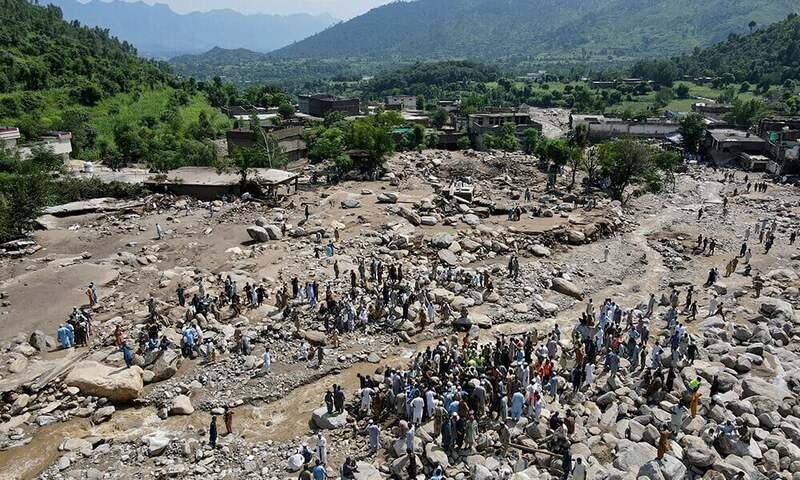
Rain victims: ECC approves relief package
ISLAMABAD: The Economic Coordination Committee (ECC) of the Cabinet on Tuesday approved a relief package of Rs5.8 billion for the victims of recent monsoon rains. The committee which met under the chairmanship of the Federal Minister for Finance and Revenue, Muhammad Aurangzeb, also directed the Finance Division to immediately release Rs4 billion to mitigate the sufferings of the affected people. The committee accorded in-principle approval to a proposal submitted by the National Disaster Management Authority (NDMA) regarding federal assistance for the victims of recent monsoon rains and approved a relief package of Rs5.8 billion. The ECC considered a summary submitted by the Ministry of Maritime Affairs regarding the arrest of Pakistan National Shipping Corporation (PNSC) ships in South Africa due to alleged claims of M/s Coniston against Pakistan Steel Mills Ltd. Pakistan resumes rescue operations in flood-hit areas; death toll over 300 After deliberations, the ECC directed the Finance Division to reimburse Rs330.526 million to PNSC through a technical supplementary grant (TSG) as per an earlier ECC decision taken in 2017, while further instructing the Ministry of Industries and Production to expedite the finalisation and settlement of the arbitration case in court and report back within three months on the progress achieved in resolving this matter on priority basis. The ECC also approved a proposal of the Power Division for the uniform application of fuel charges adjustment across the country. On another agenda item, the ECC approved the term sheet jointly prepared by relevant stakeholders including NEECA, SBP and banks, based on the Draft Tripartite Agreement for the launch of the Prime Minister's Fan Replacement Programme. To kick-start the programme, the ECC also approved a TSG of Rs2 billion in favour of NEECA. The ECC approved a TSG of Rs250 million for the National Security Division for its Strategic Policy Planning Cell, with the decision that the remaining amount would be released in a phased manner subject to contextualisation and rationalisation of expenditures in consultation with the Finance Division. On a proposal from the Finance Division regarding the subsidy for RAAST QR Code based person-to-merchant payments, the ECC approved an allocation of Rs3.5 billion through TSG for the current financial year with provision for continuation for three years, aimed at accelerating digital adoption and promoting the digital economy. The ECC further decided that the State Bank of Pakistan would notify the scheme immediately and submit a comprehensive evaluation report to the ECC on the operational effectiveness of the MDR subsidy scheme by the close of the fiscal year. The ECC also considered and approved a summary submitted by the Industries and Production Division pertaining to the New Energy Vehicle Policy 2025-30. The committee commended the division for preparing a comprehensive and forward-looking policy aligned with international best practices and recognised its potential to steer the country's transition towards electric vehicles. The ECC was further briefed on the risk coverage scheme for small farmers and underserved areas which is designed to provide coverage to subsistence farmers in Punjab and Sindh as well as all farmers in Khyber Pakhtunkhwa, Balochistan, Azad Jammu and Kashmir and Gilgit-Baltistan in view of their low share in current agricultural credit disbursements. Copyright Business Recorder, 2025

Express Tribune
3 hours ago
- Express Tribune
Israel reviews Hamas proposal for 60-day Gaza ceasefire, hostage release
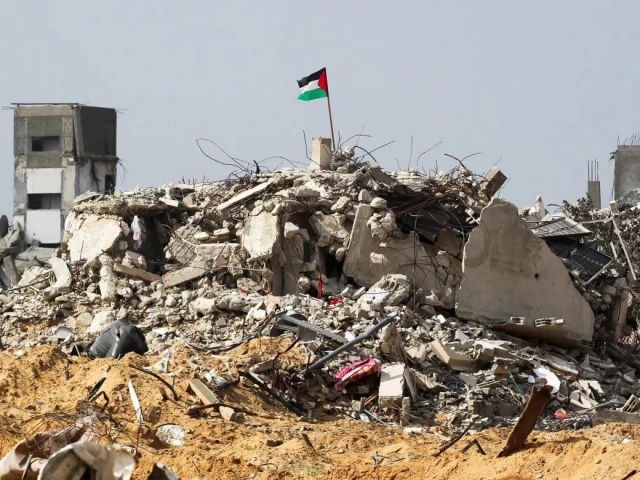
A Palestinian flag flutters amid the rubble of buildings destroyed during the Israeli offensive in Rafah in southern Gaza. PHOTO: REUTERS Israel is studying Hamas' response to a proposal for a 60-day ceasefire and release of half the hostages still held in Gaza, two Israeli officials said on Tuesday, although one source reiterated that all Israeli captives must be freed for the war to end. Efforts to pause the fighting gained new momentum over the past week after Israel announced plans for a new offensive to seize control of Gaza City at the heart of the Palestinian enclave. Mediators Egypt and Qatar have been pushing proposals to restart indirect talks between the sides on a US.-backed ceasefire plan. The proposals include the release of 200 Palestinian convicts jailed in Israel and an unspecified number of imprisoned women and minors, in return for 10 living and 18 deceased hostages from Gaza, according to a Hamas official. Read More: Pakistan joins 'Global Sumud Flotilla' for Gaza aid Two Egyptian security sources confirmed the details, and added that Hamas has requested the release of hundreds of Gaza detainees as well. Israel says a total of 50 hostages remain in Gaza, 20 of them still alive. "Israel's policy is consistent and has not changed. Israel demands the release of all 50 hostages in accordance with the principles established by the cabinet for ending the war. We are in the final decisive stage of Hamas and will not leave any hostage behind," an Israeli political source said. The comment, while adamant, fell short of an outright rejection of the proposal on the table. Prime Minister Benjamin Netanyahu was expected to convene discussions about the ceasefire proposal soon, the two Israeli officials said. A response was expected in the coming two days, said a Palestinian source close to the talks. Before Hamas responded on Monday to the proposal, Netanyahu had ruled out any deal that excluded the return of all the hostages. Qatar's Ministry of Foreign Affairs spokesperson Majed Al Ansari said the 60-day truce deal would include "a pathway to a comprehensive agreement to end the war." The proposal includes a partial withdrawal of Israeli forces, which presently control 75% of Gaza and the entry of more humanitarian aid into the enclave, where a population of 2.2 million people is increasingly facing famine. Israel had previously agreed to the outline, advanced by US special Middle East envoy Steve Witkoff, but negotiations faltered over some of its details. The last round of talks ended in deadlock in late July. While Israel's political echelon weighed a response, Defence Minister Israel Katz met commanders late on Tuesday. Public broadcaster Kan's military correspondent Itay Blumental said on X the meeting was to approve plans to capture Gaza City. The post cited four stages to the plans: building humanitarian infrastructure in the southern Gaza Strip, evacuation of Gaza City, encirclement of Gaza City and manoeuvring into Gaza City. Thousands of people fearing an imminent Israeli ground offensive are estimated to have fled the area in the past few days for points to the west and south in the shattered territory. Also Read: Thousands evacuate homes as fears of Israeli ground offensive grow in Gaza On the ground, there were no signs of a ceasefire nearing as Israeli gunfire, tank shelling and airstrikes killed at least 20 Palestinians on Tuesday, according to Gaza health officials. At a shelter in Khan Younis, in the south of the enclave, displaced people had mixed feelings over whether a deal would be reached this time. "I expect - every time the (Israeli) occupation would be obstinate, reject and receive proposals with negative responses - I expect the same for this proposal as well," said Abdallah Al-Khawaja. Women sat by wood fires cooking meals for their families, while men filled plastic gallons with water; many hoped Israel would approve the proposal. "What I say and expect as a member of the Palestinian people living in the Gaza Strip, one of the bereaved and displaced, is that I expect a positive response (from Israel)," said Awad Labde. Israeli protesters demand deal In Israel, the threatened offensive prompted tens of thousands of Israelis on Sunday to hold some of the largest protests since the war began, urging a deal to end the fighting and free the remaining hostages held in Gaza. A mourner attends the funeral of Palestinians killed in Israeli strikes, according to medics, at Al-Ahli Arab Hospital in Gaza City August 12, 2025. PHOTO: REUTERS Netanyahu faces domestic political pressure from his far-right government partners who object to a truce with Hamas. Ministers Bezalel Smotrich and Itamar Ben-Gvir have demanded to keep the war going until Hamas' defeat, and annex Gaza. Groups representing Israeli families of those held hostage have demanded their return to Israel and an end to the war. Hamas official Izzat El-Reshiq said that the truce proposal it has agreed to is an interim accord that would pave the way for negotiations on ending the war. A source close to the talks said that, unlike previous rounds, Hamas accepted the proposal with no further demands. But prospects for agreeing an end to the war appear remote, with gaps remaining on the terms. Israel is demanding the group lay down its arms and its leaders leave Gaza, conditions which Hamas has so far publicly rejected. The war began when Hamas-led fighters stormed into Israel, killing 1,200 people and taking 251 hostages. Israel's offensive has since killed more than 62,000 Palestinians, according to local health officials who do not distinguish between fighters and non-combatants. The Israeli assault has plunged Gaza into a humanitarian crisis and displaced most of its population.

Express Tribune
4 hours ago
- Express Tribune
Nvidia working on new AI chip for China that outperforms the H20, sources say
Nvidia is developing a new artificial intelligence chip for China based on its latest Blackwell architecture that will be more powerful than the H20 model it is currently allowed to sell there, two people briefed on the matter said. US President Donald Trump last week opened the door to the possibility of more advanced Nvidia chips being sold in China. But the sources noted U.S. regulatory approval is far from guaranteed amid deep-seated fears in Washington about giving China too much access to U.S. AI technology. The new chip, tentatively known as the B30A, will use a single-die design likely to deliver half the raw computing power of the more sophisticated dual-die configuration in Nvidia's flagship B300 accelerator card, the sources said. A single-die design has all the main parts of an integrated circuit on one continuous piece of silicon rather than split across multiple dies. The new chip would have high-bandwidth memory and Nvidia's NVLink technology for fast data transmission between processors, features that are also in the H20, a chip based on the company's older Hopper architecture. The new chip's specifications are not completely finalised but Nvidia hopes to deliver samples to Chinese clients for testing as early as next month, said the sources who were not authorised to speak to media and declined to be identified. "We evaluate a variety of products for our roadmap, so that we can be prepared to compete to the extent that governments allow," Nvidia said in a statement. "Everything we offer is with the full approval of the applicable authorities and designed solely for beneficial commercial use." "Of course (CEO Jensen Huang) would like to sell a new chip to China," US Commerce Secretary Howard Lutnick said when asked about the Reuters story in a CNBC interview, repeatedly praising Huang. "I'm sure he's pitching the president all the time." "I've listened to him pitch the president, and the president listens to our great technology companies, and he'll decide how he wants to play it. But the fact Jensen is pitching a new chip shouldn't surprise anybody." The US Department of Commerce did not respond to a request for comment.
