


Indias Counter To Chinese Dam On Brahmaputra? Hydropower Project Approved In Arunachal Pradesh
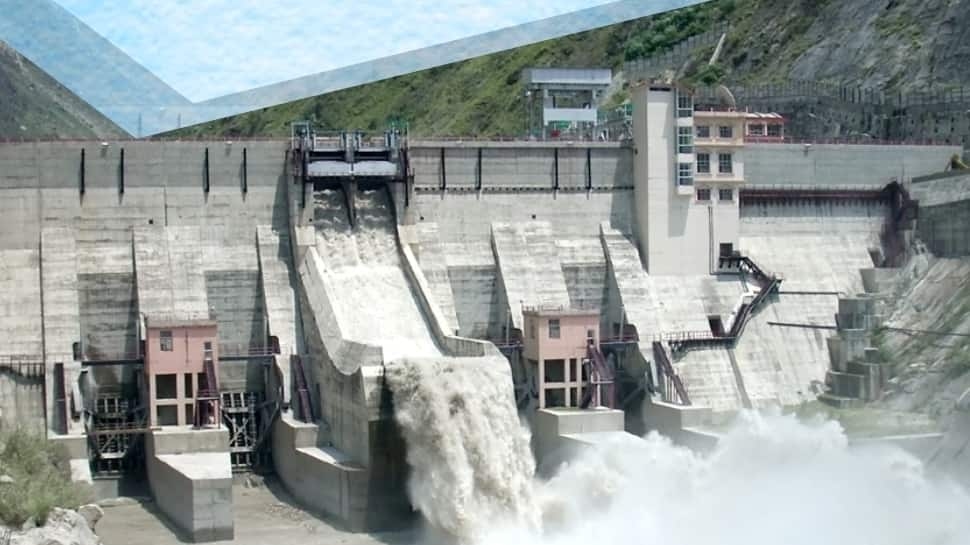
Tato-II Hydro Electric Project
According to the Cabinet Committee on Economic Affairs (CCEA), the project with an installed capacity of 700 MW (4 x 175 MW) would produce 2738.06 MU of energy. 'The Power generated from the Project will help improve the power supply position in the state of Arunachal Pradesh and will also help in balancing the national Grid. The Project will be implemented through a Joint Venture Co. between North Eastern Electric Power Corporation Ltd. (NEEPCO) and the Government of Arunachal Pradesh,' said the CCEA.
Funding Details
The Government of India will extend Rs 458.79 crore as budgetary support for the construction of roads, bridges and associated transmission line under enabling infrastructure, besides Central Financial Assistance of Rs 436.13 crore towards equity share of the State.
'The state would benefit from 12% free power and another 1% towards Local Area Development Fund (LADF), besides significant infrastructure improvement and socio-economic development of the region,' said the CCEA.
It further said that the Project is in line with the aims and objectives of Aatmanirbhar Bharat Abhiyan, would provide various benefits to local suppliers/enterprises/MSMEs, including direct and indirect employment opportunities.
Infra Boost
According to the Central government, there will be a significant improvement in infrastructure, including the development of around 32.88 kilometres of roads and bridges, for the project, which shall be mostly available for local use. The district will also benefit from the construction of essential infrastructure such as hospitals, schools, marketplaces, playgrounds, etc., to be financed from dedicated project funds of Rs 20 crore. Local populace shall also benefit from many sorts of compensations, employment and CSR activities.
Hashtags

Try Our AI Features
Explore what Daily8 AI can do for you:
Comments
No comments yet...
Related Articles


The Hindu
 25 minutes ago
- The Hindu
When DMK opposed a Vice-President candidate from Tamil Nadu 41 years ago
Shortly after the BJP-led NDA fielded Maharashtra Governor and former Coimbatore MP C.P. Radhakrishnan as its candidate for the upcoming polls for the post of Vice-President, several political party leaders, including AIADMK leader Edappadi K. Palaniswami and TMC (Moopanar) leader G.K. Vasan, had appealed to parties in Tamil Nadu to sink differences and back his candidature. The last time a candidate hailing from Tamil Nadu was fielded for the post was 41 years ago – when R. Venkataraman entered the fray. However, now, the Opposition INDIA bloc, of which the ruling DMK in Tamil Nadu is a constituent, has announced former Supreme Court judge B. Sudarshan Reddy, who hails from Telangana, as their nominee to take on Mr Radhakrishnan. While Mr. Radhakrishnan's victory is likely guaranteed on account of the NDA's numbers in both Houses of Parliament, the DMK and its allies shall be opposing the 'son of the soil' for political reasons. However, such a stand is not new for the Dravidian party. On August 1, 1984, the Congress (I) Parliamentary board formally nominated R. Venkataraman, who was serving as the Defence Minister in Prime Minister Indira Gandhi's Cabinet, for the office of Vice-President of India. He had earlier served as a Minister holding various portfolios in Madras State, playing an instrumental role in the State's industrialisation. A report published in The Hindu on August 2, 1984, said that after nominating Venkataraman, also called R.V., Indira Gandhi apprised Satyasadan Chakraborty, the CPI(M) leader in the Lok Sabha, of the views of the Congress board members. The CPI(M) leader, in turn, informed his colleagues in the Opposition about the ruling party's decision, as the Prime Minister had sought their support to ensure Venkataraman's election by consensus, even though the Congress nominee could win comfortably on the party's own strength. Referring to the archival reports of Murasoli, the DMK's mouthpiece, R. Kannan, the author of The DMK Years and biographer of Dravidian stalwarts C.N. Annadurai and M.G. Ramachandran, noted that failing to achieve consensus, leaders of the Opposition parties, including Era. Mohan of the DMK, Atal Bihari Vajpayee of the BJP and Indrajit Gupta of the CPI convened a meeting on August 2, 1984, and decided to field B.C. Kamble, a former MP from the Republican Party, was their joint candidate, fully realising that the contest would only be token in nature. Mr. Chakraborty said the Opposition had nothing personal against R.V. but regretted that the Prime Minister had not followed the procedure of choosing a candidate on the basis of all-party consensus. The Opposition was keen that a member of the weaker sections be given an opportunity to occupy the post of Vice-President, The Hindu reported. Despite not being a part of the Congress-led alliance in the Parliamentary elections in 1980, the AIADMK, which eventually showed signs of moving closer towards the Congress in the early 1980s, supported R.V.'s candidature for the Vice-President post. The election held on August 22, 1984, ended as expected with R.V. defeating Kamble by a comfortable margin. In a statement, Chief Minister M.G. Ramachandran (MGR) thanked Indira Gandhi, saying, 'I am happy that Mr. R. Venkataraman has been elected Vice-President of the Indian Republic. You made it possible by enabling a Tamilian to contest the election and to win it. On behalf of the people and the Government of Tamil Nadu and on my own behalf, I express my sincere thanks to you for having fulfilled a long-cherished wish of the people of Tamil Nadu.' Three years later, when the Congress nominated R.V., the incumbent Vice-President, for the post of President, the AIADMK, by then in alliance with the Congress, backed him. The Opposition parties convened a meeting in New Delhi and unanimously decided to field eminent jurist V.R. Krishna Iyer for the top post. Even this time, the DMK opposed R.V.'s candidature and backed the Opposition as it was part of it. R.V. comfortably won the elections and went on to become the eighth President of India. Chief Minister MGR, in a statement, congratulated R.V. and said, 'Your election to the highest office of the Indian Republic is thus a natural culmination of your eventful public life and is a most fitting tribute to your selfless service. It is a matter of supreme pride for the people of Tamil Nadu, and I am profoundly happy in sharing this pride with them.' The DMK President M. Karunanidhi, in a telegram to R.V., said, 'Please accept my hearty congratulations on your election as the President of India.' AIADMK, DMK both backed Kalam In 2002, when the BJP-led NDA proposed the name of A.P.J. Abdul Kalam, an eminent scientist and native of Tamil Nadu, for the post of President of India, both the ruling AIADMK and the DMK rallied behind him. The DMK was then a key constituent of the NDA. Despite not being a part of the combine, AIADMK supremo and Chief Minister Jayalalithaa described Kalam as the ideal choice and said her party was happy to extend support. In a statement, she said Prime Minister Atal Bihari Vajpayee had spoken to her over the phone about Kalam's candidature. 'I told him that I was delighted with the choice…. Apart from the fact that Dr. Kalam is an eminent and internationally renowned scientist who is respected all over the world, it is a matter of great pride and happiness for the AIADMK that he belongs to Tamil Nadu,' The Hindu reported on June 12, 2002, quoting Jayalalithaa. A report published in this daily on June 16, 2002, noted how the DMK too welcomed Kalam's nomination. Reacting to the Left's contention that Kalam lacked political experience and knowledge of the Constitution, DMK president M. Karunanidhi said political experience was not listed as a necessary qualification for the post of the President of India. Comparing Kalam to former Presidents S. Radhakrishnan and Zakir Hussain, Karunanidhi said all three were eminent in their fields. 'In the current situation, a non-political, secular, non-partisan person like Dr. Kalam was best suited for the role,' he said. On July 18, 2002, the 71-year-old scientist was elected as the President of India. With the support of the NDA, the Congress, the Telugu Desam Party and the Samajwadi Party, Kalam secured nearly 90% of the valid votes against his sole rival Captain Lakshmi Sahgal. After his victory, Kalam addressed his critics who had doubted his suitability for the presidency because of his lack of political background. 'I have been working from 1982 onwards directly with the Government, whether it be related to research, launch vehicles or nuclear programmes. Unless political decisions are taken, satellites will not be in orbit. Political decisions are vital for the success of any programme. I have worked with six Prime Ministers, I know how to handle politics,' a report published in The Hindu on July 19, 2002, quoted Kalam.


Mint
25 minutes ago
- Mint
Govt plans factory clusters, big reforms to boost economy amid US tariff jolt
New Delhi: The government is weighing new measures to boost manufacturing while exploring alternative markets to offset the impact of US tariffs and make Indian products more competitive globally, according to two people familiar with the matter. The proposals under discussion include interest subventions, the development of manufacturing clusters near infrastructure hubs, and measures to attract more private capital, the people cited earlier said on the condition of anonymity. The measures are also expected to focus on creating jobs, boosting exports, and strengthening domestic consumption. 'Beyond targeted incentives, the government is weighing structural reforms, ranging from tweaks in the GST (goods and services tax) framework to fresh manufacturing pushes, to raise the sector's weight in GDP," said the first person. 'Importance is also being given to sectors like engineering, electronics, textiles, steel, and construction, with a sharper focus on 'Make in India' and 'Vocal for Local.' New PLI (production-linked incentive) schemes for heavy machinery in mining and construction are also under discussion to curb import dependence," this person added. Last week, Prime Minister Narendra Modi announced a Reform Task Force in his Independence Day speech on 15 August, aimed at driving next-generation reforms to steer India toward a $10 trillion economy by 2047. India's manufacturing sector, which accounts for about one-sixth of the economy, is projected to expand by 3.8% in fiscal year 2026 (FY26), slower than the 4.3% estimated for FY25, according to the Centre for Monitoring Indian Economy (CMIE). The deceleration reflects the impact of US tariffs, moderating domestic demand, and a high base effect, with some sub-sectors expected to cool after last year's unsustainably strong growth. The US has imposed a 50% tariff on Indian goods entering the world's largest economy. The spokespersons of the ministries of finance, and commerce, and the Prime Minister's Office didn't respond to emailed queries. Meanwhile, new PLI schemes aimed at reducing import dependence have also been discussed. The Centre is looking to fire up manufacturing activities, a crucial engine of economic growth, the second person said. 'The government is also exploring the creation of factory clusters strategically located near major infrastructure projects, such as roads, railways, and ports, to create manufacturing hubs that boost logistics efficiency and generate large-scale employment," this person added. 'These clusters are aimed at raising manufacturing's share in India's GDP. Linking these clusters with key infrastructure projects will help create seamless value chains, drawing both domestic and foreign investment and giving a strong push to the economy," the person said. 'The cluster-based approach to manufacturing, where firms and industries operate within an integrated ecosystem, rests on strong theory and is backed by compelling global evidence," the person added. Experts say the government is adopting a broad-based strategy to strengthen Indian manufacturing and boost global competitiveness, with an emphasis on scale, value addition, and market diversification to reduce vulnerability to tariff shocks. 'The government is taking a comprehensive approach to strengthen fiscal measures, such as targeted incentives and credit support, which are being matched with non-fiscal steps, including logistics upgrades, regulatory simplification, skilling programs, and increased investment in research and innovation," said Hardik Shah, partner, Deloitte India. 'These initiatives are designed not merely as quick fixes but as part of a long-term vision of Viksit Bharat to build resilience, reduce external dependence, and position India as a reliable, trusted, and globally competitive manufacturing hub," Shah added.


Time of India
an hour ago
- Time of India
Modi-Mauritius PM meet likely in Kashi on Sept 11
Varanasi: Prime Minister Narendra Modi is likely to host Mauritius PM Navin Ramgoolam in Varanasi on Sept 11. As per the initial intimation from the Ministry of External Affairs received by the district officials, a bilateral meeting of both the PMs has been also proposed in the city on the same day. Talking to TOI on Tuesday, divisional commissioner S Rajalingam said that as per the initial intimation from the Ministry of External Affairs, a bilateral meeting of PM Narendra Modi and the Mauritius PM has been proposed here on Sept 11. The minutes of the proposed visit of both the PMs have not been received, said the divisional commissioner, who has been appointed the nodal officer for the preparations of the proposed bilateral meeting. He has been also assigned the task to welcome the guests and select the venues. It would be the third occasion when Modi would host the premier of another country in his parliamentary constituency. In Dec 2015, Modi hosted the then Japanese PM, the late Shinzo Abe. The visit of the Japanese PM resulted in the gifting of an international convention centre, Rudraksh, as a symbol of Indo-Japan friendship. Modi hosted French President Emmanuel Macron in the city in March 2018. After inaugurating a solar power plant in Mirzapur, the PM Modi and the French President visited the Deen Dayal Hastkala Sankul to interact with artisans and view a live demonstration of their crafts. Later, they both enjoyed a boat ride from Assi to Dashaswamedh. The officials said that apart from the venue of the proposed bilateral meeting, other places where the guest will visit and events in which he will take part will be finalised soon. The agenda of the bilateral meeting is expected to remain focused on trade and tourism. Before Ramgoolam, his predecessor, Pravind Jugnauth, arrived in the city in Sept 2023. Stay updated with the latest local news from your city on Times of India (TOI). Check upcoming bank holidays , public holidays , and current gold rates and silver prices in your area.
