


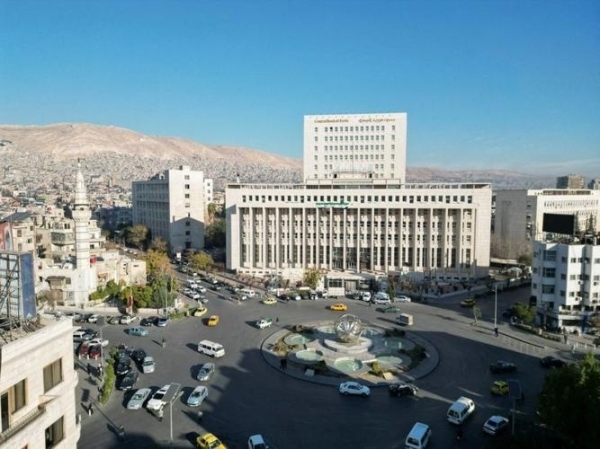
Syria completes first global SWIFT transfer since war, governor says
Central bank governor Abdelkader Husriyeh told Reuters in Damascus that a direct commercial transaction had been carried out from a Syrian to an Italian bank on Sunday, and that transactions with U.S. banks could begin within weeks.
"The door is now open to more such transactions," he said. Syrian banks were largely cut off from the world during the civil war after a crackdown by Bashar al-Assad on anti-government protests in 2011 led Western states to impose sanctions, including on Syria's central bank.
Syria needs to make transfers with Western financial institutions in order to bring in huge sums for reconstruction and to kickstart a war-ravaged economy that has left nine out of 10 people poor, according to the United Nations.
Husriyeh chaired a high-level virtual meeting on Wednesday bringing together Syrian banks, several U.S. banks and U.S. officials, including Washington's Syria envoy Thomas Barrack.
The aim of the meeting was to accelerate the reconnection of Syria's banking system to the global financial system and Husriyeh extended a formal invitation to U.S. banks to re-establish correspondent banking ties.
"We have two clear targets: have U.S. banks set up representative offices in Syria and have transactions resume between Syrian and American banks.
I think the latter can happen in a matter of weeks," Husriyeh told Reuters.
Hashtags

Try Our AI Features
Explore what Daily8 AI can do for you:
Comments
No comments yet...
Related Articles

Observer
 6 hours ago
- Observer
Lebanon urges extension of UN peacekeepers
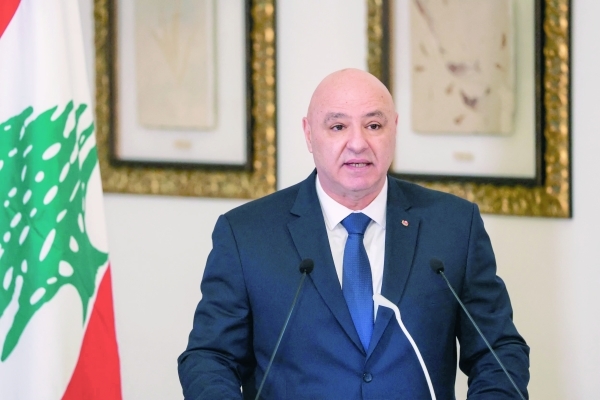
BEIRUT: Lebanese President Joseph Aoun warned against ending the United Nations peacekeepers' mandate in the country's south, after the UN Security Council began debating extending their mission. The annual mandate renewal this year comes after Lebanese authorities, under heavy US pressure, have committed to disarming Hezbollah by year's end, following a November ceasefire deal with Israel. "Any timetable for the mandate of UNIFIL that is different from the actual needs will negatively impact the situation in the south, which still suffers from Israeli occupation," Aoun told force commander Diodato Abagnara, according to a presidency statement. The UN Interim Force in Lebanon has been deployed since 1978 to separate Israel and Lebanon and counts some 10,000 personnel from around 50 countries. Aoun said Beirut "has begun contacts with Security Council member states, and brotherly and friendly countries, to ensure the extension" of UNIFIL's mandate. He cited Lebanon's need for the force to help "maintain security and stability in the south" and to support the army following the government's decision to increase troop numbers there to 10,000 personnel. — AFP

Observer
8 hours ago
- Observer
SoftBank's Son backs ally Tan with $2 billion Intel investment
TOKYO: When Lip-Bu Tan stepped down from the SoftBank Group board in 2022 at a time when the Japanese company was grappling with soured investments, his parting message offered advice on how Masayoshi Son's conglomerate could strengthen its business. Three years later, a resurgent SoftBank has made a show of support by taking a $2-billion stake in Intel as Tan, now the storied American company's CEO, seeks to turn around the embattled chipmaker. Tan took Intel's top job in March and is driving restructuring at the company, which lost out to Nvidia in artificial intelligence chips and whose foundry business is struggling. "This is really a vote of confidence of Masa in the turnaround materialising over the coming years," said Rolf Bulk, an analyst at New Street Research. "For Intel, the investment makes it more likely that SoftBank could be a potential client to Intel in the future." The two men have a long-standing relationship. "Masa and I have worked closely together for decades, and I appreciate the confidence he has placed in Intel with this investment," Tan said in a statement. In addition to his time on SoftBank's board, Tan became chairman of chip startup SambaNova, which received backing from SoftBank's Vision Fund. "Masa is brilliant; he's a visionary. But he still needs people to provide safeguards, give him advice, and make him even more successful," Tan wrote in his statement on leaving the SoftBank board. Son, 68, is known as a savvy political operator, appearing publicly with U.S. President Donald Trump twice in the months following the presidential election. He has close relationships with leading tech entrepreneurs such as Jensen Huang, CEO of Nvidia, in which SoftBank has a stake. Last week Tan, 65, met with Trump, who days earlier had called on him to resign due to his ties to Chinese firms. Washington is in talks to take a 10% stake in Intel, Bloomberg has reported. "SoftBank's investment helps but it is not what is going to move the dial for Intel," said Amir Anvarzadeh of Asymmetric Advisors. "It's more to maintain this very good relationship he has with Trump," he said. Son is making splashy investments again after some underperforming tech bets forced a period of retrenchment, with the conglomerate pursuing a $500 billion US data centre venture with OpenAI, the maker of ChatGPT. SoftBank has acquired a former electric vehicle factory from Foxconn in Ohio as it looks to advance its Stargate data centre project. Arm, which is controlled by SoftBank, plans to make its own chips, and the Japanese conglomerate also acquired chipmaker Graphcore last year. SoftBank's shares have been on a tear, boosted by positive sentiment around its AI investments. "The $2-billion investment should be viewed more as a strategic stake rather than a financial one," said Nori Chiou, investment director at White Oak Capital Partners. "In the world of cutting-edge semiconductor manufacturing, only capital commitments in the $30 billion-$40 billion range carry true commercial weight," he said. Industry experts say Tan still faces a mountain to climb to turn around Intel, which has suffered from years of management missteps. "It is Masa making a contrarian bet but one where I think the downside risk is fairly limited," said Bulk of New Street Research. — Reuters
Observer
8 hours ago
- Observer
Watchmaker Swatch apologises for 'slanted eye' ad after online backlash in China
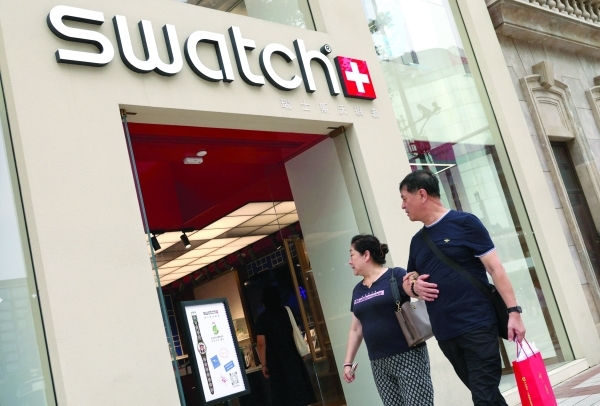
Swiss watchmaker Swatch issued an apology at the weekend and pulled ads featuring images of an Asian male model pulling the corners of his eyes up and backwards in a "slanted eye" pose. The images for the Swatch Essentials collection were widely condemned online in China, where many comments said they appeared to mimic racist taunts about Asian eyes. Shares in the company slipped by as much as 2.7% in early trading on Monday before paring losses somewhat. "When I saw this news, I was quite shocked. Swatch has been in the Chinese market for many years, and I feel like most people are familiar with the brand," said 23-year-old student Justin Zhao. "I don't know why they did it. They were able to somehow release this after going through numerous approvals." In an apology posted in both Chinese and English on its official account on the Weibo social media platform on Saturday, Swatch said that it had "taken note of the recent concerns" and removed all related materials worldwide. "We sincerely apologise for any distress or misunderstanding this may have caused," the statement said. It also posted the same apology on Instagram. Swatch Group did not immediately respond to a Reuters request for further comment. The criticism over the advert is the latest setback for a firm whose shares have fallen by more than half since early 2023 and now faces a 39% tariff on its exports to the United States. Swatch, which also makes Omega, Longines and Tissot watches, relied on China, Hong Kong and Macau for around 27% of group sales last year. Revenue for the watchmaker slumped 14.6% to 6.74 billion Swiss francs ($8.4 billion) in 2024, hit by a downturn in demand in China, where Swatch said it was seeing "persistently difficult market conditions and weak demand for consumer goods overall". Peter Xu, a fashion influencer in China with over seven million Weibo followers, said he believed the controversy would impact Swatch's business in China, but given the speed of the apology, the fallout was likely to be relatively short-term. "It was pretty stupid to release images like those ones," he said. —Reuters
