


&w=3840&q=100)
Pak army chief describes terrorism in J&K as 'legitimate struggle'
Field Marshal Munir also warned India of a befitting response in case of any future attack, weeks after the two nations briefly locked horns in a dangerous conflict.
"What India labels as terrorism is, in fact, a legitimate and lawful struggle for freedom, recognised by international law," Munir said while addressing a passing out ceremony at Pakistan Naval Academy, Karachi, on Saturday.
"Those who have tried to suppress the Kashmiri people's will and pursue conflict elimination instead of resolution have only made the movement more relevant through their own actions," he claimed.
He said that Pakistan would always stand by the people of Kashmir in their struggle for the right to self-determination. "Pakistan is a strong advocate for a just resolution of the Kashmir issue in accordance with United Nations resolutions and the aspirations of the Kashmiri people, he added.
In the past, Munir had described Kashmir as Pakistan's "jugular vein".
India has repeatedly told Pakistan that the Union Territories of Jammu & Kashmir and Ladakh "was, is and shall forever remain an integral part of the country.
The ties between the two countries nosedived after India abrogated Article 370 of the Constitution, revoking the special status of Jammu and Kashmir, and bifurcating the State into two Union Territories on August 5, 2019.
In his address, Munir also claimed that Pakistan proved itself as a "net region stabiliser after having repelled the Indian military attack twice. He was apparently referring to the 2019 Balakot strike after the Pulwama terror attack and the recent Operation Sindoor following the Pahalgam terror attack.
"Pakistan, despite grave provocations, acted with restraint and maturity and demonstrated its commitment to regional peace and stability, which has led to Pakistan's role as a net regional stabiliser," he claimed.
"As we steadily, but surely, build our comprehensive national power, any enemy acting on the perceived vulnerability of Pakistan under the illusion of strategic impunity or miscalculation, would get a swift and a very befitting response," he said.
The army chief also said that undeterred by the efforts by adversaries, Pakistan would continue on the path of progress, development and prosperity.
He also reaffirmed the armed forces' commitment to eradicating terrorism in all its forms and manifestations, vowing to take the fight to its logical conclusion.
Hashtags

Try Our AI Features
Explore what Daily8 AI can do for you:
Comments
No comments yet...
Related Articles

India.com
 5 minutes ago
- India.com
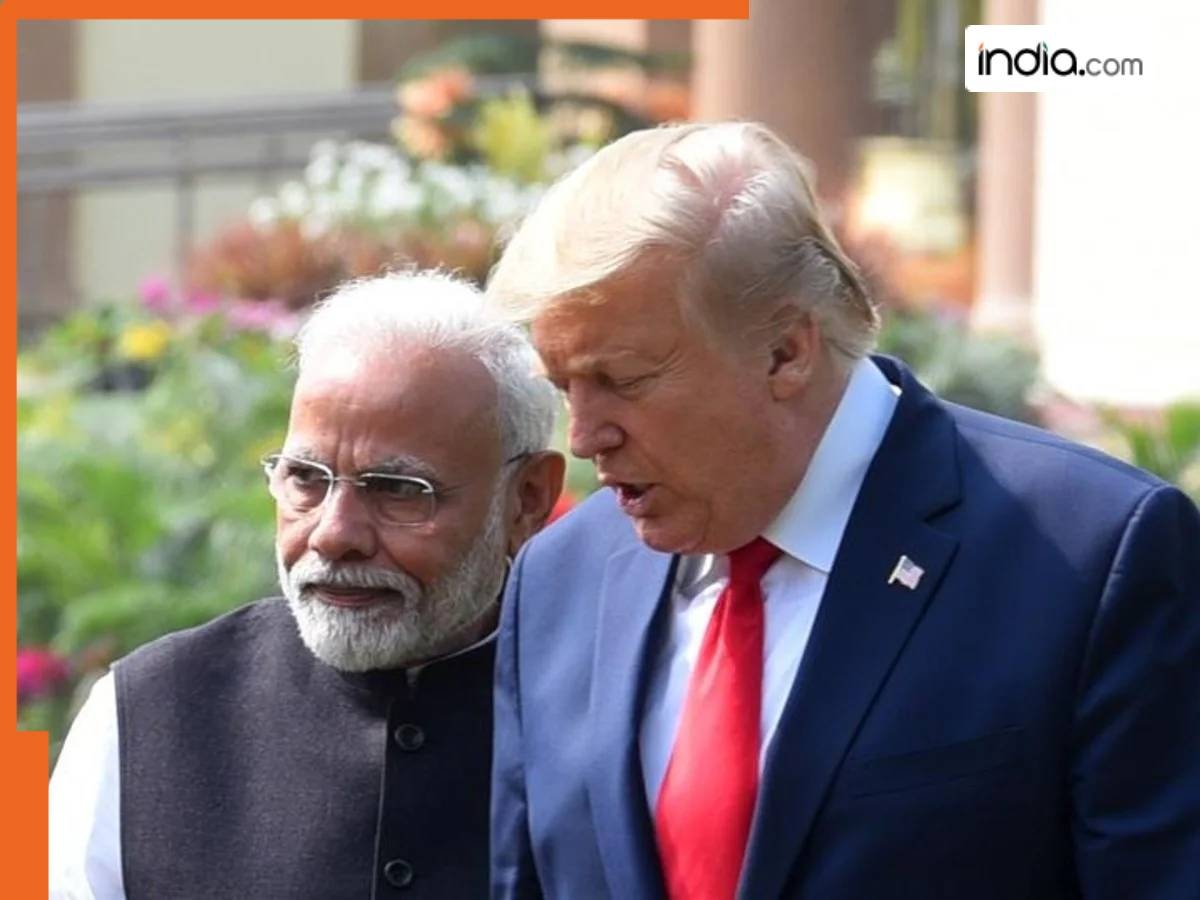
Trump imposed additional tariffs on India to create 'secondary pressure' on Russia over Ukraine war, says White House
Trump imposed additional tariffs on India to create 'secondary pressure' on Russia over Ukraine war, says White House US President Donald Trump has announced new higher tariffs on Indian goods as part of his plan to pressure Russia to end the war in Ukraine, the White House said on Tuesday. Trump has decided to double tariffs on India to 50 per cent by adding an extra 25 per cent duty. The new rates will come into effect on August 27. White House press secretary Karoline Leavitt told reporters that the president was putting strong public pressure to stop the war. She said Trump had already taken steps, including sanctions on India, to create 'secondary pressure' on Moscow. This decision comes just a few days after Trump met Ukrainian President Volodymyr Zelenskyy at the White House. Both leaders suggested that progress had been made toward possible three-way talks with Russian President Vladimir Putin. Trump called the meeting 'a very successful day,' while Zelenskyy said it was the 'best conversation' he had had with the US president so far. According to ANI, Leavitt added that Trump was keen to move the peace process forward quickly.
India.com
5 minutes ago
- India.com
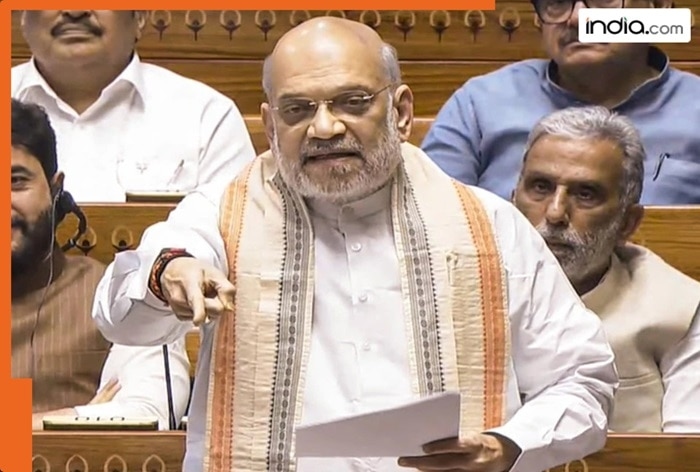
Centre to introduce bills that can sack the PM, CMs and top ministers held in custody for 30 days
Centre to introduce bills that can sack the PM, CMs and top ministers held in custody for 30 days Union home minister Amit Shah will bring three important bills in the Lok Sabha on Wednesday. These bills say that if any minister, chief minister, or even the prime minister is arrested or kept in custody for 30 days in a row for a crime that can lead to at least five years in jail, they will have to leave their post. The government's schedule for the Lok Sabha shows that the three bills are – The Constitution (130th Amendment) Bill, The Jammu & Kashmir Reorganization (Amendment) Bill, and The Government of Union Territories (Amendment) Bill. The schedule also mentions that after the bills are introduced, there will be a proposal to send them to a joint parliamentary committee for review. Together, these bills aim to create a new system that will apply to ministers and chief ministers in states and Union territories like Jammu & Kashmir, as well as Union ministers and even the prime minister at the Centre. However, the bills also make it clear that once the arrested leader is released, they can be appointed to their position again. The new bills, which also include a constitutional amendment, say that if the Prime Minister, a Chief Minister, or any minister in a state or Union Territory (including Delhi) is arrested and kept in custody for 30 days in a row on charges that carry at least five years of jail, they will have to step down on the 31st day. If they don't resign, they will automatically lose their post. For Union Territories like Jammu and Kashmir, the bill states that if a minister or the Chief Minister is detained for 30 days, the Lieutenant Governor must remove them if the Chief Minister advises so. But if no advice is given by the 31st day, then from the next day the minister or Chief Minister will automatically lose their position. The same rule is proposed for the Union government and the states. If the Prime Minister or any minister is in custody for 31 days straight, they will automatically be removed from office. The explanation attached to the bill says this step is necessary to protect constitutional values and keep people's trust in their leaders. It points out that while leaders represent the hopes and faith of citizens, the Constitution does not currently have any rule to remove a Prime Minister or minister if they are arrested on serious criminal charges. The note adds that ministers are expected to have integrity and set an example. If a minister is facing grave criminal allegations and remains in custody, it can harm constitutional values, weaken good governance, and break the trust that people have placed in them.


Hindustan Times
5 minutes ago
- Hindustan Times
NCERT releases two special modules hailing Operation Sindoor
The National Council for Education Research and Training (NCERT) has introduced two special modules on Operation Sindoor, calling the special military operation against terror infrastructure in Pakistan and Pakistan-occupied Kashmir (PoK) 'a triumph of bravery, strategy and innovation.' The modules are aimed at familiarising students with the country's military prowess during Operation Sindoor (AFP) 'Operation Sindoor— A Saga of Valour', is meant for preparatory and middle stages (Classes 3 to 8), and 'Operation Sindoor— A Mission of Honour and Bravery' is meant for students in the secondary stage (Classes 9 to 12). The modules are aimed at familiarising students with the country's military prowess. NCERT modules are supplementary resources in English and Hindi that cover contemporary and culturally significant topics. They are separate short publications on specific topics that are not part of the textbooks but taught through projects, posters, discussions, and debates. The modules state that even though Pakistan denied any involvement in the Pahalgam terror attack on April 22, it was carried out on 'direct orders' by 'Pakistan's military and political leadership.' They also go into detail about the role of the Resistance Front (TRF), a Lashkar-e-Taiba proxy, in planning and executing the attack, in what is referred to in the modules as a conspiracy also involving Pakistan's ISI. They also feature strategy details that went into the operation, maps of targeted sites and photographs of destroyed Pakistani drones, as well as information on India's air defence systems, including the S-400, which intercepted and neutralised enemy aircraft and drones. The secondary module also provides details on the country's response in the immediate aftermath of the Pahalgam attack. 'Candlelight marches were held from across the country. Muslim communities in Hyderabad, Lucknow, and Bhopal wore black armbands and openly denounced the attack. In Kashmir, shopkeepers closed their shops in protest. Villages near the border demanded strong action and supported the Armed Forces,' the module states. It adds that the local (Kashmiri) population 'stood up and spoke against terrorists. Their response breaks stereotypes and shows the real voice of peace-loving people.' India launched Operation Sindoor in the early hours of May 7 and struck nine terror and military installations in Pakistan and Pakistan-occupied Kashmir (PoK) as a response to the Pahalgam terror strike in which 26 people were shot dead by terrorists. In June, defence minister Rajnath Singh said Operation Sindoor was the natural progression from the 2016 surgical strikes and the 2019 Balakot airstrikes in Pakistan, and it was conducted in a manner that forced Islamabad to ask for a ceasefire, articulating India's firm resolve against terror. The modules cite historical examples of India's strong military responses—from the wars of 1947, 1965, 1971, and 1999 to the 2019 Balakot strikes . They also underscore the role of the 'Make in India' initiative in Operation Sindoor, quoting Defence Minister Rajnath Singh: 'The operation proved India can break through any enemy defence using what we have made ourselves.'
