


Latest news with #Ageing


Daily Mail
 11-07-2025
- Entertainment
- Daily Mail
Adrianne Curry doesn't look like this anymore! OG America's Next Top Model star is unrecognisable as she goes completely grey
She was the brunette beauty who, at age 20, took out the inaugural season of America's Next Top Model in 2003. But Adrianne Curry, 42, looked almost unrecognisable in a recent social media post that showed her sporting grey hair. Adrianne took to Instagram this week to share a then-and-now photo that showed her just after her 2003 Next Top Model win, next to a more recent shot. The second image showed Adrianne's previously dark brown locks had turned almost completely grey. Captioning the image, Adrianne said that she was embracing her new look with: 'Ageing Happens. I'm having a f***ing blast doing it, too!' From A-list scandals and red carpet mishaps to exclusive pictures and viral moments, subscribe to the DailyMail's new showbiz newsletter to stay in the loop. The post elicited a flurry of comments from followers, with many praising the star for her approach to ageing. 'Your hair looks beautiful, but your skin looks just the same. Doesn't look like you've aged at all,' one fan offered. 'Actually your skin looks great and your hair is beautiful. I mean, it's got silver streaks and that's lovely. The post was also picked up by the US Today show, which posted an article about Adrianne's dramatic transformation. Responding to the story, Adrianne shared a clip where she encouraged embracing 'getting old'. ''I'm used to getting bad press, so this was pretty cool,' she said of the article. 'I think it's high time we start normalising not dyeing our hair and not injecting botulism into our faces or fillers, and stop perpetuating that impossible beauty standard that we blame on men, which really is just women setting on each other.' Continuing, Adrianne urged her fans to stop 'competing' with one another when it comes to looking youthful. 'Let's just get old, guys. It's going to be fun. I promise you'll be okay,' she said. 'You just get old and try to stay healthy and try to be happy, And then stop trying to compete with each other and look like you're 20 when you're not. We can all see your hands, we know the truth. Let's get old.' Reiterating the sentiment in the caption, Adrianne added: 'Let's normalise ageing without dye, botox or fillers! We create the impossible beauty standards other women feel they have to live up to.' This post also drew a slew of comments, with many fans, again, praising Adrianne on her views on ageing. 'You're freaking gorgeous now!! Both beautiful at 18 and at 42!! Ageing is such an honour,' one fan wrote. Another chimed in with a similar sentiment: 'I admire you for taking the grey hair in strides. I'm 45 and not there yet. I can't do it. To each their own though.' A third said: 'Ageing is such a privilege!!! Let's all get old and embrace every phase as we age... we are all beautiful at all ages!' Adrianne rose to stardom as the very first winner of America's Next Top Model in 2003 and even met her now ex-husband, Christopher Knight, on the VH1 reality show, The Surreal Life. Despite catapulting to fame and modelling for the likes of Marie Claire and Ed Hardy, Adrianne ultimately decided to leave Hollywood after she found herself seriously considering a job for face fillers at age 32. Now, Adrianne is enjoying a more peaceful existence in Montana that is worlds away from the life she once knew in Hollywood. 'It's like a complete reversal of where I used to be, and I feel richer than I ever was, and I have less than I ever did,' she told People in July. 'I want to die and leave this earth with people saying good things about me in terms of who I was to them, as opposed to accomplishments or how many Prada bags I have,' she said.
Yahoo
16-06-2025
- Health
- Yahoo
Study inspects generational and geographical differences in dementia prevalence
Due to varied and evolving case definitions, the task of measuring dementia's prevalence across time and borders has been hindered by heterogeneity. As a result, epidemiological indicators of its disease burden have required standardisation in order to allow for meaningful intergenerational and global comparison. In a novel study published in June 2025 in JAMA Open Network, Xiaoxue Dou and colleagues leveraged and standardised three large databases in Europe and the US to explore the prevalence of dementia across multiple geographies with distinct generational cohorts. The authors' analysis shows that dementia prevalence, as well as the risk of developing dementia, is significantly lower in more recent birth cohorts across all studied geographic regions. GlobalData epidemiologists forecast that the diagnosed prevalent cases of dementia are expected to increase from over five million to nearly 5.9 million between 2025 and 2032 in the US and five major European markets (France, Germany, Italy, Spain, and the UK). Studies that allow for meaningful comparison of dementia indicators across countries and generational cohorts, such as that of Dou and colleagues, allow for a more nuanced study of dementia to guide clinical authorities and policymakers in their attempts to address the disease's individual and social effects as its burden mounts over time. Dou and colleagues studied the prevalence of dementia across difference age cohorts in the US and Europe using three databases that measure health and aging in older adults: the US Health and Retirement Study, the UK's English Longitudinal Study of Ageing, and Europe's Survey of Health, Ageing, and Retirement in Europe (countries included are Austria, Germany, Sweden, the Netherlands, Spain, Italy, France, Denmark, Switzerland, and Belgium). Each dataset is nationally representative, and they were conducted between 1994 to 2021, 2002 to 2019, and 2004 to 2020, respectively, and in the aggregate capture 99,420 individuals aged 71 years or older. The authors segmented participants into four-year age groups from age 71 years to 96 years and over. To diagnose dementia in each cohort, the authors utilised a panel of experts whose diagnostic consensus was based on criteria in the third and fourth editions of the Diagnostic and Statistical Manual of Mental Disorders. As displayed in Figure 1, when comparing the frequency of dementia across the three regions, Dou and colleagues found that participants born more recently showed a lower diagnosed prevalence than that of older participants, suggesting a decline in the age-specific prevalence of dementia in all three geographies. The authors attribute this intergenerational heterogeneity to cohort-specific features and life experiences (eg, experiences with catastrophic events such as war, urbanisation, or varying levels of exposure to neurotoxic pollution). In this large-scale study, Dou and colleagues present a compelling study design for cross-country comparisons of dementia prevalence in varying age cohorts. Moreover, they draw attention to important factors influencing the disease burden of dementia in different age groups, many of which are rooted in generation-specific environmental factors and life events. The novel methodology and findings from the authors present opportunities for further comparative research into dementia, as well as a case for policymaking and healthcare investment and practice in dementia care that acknowledges the nuance of intergenerational variation. As societies such as many of those in Europe and North America undergo demographic change to older populations on average, these considerations will be crucial in delivering on the needs of geriatric care. "Study inspects generational and geographical differences in dementia prevalence" was originally created and published by Clinical Trials Arena, a GlobalData owned brand. The information on this site has been included in good faith for general informational purposes only. It is not intended to amount to advice on which you should rely, and we give no representation, warranty or guarantee, whether express or implied as to its accuracy or completeness. You must obtain professional or specialist advice before taking, or refraining from, any action on the basis of the content on our site. Error in retrieving data Sign in to access your portfolio Error in retrieving data Error in retrieving data Error in retrieving data Error in retrieving data

Daily Mirror
24-05-2025
- Health
- Daily Mirror
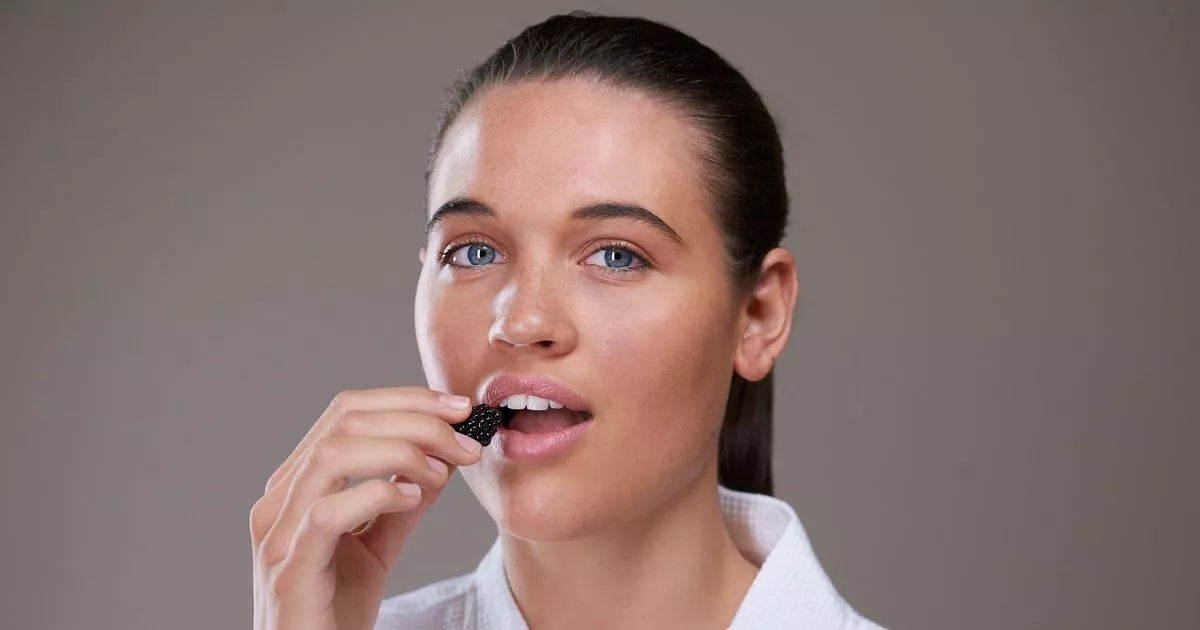
Four foods that 'reverse' biological ageing by years
The study found that eating foods rich in polyphenols could effectively reverse ageing. Scientists have discovered that four common foods could hold the secret to living longer. Regularly consuming these foods could reduce your biological age by more than two years. While it is impossible to completely prevent the body from ageing, many people look for ways to delay the process as much as possible. Regular exercise and cutting back on certain habits are some of the steps people take to promote longevity. But a new study has shown how an important a role your diet can take. Published in the journal Ageing, the findings revealed that eating foods rich in polyphenols - naturally occurring compounds in plants - could effectively reverse ageing. These specific foods are known as 'methyl adaptogens' because the polyphenols they contain have been shown in lab studies to modulate DNA methylation - chemical tags that help regulate how genes are expressed as we age. The foods highlighted in the study were: Turmeric Rosemary Garlic Berries Green tea and oolong tea were also found to have anti-ageing properties. However, it is important to note this isn't to do with looking younger - a reduced biological age comes with a lowered risk of disease and an improved chance of living longer. The data used by the team came from the Methylation Diet and Lifestyle (MDL) study, which initially reported that participants following a targeted eight-week program lowered their epigenetic age by an average of 3.14 years compared to those who didn't make any lifestyle changes. The study involved 43 healthy, predominantly white and highly educated men aged between 50 and 72. Participants were randomly allocated to either maintain their usual lifestyle or adhere to a specific regimen that included daily portions of leafy greens, cruciferous vegetables, colourful vegetables, pumpkin and sunflower seeds, lean meats, low-glycaemic fruits, and at least one item from the methyl adaptogen group. Alcohol, sugar, trans fats, grains, legumes, and dairy were limited. Following an eight-week period, researchers examined DNA methylation in saliva samples to evaluate alterations in epigenetic age. Although the treatment group lost an average of 4.6 pounds (in contrast to a 0.9-pound increase in the control group), weight loss did not explain the reductions in biological age. Instead, a higher consumption of methyl adaptogens was independently linked with reversing epigenetic age, even after accounting for initial biological age and weight differences. Study authors wrote: 'In hierarchical linear regression, foods investigated as polyphenolic modulators of DNA methylation (green tea, oolong tea, turmeric, rosemary, garlic, berries) categorised in the original study as methyl adaptogens showed significant linear associations with epigenetic age change, after controlling for baseline epigenetic age acceleration and weight changes. 'Although the intervention group lost significantly more weight than the control group, these changes were not associated with epigenetic age changes in the regression model. These findings suggest that consuming foods categorised as methyl adaptogens may reduce markers of epigenetic ageing.' Why are these foods so effective? Researchers noted that polyphenols found in green tea (EGCG), turmeric (curcumin), garlic (allicin), berries (anthocyanins), and rosemary (rosmarinic acid) seem to affect enzymes and pathways associated with ageing. These pathways are frequently disrupted in age-related illnesses, including heart disease, diabetes, neurodegeneration, and cancer. The team highlighted that even a single daily serving of methyl adaptogens was associated with noticeable reductions in biological ageing markers. But this study did come with some limitations - it was a small, short-term study involving middle-aged men. The researchers advised that more diverse, long-term trials are necessary to give more weight to the findings. Moreover, lifestyle factors such as meditation and sleep weren't evaluated in this follow-up analysis.
